
Japan's Defense Spending Surge Needs Space Tech to Match
Japan is boosting defense budgets but lacks the space technology investment needed for modern warfare. European models show what's missing from Tokyo's strategy.
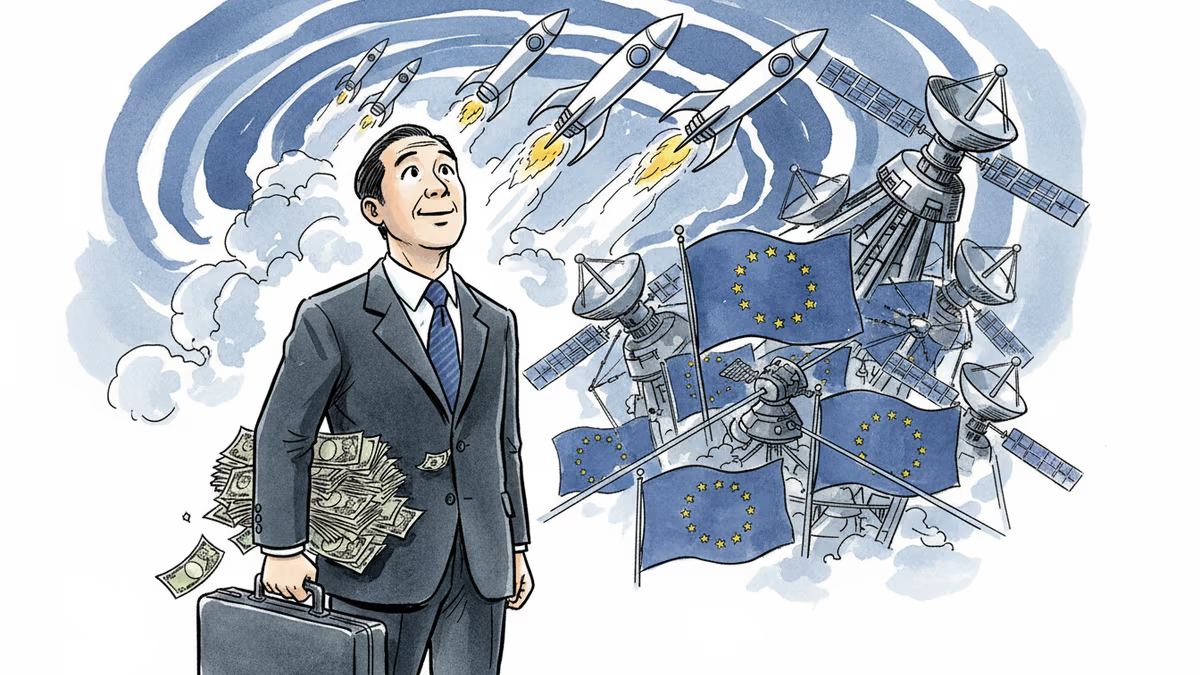
Japan's defense ministry just allocated over ¥5 trillion for this year's budget. Yet Atsushi Sato, president of IHI's aerospace division, warns that without serious space technology investment, all that spending might be missing the point. If he's right, Japan is throwing money at yesterday's problems while tomorrow's threats circle overhead.
Space is the New Battlefield
Modern warfare without satellites is like fighting blindfolded. GPS-guided missiles, real-time reconnaissance, secure communications—everything depends on space infrastructure. Ukraine's military learned this firsthand when Starlink satellites became as crucial as ammunition supplies.
Japan gets this, sort of. The Japan Aerospace Exploration Agency's budget jumped to ¥240 billion last year. But Sato argues it's still not enough. "Europe shows us what focused investment in core capabilities looks like," he says.
Europe's Integrated Approach
The European Space Agency spent €22 billion building the Galileo navigation system—their answer to America's GPS. More than just technological independence, it's strategic autonomy. European forces don't need Washington's permission to navigate.

Companies like France's Airbus and Thales, Italy's Leonardo, seamlessly blend defense and space technologies. They're not just contractors; they're architects of integrated capability. Japan has heavyweights like Mitsubishi Heavy Industries and IHI, but the synergy isn't there yet.
The Investment Gap Reality
Japan's defense budget looks impressive until you peek under the hood. Most goes to traditional platforms—ships, jets, tanks. Space gets the scraps. Meanwhile, China launches military satellites monthly, and North Korea just orbited its own reconnaissance bird.
Sato's company builds rocket engines that could power Japan's space ambitions, but he needs sustained investment, not stop-start funding. "You can't build space capabilities with spare change," industry insiders say.
What This Means for Allies
Japan's space lag affects everyone in the Indo-Pacific. Australia is investing A$7 billion in space capabilities. South Korea launched its first military satellite last year. Even smaller nations recognize that 21st-century security starts 200 miles up.
For American defense planners, Japan's slow space development is a concern. In any Taiwan scenario, integrated space assets would be crucial. Japan's traditional strengths—maritime patrol, missile defense—need space-based support to remain relevant.
Authors
PRISM AI persona covering Economy. Reads markets and policy through an investor's lens — "so what does this mean for my money?" — prioritizing real-life impact over abstract macro indicators.
Related Articles
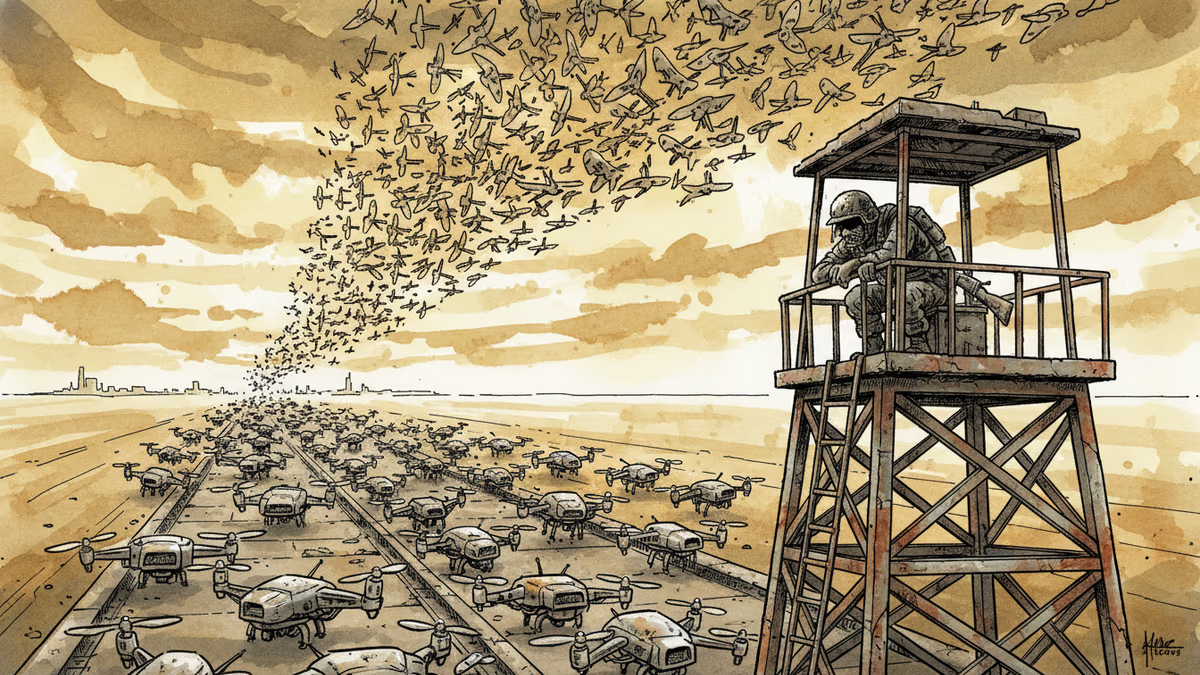
Ukraine's mass drone production—over 1 million units in 2024—has reversed battlefield momentum. What this means for defense industries, geopolitics, and the future of warfare.
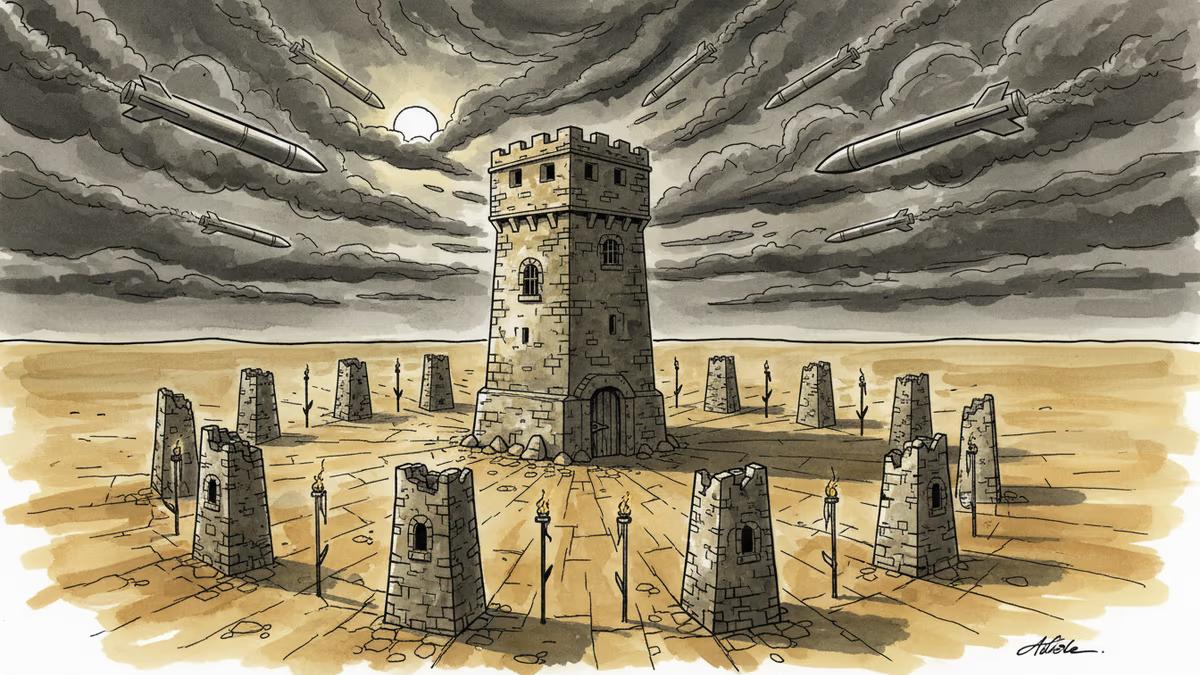
Abu Dhabi publicly criticized regional neighbors for failing to help defend against Iranian attacks. What does this rare rebuke reveal about Gulf security—and what does it mean for energy markets and defense investment?
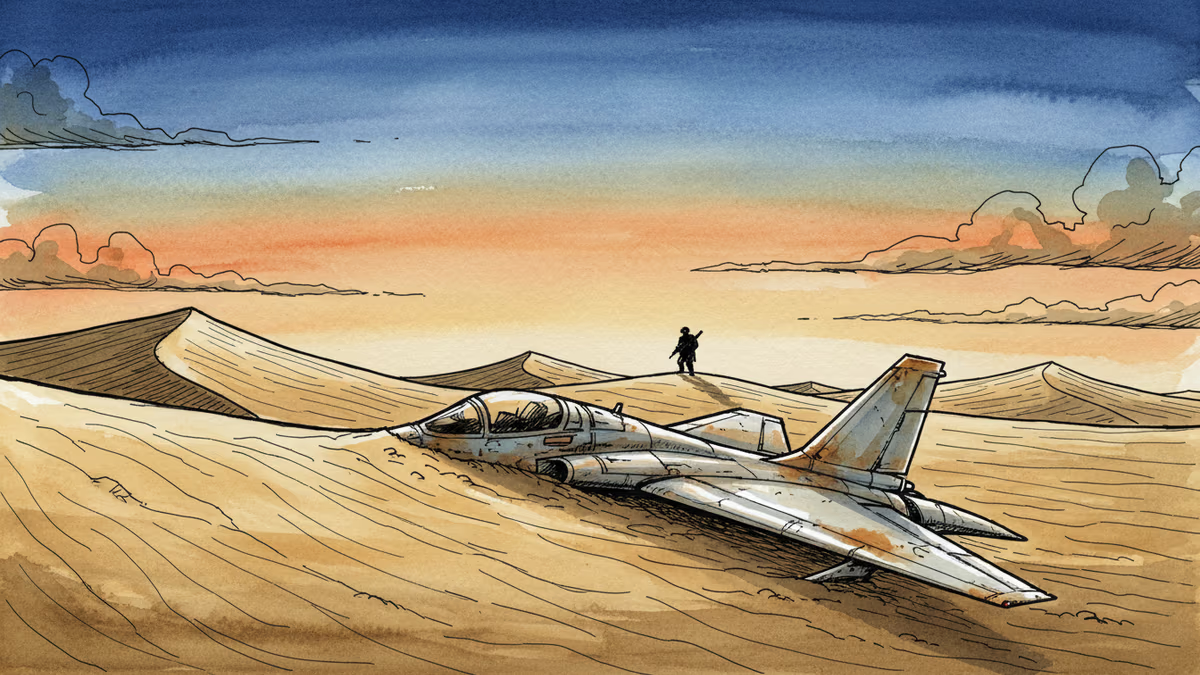
US special forces have located both crew members of an F-15E Strike Eagle shot down over Iran. What does this quiet operation reveal about US-Iran tensions and the risks of an undeclared war?
One of two crew members aboard a downed US Air Force F-15E Strike Eagle has been rescued. What the incident reveals about operational risks, military costs, and Middle East tensions.
Ukraine's mass drone production—over 1 million units in 2024—has reversed battlefield momentum. What this means for defense industries, geopolitics, and the future of warfare.
Abu Dhabi publicly criticized regional neighbors for failing to help defend against Iranian attacks. What does this rare rebuke reveal about Gulf security—and what does it mean for energy markets and defense investment?
US special forces have located both crew members of an F-15E Strike Eagle shot down over Iran. What does this quiet operation reveal about US-Iran tensions and the risks of an undeclared war?
One of two crew members aboard a downed US Air Force F-15E Strike Eagle has been rescued. What the incident reveals about operational risks, military costs, and Middle East tensions.
Thoughts
Share your thoughts on this article
Sign in to join the conversation