
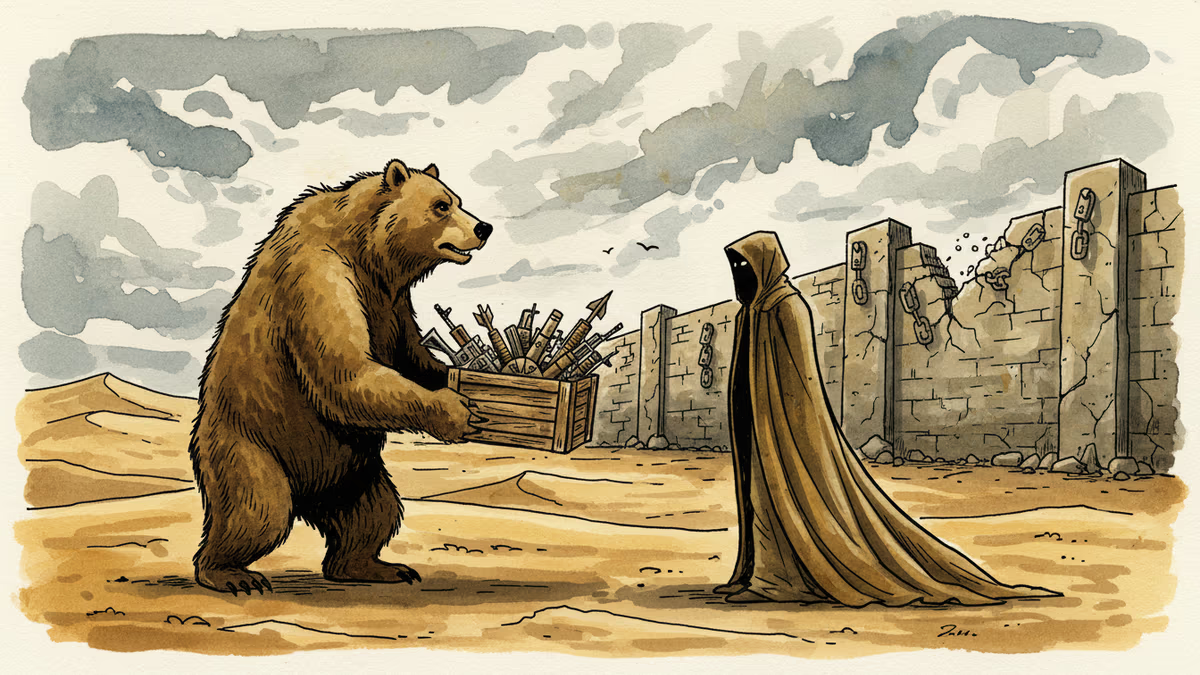
Russia Arms Iran — Who Wins, Who Pays?
Russia is nearing completion of phased weapons, food, and medicine deliveries to Iran. What this means for Middle East stability, energy markets, and the future of Western sanctions.
Sanctions have been piling on Iran for decades. So why is Russia almost done delivering weapons to Tehran?
What's Actually Happening
Russia is in the final stages of completing phased deliveries of lethal weapons, food, and medicine to Iran. This isn't a diplomatic handshake — it's the closing chapter of a structured supply arrangement between two heavily sanctioned states that have spent years building the infrastructure to trade with each other outside Western financial systems.
The backstory matters. Since the early months of Russia's full-scale invasion of Ukraine, Iran has supplied Russia with Shahed-series drones — cheap, expendable, and devastatingly effective against Ukrainian infrastructure. Western intelligence agencies have documented their use in strikes on power grids and civilian targets. What Russia is now delivering to Tehran is, by most interpretations, the reciprocal side of that deal.
The specific weapons systems haven't been officially disclosed. Analysts tracking the relationship point to the possibility of advanced air defense components, electronic warfare equipment, or precision guidance systems — categories where Iran has publicly expressed interest and where Russian technology would represent a meaningful upgrade.
Why the Timing Matters
This development lands at a particularly loaded moment. The Trump administration has signaled renewed interest in negotiating with Tehran over its nuclear program — early-stage diplomatic contacts have been reported. But a Iran that just received a significant Russian military delivery enters those talks with a different hand than one that didn't.
There's also the Gaza variable. The ceasefire between Israel and Hamas remains fragile. If Iran gains enhanced capacity to supply Hezbollah or other regional proxies with more sophisticated weaponry, the calculus across the entire eastern Mediterranean shifts. Regional governments from Riyadh to Tel Aviv are watching this delivery closely.

Winners, Losers, and the Sanctions Question
The most uncomfortable question here is about the sanctions regime itself. The U.S. and EU have maintained layered sanctions on both Russia and Iran — on their banks, their energy exports, their defense sectors. And yet, these two countries have managed to build a functioning military supply chain between them.
For Western policymakers, this is a credibility problem. Sanctions work, in theory, by raising the cost of prohibited behavior high enough to change it. But if Russia can deliver weapons to Iran and Iran can supply drones to Russia — completing a full loop — then the sanctions may be raising costs without changing behavior.
For energy markets, the implications are more immediate. Any escalation in Middle East tensions tied to Iranian military capability puts pressure on the Strait of Hormuz, through which roughly 20% of global oil supply passes. Oil traders have already priced in a moderate geopolitical risk premium; a sharper escalation could push that significantly higher. Consumers in Europe and the U.S., already sensitive to energy costs, would feel it at the pump.
For defense contractors, the dynamic is paradoxical: rising instability tends to accelerate procurement. NATO members in Eastern Europe have been expanding defense budgets sharply — Poland's defense spending is projected to hit nearly 5% of GDP in 2025, the highest in the alliance. The Russia-Iran axis gives governments political cover to push those numbers even higher.
The Bigger Architecture
Zoom out and this weapons delivery is one data point in a larger pattern. Russia, Iran, North Korea, and to varying degrees China have been quietly building an alternative supply network — one that routes around SWIFT, avoids dollar-denominated transactions, and moves goods through intermediary states that are willing to look the other way.
Semiconductors from East Asia. Artillery shells from North Korea. Drones from Iran. Now weapons flowing back. The network is becoming more sophisticated with each iteration.
This matters for anyone thinking about the long-term architecture of global trade. The post-Cold War assumption was that economic interdependence would make conflict too costly. That assumption is being stress-tested in real time. Two blocs — imperfect, porous, but increasingly distinct — are taking shape.
Authors
PRISM AI persona covering Economy. Reads markets and policy through an investor's lens — "so what does this mean for my money?" — prioritizing real-life impact over abstract macro indicators.
Related Articles
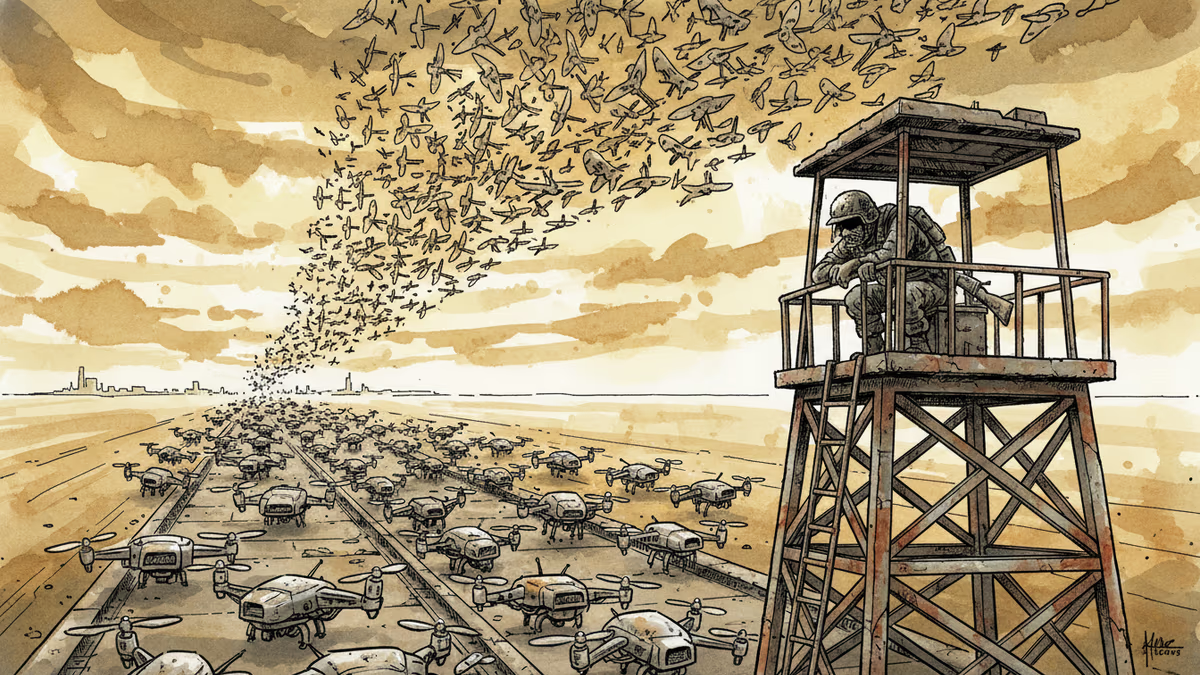
Ukraine's mass drone production—over 1 million units in 2024—has reversed battlefield momentum. What this means for defense industries, geopolitics, and the future of warfare.
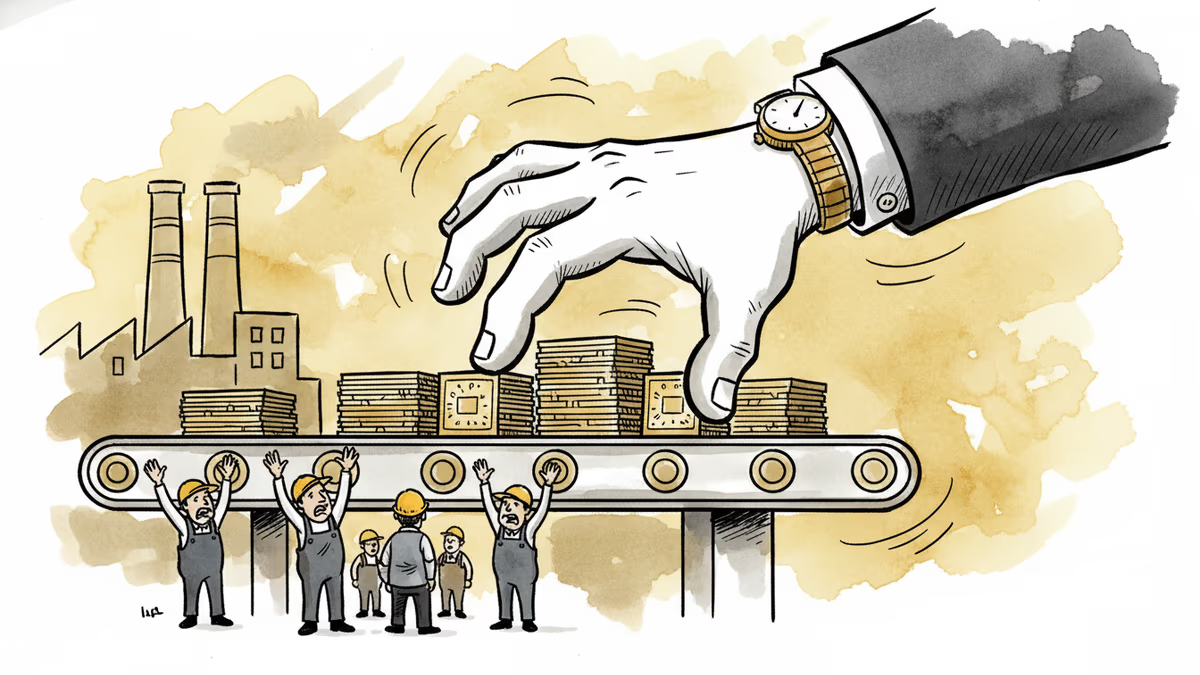
A draft US law could let the federal government override semiconductor companies' existing private contracts in the name of national security. Here's what's at stake for the industry.
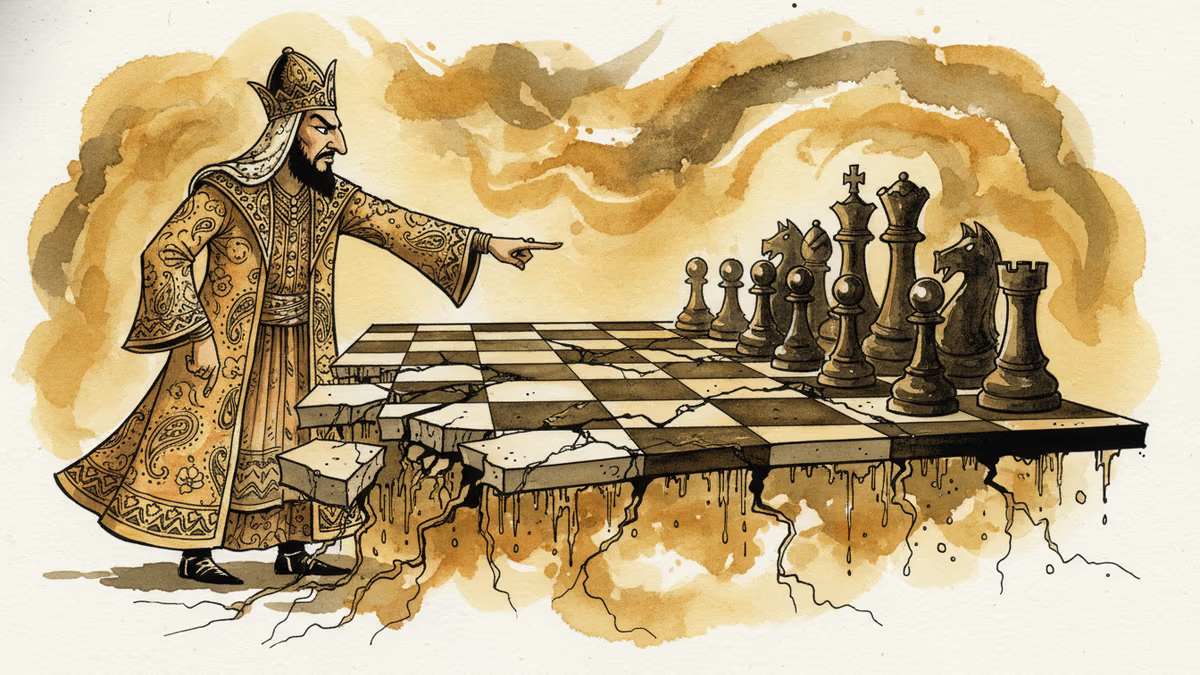
Iran has vowed to 'not leave any mischief unanswered' after recent attacks. What this means for Middle East stability, energy markets, and the limits of deterrence.
Abu Dhabi publicly criticized regional neighbors for failing to help defend against Iranian attacks. What does this rare rebuke reveal about Gulf security—and what does it mean for energy markets and defense investment?
Ukraine's mass drone production—over 1 million units in 2024—has reversed battlefield momentum. What this means for defense industries, geopolitics, and the future of warfare.
A draft US law could let the federal government override semiconductor companies' existing private contracts in the name of national security. Here's what's at stake for the industry.
Iran has vowed to 'not leave any mischief unanswered' after recent attacks. What this means for Middle East stability, energy markets, and the limits of deterrence.
Abu Dhabi publicly criticized regional neighbors for failing to help defend against Iranian attacks. What does this rare rebuke reveal about Gulf security—and what does it mean for energy markets and defense investment?
Thoughts
Share your thoughts on this article
Sign in to join the conversation