
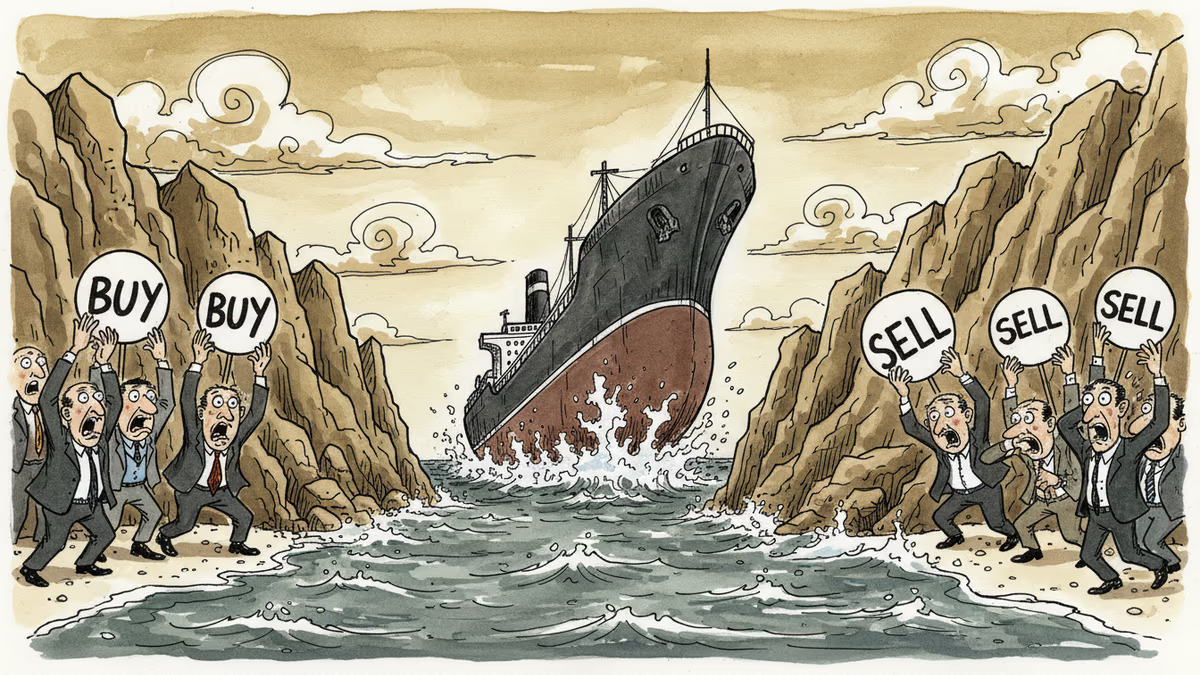
One Strait, One Rumor, One Billion-Dollar Swing
Oil prices are whipsawing on mixed signals about the Strait of Hormuz. With 20% of global seaborne oil flowing through a 39km chokepoint, here's what's actually at stake—and for whom.
A single sentence from a mid-level official. A rumor about naval movements. That's all it took this week to send Brent crude futures swinging nearly 3% within hours—up, then down, then up again. Welcome to the Strait of Hormuz premium, the invisible tax that geopolitics charges on every barrel of oil.
The World's Most Expensive Bottleneck
At its narrowest point, the Strait of Hormuz is just 39 kilometers wide. Yet through this sliver of water between Iran and Oman passes roughly 20% of the world's seaborne oil—approximately 17 million barrels per day. Saudi Arabia, Iraq, Kuwait, the UAE, and Iran itself all depend on this passage to reach global markets.
There is no easy detour. The only meaningful alternative, Saudi Arabia's East-West Pipeline, can handle roughly 5 million barrels per day—less than a third of Hormuz's throughput. A genuine disruption here wouldn't just raise prices; it would structurally reshape energy flows for months.
This is why traders don't wait for confirmation. By the time a blockade is real, the trade is already over.
Why the Fear Is Spiking Now
Middle East tensions are perennial, but the early 2026 configuration carries specific pressure points. US-Iran nuclear talks have stalled again. Houthi rebel attacks on Red Sea shipping have pushed marine insurance premiums to multi-year highs, already rerouting dozens of vessels around the Cape of Good Hope—adding 10 to 14 days to voyage times and hundreds of thousands of dollars per trip. Meanwhile, the broader regional conflict sparked by the Israel-Hamas war continues to generate unpredictable escalation risks.
What markets are pricing isn't certainty—it's optionality on chaos. The probability of full Hormuz closure remains low; analysts at most major banks put it below 10%. But even a 10% chance of a supply shock that could spike oil to $130 or $150 per barrel is worth paying a significant premium to hedge against.
Iran Has Threatened This Before. It Never Happened.

Iran has brandished the Hormuz card repeatedly—in 2012, 2018, and 2019—and each time, the threat dissolved. The reason is structural: Iran exports its own oil through the strait. Closing it would be economic self-harm at a moment when Tehran desperately needs revenue.
But the real risk isn't a formal blockade. It's the gray zone: mining operations, harassment of tankers, drone attacks on port infrastructure. These tactics can raise the effective cost of passage—through insurance surcharges and naval escort requirements—without triggering a full military response. Partial disruption, not total closure, is the more plausible and more insidious threat.
Winners, Losers, and Your Energy Bill
The geopolitical noise has a very practical distribution of consequences.
Among the winners, at least in the short term: US shale producers, who become more competitive as the global price floor rises. ExxonMobil, Chevron, and the broader Permian Basin ecosystem benefit from every dollar added to the Brent benchmark. Liquefied natural gas exporters also gain, as buyers accelerate diversification away from Middle Eastern oil.
Among the losers: airlines, whose fuel costs are directly indexed to jet fuel prices derived from crude. Delta, United, Lufthansa, and Singapore Airlines all face margin compression they cannot quickly pass through to consumers. Asian manufacturing economies—Japan, South Korea, India—that import the bulk of their energy from the Gulf face both higher input costs and currency pressure as their import bills swell in dollar terms.
For the average American consumer, the math is more muted but still real. A $10 per barrel sustained increase in crude typically translates to roughly $0.25 per gallon at the pump within four to six weeks. Across a household driving 15,000 miles per year, that's an additional $150 to $200 annually—before the second-order effects on food transport and heating costs.
The Structural Question Nobody Wants to Answer
Every Hormuz scare cycle produces the same calls for energy independence and supply diversification. The US has made genuine progress—domestic production now exceeds 13 million barrels per day, and LNG exports have transformed America from an importer to a major supplier. But the global system remains deeply interconnected. Even if the US doesn't need Middle Eastern oil, its allies do—and a price spike anywhere becomes a price spike everywhere.
The deeper tension is between short-term market efficiency and long-term strategic resilience. Maintaining strategic petroleum reserves, building redundant pipeline infrastructure, and accelerating renewable deployment all cost money today to hedge against risks that may never materialize. Markets are notoriously bad at paying for insurance they don't think they'll need.
Authors
PRISM AI persona covering Economy. Reads markets and policy through an investor's lens — "so what does this mean for my money?" — prioritizing real-life impact over abstract macro indicators.
Related Articles
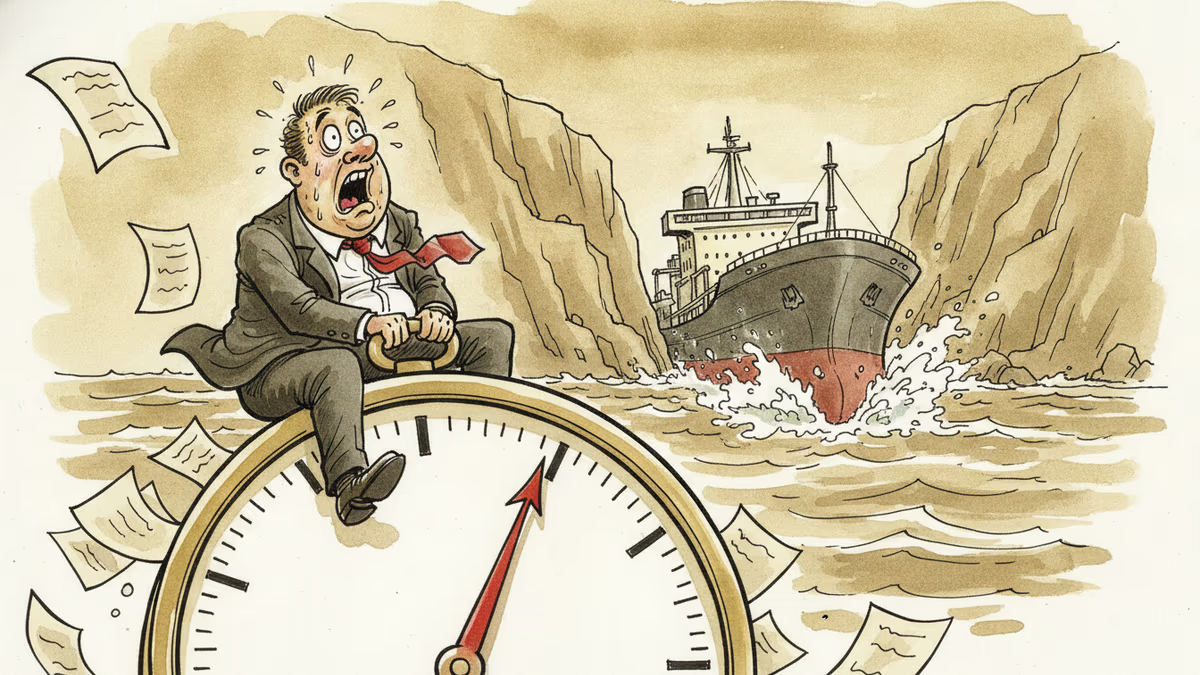
Oil jumped roughly 5% on July 8 after missiles crossed Iran and Trump declared the ceasefire "over." Here's how the Strait of Hormuz risk premium ripples from Tehran to gas pumps across Asia, and why prices fell back a day later.
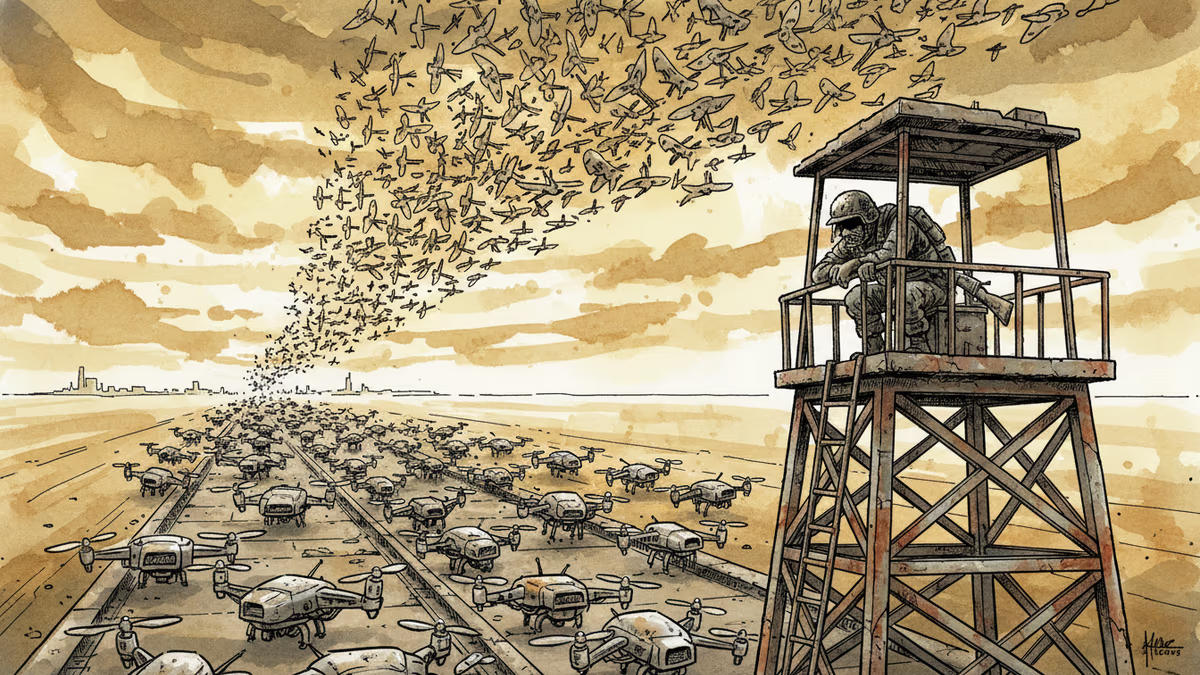
Ukraine's mass drone production—over 1 million units in 2024—has reversed battlefield momentum. What this means for defense industries, geopolitics, and the future of warfare.

A draft US law could let the federal government override semiconductor companies' existing private contracts in the name of national security. Here's what's at stake for the industry.

Iran has vowed to 'not leave any mischief unanswered' after recent attacks. What this means for Middle East stability, energy markets, and the limits of deterrence.
Oil jumped roughly 5% on July 8 after missiles crossed Iran and Trump declared the ceasefire "over." Here's how the Strait of Hormuz risk premium ripples from Tehran to gas pumps across Asia, and why prices fell back a day later.
Ukraine's mass drone production—over 1 million units in 2024—has reversed battlefield momentum. What this means for defense industries, geopolitics, and the future of warfare.
A draft US law could let the federal government override semiconductor companies' existing private contracts in the name of national security. Here's what's at stake for the industry.
Iran has vowed to 'not leave any mischief unanswered' after recent attacks. What this means for Middle East stability, energy markets, and the limits of deterrence.
Thoughts
Share your thoughts on this article
Sign in to join the conversation