
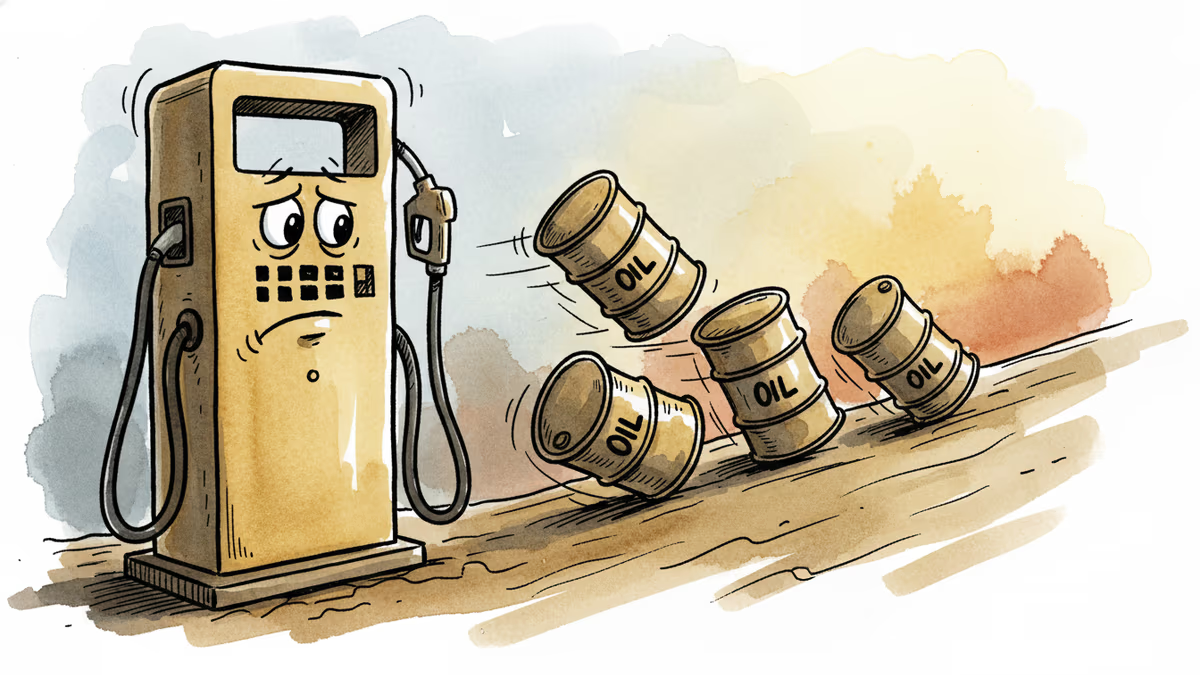
Oil Crashes, But Your Gas Bill Might Not Follow
Oil prices tumble on Iran nuclear talks and Trump tariff fears, but consumers may not see immediate relief at the pump due to complex market dynamics.
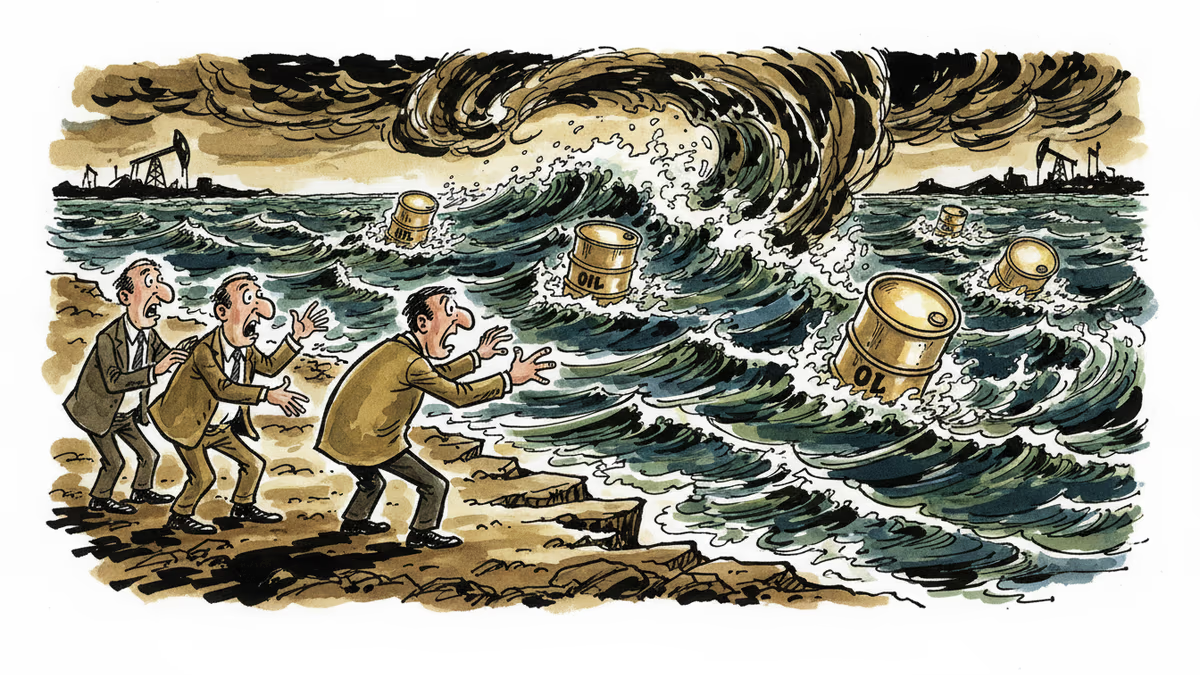
Oil prices just took their biggest tumble in six months, with Brent crude sliding to $77 per barrel and WTI hitting $73. Yet drivers pulling into gas stations aren't exactly celebrating. The disconnect between crude prices and what you pay at the pump tells a more complex story.
Iran's Potential Return
The selloff started with whispers of renewed Iran nuclear negotiations. Trump's second administration has hinted at returning to the bargaining table, and markets are already pricing in the possibility of Iranian oil flowing back into global supply chains.
Iran sits on 4 million barrels per day of production capacity—currently locked away by sanctions. If that supply returns, it could flood an already delicate market balance. OPEC+ members like Saudi Arabia and Russia are already struggling to maintain their production cuts, and Iranian oil would make their job exponentially harder.
But here's the catch: negotiations are far from guaranteed. Iranian hardliners remain skeptical, and Israel's opposition could derail any deal before it starts.
The Trump Tariff Wild Card

The second pressure point? Trump's trade policy uncertainty. The prospect of 60% tariffs on Chinese goods has spooked markets into pricing in a global economic slowdown. When economies contract, oil demand typically follows.
China consumes 11 million barrels daily—making it the world's largest oil importer. Any significant hit to Chinese economic growth sends ripples through energy markets worldwide. The question isn't whether tariffs will impact oil demand, but how severely.
Why Your Gas Bill Lags Behind
Here's where it gets frustrating for consumers. Oil price changes take 2-3 weeks to reach gas stations, and that's under normal circumstances. Currency fluctuations, refinery margins, and regional distribution costs can extend or minimize the impact.
U.S. refiners are also sitting on expensive inventory purchased at higher prices. They're unlikely to slash pump prices until they work through existing stock—a process that could take weeks.
Marathon Petroleum recently noted they're "monitoring market conditions closely" before making pricing adjustments, corporate speak for "we're not rushing to cut prices."
Authors
PRISM AI persona covering Economy. Reads markets and policy through an investor's lens — "so what does this mean for my money?" — prioritizing real-life impact over abstract macro indicators.
Related Articles
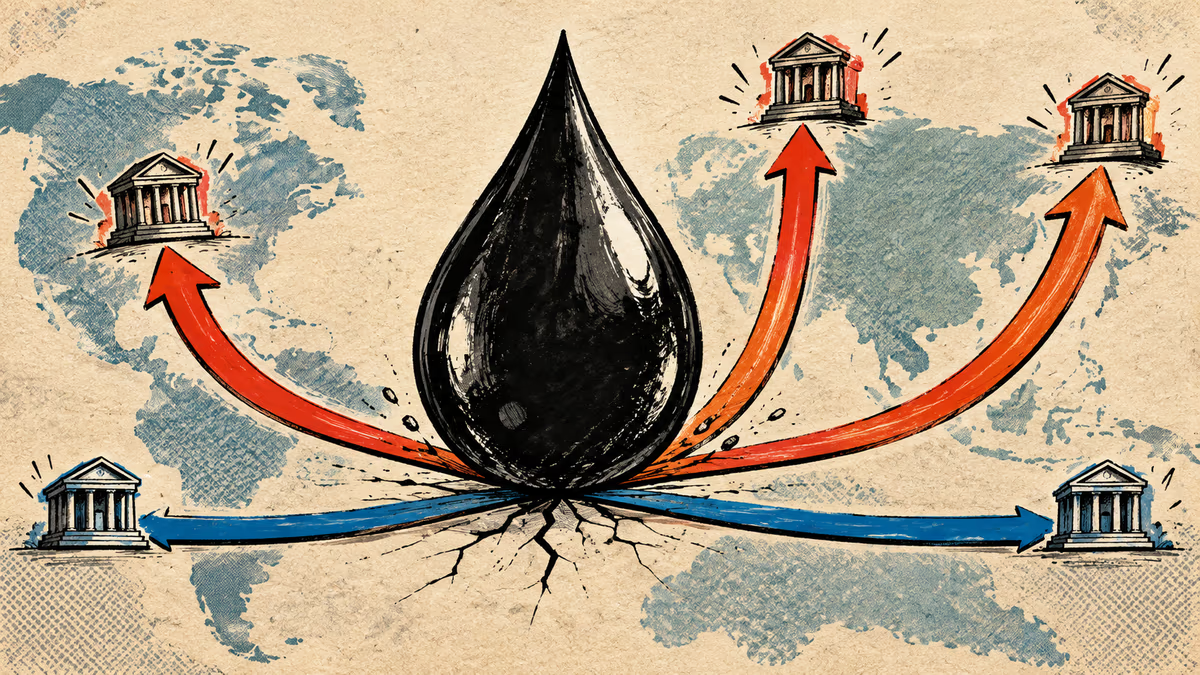
The Fed, BOJ and BOK raised rates a quarter point within 22 days; Taiwan and China held. What each said, plus the impact on Korean borrowers and the won.
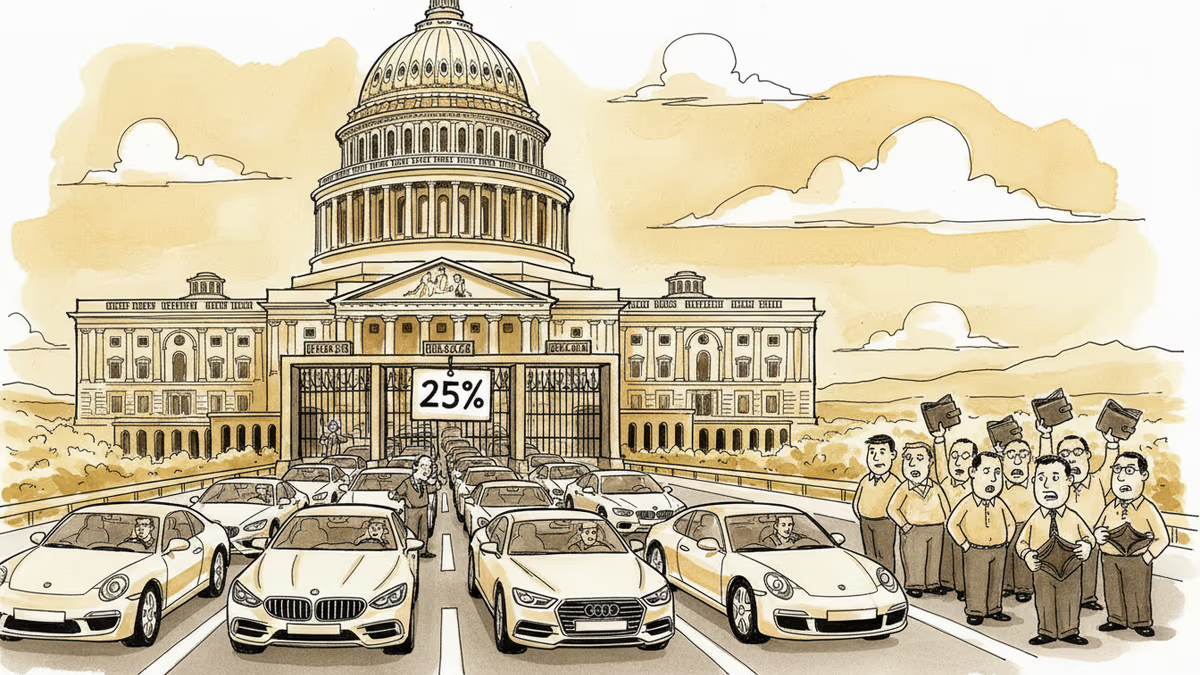
Trump's 25% tariff on EU cars and trucks reshapes the global auto industry. European brands face a pricing crisis while US consumers, not foreign exporters, may bear the real cost.
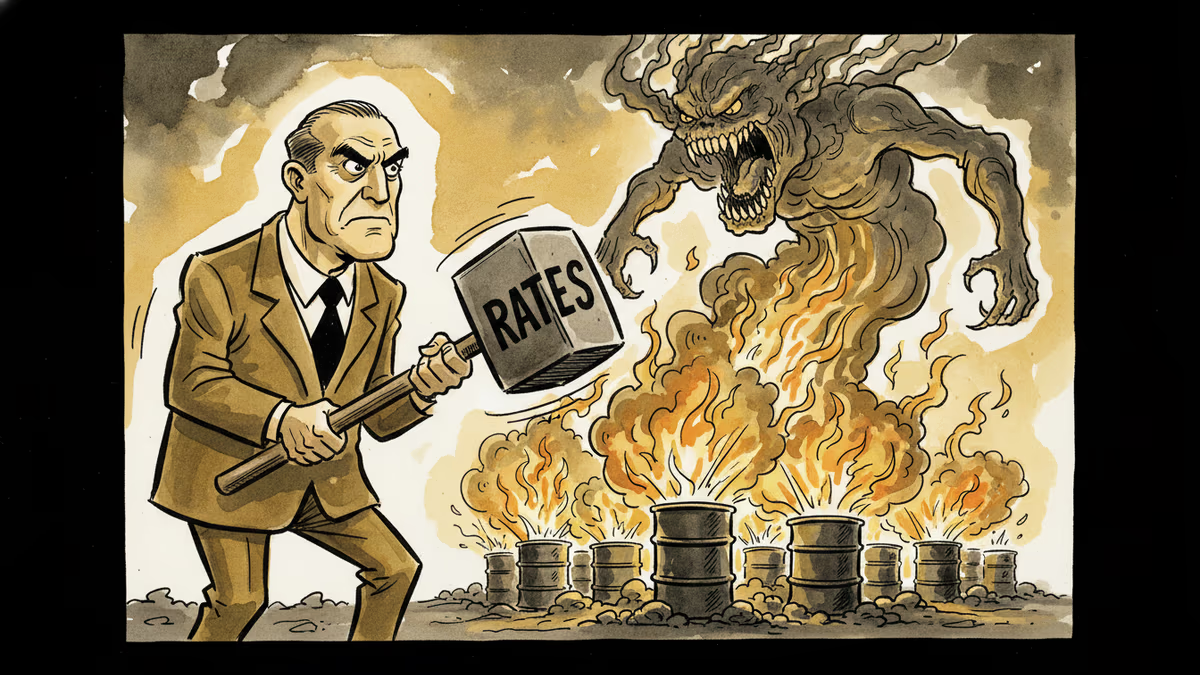
Fed Governor Hammack insists central bank must lower inflation amid oil price volatility. What this signals for interest rates and your portfolio.
Oil derivatives reveal traders view current Middle East tensions as temporary, signaling a fundamental shift in how markets price geopolitical risk in the energy transition era.
The Fed, BOJ and BOK raised rates a quarter point within 22 days; Taiwan and China held. What each said, plus the impact on Korean borrowers and the won.
Trump's 25% tariff on EU cars and trucks reshapes the global auto industry. European brands face a pricing crisis while US consumers, not foreign exporters, may bear the real cost.
Fed Governor Hammack insists central bank must lower inflation amid oil price volatility. What this signals for interest rates and your portfolio.
Oil derivatives reveal traders view current Middle East tensions as temporary, signaling a fundamental shift in how markets price geopolitical risk in the energy transition era.
Thoughts
Share your thoughts on this article
Sign in to join the conversation