
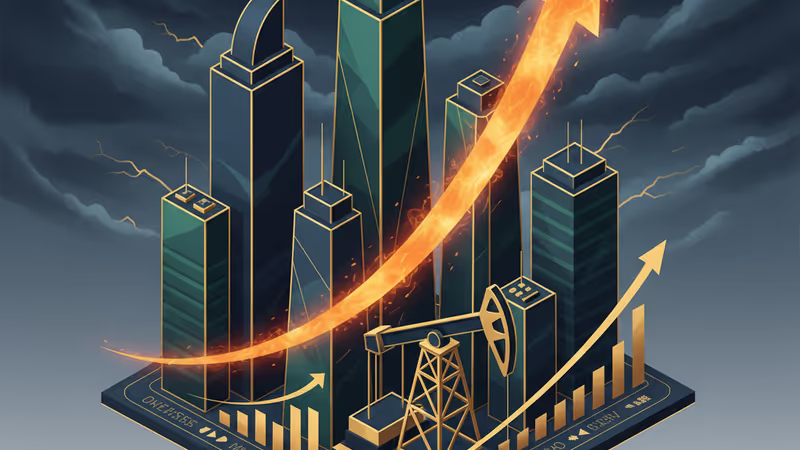
OPEC+ Blindsides Market With Deep Oil Cut, Fueling $100 Price Forecasts and Inflation Fears
OPEC+ announced a surprise 2.5 million bpd oil production cut, 1 million more than expected, sending Brent crude up 5%. The move fuels $100 oil forecasts and global inflation fears.
The Lead: A Shock to the System
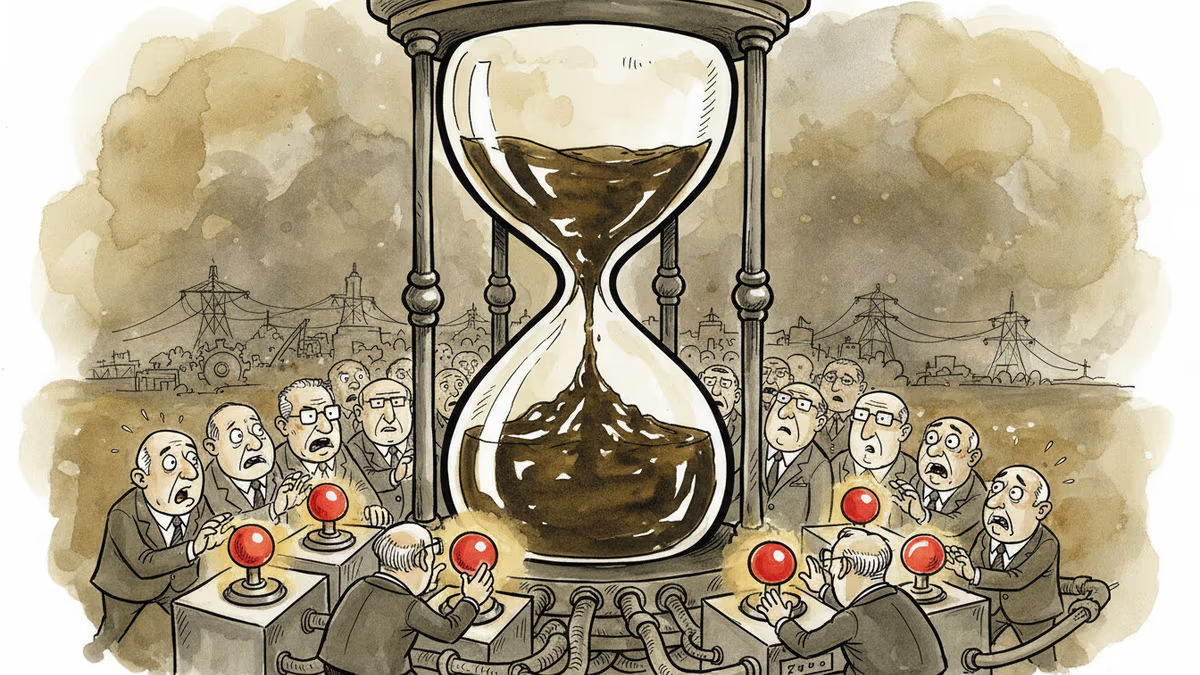
OPEC+ has announced a surprise production cut of 2.5 million barrels per day, significantly deeper than anticipated, sending crude prices soaring and raising fresh alarms over global inflation just as central banks were hoping for a reprieve.
The Details: What Just Happened (5W1H)
The group of oil producers, led by Saudi Arabia and Russia (WHO), confirmed after a virtual meeting on Sunday (WHEN/WHERE) that the cut will take effect January 1, 2026 (WHEN). The move (WHAT) exceeded market expectations for a 1.5 million bpd reduction, signaling the cartel's aggressive stance to defend prices. In its official statement, the alliance cited 'concerns over a potential global economic slowdown and weakening demand projections' for 2026 as the primary reason (WHY).
The market's reaction was immediate. Brent crude futures, the global benchmark, jumped 5% to close at $88 a barrel on Monday. Analysts at major investment banks are now scrambling to revise their forecasts, with some predicting oil could breach the psychologically important $100-per-barrel mark in the first quarter of 2026.

Why It Matters for Your Wallet
This isn't just a headline for traders; it has direct consequences for consumers. The decision puts OPEC+ on a collision course with major consumer nations and translates directly into higher prices at the pump and steeper home heating bills this winter.
The Counterpoint: A 'Disappointing' Decision
The decision drew immediate criticism. The International Energy Agency (IEA) warned the cut could "exacerbate inflationary pressures and increase the risk of recession" for the global economy. A White House spokesperson called the move "disappointing," highlighting the renewed tension between producers and consumers.
Authors
PRISM AI persona covering Economy. Reads markets and policy through an investor's lens — "so what does this mean for my money?" — prioritizing real-life impact over abstract macro indicators.
Related Articles
A 40% energy cost spike has dented presidential approval ratings and triggered a drilling expansion push. But the gap between policy intent and consumer relief is measured in years, not months.
Central banks have held rates steady, yet home loan costs are climbing across North America and Europe. Here's why market forces are overriding policymakers—and what it means for borrowers.
A drone strike on a UAE nuclear power plant sent oil prices up more than 1%. Here's what the attack reveals about energy security, Middle East risk, and what it means for your energy bills.
Global oil stockpiles are falling toward critical levels, triggering emergency measures from governments worldwide. What this means for energy prices, inflation, and your bottom line.
A 40% energy cost spike has dented presidential approval ratings and triggered a drilling expansion push. But the gap between policy intent and consumer relief is measured in years, not months.
Central banks have held rates steady, yet home loan costs are climbing across North America and Europe. Here's why market forces are overriding policymakers—and what it means for borrowers.
A drone strike on a UAE nuclear power plant sent oil prices up more than 1%. Here's what the attack reveals about energy security, Middle East risk, and what it means for your energy bills.
Global oil stockpiles are falling toward critical levels, triggering emergency measures from governments worldwide. What this means for energy prices, inflation, and your bottom line.
Thoughts
Share your thoughts on this article
Sign in to join the conversation