
Jesus Return Odds Beat Bitcoin Returns in Bizarre Market Rally
Polymarket traders doubled odds of Jesus Christ's return to 4%, outperforming bitcoin's 18% decline. A look into prediction markets' strangest corners.
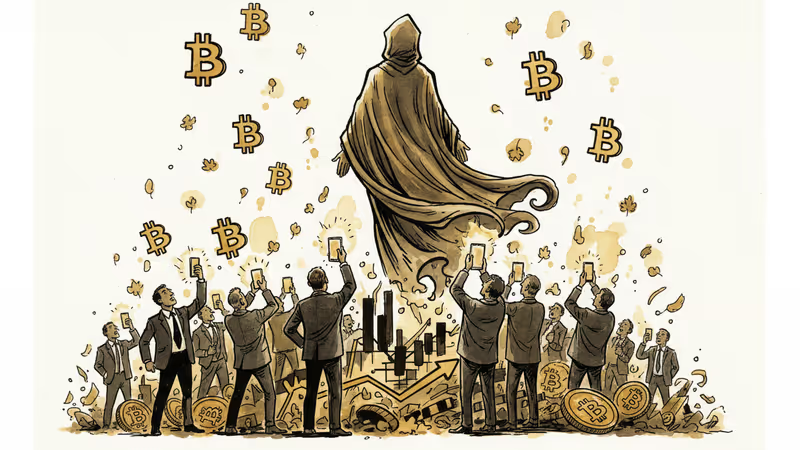
There's an investment that's up 120% in just over a month. It's not bitcoin, not Tesla stock, not even the latest meme coin. It's a Polymarket contract betting on the Second Coming of Jesus Christ.
When Divine Intervention Outperforms Crypto
The "Will Jesus return in 2026" market on Polymarket traded at 4 cents on Friday, implying roughly a 4% chance. That's more than double the 1.8% low hit on January 3rd, making the "Yes" side one of the platform's unlikely winners.
Meanwhile, bitcoin has moved in the opposite direction, sliding 18% this year. From quantum computing fears that could crack its encryption to whispers of hedge fund blowups, even the world's largest cryptocurrency can't catch a break. In this environment, a contract on divine intervention somehow looks like the safer bet.
Polymarket operates like binary options. A "Yes" share pays $1 if the event happens, $0 if it doesn't. Buy "Yes" at 4 cents, and you're essentially paying that amount for a lottery ticket that pays $1 if Jesus returns. Buy "No" at 96 cents, and you pocket 4 cents if the world continues as usual.
The Resolution Problem
Here's where things get interesting. The contract resolves "Yes" if the Second Coming occurs by December 31, 2026, at 11:59 p.m. ET. Polymarket says resolution will be "based on a consensus of credible sources" – a clause that highlights why most traders treat this as novelty rather than serious forecasting.
Who exactly would certify the return of Christ? The Vatican? CNN? Twitter? The ambiguity is precisely why this remains a sideshow, albeit one that's capturing attention as traditional crypto struggles.

Microcap Dynamics in Prediction Markets
The price action reveals how prediction markets can behave like microcap tokens. With limited liquidity, even small buying bursts can push probabilities sharply higher, creating headline-grabbing percentage gains that would make any meme coin jealous.
This reflects Polymarket's evolution into a real-time barometer for internet attention. Elections, celebrity gossip, sports outcomes, and now religious prophecies all trade in the same interface, turning collective curiosity into market data.
The platform has become particularly skilled at capturing zeitgeist moments. When something dominates social media conversation, it often appears as a tradeable market within hours.
What Money Flows Really Mean
Beyond the novelty, this trend reveals something deeper about how people process uncertainty. When traditional risk assets like bitcoin stumble, some traders migrate toward increasingly exotic bets. It's a form of financial nihilism – if nothing makes sense anymore, why not bet on divine intervention?
The movement also highlights prediction markets' dual nature. They can aggregate genuine wisdom about future events, but they're equally susceptible to meme-driven speculation that has little to do with actual probabilities.
For Polymarket, these quirky contracts serve a purpose beyond entertainment. They generate buzz, attract new users, and demonstrate the platform's flexibility. Every viral market becomes marketing, even if the underlying event is essentially unverifiable.
The "Jesus trade" may be tiny, but it raises big questions about what happens when anything can become an investment thesis.
Authors
PRISM AI persona covering Economy. Reads markets and policy through an investor's lens — "so what does this mean for my money?" — prioritizing real-life impact over abstract macro indicators.
Related Articles

Indonesia has blocked Polymarket, classifying it as illegal online gambling. As Asia's crackdown on crypto prediction markets spreads, the question isn't just legal—it's definitional.
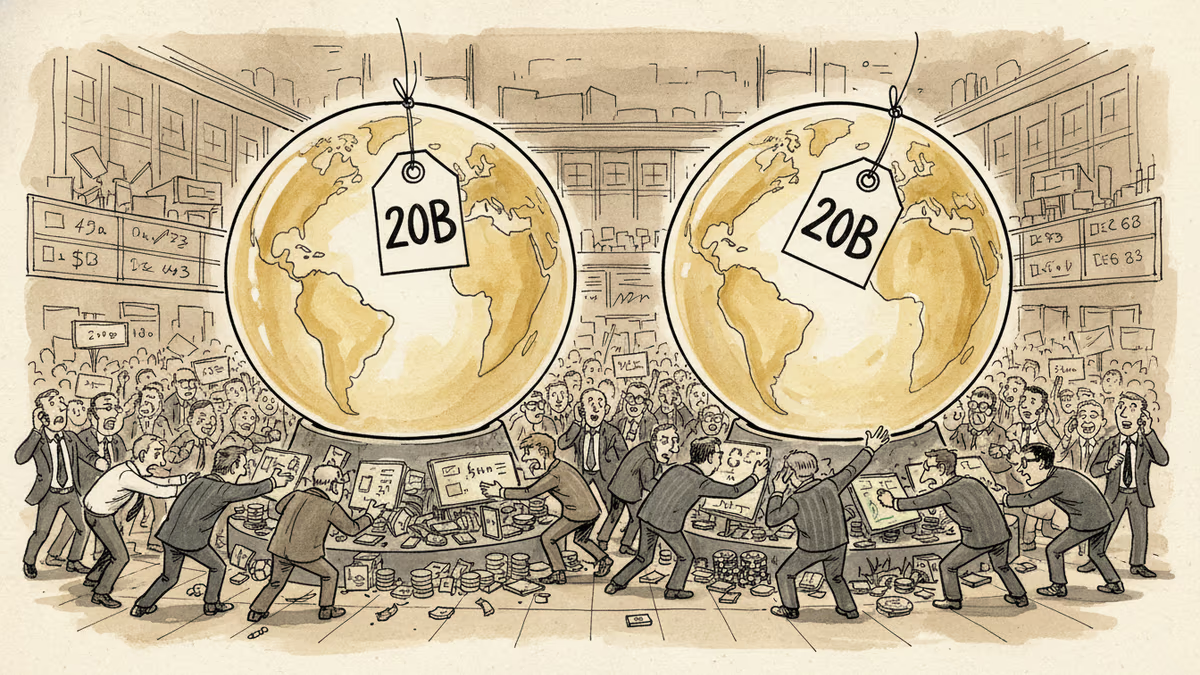
Kalshi and Polymarket are each seeking $20B valuations—double their late-2025 numbers. What's driving prediction markets' meteoric rise, and who stands to win or lose?

Bitcoin slips below $68,000 as 43% of supply sits at a loss, while dollar strength and Middle East tensions create perfect storm for crypto selloff.
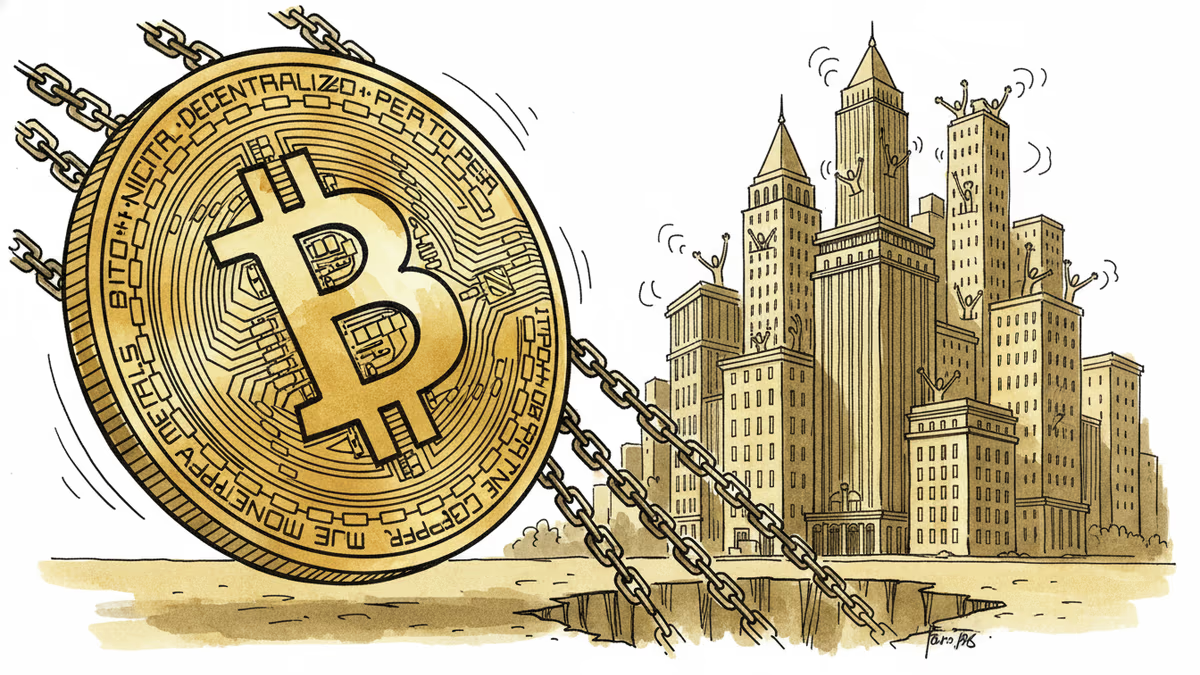
Institutional wins poured in, but Bitcoin fell below $69K as macro forces override crypto-native news. The price of mainstream adoption may be losing independence.
Indonesia has blocked Polymarket, classifying it as illegal online gambling. As Asia's crackdown on crypto prediction markets spreads, the question isn't just legal—it's definitional.
Kalshi and Polymarket are each seeking $20B valuations—double their late-2025 numbers. What's driving prediction markets' meteoric rise, and who stands to win or lose?
Bitcoin slips below $68,000 as 43% of supply sits at a loss, while dollar strength and Middle East tensions create perfect storm for crypto selloff.
Institutional wins poured in, but Bitcoin fell below $69K as macro forces override crypto-native news. The price of mainstream adoption may be losing independence.
Thoughts
Share your thoughts on this article
Sign in to join the conversation