

Nvidia Strikes $20 Billion Asset Deal with Groq in Unconventional Move to Bolster AI Dominance
Nvidia has acquired the core assets and team of AI chip startup Groq for $20 billion in its largest deal ever. The move is a strategic play to bolster its capabilities in the AI inference market.
Nvidia is making its biggest deal ever, but it's not a typical acquisition. The AI chip giant has entered into a $20 billion cash agreement to purchase the assets of AI chip startup Groq, a move designed to absorb key technology and talent rather than the entire company, further cementing its grip on the AI semiconductor market.
The Details of the 'Non-Acquisition'
In a blog post on Wednesday, Groq announced that as part of the agreement, its Founder Jonathan Ross, President Sunny Madra, and other team members will join Nvidia. However, Groq will continue to operate as an independent company, with Simon Edwards stepping in as the new CEO. Its GroqCloud service will also continue without interruption.
The $20 billion figure was first reported by CNBC, citing Alex Davis, the CEO of Disruptive, the firm that led Groq's latest financing round. According to the report, Disruptive has invested over half a billion dollars in Groq over the past nine years.

Why Nvidia Wants Groq's Speed
In an email obtained by CNBC, Nvidia CEO Jensen Huang outlined the strategy: "We plan to integrate Groq’s low-latency processors into the NVIDIA AI factory architecture." The goal, he wrote, is to extend the platform "to serve an even broader range of AI inference and real-time workloads." This move signals Nvidia's intent to strengthen its position beyond its core GPU-dominated training market and into the fast-growing inference space.
A Record Deal Amidst a Financial Surge
This deal marks Nvidia’s largest ever, according to CNBC. It comes as the company reports surging revenues, fueled by the insatiable demand for its AI chips. In November, Mashable reported that Nvidia’s third-quarter 2025 revenue hit $57 billion, beating Wall Street expectations by $2 million. The company's fourth quarter is expected to be even stronger. "Sales are off the charts," Huang said of the company's Blackwell chips at the time.
Authors
Related Articles
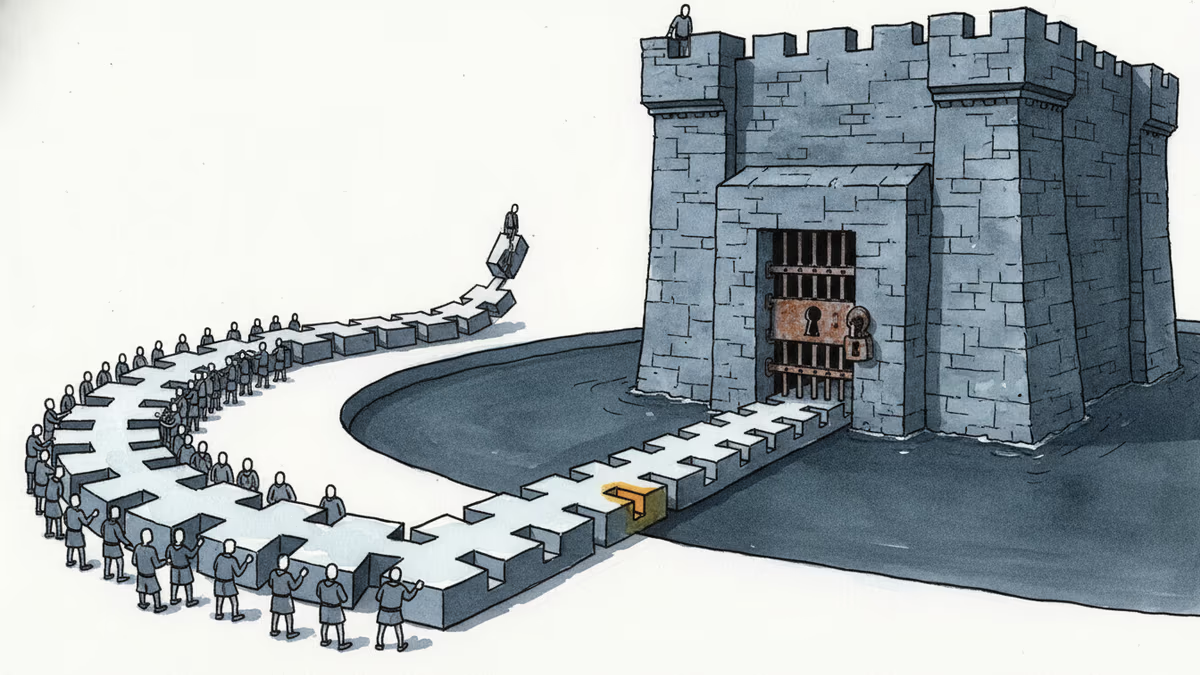
Nvidia shipped roughly a billion RISC-V cores in 2024, then announced it would run CUDA on the open standard. We break down how royalty-free instruction sets and open software stacks are trying to route around CUDA's lock-in. Part 2 of the Semiconductor Sovereignty series.
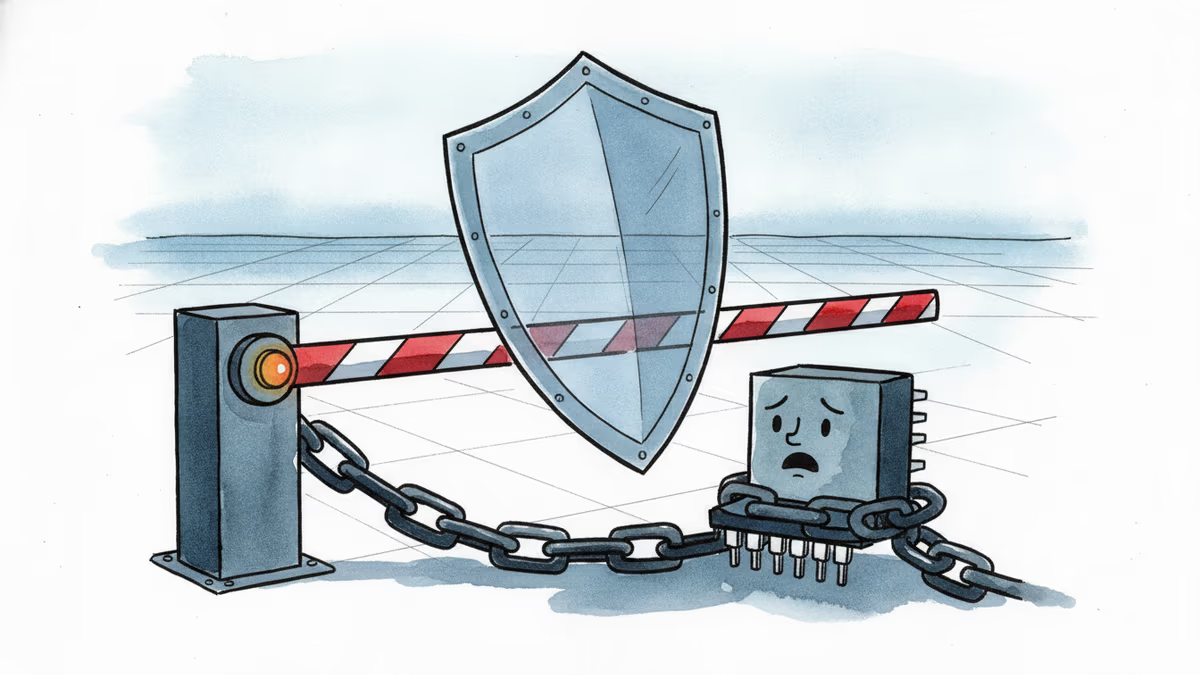
US AI-chip export controls split into three layers in the first half of 2026 — January easing, a May crackdown on circumvention, and a pending bill. Nvidia erased China from its guidance and still posted a record $81.6 billion quarter. A look at the export policy that both shields and cages it.
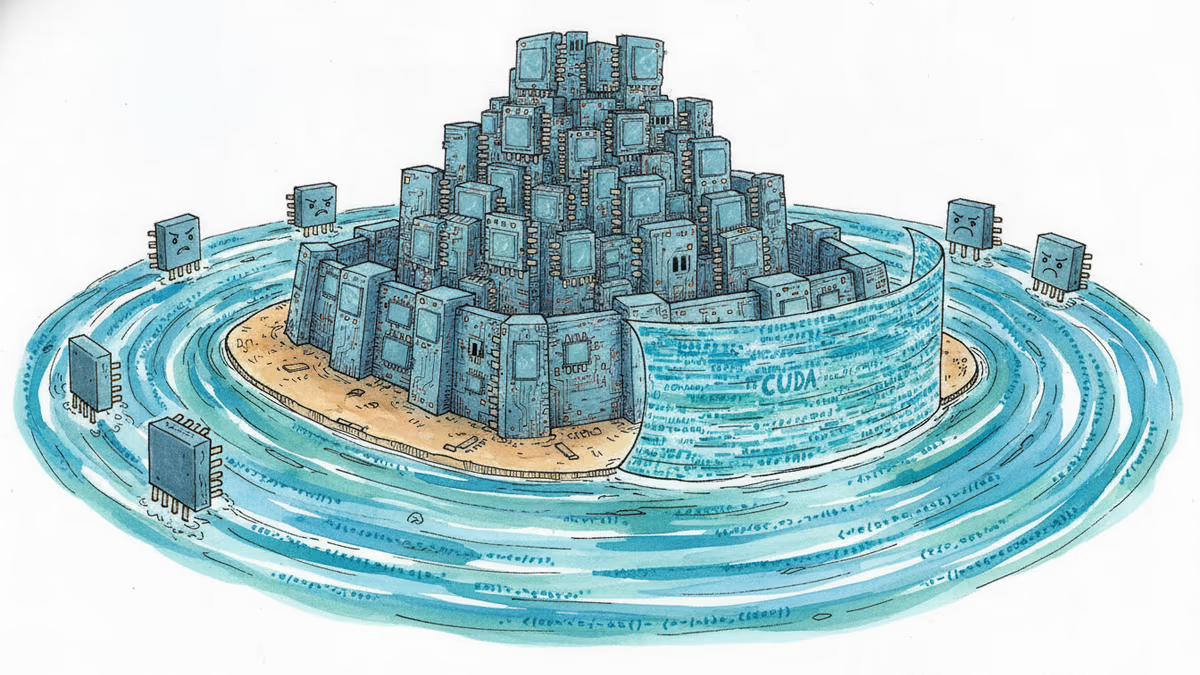
AMD's MI325X matches or beats Nvidia on memory and bandwidth — yet Nvidia's 86-92% share holds. The real moat is CUDA, 20 years in the making. Part 1 of 4.

Snowflake's new $6 billion AWS contract is about more than cloud spending. It signals a shift in AI infrastructure—away from Nvidia GPUs and toward cheaper, homegrown chips for the agent era.
Nvidia shipped roughly a billion RISC-V cores in 2024, then announced it would run CUDA on the open standard. We break down how royalty-free instruction sets and open software stacks are trying to route around CUDA's lock-in. Part 2 of the Semiconductor Sovereignty series.
US AI-chip export controls split into three layers in the first half of 2026 — January easing, a May crackdown on circumvention, and a pending bill. Nvidia erased China from its guidance and still posted a record $81.6 billion quarter. A look at the export policy that both shields and cages it.
AMD's MI325X matches or beats Nvidia on memory and bandwidth — yet Nvidia's 86-92% share holds. The real moat is CUDA, 20 years in the making. Part 1 of 4.
Snowflake's new $6 billion AWS contract is about more than cloud spending. It signals a shift in AI infrastructure—away from Nvidia GPUs and toward cheaper, homegrown chips for the agent era.
Thoughts
Share your thoughts on this article
Sign in to join the conversation