

Nvidia Rubin Architecture Launch 2026: 5x Faster AI Inference Performance
Nvidia officially launched the Rubin architecture at CES 2026. Featuring 5x faster inference and the new Vera CPU for agentic AI, Rubin replaces the Blackwell lineup.
The era of 5x faster AI inference has arrived. On January 6, 2026, Nvidia CEO Jensen Huang took the stage at CES 2026 to officially launch the Rubin computing architecture. This new powerhouse replaces the Blackwell generation, aiming to tackle the skyrocketing demand for AI computation power.
Rubin Architecture vs Blackwell: Blazing 50 Petaflops Specs
According to reports from TechCrunch and Reuters, the Rubin architecture delivers a massive leap in performance. It's 3.5 times faster than Blackwell for training tasks and 5 times faster for inference, reaching a peak of 50 petaflops. Efficiency is also a major focus, with the platform supporting 8 times more inference compute per watt.
- Training speed: 3.5x faster than Blackwell
- Inference speed: 5.0x faster than Blackwell
- Power Efficiency: 8x more compute per watt
- Total chips: 6 separate chips working in concert

Vera CPU and Agentic AI Optimization
The Rubin system features the brand-new Vera CPU, specifically designed to handle agentic reasoning and long-term tasks. To eliminate bottlenecks, Nvidia upgraded its Bluefield and NVLink technologies. Dion Harris, Nvidia’s senior director, highlighted a new tier of storage that connects externally to the compute device to manage the high memory demands of KV cache in modern AI systems.
Major industry players, including OpenAI, Anthropic, and Amazon Web Services (AWS), are already slated to use Rubin chips. This release aligns with Huang's earlier estimation in October 2025 that AI infrastructure spending will reach between $3 trillion and $4 trillion over the next five years.
Authors
Related Articles

Snowflake's new $6 billion AWS contract is about more than cloud spending. It signals a shift in AI infrastructure—away from Nvidia GPUs and toward cheaper, homegrown chips for the agent era.

At Milken 2026, five AI insiders—from the CEO of ASML to a quantum physicist challenging LLMs—laid out the physical, energy, and geopolitical limits the AI boom is running into.
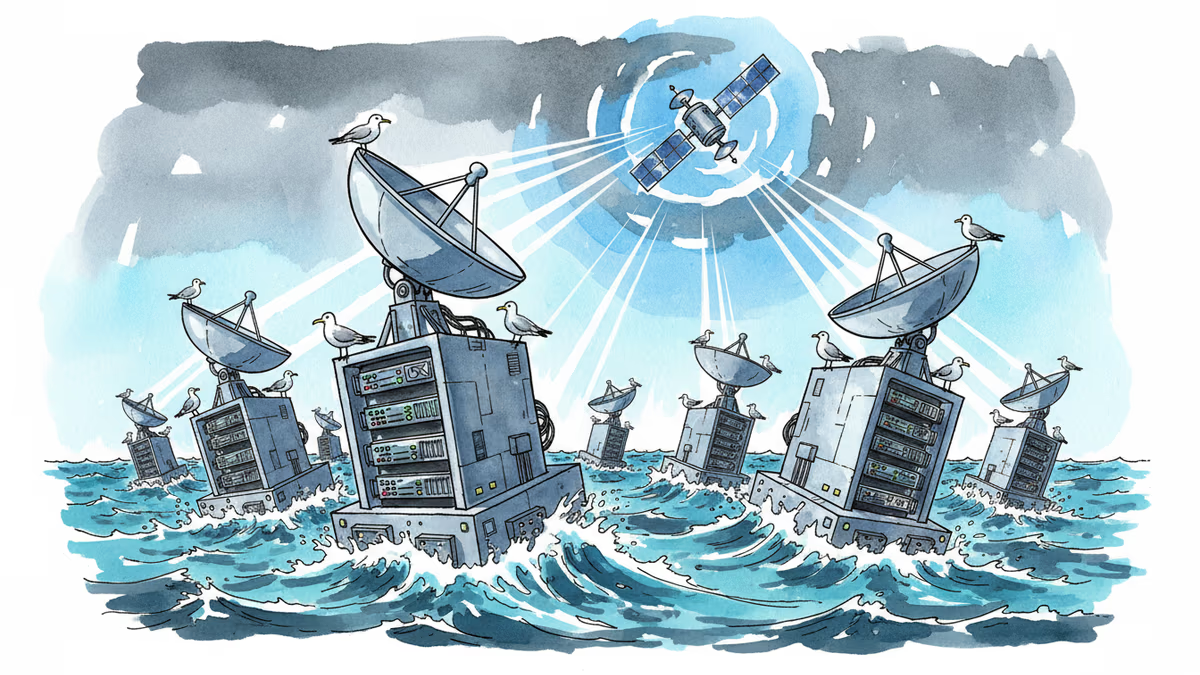
Palantir co-founder Peter Thiel and other Silicon Valley investors have poured $140 million into Panthalassa, a startup building wave-powered floating AI data centers in the open ocean. Here's what that actually means.
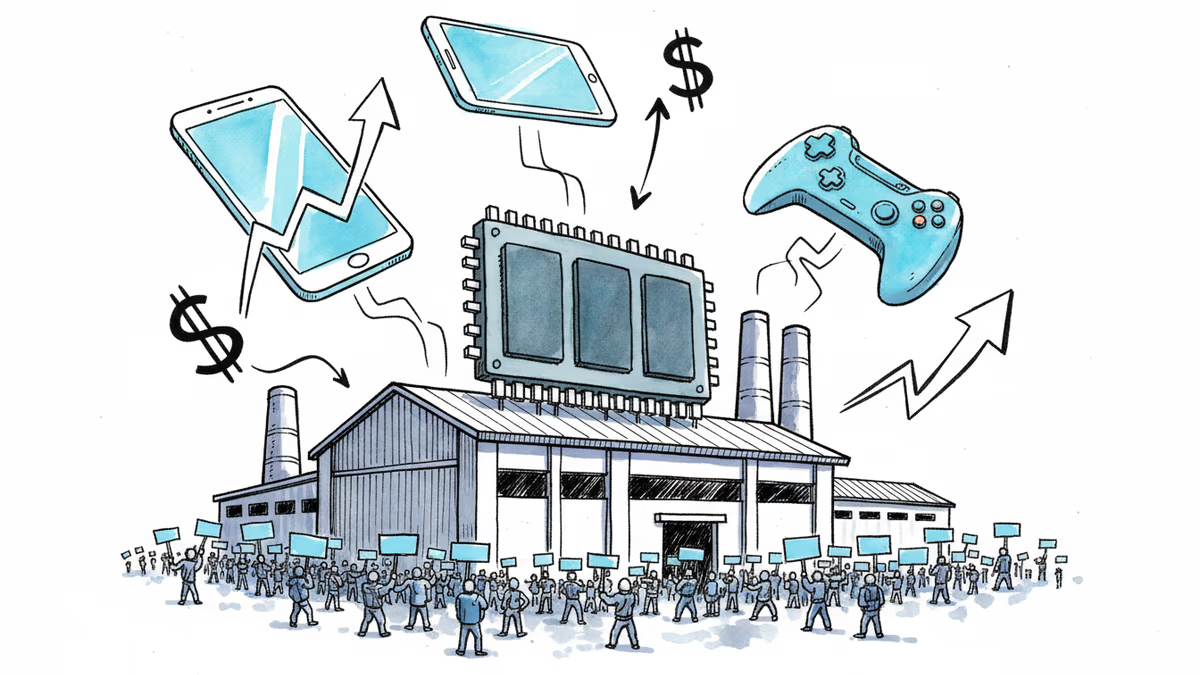
40,000 Samsung union workers rallied at its Pyeongtaek chip plant, threatening an 18-day strike over wages. With AI-driven RAM shortages already lifting consumer prices, the timing couldn't be worse.
Snowflake's new $6 billion AWS contract is about more than cloud spending. It signals a shift in AI infrastructure—away from Nvidia GPUs and toward cheaper, homegrown chips for the agent era.
At Milken 2026, five AI insiders—from the CEO of ASML to a quantum physicist challenging LLMs—laid out the physical, energy, and geopolitical limits the AI boom is running into.
Palantir co-founder Peter Thiel and other Silicon Valley investors have poured $140 million into Panthalassa, a startup building wave-powered floating AI data centers in the open ocean. Here's what that actually means.
40,000 Samsung union workers rallied at its Pyeongtaek chip plant, threatening an 18-day strike over wages. With AI-driven RAM shortages already lifting consumer prices, the timing couldn't be worse.
Thoughts
Share your thoughts on this article
Sign in to join the conversation