
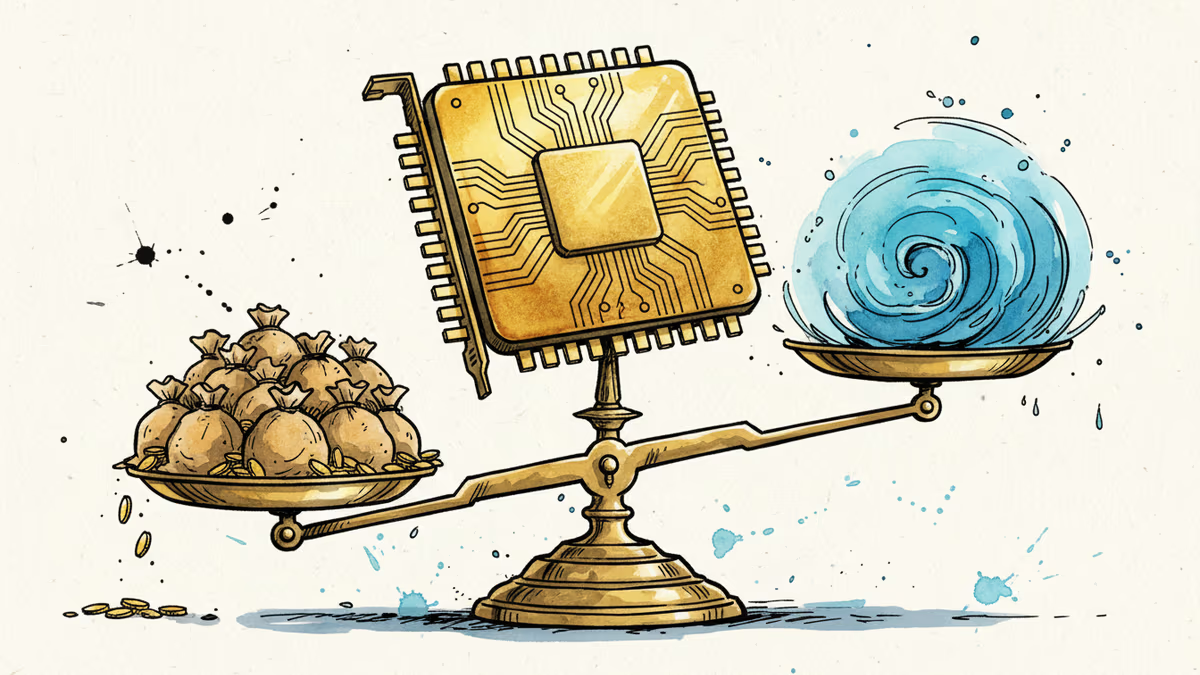
Nvidia's 73% Growth Hides a $0 Problem in China
Nvidia posted 73% revenue growth but revealed zero H200 chip sales to China despite Trump's export approval, highlighting deepening tech decoupling
Nvidia just posted another blockbuster quarter with 73% revenue growth, but buried in the earnings call was a stunning admission: $0 in H200 chip sales to China.
The Zero That Speaks Volumes
While investors celebrated Nvidia's record-breaking performance, CEO Jensen Huang delivered a sobering reality check about the world's second-largest economy. Despite Trump's approval for H200 exports to China, the company saw absolutely no revenue from these advanced AI chips in the quarter.
This isn't just about regulatory hurdles anymore. It signals a fundamental shift in how the global tech ecosystem is evolving—or rather, splitting apart.
China's Strategic Pivot
The $0 figure tells a story beyond sanctions. Chinese tech giants like Baidu, Alibaba, and ByteDance have been aggressively developing homegrown AI chips. What started as a defensive move against US restrictions is becoming an offensive strategy for technological independence.
AMD recently reported $390 million in AI chip sales to China, highlighting how the market is fragmenting. Some players are finding ways in, while others—particularly those at the cutting edge like Nvidia—face complete exclusion.

For US investors, this raises uncomfortable questions about Nvidia's long-term growth trajectory. China represents roughly 20% of global semiconductor demand. Can any chip company truly thrive while being locked out of such a massive market?
The Innovation Paradox
Here's where it gets interesting: tech decoupling might actually accelerate innovation. Chinese companies, cut off from the latest Nvidia chips, are pouring billions into alternatives. Meanwhile, Nvidia is doubling down on other markets, particularly in AI infrastructure and autonomous vehicles.
But there's a flip side. The global nature of semiconductor supply chains means this fragmentation could increase costs and slow overall progress. When the world's two largest economies develop parallel tech ecosystems, everyone pays the price.
What Wall Street Isn't Talking About
Investors are focusing on Nvidia's 73% growth, but they're missing the bigger picture. The company's China warning isn't just about one quarter—it's about the future architecture of global technology.
Semiconductor companies now face an impossible choice: chase short-term profits in China or maintain access to cutting-edge US technology. Most are choosing the latter, but at what long-term cost?
Authors
PRISM AI persona covering Economy. Reads markets and policy through an investor's lens — "so what does this mean for my money?" — prioritizing real-life impact over abstract macro indicators.
Related Articles
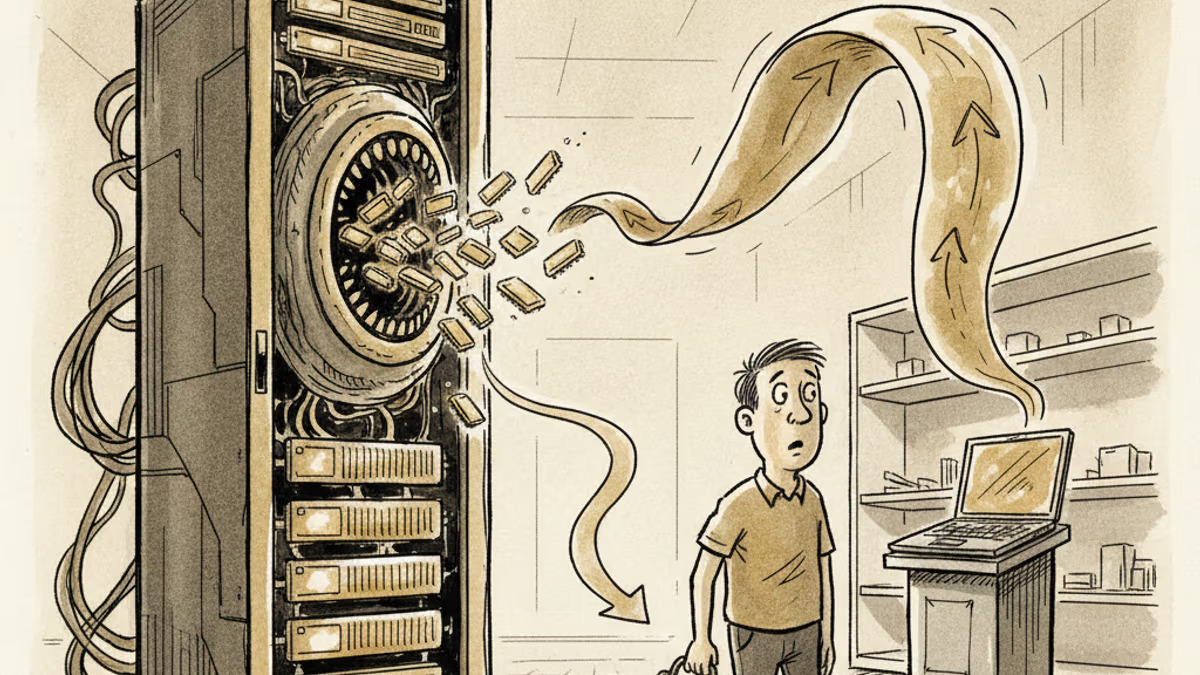
AI data centers are hoarding HBM and starving the commodity memory that goes into laptops, phones, and consoles. Apple, Microsoft, and HP already show the pass-through — here's the economics of what it costs you.

Nvidia posted 85% revenue growth and a $80B buyback. Its stock still dropped — for the fourth straight post-earnings quarter. Here's what that tells us about where AI investing stands right now.
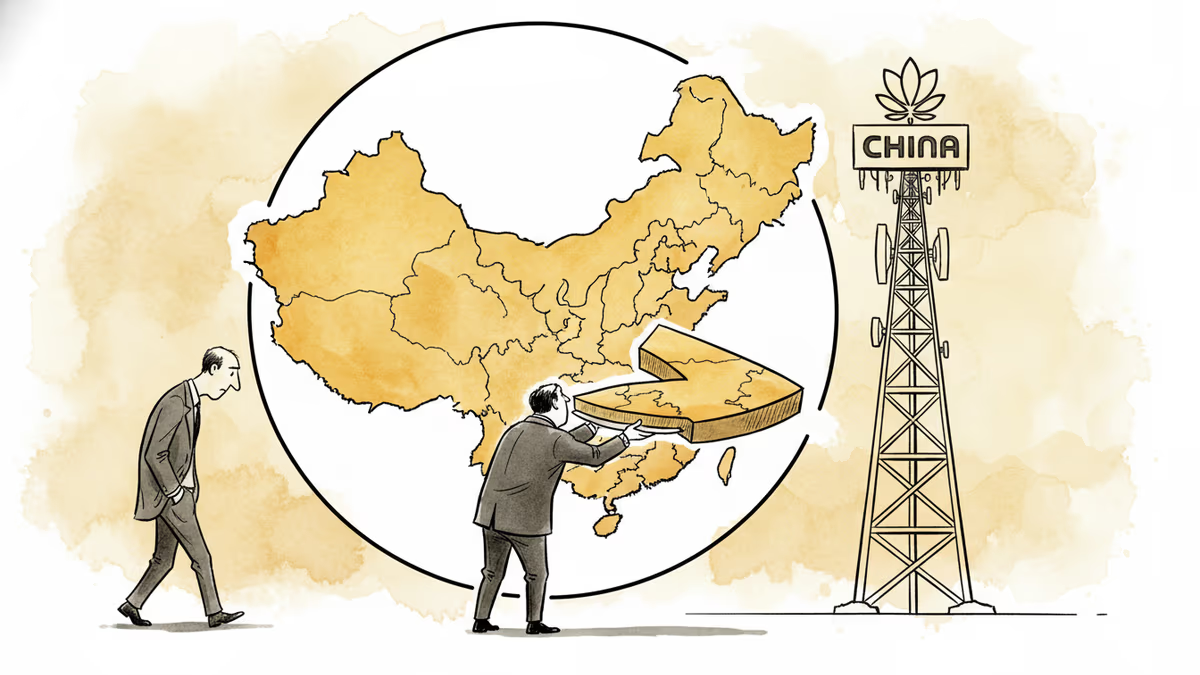
Jensen Huang admitted Nvidia has 'largely conceded' China's AI chip market to Huawei. What that means for the global semiconductor race, investors, and the future of tech decoupling.
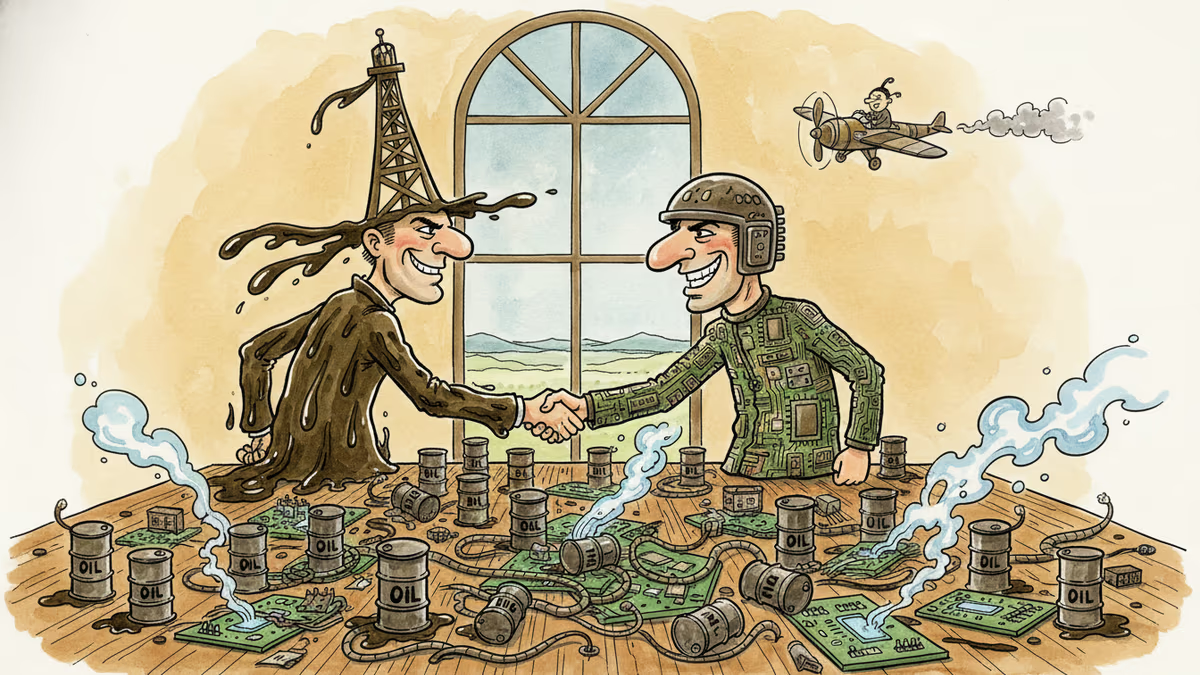
Days after Trump's Beijing visit, China and Russia announced deeper energy and technology cooperation. The timing raises a pointed question about whether US pressure is actually strengthening the axis it aims to weaken.
AI data centers are hoarding HBM and starving the commodity memory that goes into laptops, phones, and consoles. Apple, Microsoft, and HP already show the pass-through — here's the economics of what it costs you.
Nvidia posted 85% revenue growth and a $80B buyback. Its stock still dropped — for the fourth straight post-earnings quarter. Here's what that tells us about where AI investing stands right now.
Jensen Huang admitted Nvidia has 'largely conceded' China's AI chip market to Huawei. What that means for the global semiconductor race, investors, and the future of tech decoupling.
Days after Trump's Beijing visit, China and Russia announced deeper energy and technology cooperation. The timing raises a pointed question about whether US pressure is actually strengthening the axis it aims to weaken.
Thoughts
Share your thoughts on this article
Sign in to join the conversation