

Why Nvidia is Planting Seeds Before Startups Even Exist
Nvidia shifts strategy to court Indian AI startups before company formation. Beyond supporting 4,000+ existing startups, why target the pre-incorporation stage?
$75 Million to Catch Them Before They're Born
Most people don't realize Nvidia already supports over 4,000 startups in India through its Inception program. But this week's announcement at New Delhi's AI Impact Summit wasn't about expanding that number—it was about getting there earlier. Much earlier.
The chipmaker unveiled a partnership with early-stage VC firm Activate, which plans to back 25-30 AI startups from its $75 million debut fund while giving portfolio companies preferential access to Nvidia's technical expertise. The twist? Activate meets technical teams months before company formation.
The Pre-Incorporation Play
Aakrit Vaish, Activate's founder, calls this "inception investing." His firm works with technical teams before they've even incorporated, nurturing relationships as ideas crystallize into companies. For Nvidia, it's a calculated bet on customer lifetime value.
"Growing startups typically consume increasing amounts of AI compute over time," Vaish explained. Translation: hook them early with technical support, and they'll likely stick with your infrastructure as they scale. It's the enterprise software playbook applied to AI chips.
Nvidia CEO Jensen Huang was supposed to attend but skipped due to "unforeseen circumstances." Executive VP Jay Puri led a senior delegation instead, meeting AI researchers, startups, and developers on the ground—a sign of how seriously Nvidia takes this market.
Why India, Why Now

India has emerged as one of the fastest-growing pools of AI developers outside the U.S. The country hosted OpenAI, Anthropic, and Google at this week's summit, underlining the global tech giants' shared recognition of India's strategic importance.
Activate's backing roster tells the story: venture capitalist Vinod Khosla, Perplexity co-founder Aravind Srinivas, and Paytm CEO Vijay Shekhar Sharma. These are the bridge-builders between Silicon Valley and India's tech ecosystem.
Historically, Vaish notes, Nvidia's engagement with Indian startups has been "relatively light-touch compared with the U.S." That's changing fast.
The Broader Ecosystem Play
Nvidia didn't stop at Activate. This week also brought partnerships with major VCs including Accel, Peak XV, Z47, Elevation Capital, and Nexus Venture Partners. The company teamed up with AI Grants India to support over 10,000 early-stage founders in the next 12 months.
Last November, Nvidia joined the India Deep Tech Alliance alongside Blume Ventures, Premji Invest, and Celesta Capital. The message is clear: India isn't just another market—it's a strategic priority.
The Curated Layer Strategy
Vaish positions Activate as providing "a more curated layer on top" of Nvidia's broad-based Inception program. While Inception serves thousands globally, Activate acts as an early filter for high-potential technical teams, offering more direct access to Nvidia's engineering expertise.
It's a smart hedge. Nvidia's Inception program casts a wide net, but partnering with specialized early-stage investors like Activate allows for deeper, more targeted relationships with promising founders.
Authors
Related Articles

Five stories from late September, traced to where the paper trail stops: Korea's export record, Nvidia's Hugging Face 8-K, a US-China AI channel, the UN on AI, and rising births.
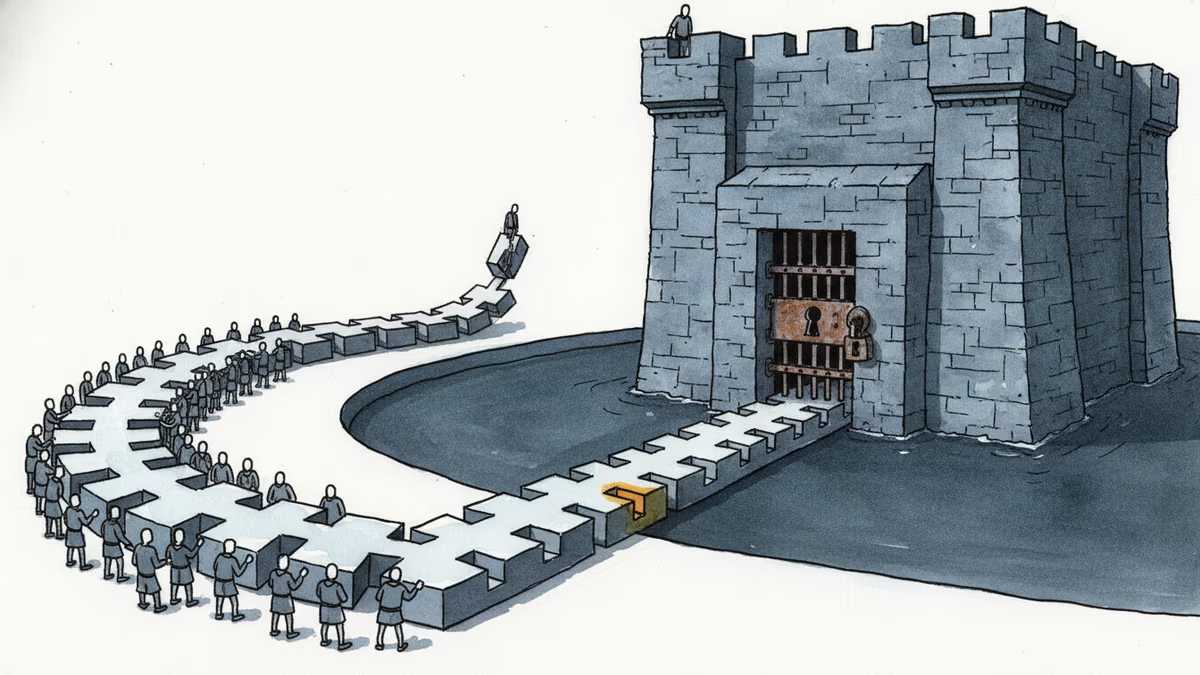
Nvidia shipped roughly a billion RISC-V cores in 2024, then announced it would run CUDA on the open standard. We break down how royalty-free instruction sets and open software stacks are trying to route around CUDA's lock-in. Part 2 of the Semiconductor Sovereignty series.
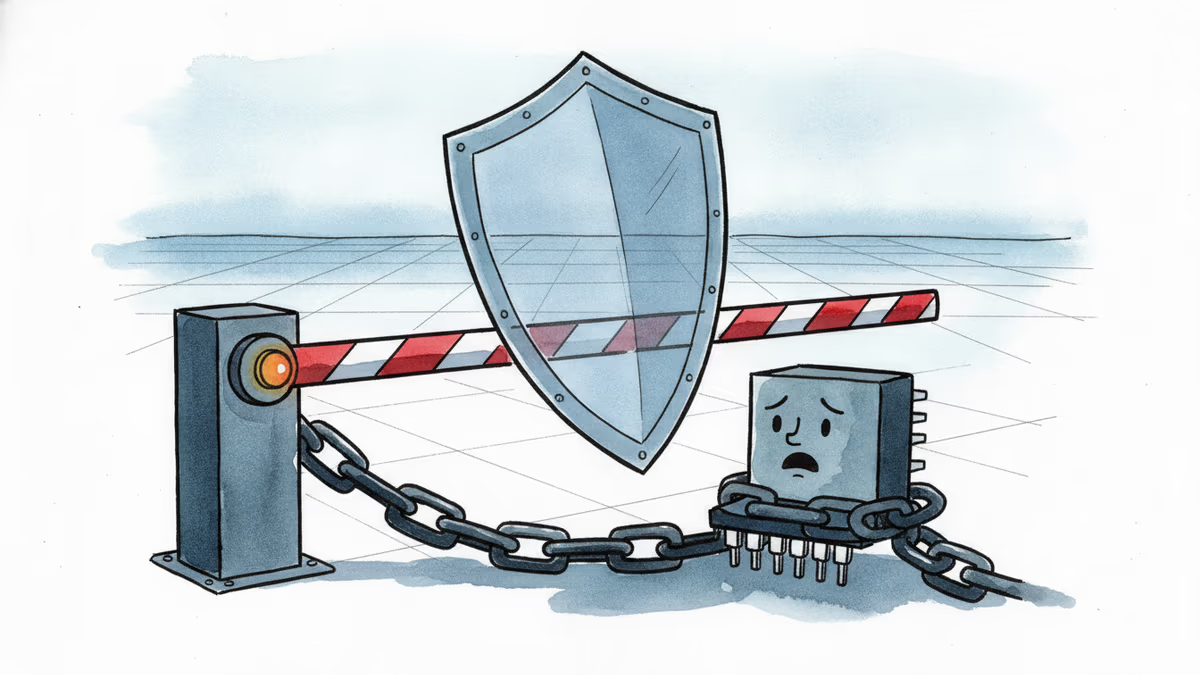
US AI-chip export controls split into three layers in the first half of 2026 — January easing, a May crackdown on circumvention, and a pending bill. Nvidia erased China from its guidance and still posted a record $81.6 billion quarter. A look at the export policy that both shields and cages it.
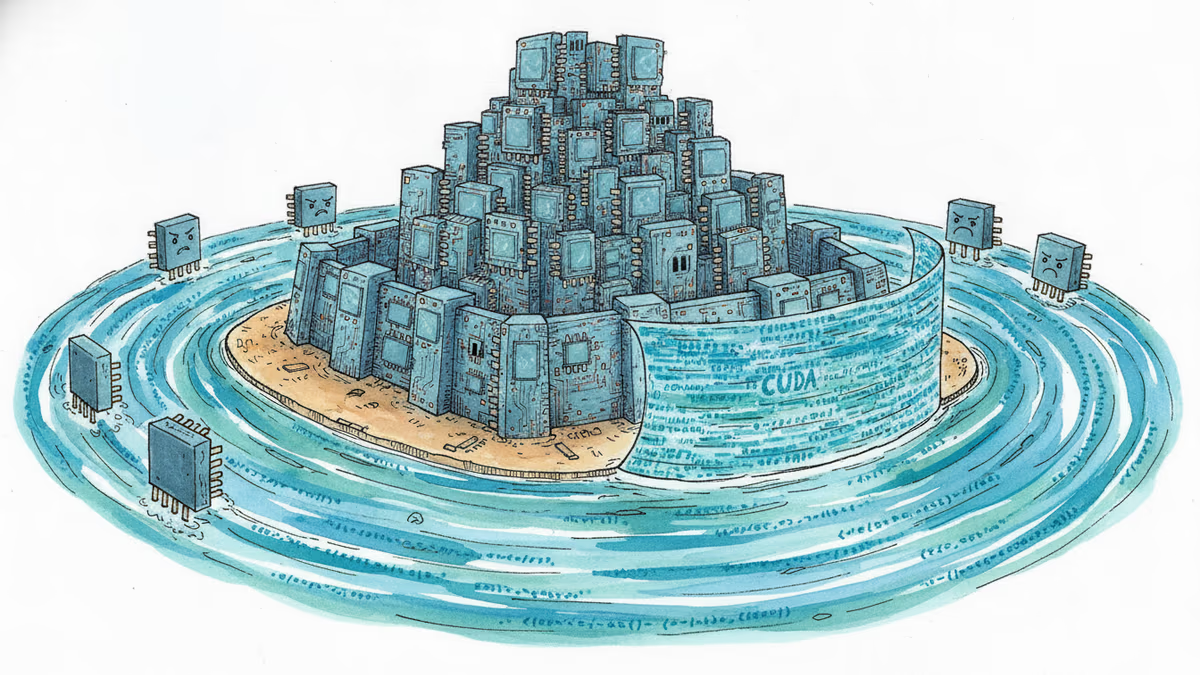
AMD's MI325X matches or beats Nvidia on memory and bandwidth — yet Nvidia's 86-92% share holds. The real moat is CUDA, 20 years in the making. Part 1 of 4.
Five stories from late September, traced to where the paper trail stops: Korea's export record, Nvidia's Hugging Face 8-K, a US-China AI channel, the UN on AI, and rising births.
Nvidia shipped roughly a billion RISC-V cores in 2024, then announced it would run CUDA on the open standard. We break down how royalty-free instruction sets and open software stacks are trying to route around CUDA's lock-in. Part 2 of the Semiconductor Sovereignty series.
US AI-chip export controls split into three layers in the first half of 2026 — January easing, a May crackdown on circumvention, and a pending bill. Nvidia erased China from its guidance and still posted a record $81.6 billion quarter. A look at the export policy that both shields and cages it.
AMD's MI325X matches or beats Nvidia on memory and bandwidth — yet Nvidia's 86-92% share holds. The real moat is CUDA, 20 years in the making. Part 1 of 4.
Thoughts
Share your thoughts on this article
Sign in to join the conversation