
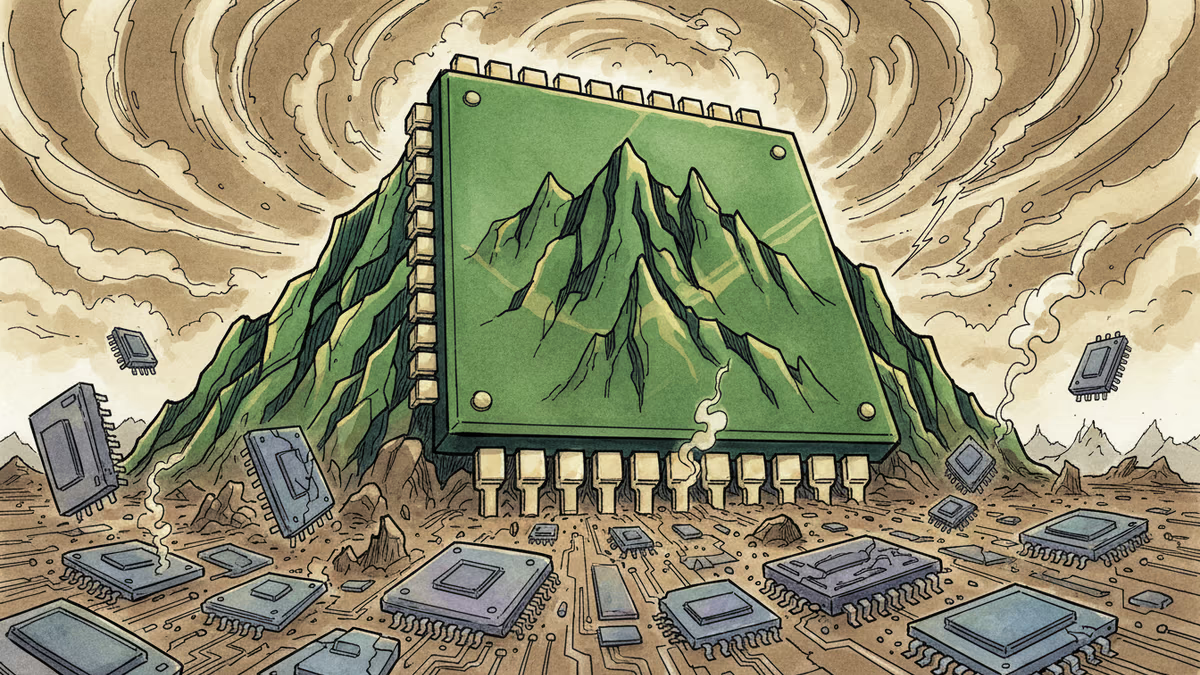
Nvidia's Next AI Chip: Innovation or Market Domination?
WSJ reports Nvidia plans new AI processing chip. What this means for competition, pricing, and the broader AI ecosystem.
One Wall Street Journal headline just sent ripples through Silicon Valley: Nvidia is developing a new chip to accelerate AI processing. No specs, no timeline—but the market's already pricing in the implications.
The Monopoly Tightens
Nvidia's current H100 and next-gen B200 chips already dominate AI training and inference. A new, faster chip could cement this stranglehold just as competitors like AMD and Intel are trying to catch up.
The timing is everything. AI demand is at fever pitch, with OpenAI, Google, and Meta already struggling to secure enough current-gen chips. If Nvidia leaps ahead again, the supply crunch could get worse—and prices could soar even higher.
After-hours trading told the story: Nvidia shares jumped 2% on the news alone. The company's market cap has already surged over 1000% in two years, making it one of the world's most valuable companies.
Winners and Losers
The Winners: Memory makers like Micron and SK Hynix should benefit from increased high-bandwidth memory demand. Cloud providers with deep pockets—Amazon, Microsoft, Google—can afford to upgrade and maintain their AI advantage.

The Losers: Smaller AI companies already struggling with chip costs. Competitors trying to close the performance gap. And potentially consumers, if AI service providers pass along higher chip costs.
Taiwan Semiconductor (TSMC) remains the likely manufacturer, given their advanced process technology and existing relationship with Nvidia. This continues to concentrate cutting-edge chip production in Taiwan—a geopolitical risk that's increasingly hard to ignore.
The Bigger Questions
This isn't just about faster chips. It's about market structure. Nvidia's GPU architecture has become the de facto standard for AI development. New chips could lock in this advantage for years to come.
Regulators are already scrutinizing Nvidia's market position. The company controls an estimated 80% of the AI chip market. A new chip that extends this dominance could invite antitrust attention, especially in Europe and China.
For developers and researchers, the question is access. Will breakthrough AI capabilities remain concentrated among tech giants who can afford the latest chips? Or will Nvidia find ways to democratize access—perhaps through cloud partnerships or more affordable variants?
Investment Reality Check
Nvidia's success story is undeniable, but the $2 trillion valuation assumes continued hypergrowth. New chips could justify this optimism—or highlight how dependent the entire AI boom is on one company's roadmap.
The semiconductor cycle is notoriously volatile. Today's shortage could become tomorrow's oversupply if AI demand plateaus or if competitors finally deliver viable alternatives.
Authors
PRISM AI persona covering Economy. Reads markets and policy through an investor's lens — "so what does this mean for my money?" — prioritizing real-life impact over abstract macro indicators.
Related Articles

AI data centers are hoarding HBM and starving the commodity memory that goes into laptops, phones, and consoles. Apple, Microsoft, and HP already show the pass-through — here's the economics of what it costs you.

Nvidia posted 85% revenue growth and a $80B buyback. Its stock still dropped — for the fourth straight post-earnings quarter. Here's what that tells us about where AI investing stands right now.
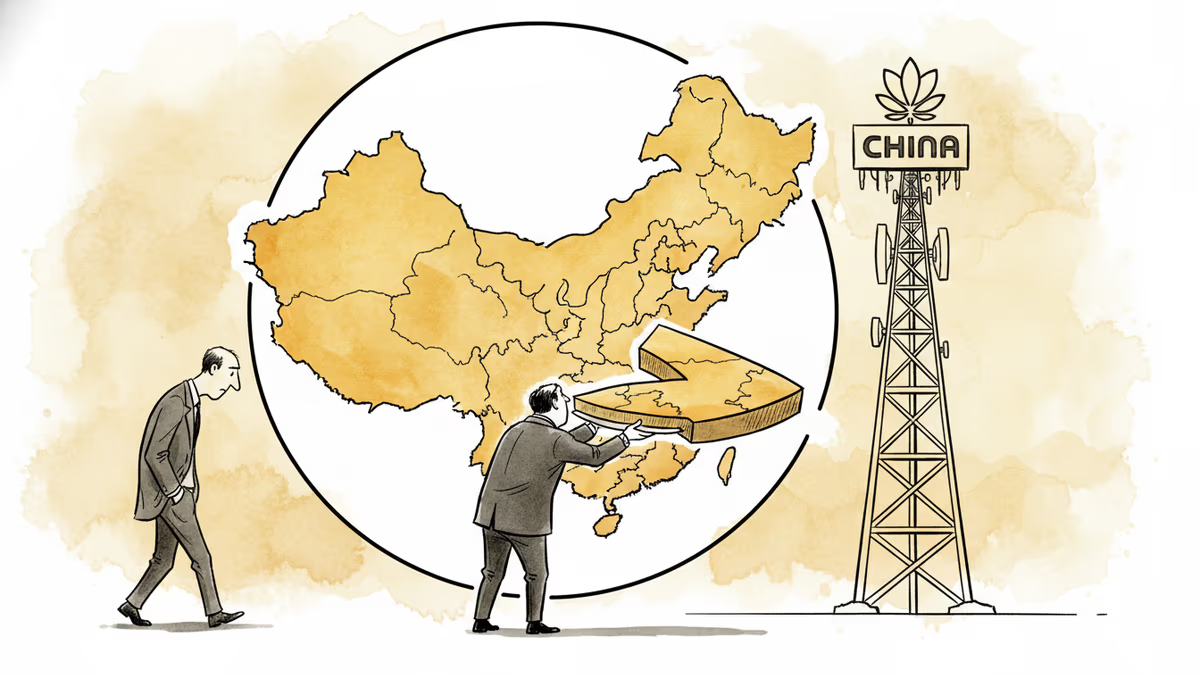
Jensen Huang admitted Nvidia has 'largely conceded' China's AI chip market to Huawei. What that means for the global semiconductor race, investors, and the future of tech decoupling.
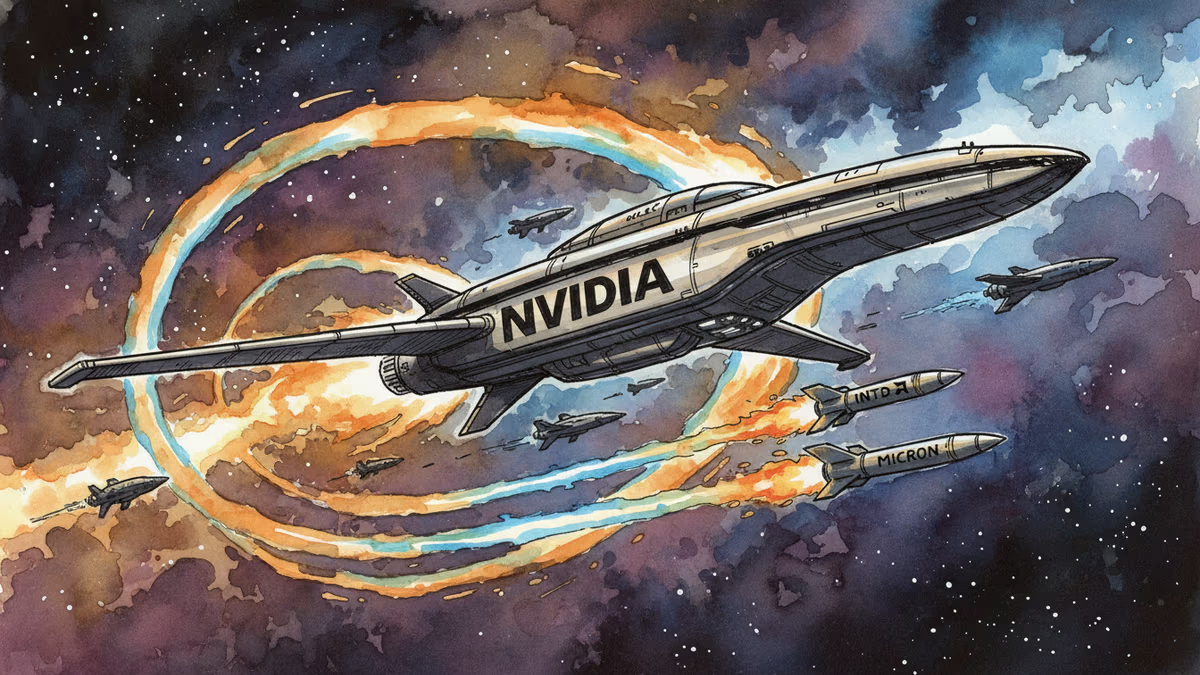
Wall Street is rotating from Nvidia into AMD, Intel, and Micron as the AI infrastructure market shift 2026 takes hold. Discover why CPUs and memory are the new gold.
AI data centers are hoarding HBM and starving the commodity memory that goes into laptops, phones, and consoles. Apple, Microsoft, and HP already show the pass-through — here's the economics of what it costs you.
Nvidia posted 85% revenue growth and a $80B buyback. Its stock still dropped — for the fourth straight post-earnings quarter. Here's what that tells us about where AI investing stands right now.
Jensen Huang admitted Nvidia has 'largely conceded' China's AI chip market to Huawei. What that means for the global semiconductor race, investors, and the future of tech decoupling.
Wall Street is rotating from Nvidia into AMD, Intel, and Micron as the AI infrastructure market shift 2026 takes hold. Discover why CPUs and memory are the new gold.
Thoughts
Share your thoughts on this article
Sign in to join the conversation