
Nvidia Alpamayo Reasoning AI: The New Era of Human-Like Self-Driving Cars
Nvidia unveils Alpamayo at CES 2026, a reasoning AI platform for autonomous vehicles. Learn how the Mercedes-Benz CLA rollout and the new Rubin chips signal a shift in Nvidia's strategy.
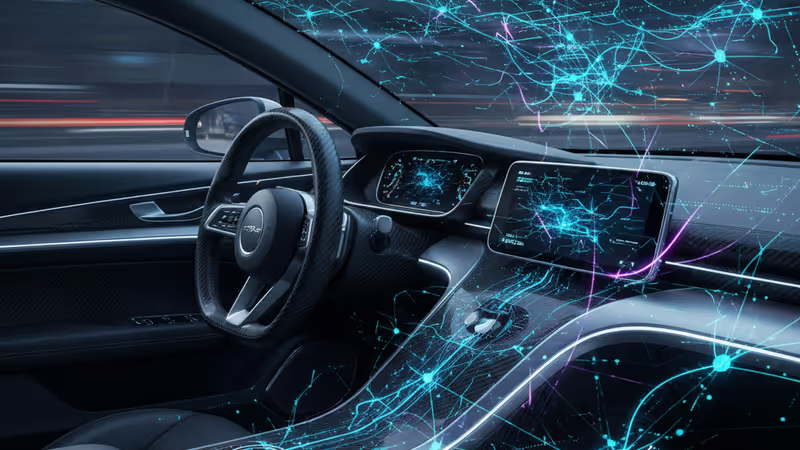
Can a car explain why it just braked? Nvidia CEO Jensen Huang just bet the future on it. At the CES 2026 conference in Las Vegas, Huang unveiled Alpamayo, an AI platform that gives autonomous vehicles the power of reasoning. It doesn't just drive; it thinks through rare scenarios like a human would.
Nvidia Alpamayo Reasoning AI 2026: Beyond Pattern Recognition
The Alpamayo project marks a profound shift for the world's most valuable company. Transitioning from a hardware provider to a platform provider for physical AI, Nvidia has already integrated this tech into the Mercedes-Benz CLA. Huang confirmed that production of the driverless vehicle is underway, with a US release scheduled for the coming months.

During a video demo, the AI-powered Mercedes navigated San Francisco smoothly. The passenger didn't touch the wheel once. What's more impressive is that the AI reasons aloud about its intentions, solving the 'black box' problem often associated with deep learning.
Not everyone's convinced. Tesla CEO Elon Musk posted on social media that Nvidia is just following Tesla's lead. He warned that while getting to 99% reliability is easy, the 'long tail' of complex real-world scenarios is incredibly difficult to solve.
Authors
Related Articles
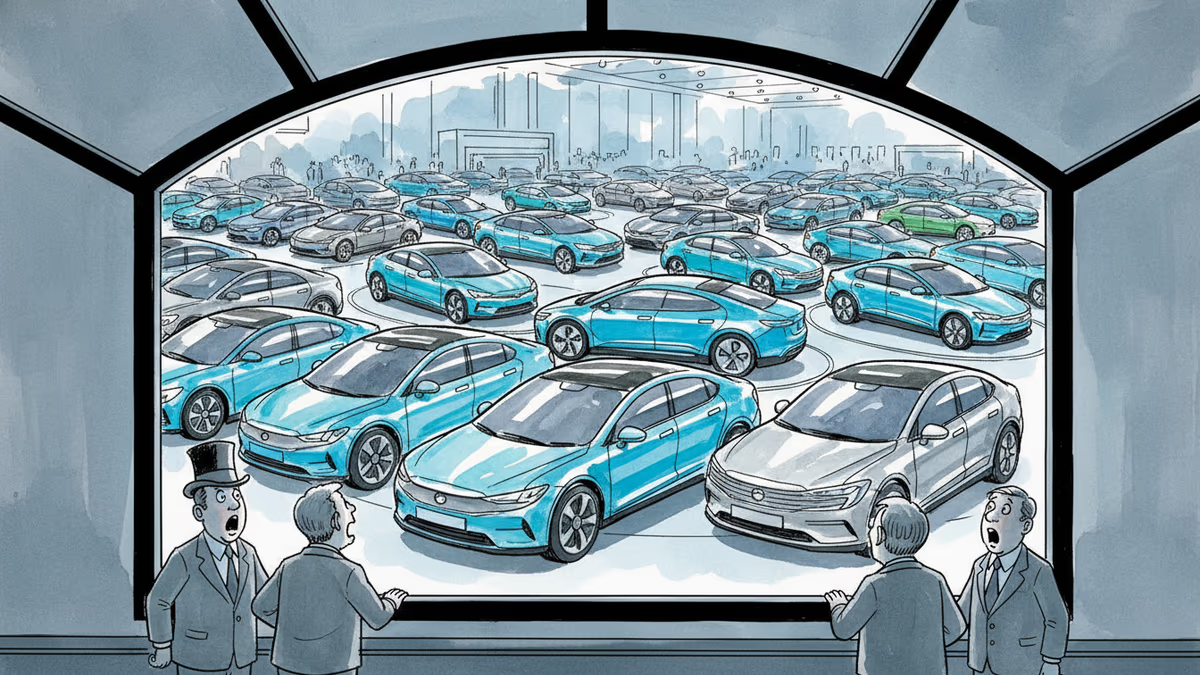
Auto China 2026 set records with 1,451 vehicles and 181 world premieres. But the real story isn't the size—it's how Chinese automakers stopped competing on price and started competing on brains.
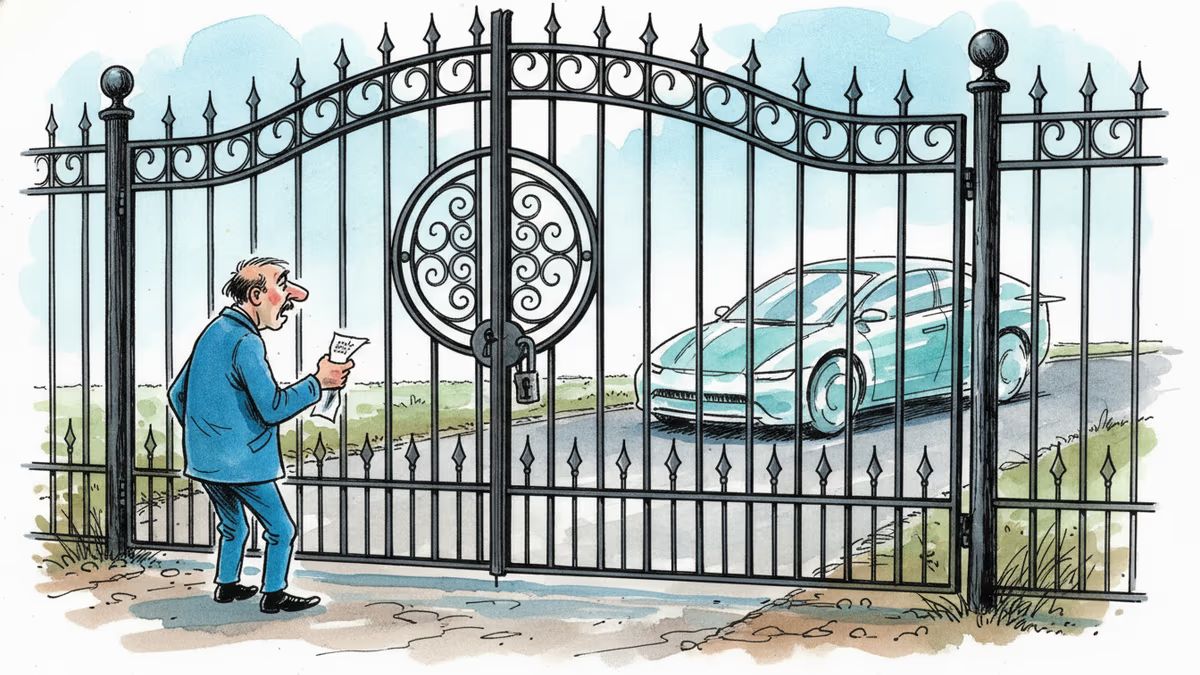
Elon Musk confirmed on Tesla's Q1 2026 earnings call that Hardware 3 vehicles will never receive unsupervised Full Self-Driving — locking out millions who paid for the feature.
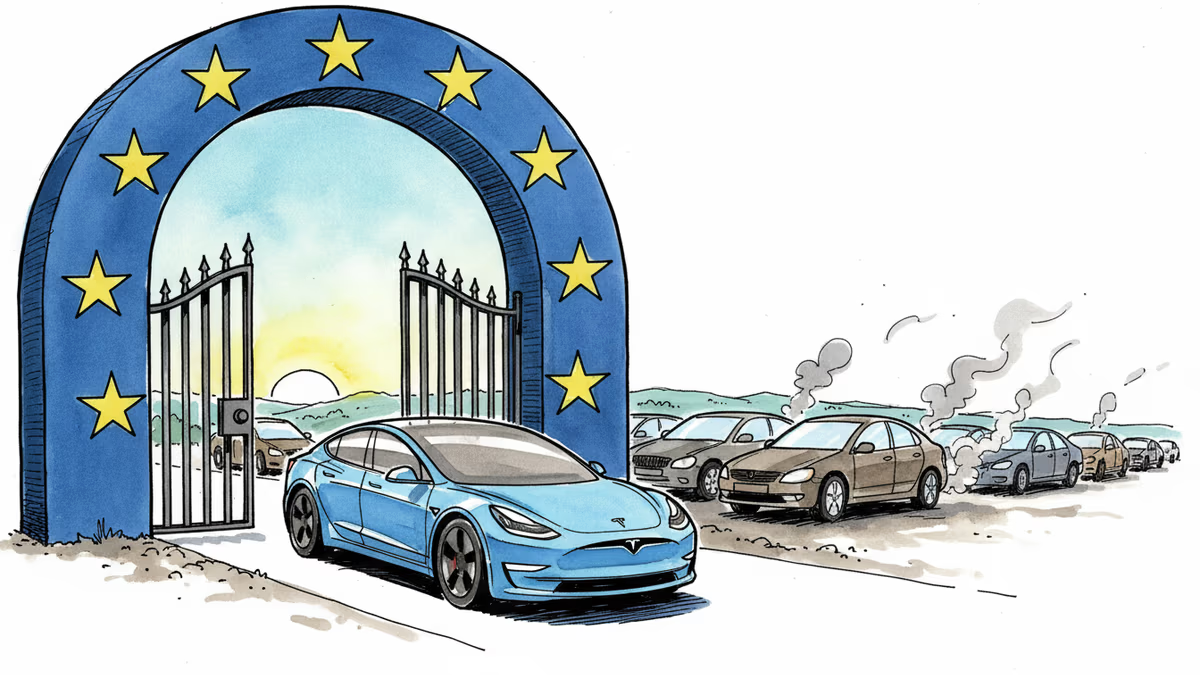
The Netherlands became the first European country to officially approve Tesla's FSD Supervised. With EU's type-approval framework, this could ripple across 27 member states fast.
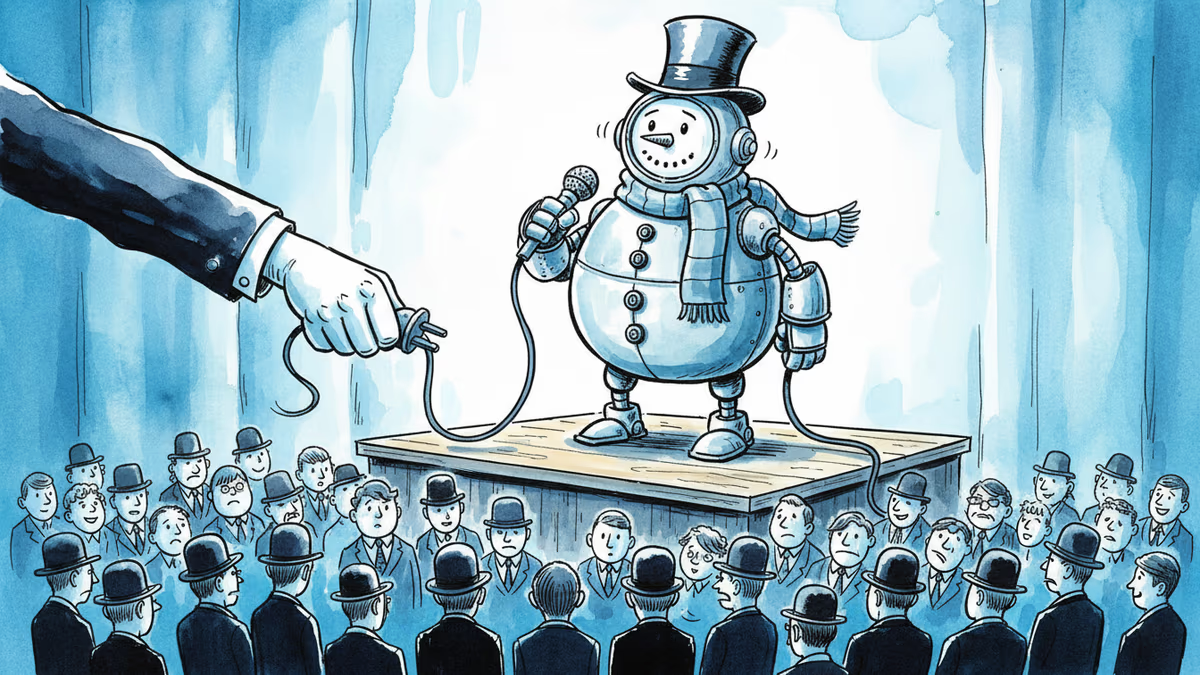
At Nvidia's GTC 2026, a rambling Olaf robot had its mic cut mid-demo. The real story isn't the glitch — it's the questions the industry keeps avoiding.
Auto China 2026 set records with 1,451 vehicles and 181 world premieres. But the real story isn't the size—it's how Chinese automakers stopped competing on price and started competing on brains.
Elon Musk confirmed on Tesla's Q1 2026 earnings call that Hardware 3 vehicles will never receive unsupervised Full Self-Driving — locking out millions who paid for the feature.
The Netherlands became the first European country to officially approve Tesla's FSD Supervised. With EU's type-approval framework, this could ripple across 27 member states fast.
At Nvidia's GTC 2026, a rambling Olaf robot had its mic cut mid-demo. The real story isn't the glitch — it's the questions the industry keeps avoiding.
Thoughts
Share your thoughts on this article
Sign in to join the conversation