

NousCoder-14B: The Open-Source AI Coding Model Replicating Two Years of Human Learning in 96 Hours
Nous Research unveils NousCoder-14B, an open-source AI coding model trained on 48 Nvidia B200s in just 4 days. Discover how it challenges proprietary rivals like Claude Code.
What took a human programmer two years of grit, an AI just mastered in 96 hours. Nous Research, an open-source AI startup backed by Paradigm, released NousCoder-14B this Monday. Leveraging 48 Nvidia B200 GPUs, this lean model matches or exceeds the performance of much larger proprietary systems.
Benchmarking NousCoder-14B Performance
According to the company's technical report, NousCoder-14B achieved a 67.87 percent accuracy rate on LiveCodeBench v6. This is a 7.08 percentage point jump from its base model, Alibaba's Qwen3-14B. Researcher Joe Li noted that the model's progress from a 1600 to 2100 rating on Codeforces mirrors a journey that took him two full years during his teens. The AI, however, did it in just four days.

The Atropos Stack and Radical Transparency
While rivals like Anthropic keep their agentic tools behind closed doors, Nous Research is betting on radical openness. They didn't just drop the weights; they published the entire Atropos training stack. This includes the reinforcement learning environment and the training harness, allowing any researcher with enough compute to replicate the work. It's a direct challenge to the proprietary status quo dominated by Claude Code and Google Gemini.
However, the project also highlighted a looming wall: data scarcity. Li revealed that the 24,000 problems used for training represent almost all high-quality, verifiable programming problems available. To keep improving, AI might soon need to learn how to teach itself by generating its own training curricula through synthetic data and self-play.
Authors
Related Articles
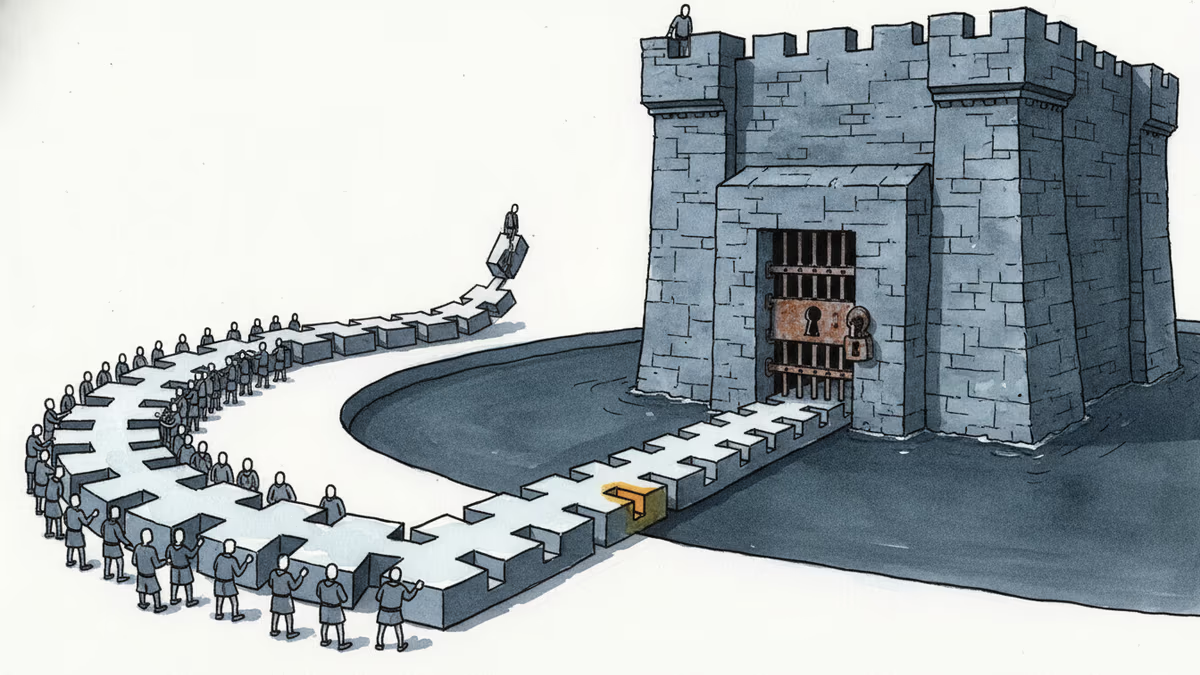
Nvidia shipped roughly a billion RISC-V cores in 2024, then announced it would run CUDA on the open standard. We break down how royalty-free instruction sets and open software stacks are trying to route around CUDA's lock-in. Part 2 of the Semiconductor Sovereignty series.

US AI-chip export controls split into three layers in the first half of 2026 — January easing, a May crackdown on circumvention, and a pending bill. Nvidia erased China from its guidance and still posted a record $81.6 billion quarter. A look at the export policy that both shields and cages it.
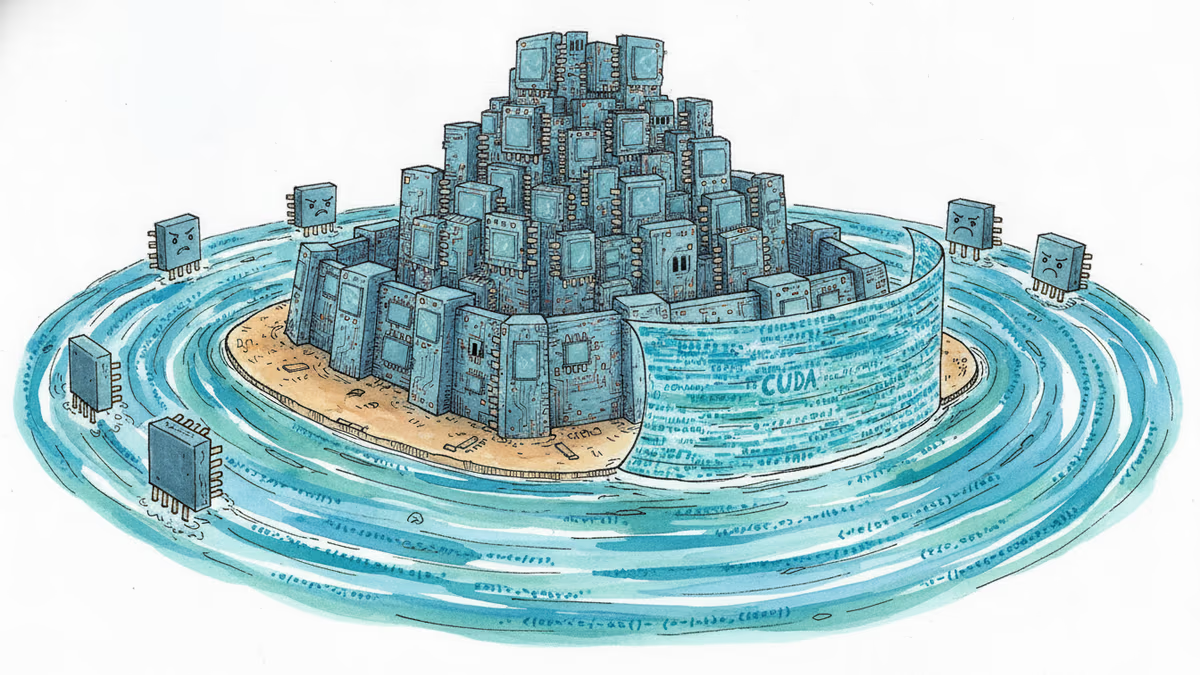
AMD's MI325X matches or beats Nvidia on memory and bandwidth — yet Nvidia's 86-92% share holds. The real moat is CUDA, 20 years in the making. Part 1 of 4.

Snowflake's new $6 billion AWS contract is about more than cloud spending. It signals a shift in AI infrastructure—away from Nvidia GPUs and toward cheaper, homegrown chips for the agent era.
Nvidia shipped roughly a billion RISC-V cores in 2024, then announced it would run CUDA on the open standard. We break down how royalty-free instruction sets and open software stacks are trying to route around CUDA's lock-in. Part 2 of the Semiconductor Sovereignty series.
US AI-chip export controls split into three layers in the first half of 2026 — January easing, a May crackdown on circumvention, and a pending bill. Nvidia erased China from its guidance and still posted a record $81.6 billion quarter. A look at the export policy that both shields and cages it.
AMD's MI325X matches or beats Nvidia on memory and bandwidth — yet Nvidia's 86-92% share holds. The real moat is CUDA, 20 years in the making. Part 1 of 4.
Snowflake's new $6 billion AWS contract is about more than cloud spending. It signals a shift in AI infrastructure—away from Nvidia GPUs and toward cheaper, homegrown chips for the agent era.
Thoughts
Share your thoughts on this article
Sign in to join the conversation