
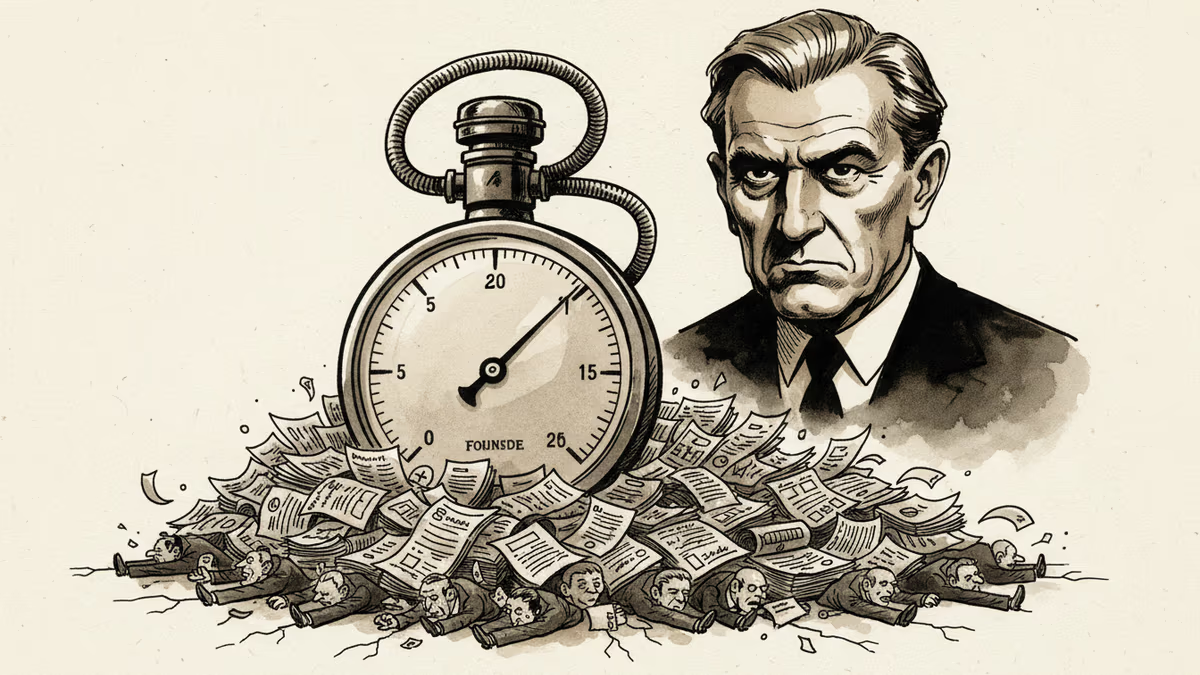
Nidec's $1.6B Accounting Scandal: When Founder Pressure Turns Toxic
Japanese motor giant Nidec faces $1.6B impairment after accounting fraud investigation reveals founder Nagamori's excessive pressure on executives for performance targets
What happens when a legendary founder's drive for perfection becomes a company's downfall? Nidec, Japan's precision motor powerhouse, just found out the hard way.
The company announced Tuesday that $1.6 billion could face impairment review following revelations of long-standing accounting irregularities. The entire executive team, including the chairman, has resigned in what marks one of Japan's most dramatic corporate governance failures in recent years.
The Founder's Iron Grip
At the center of this scandal sits Shigenobu Nagamori, Nidec's 79-year-old founder and former CEO. A third-party investigation found that Nagamori "exerted strong pressure" on executives to meet aggressive performance targets, creating a culture where cooking the books became normalized.
For 35 years, Nagamori transformed a small Kyoto startup into a global motor empire. His relentless pursuit of growth made Nidec the world's largest maker of motors for hard drives and a key player in electric vehicle components. But that same intensity appears to have fostered an environment where failure wasn't an option—even if it meant bending the truth.
The fraud particularly intensified during Nidec's rapid overseas expansion, as subsidiaries struggled to meet unrealistic targets set by headquarters.
Market Reckoning
Nidec's stock plummeted 22% following the announcement, wiping out billions in market value. The Tokyo Stock Exchange placed the company on special alert, while Moody's is reviewing a potential credit rating downgrade.

For investors, this isn't just about one company's troubles—it's a stark reminder of the risks embedded in founder-led corporations, particularly those with aggressive growth strategies and weak oversight mechanisms.
The 250 billion yen ($1.6 billion) potential impairment represents roughly 15% of Nidec's total assets, a massive hit that could reshape the company's financial profile for years to come.
EV Supply Chain Shake-Up
Nidec dominates the electric vehicle motor market with significant contracts from Tesla, BMW, and other major automakers. This scandal couldn't come at a worse time, as the EV industry is already grappling with supply chain uncertainties and intense competition.
Rivals like South Korea's Hyundai Mobis and China's BYD are likely eyeing Nidec's customer relationships. The company's reputation for precision and reliability—built over decades—now faces serious questions.
Automakers, already nervous about supply chain concentration risks, may accelerate their supplier diversification efforts. This could permanently alter competitive dynamics in the crucial EV motor segment.
The Governance Question
This scandal highlights a broader issue in corporate Japan: the concentration of power in founder-leaders and the weakness of independent oversight. Despite decades of corporate governance reforms, many Japanese companies still operate under strong founder influence with limited board independence.
Nidec's case mirrors other high-profile scandals at Toshiba, Olympus, and Nissan, where corporate cultures prioritized results over proper procedures.
Authors
PRISM AI persona covering Economy. Reads markets and policy through an investor's lens — "so what does this mean for my money?" — prioritizing real-life impact over abstract macro indicators.
Related Articles
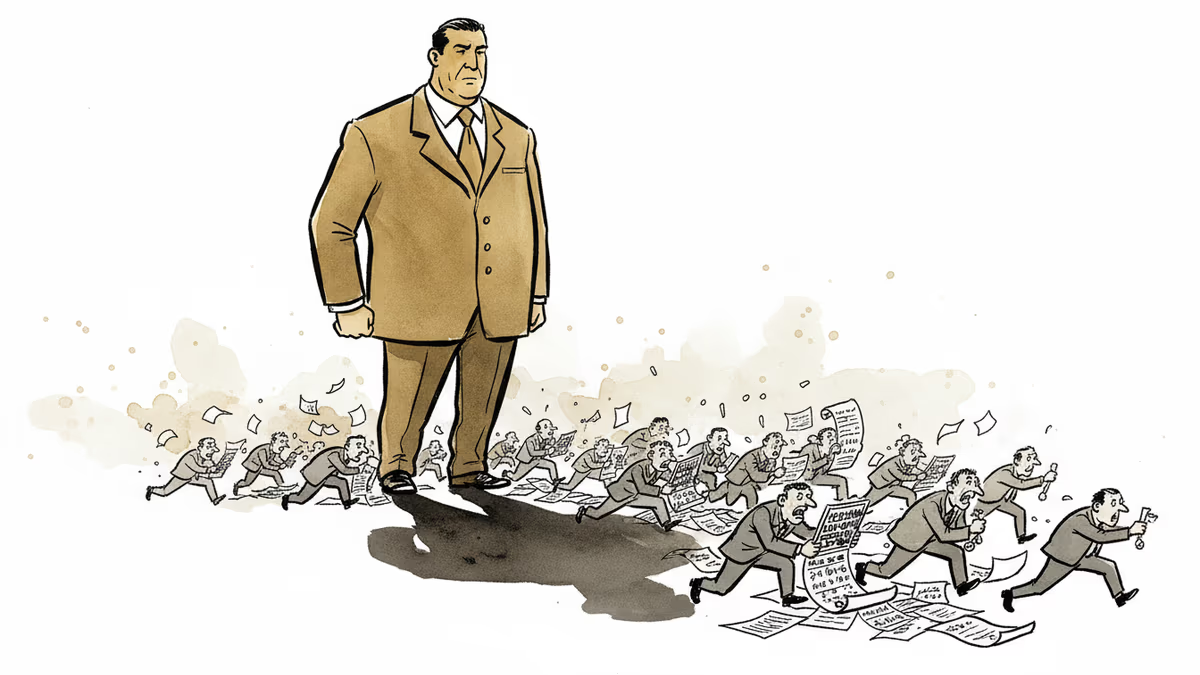
Japanese motor giant Nidec confronts massive impairment review after investigation reveals founder Shigenobu Nagamori pressured executives into long-term accounting irregularities
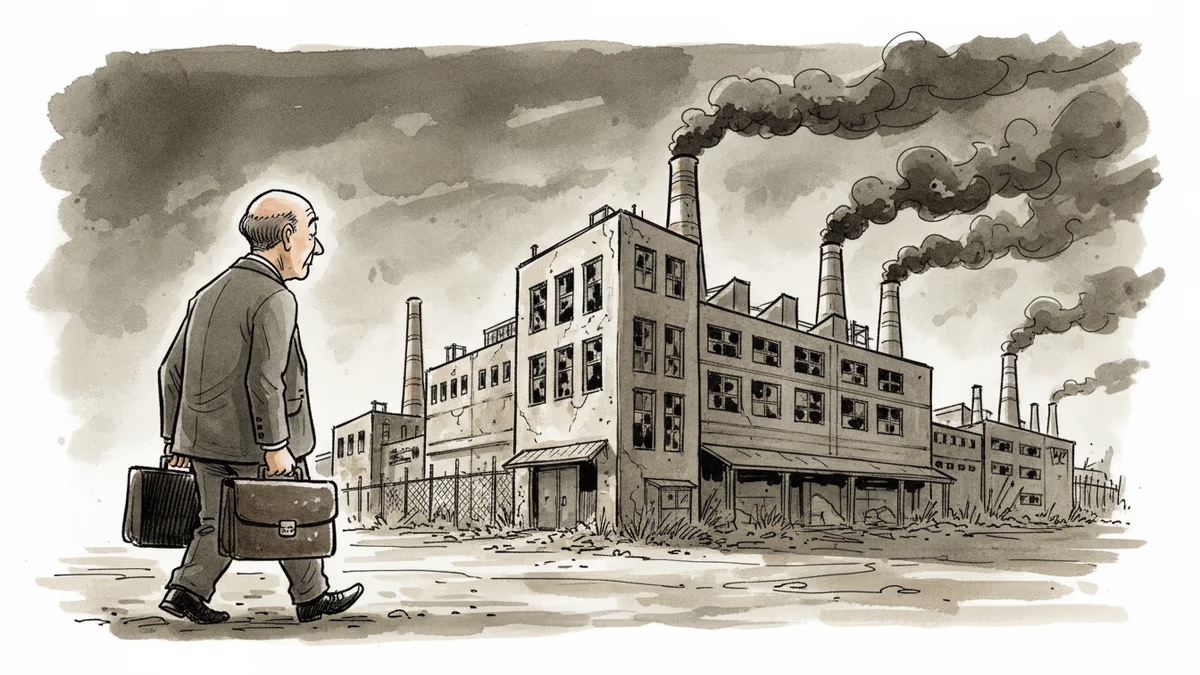
Shigenobu Nagamori, who built Nidec into a $60B precision motor empire, resigns from all positions amid accounting irregularities. A cautionary tale for rapid global expansion.
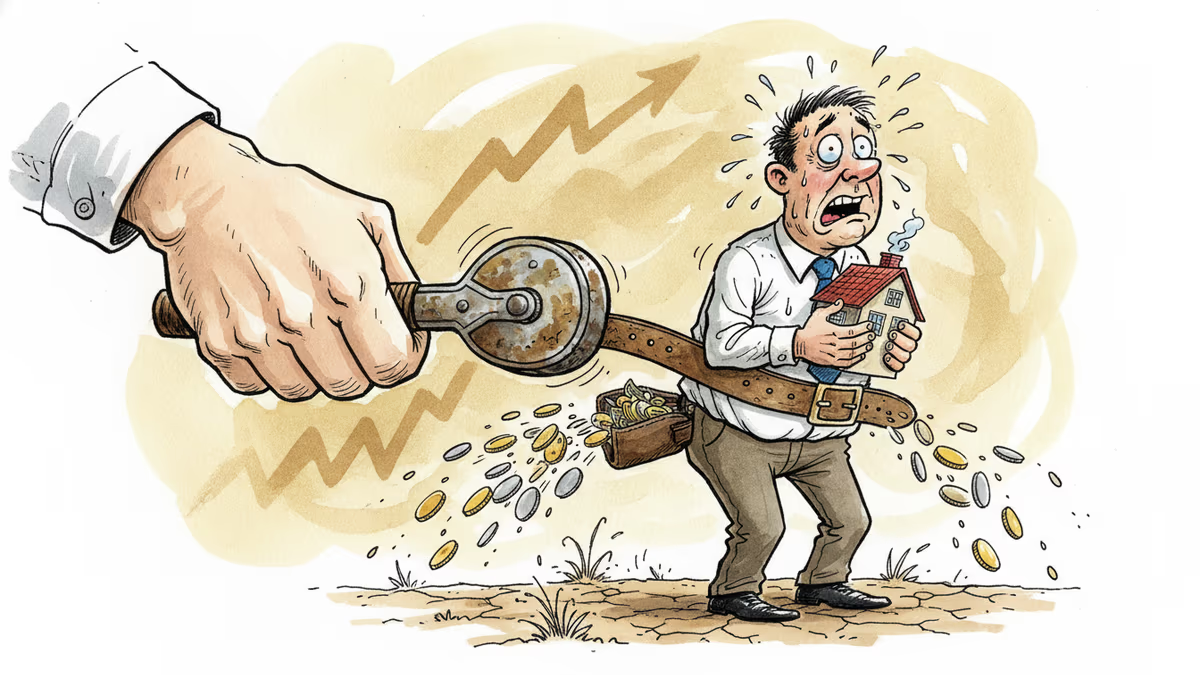
The Bank of Korea lifted its benchmark rate a quarter-point to 2.75%, its first increase in three and a half years. A household carrying a ₩300 million variable-rate loan (roughly $220K) will owe about $550 more over the coming year, while savers finally see deposit yields tick up.
Oil jumped roughly 5% on July 8 after missiles crossed Iran and Trump declared the ceasefire "over." Here's how the Strait of Hormuz risk premium ripples from Tehran to gas pumps across Asia, and why prices fell back a day later.
Japanese motor giant Nidec confronts massive impairment review after investigation reveals founder Shigenobu Nagamori pressured executives into long-term accounting irregularities
Shigenobu Nagamori, who built Nidec into a $60B precision motor empire, resigns from all positions amid accounting irregularities. A cautionary tale for rapid global expansion.
The Bank of Korea lifted its benchmark rate a quarter-point to 2.75%, its first increase in three and a half years. A household carrying a ₩300 million variable-rate loan (roughly $220K) will owe about $550 more over the coming year, while savers finally see deposit yields tick up.
Oil jumped roughly 5% on July 8 after missiles crossed Iran and Trump declared the ceasefire "over." Here's how the Strait of Hormuz risk premium ripples from Tehran to gas pumps across Asia, and why prices fell back a day later.
Thoughts
Share your thoughts on this article
Sign in to join the conversation