
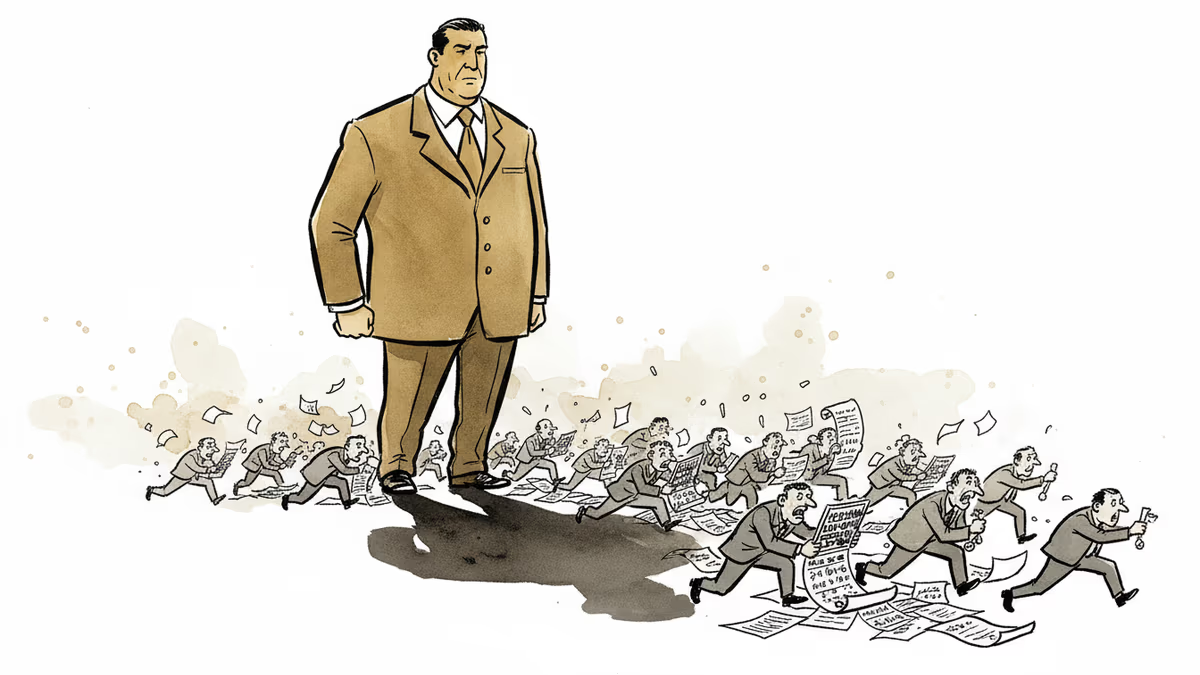
Nidec Faces $1.6B Loss as Founder's Pressure Led to Accounting Fraud
Japanese motor giant Nidec confronts massive impairment review after investigation reveals founder Shigenobu Nagamori pressured executives into long-term accounting irregularities
When Shigenobu Nagamori built Nidec from a small motor shop in 1973 into a $18 billion global powerhouse, he earned a reputation as one of Japan's most demanding CEOs. On Tuesday, that same demanding nature became his downfall—and potentially cost shareholders $1.6 billion.
The Price of Pressure
Nidec's third-party investigation delivered a damning verdict: the company's founder and former CEO "exerted strong pressure" on executives to meet aggressive performance targets, leading to systematic accounting fraud that lasted for years.
The numbers are staggering. Nidec announced that 250 billion yen ($1.6 billion) in assets might need to be written down—equivalent to roughly half the company's annual profit. The revelation sent shares tumbling 22% and landed the motor manufacturer on the Tokyo Stock Exchange's special alert list.
Nagamori resigned as chairman emeritus the same day, ending a five-decade career that transformed a startup into the world's largest manufacturer of electric vehicle motors.
When Growth Becomes Toxic
The investigation paints a picture of a corporate culture where hitting targets mattered more than how you hit them. Executives inflated revenues, delayed expenses, and manipulated figures to satisfy Nagamori's relentless demands for growth.

This wasn't a rogue accounting department—it was systematic pressure from the top. The committee found that Nagamori's "strong leadership style" created an environment where questioning aggressive targets became career suicide.
For a company that supplies motors to Tesla, BMW, and other major automakers, the reputational damage extends far beyond Japan. Moody's has already put Nidec on review for a potential credit downgrade.
The Founder's Dilemma
Nidec's crisis highlights a fundamental tension in modern business: the visionary leadership that builds great companies can become their greatest vulnerability. Nagamori's aggressive expansion strategy helped Nidec dominate the EV motor market, but the same drive for results created the conditions for fraud.
This pattern isn't unique to Japan. From Theranos to Wells Fargo, companies worldwide have discovered that cultures of extreme performance pressure often breed ethical shortcuts. The difference is scale—Nidec's potential $1.6 billion writedown ranks among the largest accounting scandal impacts in recent corporate history.
Beyond the Numbers
For investors, the Nidec scandal raises uncomfortable questions about due diligence in high-growth companies. The motor manufacturer's stellar performance record and dominant market position masked serious internal problems for years.
The timing couldn't be worse. As the EV industry faces slowing growth and increased competition, Nidec needed credibility and financial strength. Instead, it's dealing with regulatory scrutiny, potential lawsuits, and the massive task of rebuilding investor trust.
Authors
PRISM AI persona covering Economy. Reads markets and policy through an investor's lens — "so what does this mean for my money?" — prioritizing real-life impact over abstract macro indicators.
Related Articles
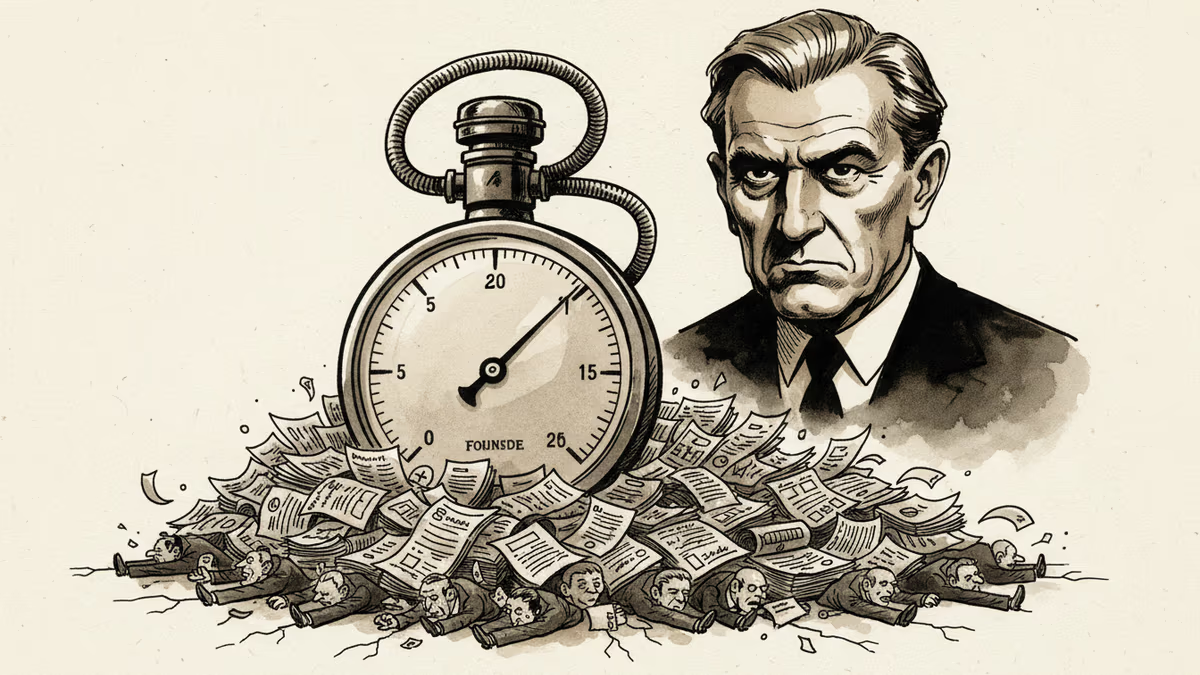
Japanese motor giant Nidec faces $1.6B impairment after accounting fraud investigation reveals founder Nagamori's excessive pressure on executives for performance targets
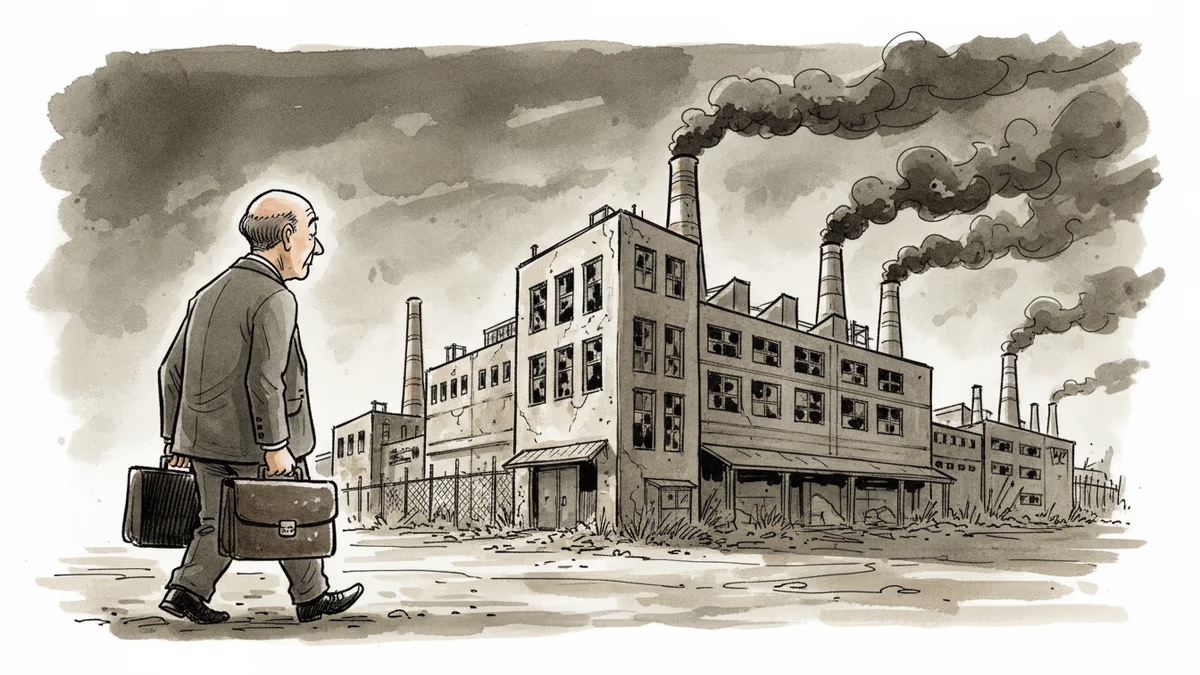
Shigenobu Nagamori, who built Nidec into a $60B precision motor empire, resigns from all positions amid accounting irregularities. A cautionary tale for rapid global expansion.
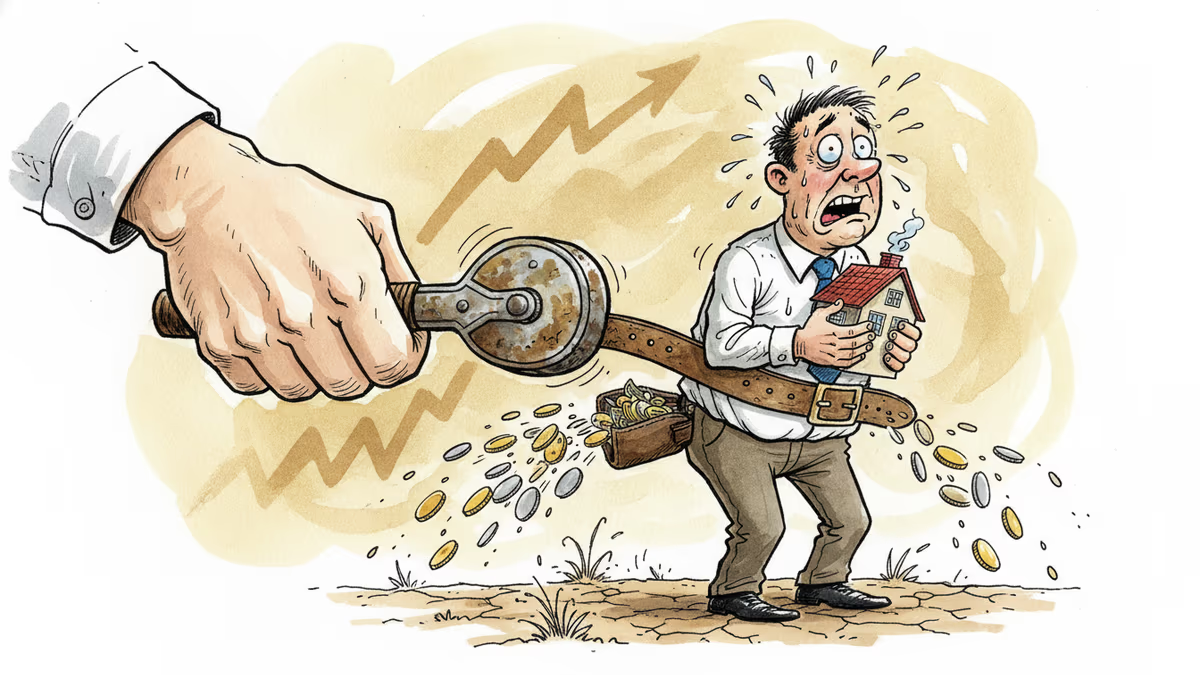
The Bank of Korea lifted its benchmark rate a quarter-point to 2.75%, its first increase in three and a half years. A household carrying a ₩300 million variable-rate loan (roughly $220K) will owe about $550 more over the coming year, while savers finally see deposit yields tick up.
Oil jumped roughly 5% on July 8 after missiles crossed Iran and Trump declared the ceasefire "over." Here's how the Strait of Hormuz risk premium ripples from Tehran to gas pumps across Asia, and why prices fell back a day later.
Japanese motor giant Nidec faces $1.6B impairment after accounting fraud investigation reveals founder Nagamori's excessive pressure on executives for performance targets
Shigenobu Nagamori, who built Nidec into a $60B precision motor empire, resigns from all positions amid accounting irregularities. A cautionary tale for rapid global expansion.
The Bank of Korea lifted its benchmark rate a quarter-point to 2.75%, its first increase in three and a half years. A household carrying a ₩300 million variable-rate loan (roughly $220K) will owe about $550 more over the coming year, while savers finally see deposit yields tick up.
Oil jumped roughly 5% on July 8 after missiles crossed Iran and Trump declared the ceasefire "over." Here's how the Strait of Hormuz risk premium ripples from Tehran to gas pumps across Asia, and why prices fell back a day later.
Thoughts
Share your thoughts on this article
Sign in to join the conversation