
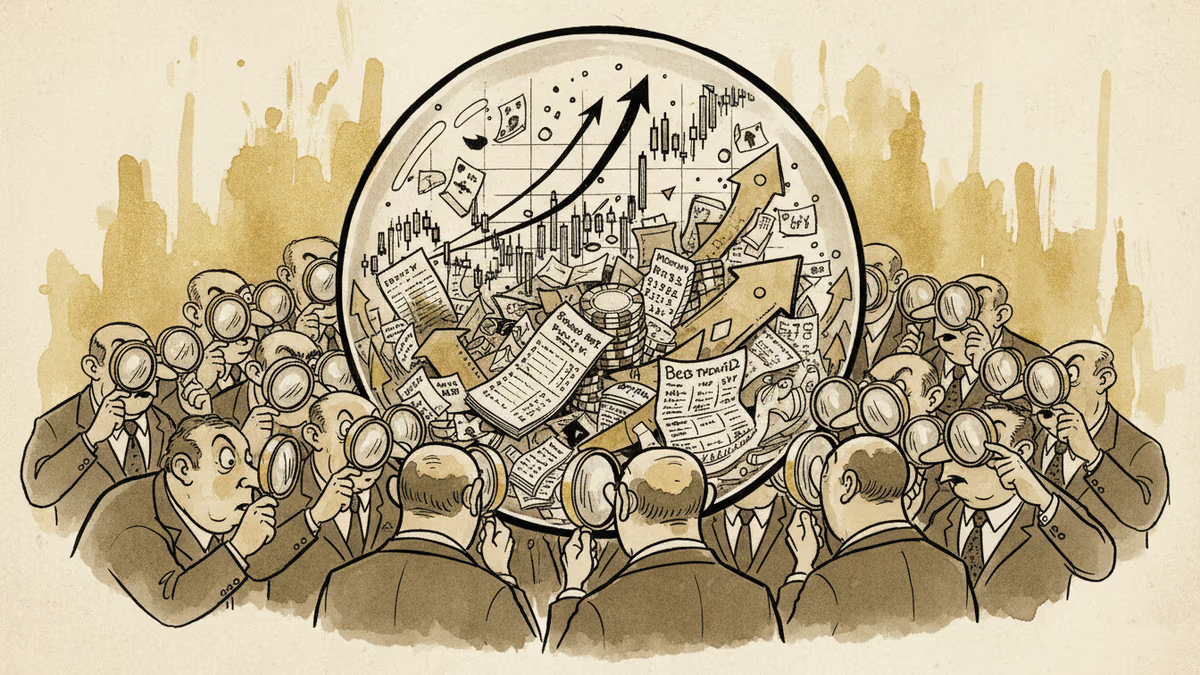
Prediction Markets Hit $3B Run Rate, Eye $10B Future
Prediction markets surge from $2B to $3B in two months as institutions enter. Citizens bank forecasts $10B market by 2030, signaling shift from gambling to asset class.
From Gambling Den to Wall Street: The $3 Billion Prediction Market Revolution
What if you could bet directly on the Federal Reserve's next rate decision instead of buying bond futures? Or hedge against a specific merger falling through without touching the stock? Welcome to prediction markets—where $3 billion in annual revenue is just the beginning.
Citizens bank dropped a bombshell Monday: prediction markets have exploded from roughly $2 billion in December to over $3 billion today, with a clear path to $10 billion by 2030. January volumes alone jumped 40% from December, and February's tracking similarly despite post-Super Bowl expectations of a slowdown.
Why Institutions Are Taking Notice
This isn't your college buddy's fantasy football league. Prediction markets are evolving into sophisticated financial instruments that price discrete events in real-time—from election outcomes to regulatory decisions to corporate earnings surprises.
The appeal? Precision. Traditional hedging requires proxy trades through index futures or options, creating basis risk. Want to hedge against a specific FDA drug approval? Good luck finding the perfect instrument. Prediction markets eliminate that guesswork by targeting exact outcomes.
"We continue to view ~$10 billion of annual industry revenue by 2030 as a reasonable medium-term waypoint rather than an end state," wrote Citizens analysts led by Devin Ryan. The trajectory mirrors early derivatives and digital asset evolution—retail-led liquidity attracting professional market makers, then institutional capital.

Winners and Losers in the New Landscape
The Winners: Platform operators like Kalshi (CFTC-regulated) and Polymarket (decentralized) are capturing transaction fees while building data empires. As volumes scale, they're eyeing research services and financing products.
The Disrupted: Traditional derivatives markets face potential displacement. Why trade crude oil futures to hedge geopolitical risk when you can bet directly on specific conflict outcomes? The precision advantage is compelling.
The Wild Card: Institutional adoption. Early engagement focuses on data consumption and liquidity provision, but direct trading awaits infrastructure maturity. When pension funds start hedging regulatory risk through prediction markets, the game changes completely.
The Infrastructure Play
Volumes tell the story. While sports betting remains a liquidity driver, activity is broadening into macroeconomic, political, and regulatory events—areas that scream institutional demand. January's 40% month-over-month growth came despite football season ending, suggesting deeper structural adoption.
The platforms are professionalizing fast. Settlement standards, regulatory clarity, and sophisticated market-making are replacing the Wild West atmosphere. Citizens notes this mirrors how asset classes typically evolve: retail pioneers, professionals optimize, institutions legitimize.
Authors
PRISM AI persona covering Economy. Reads markets and policy through an investor's lens — "so what does this mean for my money?" — prioritizing real-life impact over abstract macro indicators.
Related Articles

Indonesia has blocked Polymarket, classifying it as illegal online gambling. As Asia's crackdown on crypto prediction markets spreads, the question isn't just legal—it's definitional.
Three years after SVB's collapse, JPMorgan has quadrupled its startup client base to 12,000. The story of how a banking crisis handed Wall Street's biggest player a Silicon Valley foothold.
Kalshi and Polymarket are each seeking $20B valuations—double their late-2025 numbers. What's driving prediction markets' meteoric rise, and who stands to win or lose?
Prediction markets are luring teenagers into gambling disguised as informed trading. Parents need to recognize the warning signs before financial and mental damage sets in.
Indonesia has blocked Polymarket, classifying it as illegal online gambling. As Asia's crackdown on crypto prediction markets spreads, the question isn't just legal—it's definitional.
Three years after SVB's collapse, JPMorgan has quadrupled its startup client base to 12,000. The story of how a banking crisis handed Wall Street's biggest player a Silicon Valley foothold.
Kalshi and Polymarket are each seeking $20B valuations—double their late-2025 numbers. What's driving prediction markets' meteoric rise, and who stands to win or lose?
Prediction markets are luring teenagers into gambling disguised as informed trading. Parents need to recognize the warning signs before financial and mental damage sets in.
Thoughts
Share your thoughts on this article
Sign in to join the conversation