
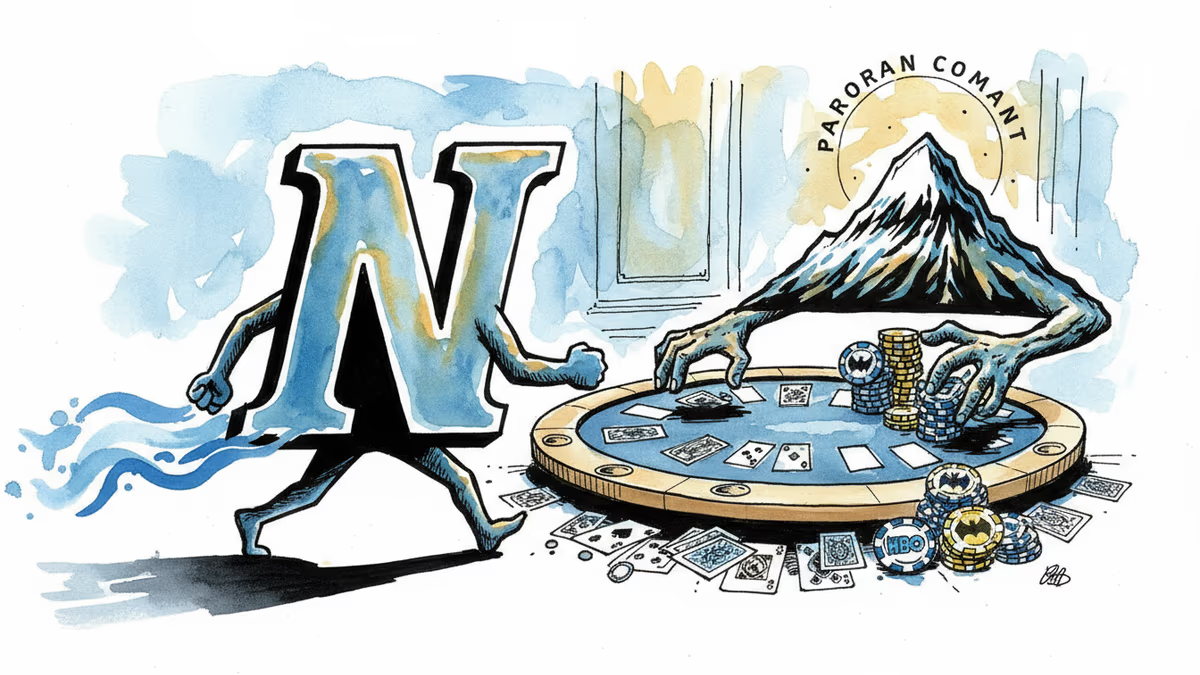
Netflix Walks Away from $82B Deal as Paramount Swoops In
Netflix abandons Warner Bros Discovery acquisition, leaving Paramount to reshape the streaming landscape. What this means for the future of entertainment consolidation.
An $82.7 billion deal just changed hands overnight. Netflix's shocking withdrawal from its Warner Bros. Discovery (WBD) acquisition has handed Paramount Skydance the keys to Game of Thrones, DC Comics, and the entire HBO Max empire.
The Bidding War That Wasn't
When Netflix announced merger intentions with WBD on December 5th, it seemed like a done deal. The streaming giant was offering $72 billion in equity value for WBD's crown jewels – content that could have cemented Netflix's dominance for the next decade.
But Paramount had other plans. The company didn't just outbid Netflix; it rewrote the rules of engagement. On Tuesday, Paramount raised its offer by $1 per share and threw in a game-changing sweetener: a $7 billion regulatory termination fee if antitrust issues killed the deal, plus $0.25 per share quarterly penalties for delays starting September 30th.
This wasn't about money – it was about certainty. Paramount essentially told WBD shareholders: "We'll pay you even if regulators block us."
Netflix's Strategic Retreat
For Netflix, walking away might be the smartest move it never wanted to make. The company has spent years preaching fiscal discipline while competitors burned cash on content. Taking on WBD's $43 billion debt load would have contradicted everything Netflix has told Wall Street about sustainable growth.

But there's a deeper story here. Netflix's subscriber growth has plateaued in key markets, and the company is increasingly focused on profit margins over market share expansion. The WBD deal represented old-school empire building in an era where streaming profitability matters more than scale.
The New Streaming Reality
Paramount's victory signals a fundamental shift in how media consolidation works. Traditional media companies are now willing to take bigger financial risks than tech-first streamers. It's a reversal of the past decade's narrative.
For consumers, this could mean more fragmented content libraries and potentially higher subscription costs. The Paramount-WBD combination will control an enormous catalog, from Top Gun and Mission Impossible to Batman and Harry Potter. That's leverage in negotiations with rival platforms.
Investors should watch how this affects the broader streaming wars. Disney, Amazon Prime, and Apple TV+ will likely reassess their own acquisition strategies. The era of "content at any cost" might be ending, replaced by "strategic content at sustainable costs."
What Regulators Are Really Thinking
Paramount's willingness to pay a $7 billion breakup fee suggests confidence that antitrust regulators will approve the deal. But that confidence might be misplaced. The Biden administration has taken a harder line on media consolidation, and combining Paramount's CBS network with WBD's CNN and HBO creates significant market concentration.
The real test isn't whether regulators block the deal – it's whether they impose conditions that undermine its strategic value. Forced asset sales or behavioral remedies could hollow out the benefits Paramount is paying for.
Authors
Related Articles
Netflix has hiked prices across all plans, including its ad-supported tier, just 14 months after its last increase. What this means for subscribers, competitors, and the future of streaming economics.
Streaming prices have doubled in a decade. Netflix, Disney, HBO Max — every platform is charging more and adding ads. Here's why, and what it means for you.
Days into his tenure, Disney CEO Josh D'Amaro faces simultaneous crises: OpenAI's Sora shutdown threatens a $1B AI deal, while Epic's layoffs cast doubt on a $1.5B metaverse plan.
A federal judge dismissed Musi's lawsuit against Apple with prejudice after the free music app was pulled from the App Store. What does it mean for developers, users, and platform power?
Netflix has hiked prices across all plans, including its ad-supported tier, just 14 months after its last increase. What this means for subscribers, competitors, and the future of streaming economics.
Streaming prices have doubled in a decade. Netflix, Disney, HBO Max — every platform is charging more and adding ads. Here's why, and what it means for you.
Days into his tenure, Disney CEO Josh D'Amaro faces simultaneous crises: OpenAI's Sora shutdown threatens a $1B AI deal, while Epic's layoffs cast doubt on a $1.5B metaverse plan.
A federal judge dismissed Musi's lawsuit against Apple with prejudice after the free music app was pulled from the App Store. What does it mean for developers, users, and platform power?
Thoughts
Share your thoughts on this article
Sign in to join the conversation