

Why Bing Just Blocked 1.5 Million Independent Websites
Microsoft's Bing mysteriously blocked 1.5 million Neocities-hosted websites, raising serious questions about search engine power and internet diversity. What this means for the future of independent web.
1.5 million independent websites vanished from search results overnight. Microsoft'sBing had inexplicably blocked every site hosted on Neocities, effectively erasing one of the internet's most vibrant creative communities.
Neocities isn't just another web hosting platform. Founded in 2013 to preserve the "aesthetic awesomeness" of GeoCities, it's where the 1990s internet spirit lives on. Here, hundreds of thousands of users craft deeply personal websites filled with spinning GIFs, custom CSS experiments, and unabashed creativity—a stark contrast to the sterile uniformity of modern social media.
For artists, niche fandom communities, and anyone seeking to express themselves beyond the constraints of Facebook templates, Neocities offers something increasingly rare: a blank digital canvas where personality trumps algorithms.
The Block That Wasn't Supposed to Happen
The trouble started last summer when Kyle Drake, Neocities' founder, noticed Bing was blocking their sites. After contacting Microsoft, the issue seemed resolved. But in January 2025, users reported login problems—and Drake discovered a complete block had been reimplemented.
The situation grew more alarming. Not only had Bing delisted Neocities' homepage, but it began directing users to a copycat site where unsuspecting visitors were entering their login credentials. What started as a search visibility issue had become a potential security nightmare.
Microsoft hasn't provided a clear explanation for the blocks, leaving the Neocities community in digital limbo. For many users, Bing might seem like a secondary concern—but this incident reveals something more troubling about how search engines wield power over information access.
When Algorithms Decide What Exists
This isn't just about one quirky corner of the internet. It's about who controls what we can find online. When a handful of search engines can unilaterally decide that 1.5 million websites don't deserve to exist in search results, we're witnessing a fundamental shift in how information flows.

The Neocities block highlights a growing tension between search engines' desire for "quality control" and the internet's foundational promise of open access. As AI increasingly powers search algorithms, these automated decisions become more opaque and potentially more arbitrary.
For web developers and small site owners, this represents an existential threat. If your site doesn't fit algorithmic expectations—if it's too creative, too niche, or simply too different—it might simply disappear from the digital map.
The Homogenization of Discovery
What makes the Neocities situation particularly concerning is what it represents: the gradual erosion of internet diversity. While major platforms optimize for engagement and ad revenue, independent sites like those on Neocities prioritize expression and community over metrics.
These sites serve as testing grounds for new web technologies, archives of internet culture, and gathering places for communities that don't fit mainstream molds. When search engines block them en masse, we lose more than just websites—we lose laboratories of digital creativity.
The incident also raises questions about search engine accountability. Unlike traditional media, search algorithms operate with little transparency or oversight. When they make mistakes—or implement policies that disproportionately affect certain communities—there's often no clear recourse.
The Future of Independent Web
As search engines become more sophisticated, they're also becoming more selective. This creates a paradox: the tools designed to help us find information are increasingly limiting what we can discover.
For internet freedom advocates, the Neocities block serves as a warning. If search engines can arbitrarily exclude entire platforms, what prevents them from gradually narrowing the scope of discoverable content to only the largest, most commercial sites?
The situation also highlights our growing dependence on a small number of search providers. While users can still access Neocities sites directly, the reality is that most web discovery happens through search. When that pipeline closes, even the most creative content becomes effectively invisible.
The Neocities incident forces us to confront an uncomfortable question: In an age of infinite information, is the greatest threat to knowledge not censorship, but simply being ignored by the algorithms that decide what exists?
Authors
Related Articles
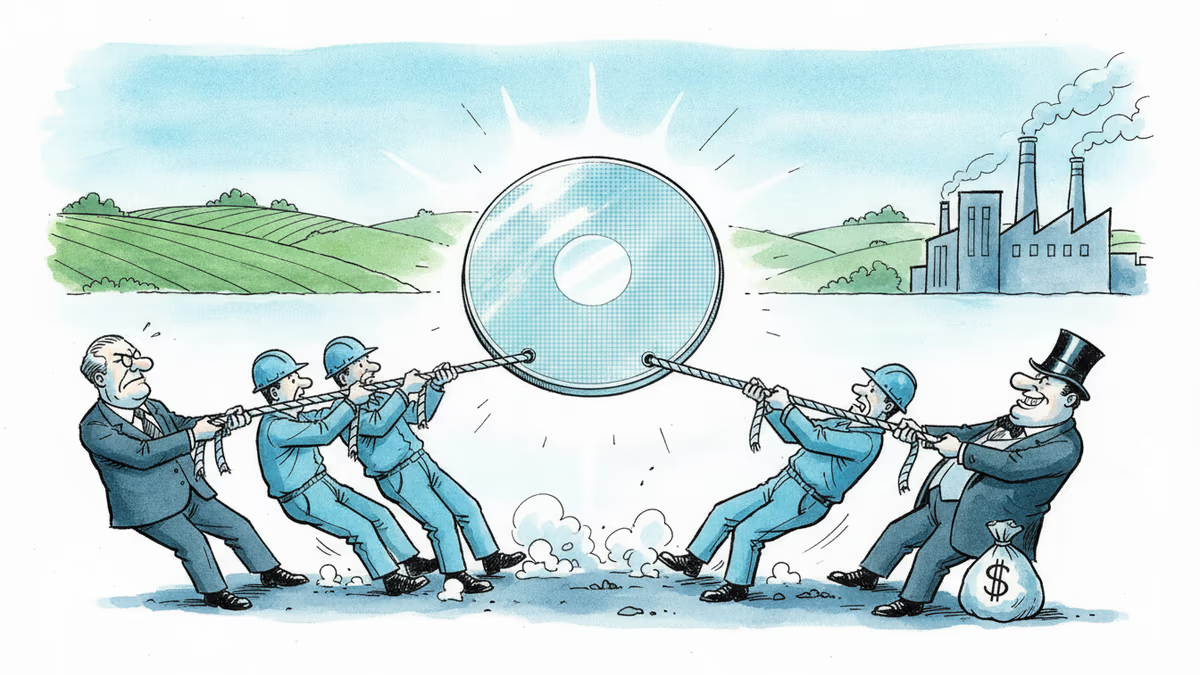
Samsung Electronics' union branch revealed that 84% of survey respondents oppose the government's roughly $290 billion (₩400 trillion) semiconductor megaproject in Gwangju. Government, management, the union and shareholders are all reading the same national project in sharply different ways.
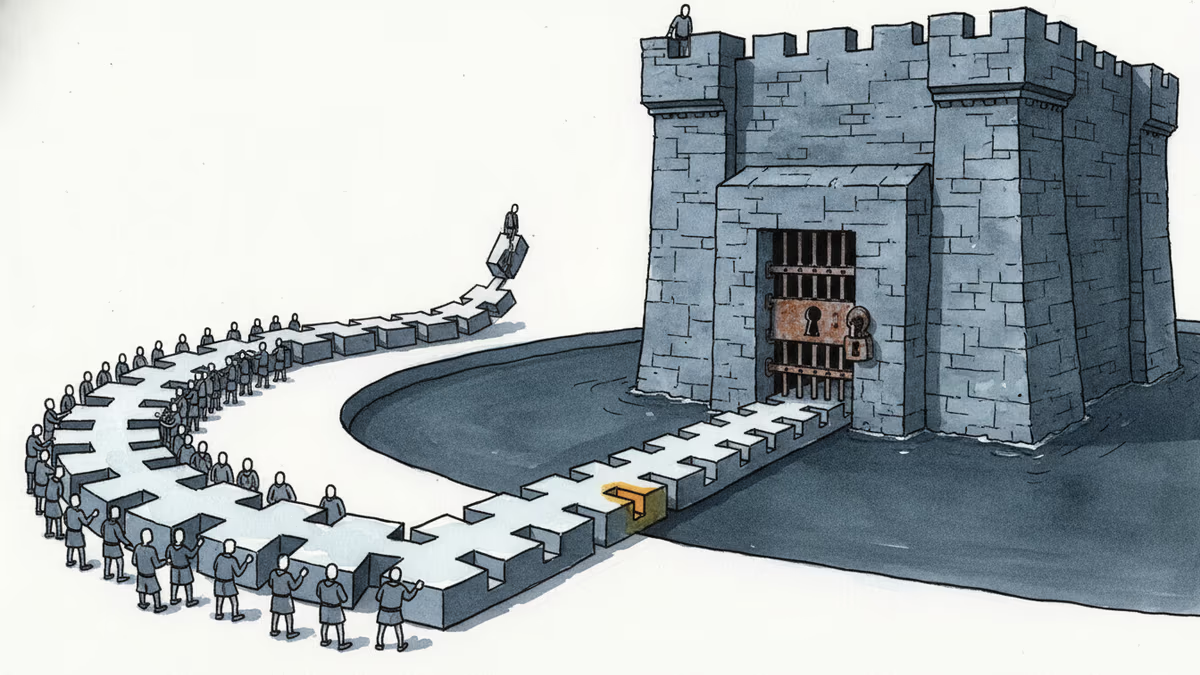
Nvidia shipped roughly a billion RISC-V cores in 2024, then announced it would run CUDA on the open standard. We break down how royalty-free instruction sets and open software stacks are trying to route around CUDA's lock-in. Part 2 of the Semiconductor Sovereignty series.

US AI-chip export controls split into three layers in the first half of 2026 — January easing, a May crackdown on circumvention, and a pending bill. Nvidia erased China from its guidance and still posted a record $81.6 billion quarter. A look at the export policy that both shields and cages it.
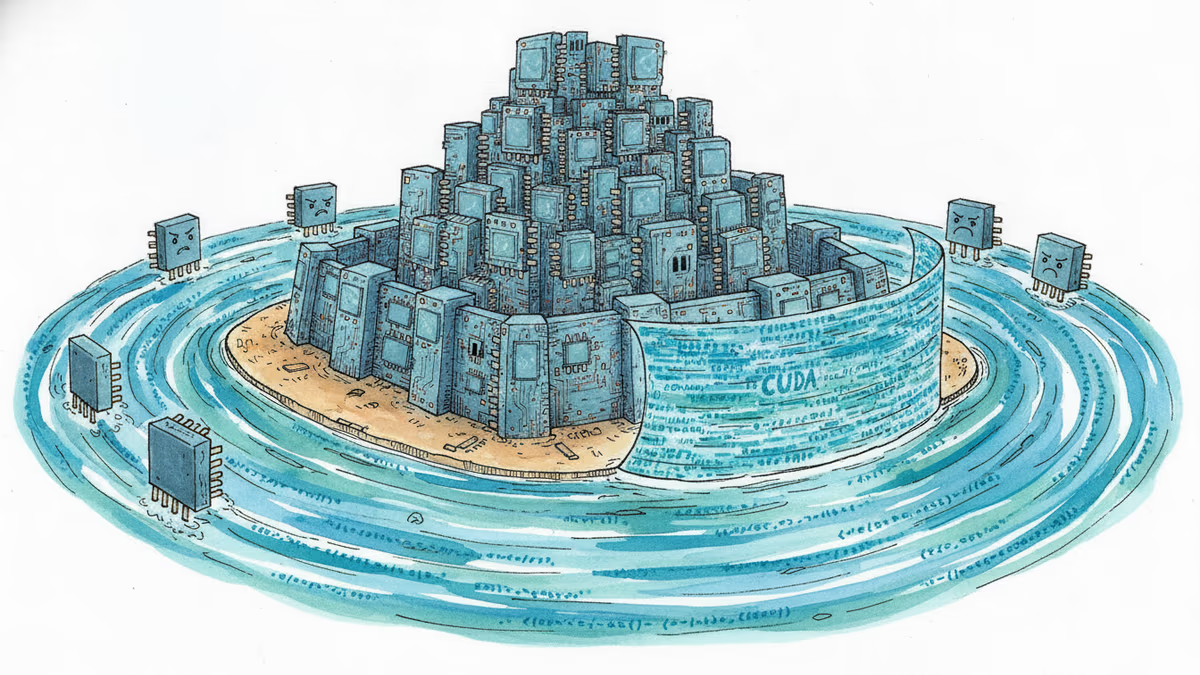
AMD's MI325X matches or beats Nvidia on memory and bandwidth — yet Nvidia's 86-92% share holds. The real moat is CUDA, 20 years in the making. Part 1 of 4.
Samsung Electronics' union branch revealed that 84% of survey respondents oppose the government's roughly $290 billion (₩400 trillion) semiconductor megaproject in Gwangju. Government, management, the union and shareholders are all reading the same national project in sharply different ways.
Nvidia shipped roughly a billion RISC-V cores in 2024, then announced it would run CUDA on the open standard. We break down how royalty-free instruction sets and open software stacks are trying to route around CUDA's lock-in. Part 2 of the Semiconductor Sovereignty series.
US AI-chip export controls split into three layers in the first half of 2026 — January easing, a May crackdown on circumvention, and a pending bill. Nvidia erased China from its guidance and still posted a record $81.6 billion quarter. A look at the export policy that both shields and cages it.
AMD's MI325X matches or beats Nvidia on memory and bandwidth — yet Nvidia's 86-92% share holds. The real moat is CUDA, 20 years in the making. Part 1 of 4.
Thoughts
Share your thoughts on this article
Sign in to join the conversation