
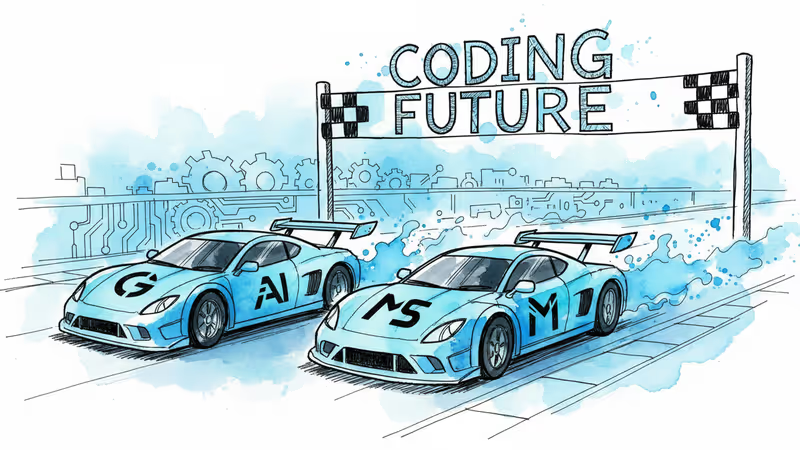
The 15-Minute Race That Defined AI's Coding Future
OpenAI and Anthropic launched competing AI coding tools within minutes. GPT-5.3 Codex debugged itself during development. What does this mean for developers?
15 minutes. That's all it took to turn a coordinated AI product launch into a high-stakes game of chicken. OpenAI and Anthropic had planned to release their competing AI coding tools at exactly the same time—10 a.m. PST on Monday. But Anthropic blinked first, moving their announcement up by a quarter-hour to steal the spotlight.
The AI That Built Itself
OpenAI'sGPT-5.3 Codex isn't just another incremental upgrade. This model represents something unprecedented: an AI that "was instrumental in creating itself." The company's engineers used early versions of the program to debug and evaluate its own performance, creating a feedback loop of self-improvement.
Where the original Codex could merely "write and review code," the new model promises to do "nearly anything developers and professionals do on a computer." In performance tests, it created "highly functional complex games and apps from scratch over the course of days." The 25% speed improvement over GPT-5.2 is almost secondary to this fundamental capability shift.
This isn't just about faster coding—it's about expanding "who can build software and how work gets done."
The Democratization Dilemma
OpenAI's vision sounds utopian: lower the barriers to software creation, let anyone build apps regardless of coding knowledge. But for professional developers, this creates a complex reality. On one hand, they're freed from repetitive tasks to focus on architecture and creative problem-solving. On the other hand, their specialized knowledge becomes less exclusive.

The implications ripple through the entire tech ecosystem. Startups might need fewer engineers to build MVPs. Enterprises could develop internal tools without expanding their dev teams. Non-technical founders might prototype ideas without technical co-founders.
But here's the catch: someone still needs to understand what they're building and why. AI can generate code, but it can't define product vision or understand user needs.
The Psychology of the 15-Minute War
Why did Anthropic jump the gun? In the AI industry, being first matters more than being slightly better. Developer communities are notoriously fickle—they'll try the first tool that catches their attention and stick with it if it works well enough.
This wasn't just about press coverage. It was about capturing mindshare in a winner-take-all market. The company that becomes the go-to coding assistant for developers gains access to millions of lines of real-world code, user feedback, and improvement opportunities. 15 minutes might seem trivial, but in the attention economy, it could determine market leadership for years.
The Bigger Game
Both companies are playing for stakes far beyond coding tools. Whoever dominates developer workflows gains unprecedented insight into how software gets built. They see every bug, every optimization, every architectural decision. This data becomes training material for even more capable AI systems.
We're witnessing the early stages of AI systems that can not only write code but understand entire software ecosystems. The question isn't whether AI will change programming—it's whether programming as we know it will still exist in five years.
Authors
Related Articles
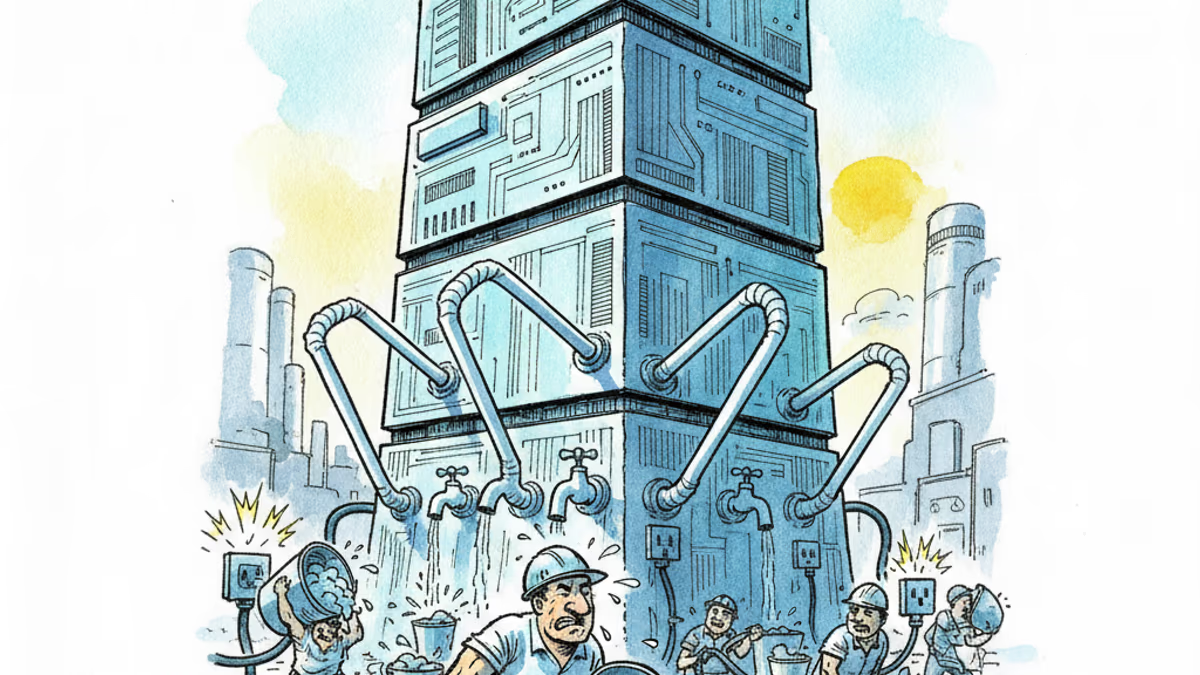
Samsung and SK unveiled a chip and AI investment package worth thousands of trillions of won on June 29. The headline number swings wildly by outlet, but the real contest isn't capital — it's water and power.
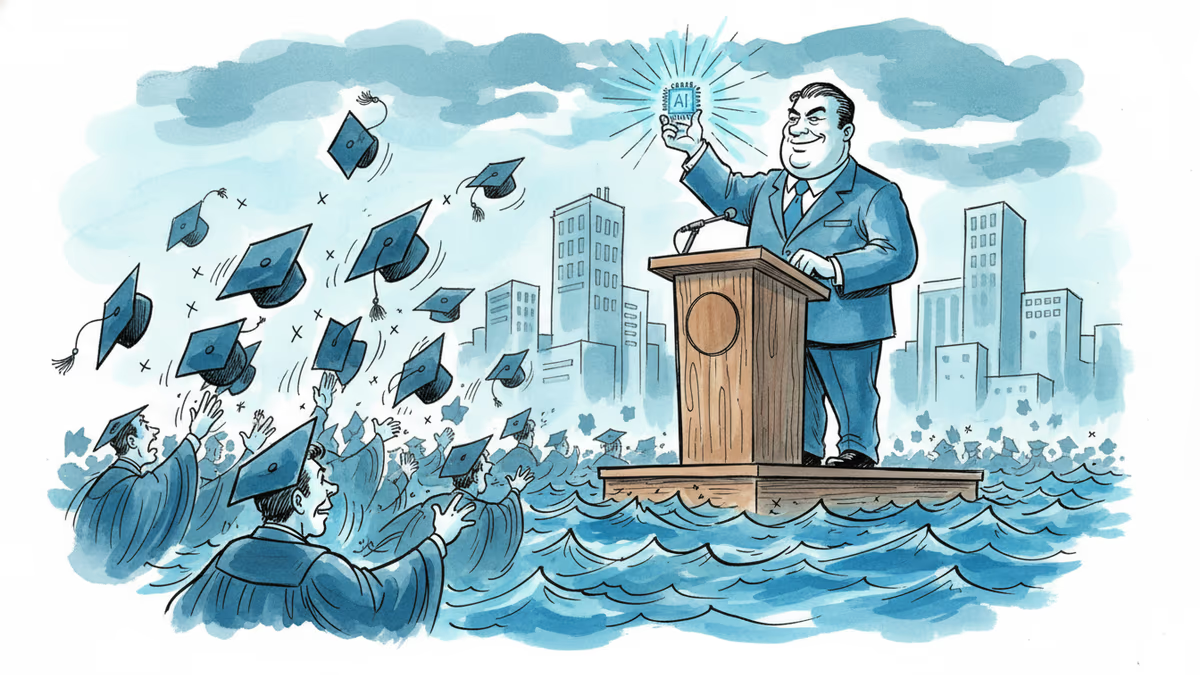
Viral videos show 2026 graduates jeering executives who praise AI at commencement ceremonies. It's not just rudeness — it's a signal about who pays for technological optimism.

Filipino virtual assistants using AI to ghost-manage LinkedIn profiles for executives is now a structured industry. 30 comments a day, fake engagement rings, and a platform struggling to tell real from fabricated.
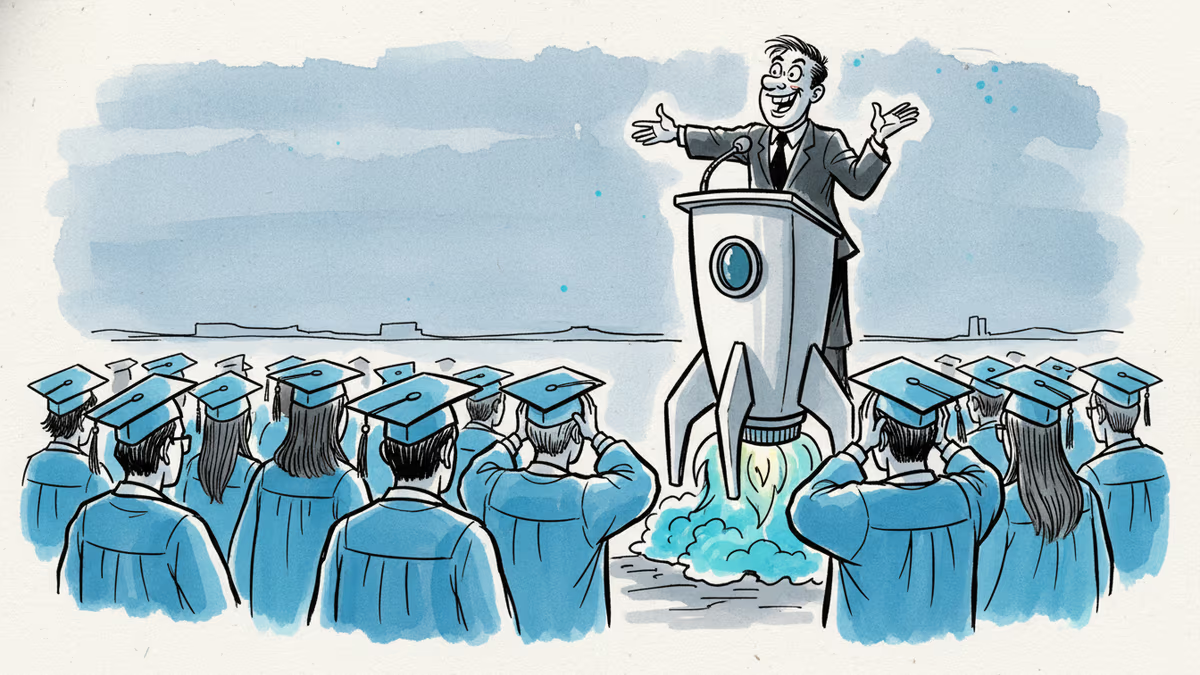
Two commencement speakers learned the hard way that AI enthusiasm doesn't land well with today's graduates. The backlash reveals a widening gap between tech optimism and Gen Z's economic reality.
Samsung and SK unveiled a chip and AI investment package worth thousands of trillions of won on June 29. The headline number swings wildly by outlet, but the real contest isn't capital — it's water and power.
Viral videos show 2026 graduates jeering executives who praise AI at commencement ceremonies. It's not just rudeness — it's a signal about who pays for technological optimism.
Filipino virtual assistants using AI to ghost-manage LinkedIn profiles for executives is now a structured industry. 30 comments a day, fake engagement rings, and a platform struggling to tell real from fabricated.
Two commencement speakers learned the hard way that AI enthusiasm doesn't land well with today's graduates. The backlash reveals a widening gap between tech optimism and Gen Z's economic reality.
Thoughts
Share your thoughts on this article
Sign in to join the conversation