

Olympic Sponsors Are Melting More Ice Than the Games Themselves
Milano Cortina 2026 Winter Olympics sponsors generate 40% more emissions than the Games, causing loss of 34 million tons of glacial ice. The paradox of winter sports.
34 million metric tons of glacial ice will disappear because of the 2026 Milano Cortina Winter Olympics. But here's the twist: the Games' sponsors are causing more environmental damage than the Olympics themselves.
A January report from the New Weather Institute reveals that while the Olympics will directly cause the loss of 5.5 square kilometers of snowpack and 34 million tons of glacial ice, three major sponsors are responsible for 40% more emissions than the Games' direct footprint.
When Sponsors Outweigh the Sport
The Olympics themselves generate 930,000 metric tons of carbon dioxide equivalent emissions. But the marketing boost given to three key sponsors—Italian energy giant Eni, automaker Stellantis, and ITA Airways—is estimated to produce an additional 1.3 million metric tons through increased sales of high-carbon goods and services.
Eni accounts for more than half of the sponsor-related emissions, followed by Stellantis and ITA. The logic is straightforward: Olympic sponsorship drives sales, and more sales of fossil fuels, cars, and flights mean more emissions.
Eni pushed back, calling the report's estimates biased and noting that "more than 90% of the fuels supplied by Eni to power the Games are derived from renewable raw materials." ITA Airways emphasized that "sustainability is a cornerstone" of its strategy, pointing to newer fuel-efficient aircraft and sustainable aviation fuel plans. Stellantis didn't respond to requests for comment.
The Vanishing Foundation of Winter Sports

The numbers paint a stark picture of winter sports in retreat. Italy has lost 265 ski resorts in the past five years. France, which will host the 2030 Winter Olympics, has seen more than 180 Alpine resorts close. Switzerland has shuttered 50-plus ski lifts and cable cars.
Each Olympic edition becomes increasingly dependent on artificial snow. Out of 93 locations with Winter Olympics infrastructure, only 52 will be "climate-reliable" by the 2050s if emissions continue at current rates, according to a 2024 International Olympic Committee study. By the 2080s, that drops to 46.
The IOC committed in 2021 to cutting direct and indirect emissions by 30% by 2024 and 50% by 2030. They claim to have hit the first target, but the sponsor problem complicates the picture.
The Path Not Taken
Without high-emissions sponsors, the Milano Cortina Olympics would be 22% cleaner than the 2018 PyeongChang Games. Organizers made smart choices: only two new permanent venues compared to six for PyeongChang and 14 for Sochi in 2014. They reused existing infrastructure wherever possible.
The report suggests that replacing carbon-intensive sponsors with low-carbon partners could save 1.4 million metric tons of CO2 equivalent without impacting funding. "The Games are not sustainable if they have big climate polluters as sponsors," says Andrew Simms, co-director of the New Weather Institute.
The Economics of Contradiction
Stuart Parkinson, director of Scientists for Global Responsibility and the report's lead author, puts it bluntly: "It is quite obvious to anyone who visits the real mountains that snow cover is being lost and glaciers are melting." Yet he believes "winter sports can be part of the solution by cleaning up their act and abandoning dirty sponsors."
The contradiction is stark: an event celebrating winter sports is accelerating the conditions that make those sports impossible. The Olympic rings might soon encircle a world where winter sports exist only in climate-controlled bubbles.
Authors
Related Articles
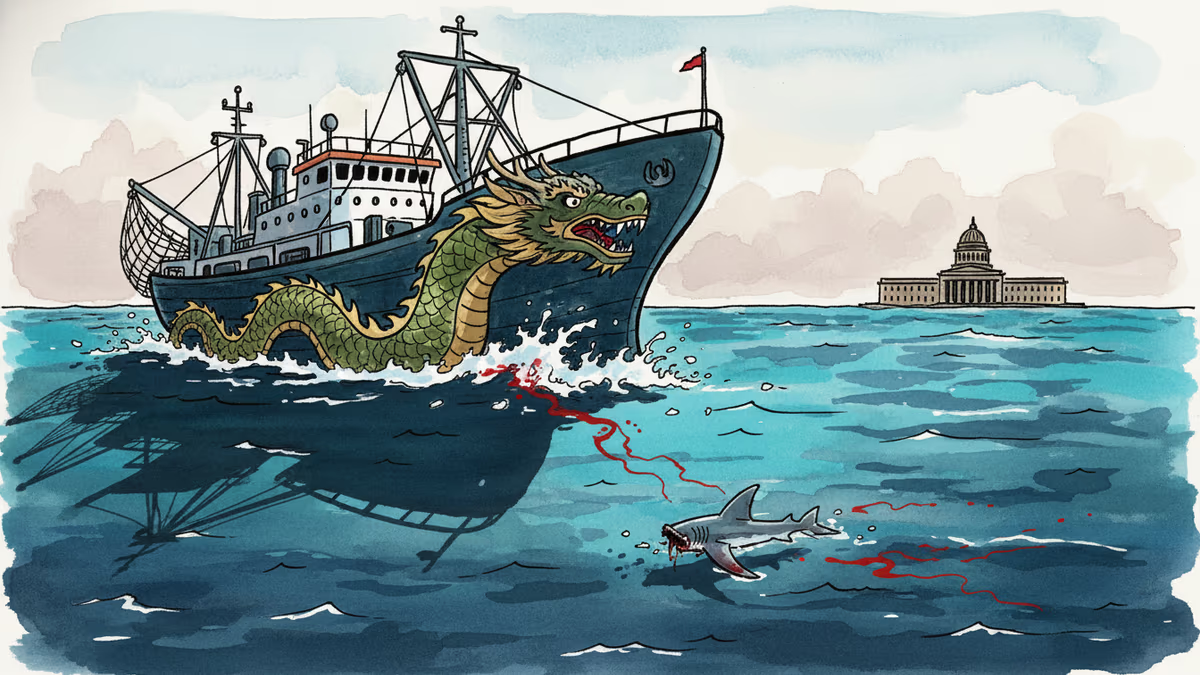
A U.S. nonprofit has petitioned the federal government to sanction China over shark finning. If upheld, it could trigger a ban on all Chinese seafood imports worth $1.5 billion annually.
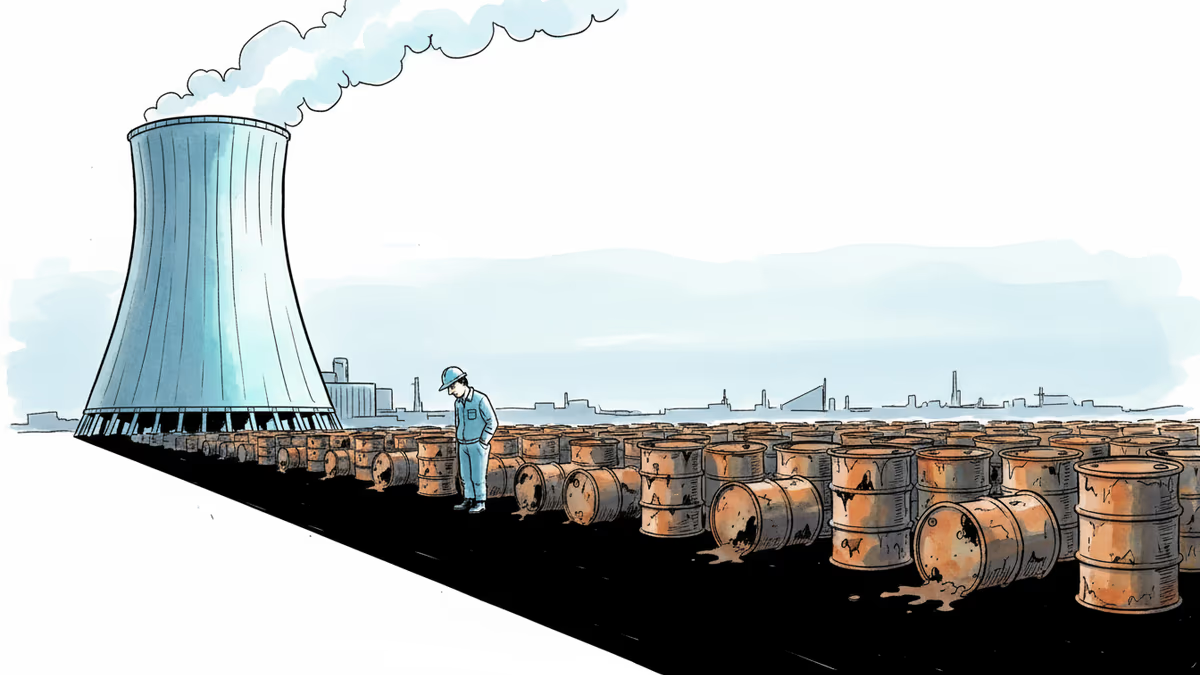
Nuclear power is winning fans across the political spectrum—and Big Tech is pouring billions in. But America still has no permanent home for the 2,000 metric tons of high-level waste its reactors produce every single year.
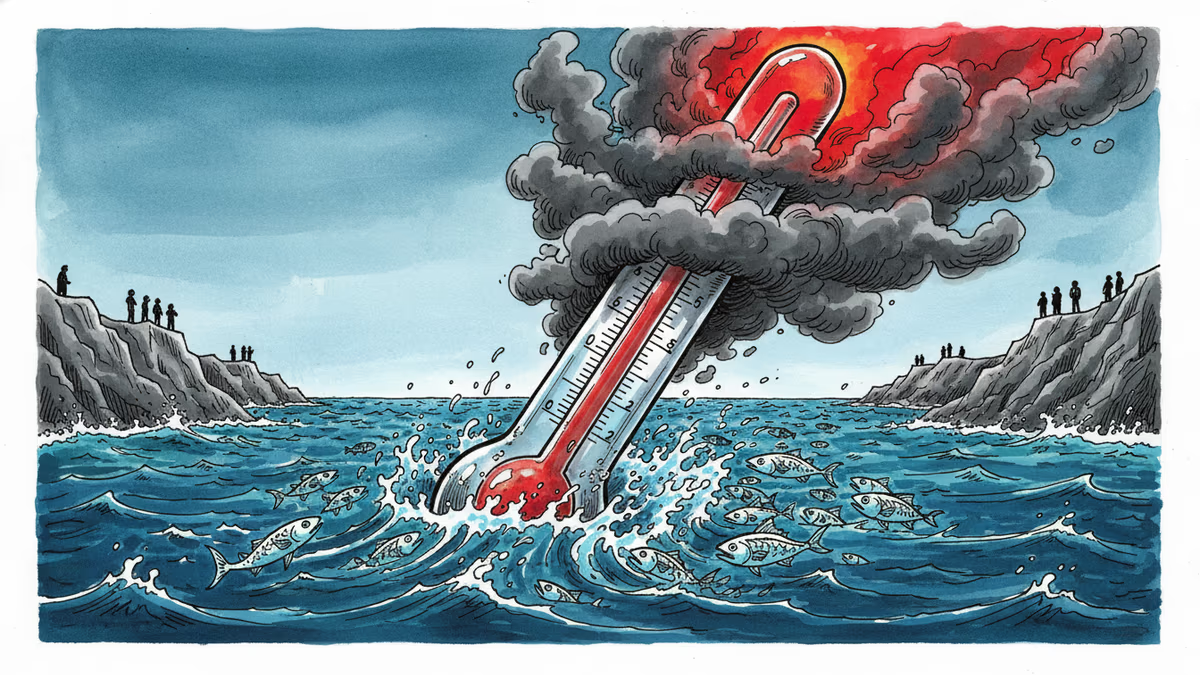
Scientists warn a strong El Niño could push Earth past the 1.5°C warming threshold within 12-18 months. What that means for weather, food, energy—and the politics of climate action.
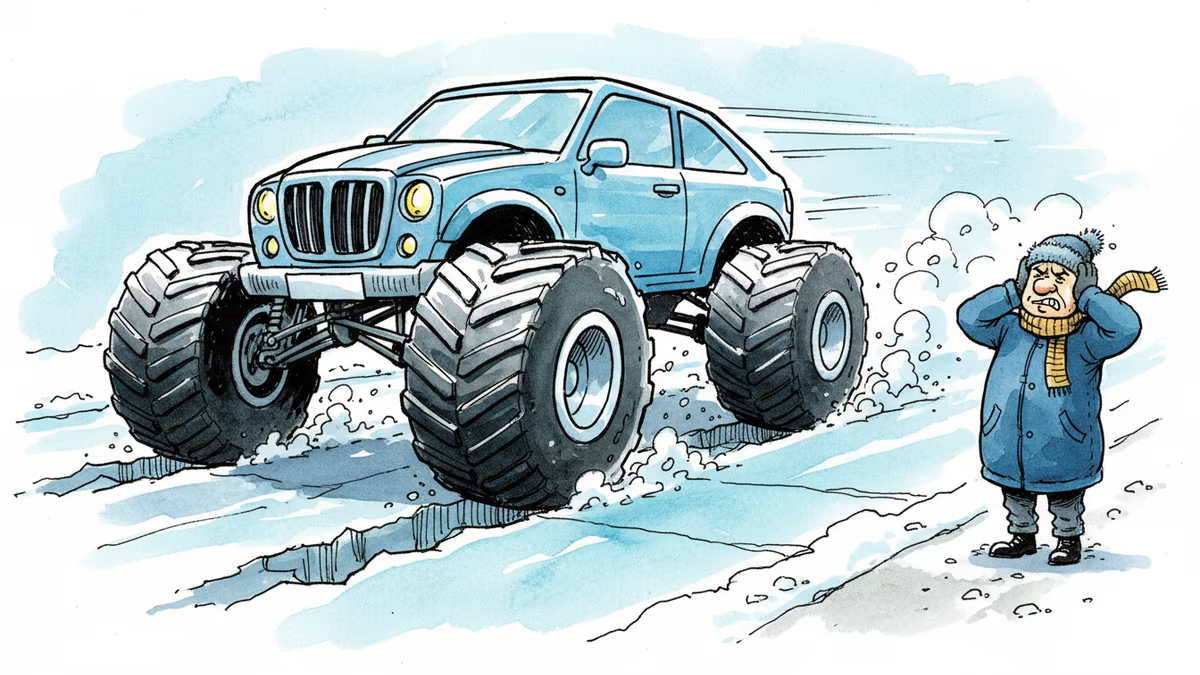
Studded snow tires offer unmatched grip on ice, but they're banned or restricted in many countries due to road damage and air quality concerns. What's the real trade-off?
A U.S. nonprofit has petitioned the federal government to sanction China over shark finning. If upheld, it could trigger a ban on all Chinese seafood imports worth $1.5 billion annually.
Nuclear power is winning fans across the political spectrum—and Big Tech is pouring billions in. But America still has no permanent home for the 2,000 metric tons of high-level waste its reactors produce every single year.
Scientists warn a strong El Niño could push Earth past the 1.5°C warming threshold within 12-18 months. What that means for weather, food, energy—and the politics of climate action.
Studded snow tires offer unmatched grip on ice, but they're banned or restricted in many countries due to road damage and air quality concerns. What's the real trade-off?
Thoughts
Share your thoughts on this article
Sign in to join the conversation