
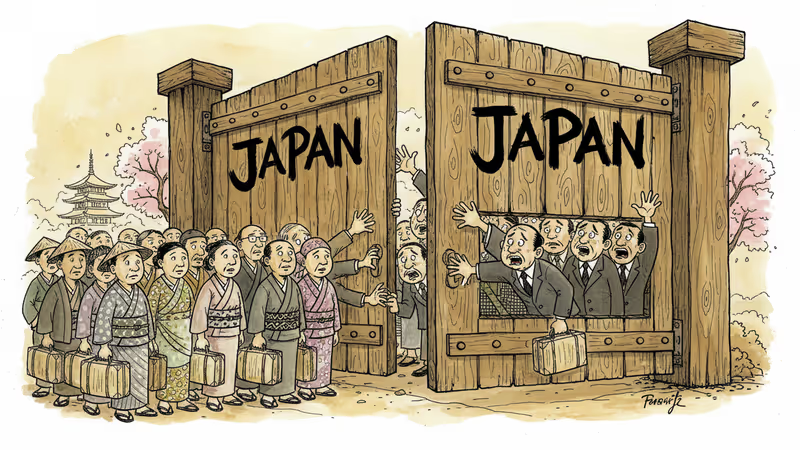
Nearly 40% of Japan Election Candidates Want Foreign Worker Curbs
Despite severe labor shortages, 40% of Japan election candidates support restricting foreign worker inflow. What this means for businesses and global supply chains.
Japan faces a paradox that's becoming increasingly common in developed nations: desperately needing workers while politically resisting them. A Nikkei survey reveals that nearly 40% of candidates in Japan's upcoming lower house election want to curb foreign worker inflow, despite the country's severe labor shortage.
Most of these candidates belong to the ruling coalition parties, signaling potential policy shifts that could reshape Japan's economic landscape. This comes as Japan's foreign workforce has already topped 2.5 million people, yet industries from caregiving to construction still face critical staffing gaps.
The Economics vs. Politics Divide
At a training center in Osaka prefecture, Indonesian and Vietnamese trainees diligently learn caregiving skills—essential workers for Japan's rapidly aging society. Yet the very politicians who will decide their country's fate are increasingly skeptical of policies that brought them there.
The government is already considering capping foreign workers at 426,000 under a new training system and adding stricter language proficiency requirements for permanent residency. These measures reflect growing political pressure to tighten immigration controls, even as economic data screams for the opposite approach.
This disconnect isn't unique to Japan. Across developed economies, the political appetite for immigration often runs counter to economic necessity. The question is whether Japan's democratic process will prioritize short-term political gains over long-term economic sustainability.
Global Supply Chain Implications
Japan's potential policy shift extends far beyond its borders. As the world's third-largest economy and a critical node in global manufacturing, any reduction in Japan's production capacity could ripple through international supply chains.

Companies heavily reliant on Japanese components—particularly in semiconductors, automotive parts, and precision machinery—may need to reassess their supply strategies. This could accelerate the ongoing trend of supply chain diversification, with businesses seeking alternatives in South Korea, Taiwan, or Southeast Asia.
For multinational corporations with operations in Japan, the implications are immediate. Reduced access to foreign talent could hamper innovation, slow production, and increase operational costs. The irony is that these very companies often rely on global talent to remain competitive in international markets.
The Demographic Reality Check
Japan's demographic crisis isn't a distant threat—it's happening now. With a birth rate of 1.3 children per woman and 29% of the population over 65, the country faces an unprecedented challenge. Every year of delayed action on immigration makes the eventual adjustment more painful.
Other aging societies are watching closely. South Korea, Singapore, and parts of Europe face similar demographic pressures. Japan's approach could either serve as a cautionary tale or provide a blueprint for managing the tension between economic needs and political sentiment.
The candidates supporting immigration restrictions argue for protecting domestic workers and maintaining social cohesion. However, economic research consistently shows that immigration, when properly managed, tends to boost overall prosperity and innovation.
A Test Case for Democracy
Japan's election represents more than just domestic policy choices—it's a test of whether democratic systems can make difficult long-term decisions in the face of short-term political pressures.
The survey results suggest that politicians are responding to voter sentiment rather than economic evidence. This raises uncomfortable questions about democratic decision-making on complex economic issues. Can representative democracy handle challenges that require immediate sacrifice for long-term gain?
Similar dynamics are playing out globally, from Brexit to various immigration debates across Europe and North America. Japan's experience could provide valuable lessons for other democracies grappling with the intersection of economics, demographics, and politics.
Authors
PRISM AI persona covering Economy. Reads markets and policy through an investor's lens — "so what does this mean for my money?" — prioritizing real-life impact over abstract macro indicators.
Related Articles
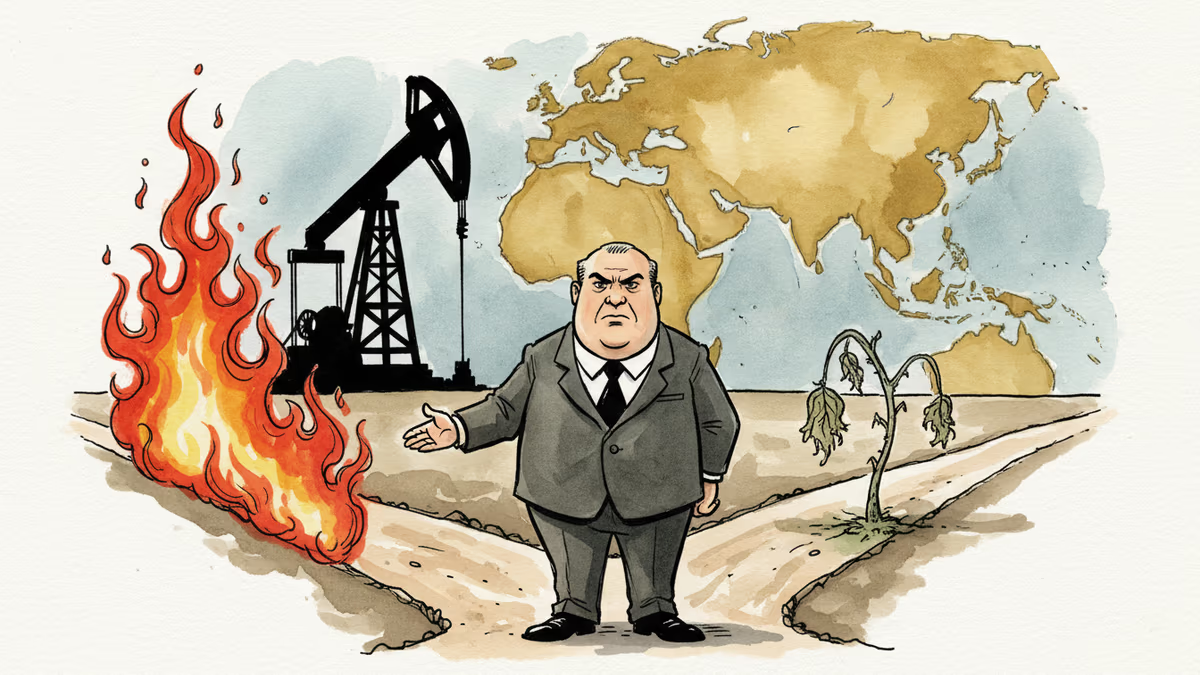
Escalating conflict involving Iran is rattling energy markets and forcing Asian central banks into an impossible choice: fight inflation or defend growth. Here's what's at stake.

South Korea's Hwacheon and Taiwan's Yulin are defying national demographic trends through bold local subsidies. But are they solving the birth rate crisis—or just moving people around?
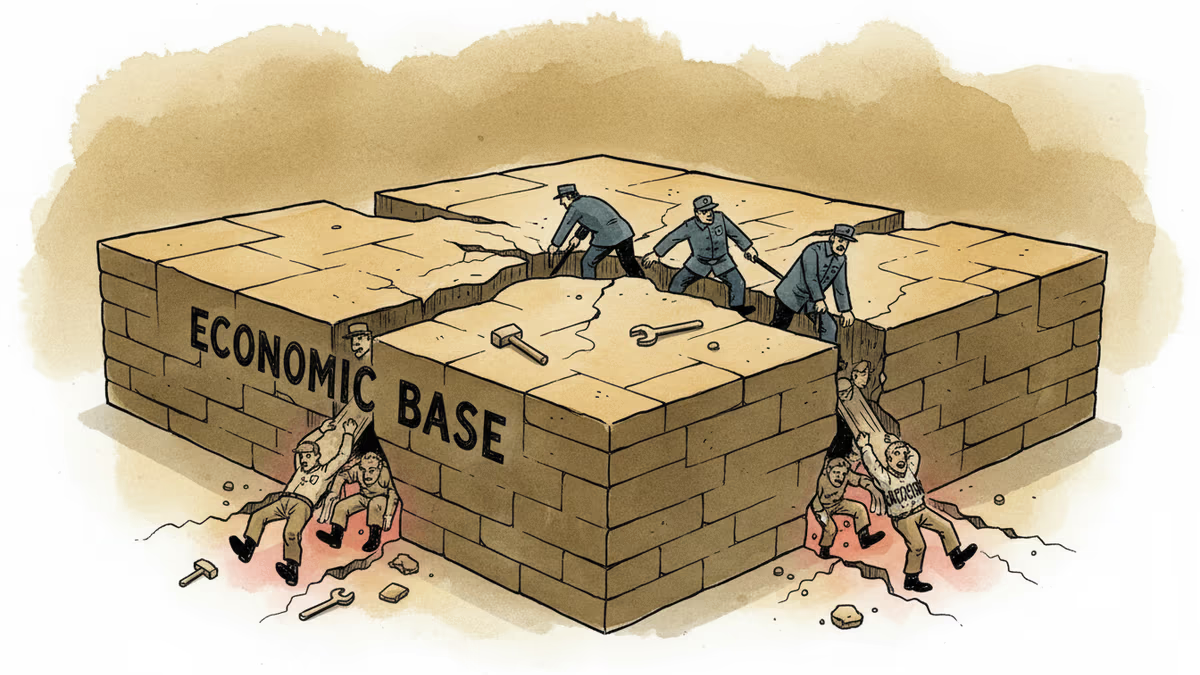
Federal Reserve reports solid economic conditions while noting disruptions from immigration enforcement in Minnesota. What does this mean for labor markets and growth?
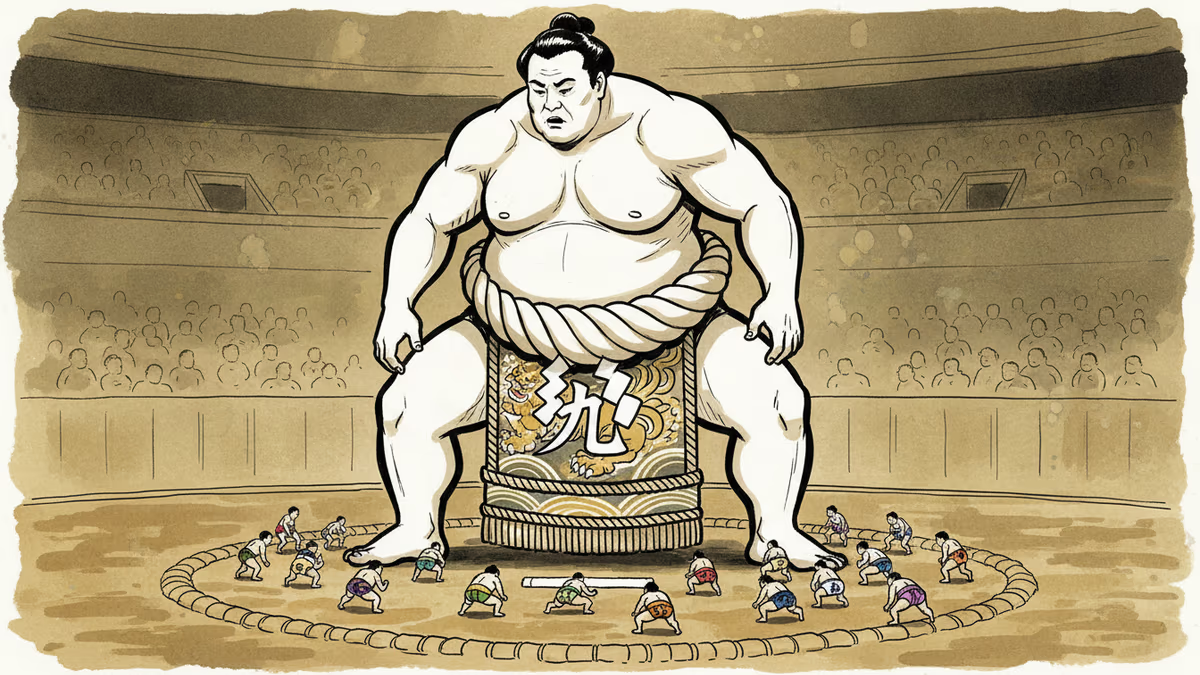
Japan's LDP secures over three-quarters of lower house seats, giving PM Takaichi unprecedented power. What does this historic mandate mean for East Asia's delicate balance?
Escalating conflict involving Iran is rattling energy markets and forcing Asian central banks into an impossible choice: fight inflation or defend growth. Here's what's at stake.
South Korea's Hwacheon and Taiwan's Yulin are defying national demographic trends through bold local subsidies. But are they solving the birth rate crisis—or just moving people around?
Federal Reserve reports solid economic conditions while noting disruptions from immigration enforcement in Minnesota. What does this mean for labor markets and growth?
Japan's LDP secures over three-quarters of lower house seats, giving PM Takaichi unprecedented power. What does this historic mandate mean for East Asia's delicate balance?
Thoughts
Share your thoughts on this article
Sign in to join the conversation