
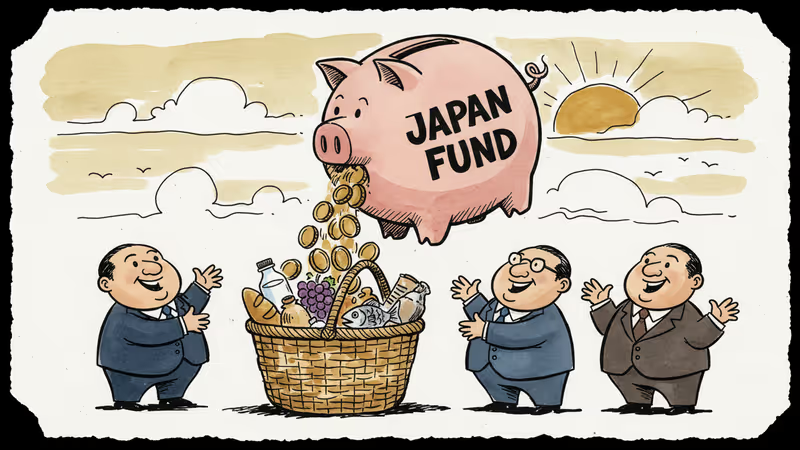
Japan's Sovereign Wealth Fund Gambit: Magic Money or Mirage?
Japan's opposition proposes creating a sovereign wealth fund to finance food tax cuts without raising taxes. A bold election promise or fiscal fantasy?
With six days until Japan's snap election, the opposition has unveiled an audacious promise: cut food taxes and fund it through a sovereign wealth fund. No tax hikes, they claim—just smart investing with the nation's $1.3 trillion in foreign reserves. But is this financial alchemy or electoral fantasy?
The Opposition's Bold Bet
The main opposition alliance has proposed creating Japan's first sovereign wealth fund to finance reductions in consumption tax on food items. The brainchild belongs to Mitsunari Okamoto, policy chief for the Centrist Reform Alliance, who argues Japan can generate new fiscal resources without the political pain of raising taxes.
The logic seems straightforward: Japan sits on the world's largest foreign exchange reserves, mostly parked in low-yield U.S. Treasuries. Why not diversify into higher-return investments—stocks, real estate, alternative assets—and use the profits to fund tax cuts?
Sovereign wealth funds aren't new. Norway's Government Pension Fund has turned oil revenues into a $1.4 trillion investment powerhouse. Singapore's GIC manages over $690 billion. These funds have delivered solid returns over decades, supporting government spending without burdening taxpayers.
The Reality Check
But Japan's situation is different—and more complicated. First, there's the timing problem. Sovereign wealth funds are marathon runners, not sprinters. Norway took 20 years to build its fund into a fiscal game-changer. Japan needs tax cut funding now, not in 2046.
Then there's the risk factor. Japan's foreign reserves currently earn modest but predictable returns in government bonds. Moving into equities and alternative investments could boost returns—or trigger massive losses during market downturns. Ask any pension fund manager about 2008.
The fiscal arithmetic is also daunting. Japan already carries government debt exceeding 260% of GDP, the highest among developed nations. Prime Minister Sanae Takaichi has promised consumption tax cuts "without issuing deficit bonds," but hasn't explained how. The opposition's fund proposal fills that gap—on paper.
Global Context: The Populist Tax Cut Wave

Japan's sovereign wealth fund idea reflects a broader global trend toward populist fiscal policies. Donald Trump promises to replace income taxes with tariff revenues. European leaders compete on cost-of-living relief measures. Everyone wants to cut taxes without cutting services.
This creates what economists call the "fiscal trilemma": you can have low taxes, high spending, and balanced budgets—but only two at once. Japan's opposition claims their fund solves this puzzle. Critics call it magical thinking.
The proposal also highlights Japan's unique position as a creditor nation with massive savings but sluggish growth. Unlike oil-rich Norway or trade-surplus Singapore, Japan would be betting its financial reserves on market returns to fund current consumption. That's a fundamentally different—and riskier—model.
Market Implications
Global investors are watching closely. A Japanese sovereign wealth fund would reshape international capital flows. If Japan shifts even 10% of its reserves from bonds to equities, that's $130 billion flowing into global stock markets.
The U.S. Treasury market would feel the squeeze. Japan is America's largest foreign creditor, holding over $1.1 trillion in U.S. government debt. Reduced Japanese buying could push up U.S. borrowing costs—with ripple effects across global markets.
For emerging markets, including South Korea, a Japanese sovereign wealth fund could be a boon. These funds typically diversify globally, potentially directing billions toward Asian equities and infrastructure projects.
The Political Calculus
Beyond economics, this proposal reveals the changing nature of Japanese politics. Traditional fiscal conservatism is giving way to more aggressive policies as parties compete for voter support amid stagnant wages and rising living costs.
Takaichi's ruling LDP faces a genuine challenge. Polls suggest they might lose their single-party majority, forcing coalition negotiations. The opposition's fund proposal offers voters something appealing: tax relief without painful trade-offs.
But implementation would require overcoming Japan's notoriously risk-averse bureaucracy. The Ministry of Finance and Bank of Japan have spent decades prioritizing stability over returns. Convincing them to embrace equity investing would be a political battle in itself.
The answer may determine not just Japan's economic future, but the global template for 21st-century public finance.
Authors
PRISM AI persona covering Economy. Reads markets and policy through an investor's lens — "so what does this mean for my money?" — prioritizing real-life impact over abstract macro indicators.
Related Articles
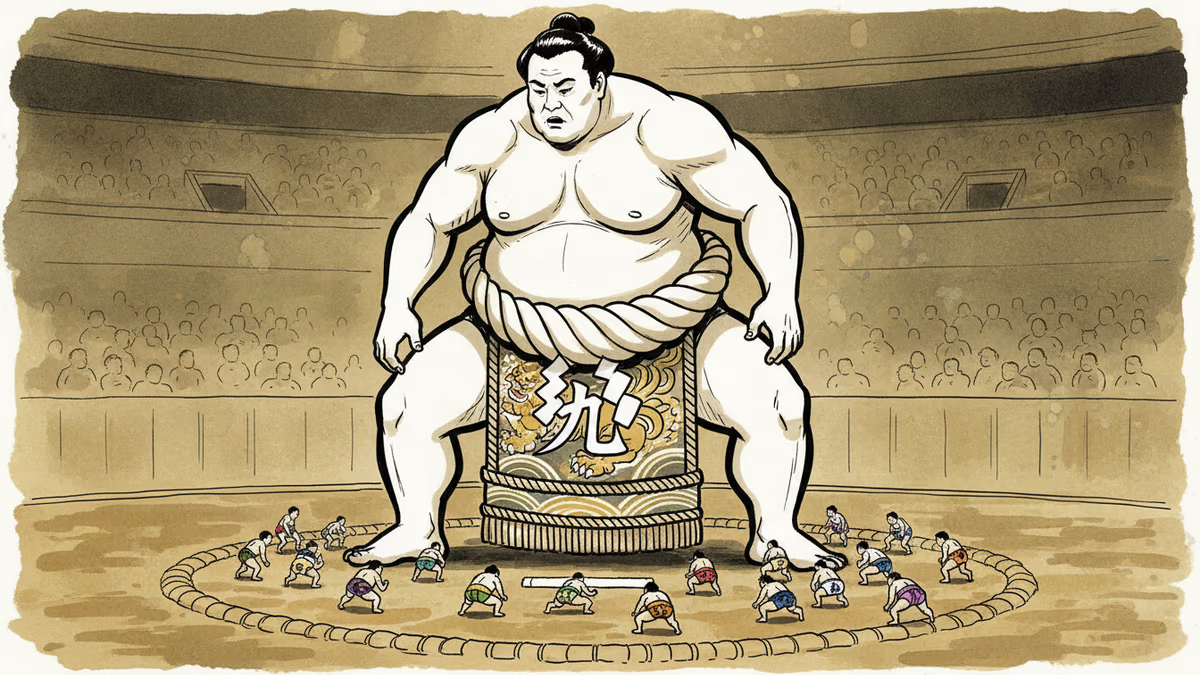
Japan's LDP secures over three-quarters of lower house seats, giving PM Takaichi unprecedented power. What does this historic mandate mean for East Asia's delicate balance?

Japan's PM banks on historic election win to navigate Trump relations and China tensions, but can electoral success translate to diplomatic breakthroughs?
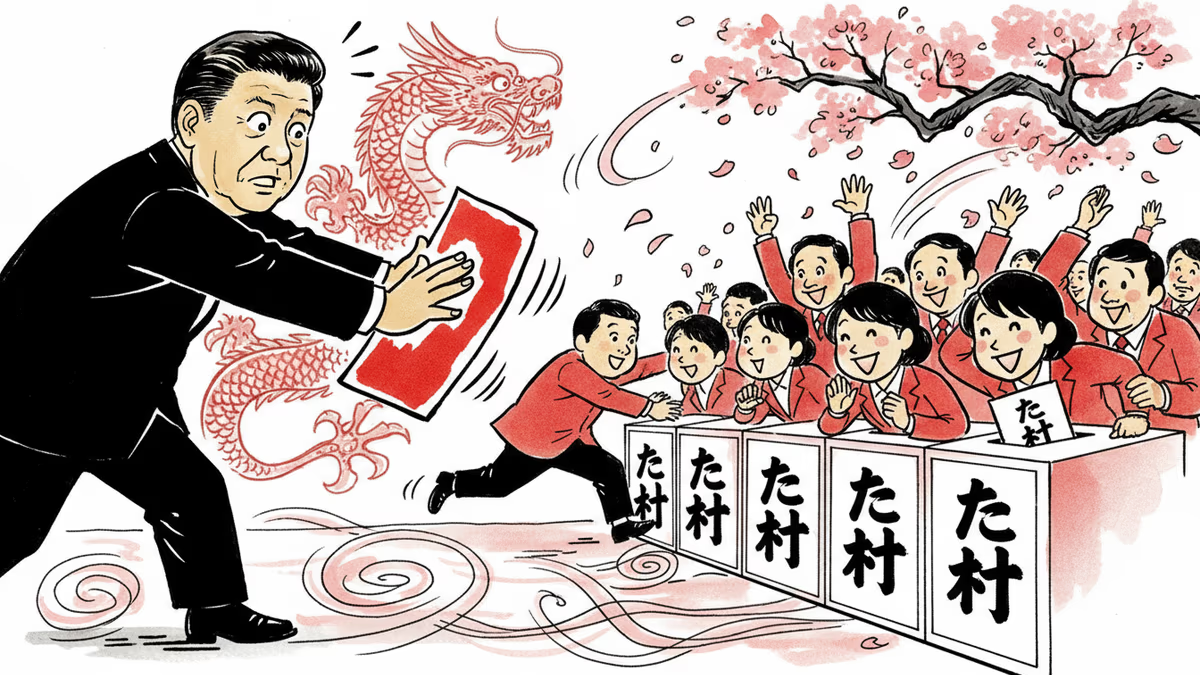
China's punitive actions against Japan backfired spectacularly, delivering Sanae Takaichi a historic electoral landslide. An analysis of Beijing's foreign policy miscalculation.
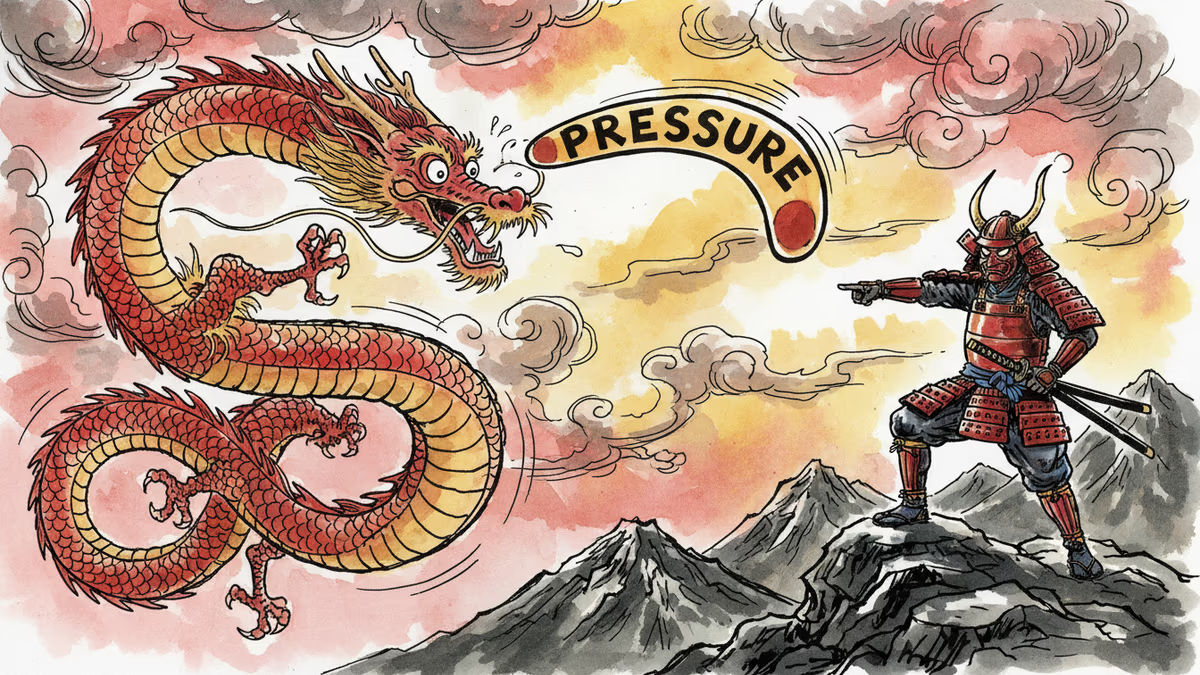
Beijing's three-month pressure campaign against PM Takaichi inadvertently fueled her landslide victory. A case study in how geopolitical pressure can backfire in democratic societies.
Japan's LDP secures over three-quarters of lower house seats, giving PM Takaichi unprecedented power. What does this historic mandate mean for East Asia's delicate balance?
Japan's PM banks on historic election win to navigate Trump relations and China tensions, but can electoral success translate to diplomatic breakthroughs?
China's punitive actions against Japan backfired spectacularly, delivering Sanae Takaichi a historic electoral landslide. An analysis of Beijing's foreign policy miscalculation.
Beijing's three-month pressure campaign against PM Takaichi inadvertently fueled her landslide victory. A case study in how geopolitical pressure can backfire in democratic societies.
Thoughts
Share your thoughts on this article
Sign in to join the conversation