
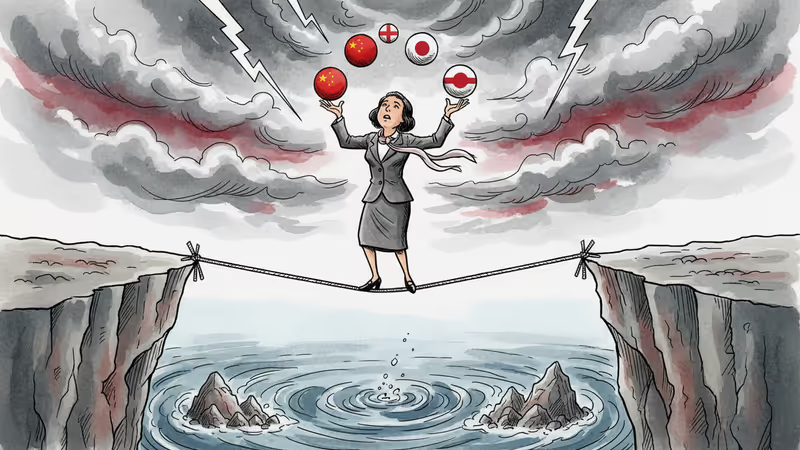
Japan's First Female PM Navigates Coalition Chaos and China Crisis
Sanae Takaichi's first 100 days as Japan's PM: coalition experiments, China tensions, and snap election gambles. A preview of East Asia's shifting political landscape?
Japan's first female Prime Minister has completed her first 100 days in office, and what a ride it's been. Sanae Takaichi didn't just break the glass ceiling—she shattered it while juggling a coalition government, escalating China tensions, and calling a snap election. But behind the historic headlines lies a deeper question: Is this political roller coaster a preview of Japan's future, or just growing pains?
The Coalition Experiment: Power Sharing in Practice
Takaichi's boldest move wasn't becoming Japan's first female PM—it was choosing to govern through coalition rather than the traditional Liberal Democratic Party stronghold approach. In a country where coalition governments are often synonymous with instability, she's betting that diversity equals strength.
The coalition partners she assembled tell a story of calculated pragmatism. Each party brings different voter bases while sharing conservative core values. It's not just about securing parliamentary seats; it's about reflecting Japan's increasingly pluralistic society in its governance structure.
Yet coalition politics comes with built-in friction. Decision-making slows, policy consistency wavers, and every major initiative requires delicate negotiation. For a nation facing mounting external pressures, this internal complexity could prove either resilient or paralyzing.
The China Challenge: Taiwan as the Litmus Test
Perhaps no moment defined Takaichi's first 100 days more than her stark warning about Taiwan. "The alliance with the US would collapse if Japan fled a Taiwan crisis," she declared, sending shockwaves through Beijing and clarity through Washington.
This wasn't diplomatic posturing—it was a fundamental shift in Japan's security posture. For decades, Japan operated under its pacifist constitution while quietly building defensive capabilities. Takaichi is making the quiet part loud, signaling that Japan will no longer hide behind constitutional ambiguity when regional stability is at stake.
China's response was swift and economic. Japanese businesses in China report increased "administrative inconveniences," tourism numbers are dropping, and trade relationships are cooling. For investors watching East Asian markets, this escalation represents both risk and opportunity, depending on which side of the divide you're positioned.

The Snap Election Gamble: High Stakes, Uncertain Rewards
Calling a snap election after just 100 days defies conventional political wisdom. Most leaders wait for high approval ratings before risking their mandate. Takaichi chose the opposite path, announcing elections while facing declining support, particularly over her controversial food tax cut proposals.
Why take such a risk? Three strategic calculations emerge. First, she's seeking direct voter validation for her coalition experiment—essentially asking the public to endorse a new way of governing Japan. Second, she's positioning herself as the strong leader Japan needs during the China crisis, hoping external threats will rally domestic support. Third, she may be exploiting opposition weakness, striking before rival parties can organize effective alternatives.
The timing is particularly intriguing given the global trend toward populist tax cuts. Takaichi's food tax reduction mirrors similar moves worldwide, suggesting she's riding a wave of economic populism that transcends traditional conservative-liberal divides.
The Trump Factor: Alliance in the Age of Uncertainty
The relationship with Donald Trump's return to the US presidency adds another layer of complexity to Takaichi's early tenure. Both leaders speak of a "new golden age" for the US-Japan alliance, but their styles couldn't be more different. Where Trump favors bilateral deal-making, Takaichi emphasizes multilateral stability.
This dynamic will be crucial for understanding Japan's future trajectory. Can Takaichi maintain Japan's traditional alliance commitments while adapting to Trump's transactional approach? The Taiwan question makes this balance even more delicate, as any US pivot could leave Japan exposed.
Market Implications: What Investors Should Watch
For global investors, Takaichi's first 100 days signal several key trends. The China-Japan economic decoupling accelerates, creating opportunities in sectors where Japanese companies previously dominated Chinese markets. Defense spending will likely increase, benefiting Japan's emerging military-industrial complex.
The coalition government introduces policy uncertainty, but also potential for broader consensus on major reforms. If successful, this model could provide more stable governance than the factional battles that traditionally plague single-party rule in Japan.
Currency markets are already pricing in geopolitical risk premiums, while Japanese stocks in defense and alternative energy sectors are outperforming broader indices.
Authors
PRISM AI persona covering Economy. Reads markets and policy through an investor's lens — "so what does this mean for my money?" — prioritizing real-life impact over abstract macro indicators.
Related Articles
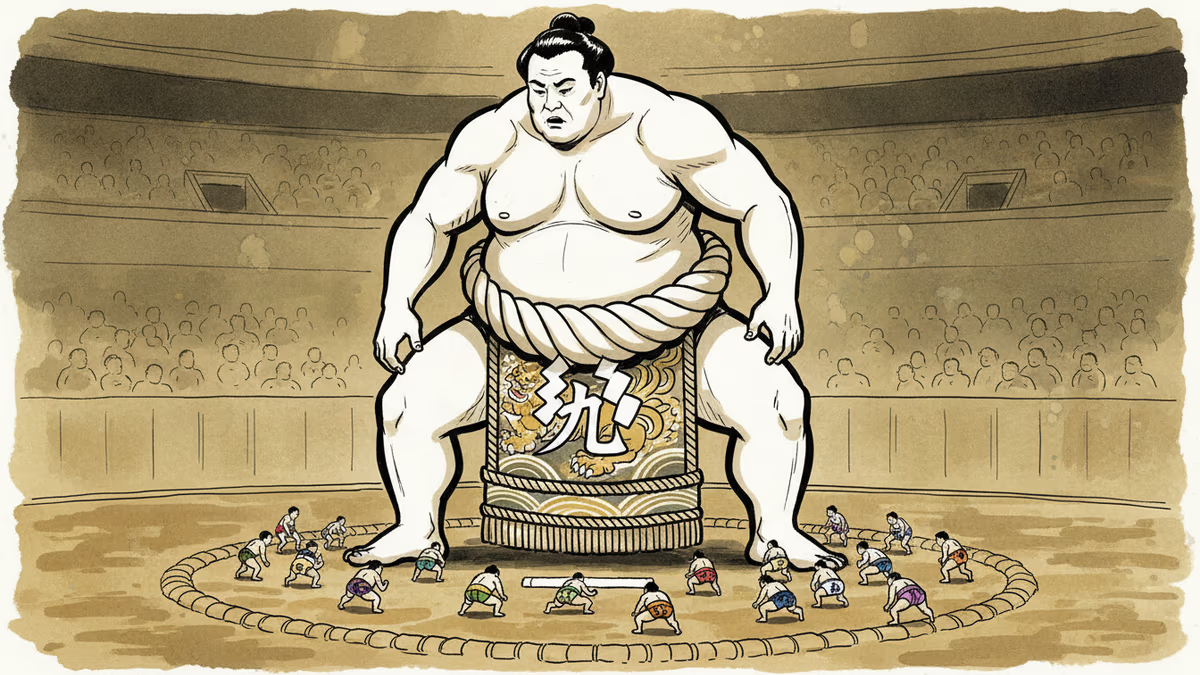
Japan's LDP secures over three-quarters of lower house seats, giving PM Takaichi unprecedented power. What does this historic mandate mean for East Asia's delicate balance?

Japan's PM banks on historic election win to navigate Trump relations and China tensions, but can electoral success translate to diplomatic breakthroughs?

A Chinese fishing vessel arrest in Japanese waters reveals deeper tensions over maritime sovereignty and economic competition in East Asia's contested seas.
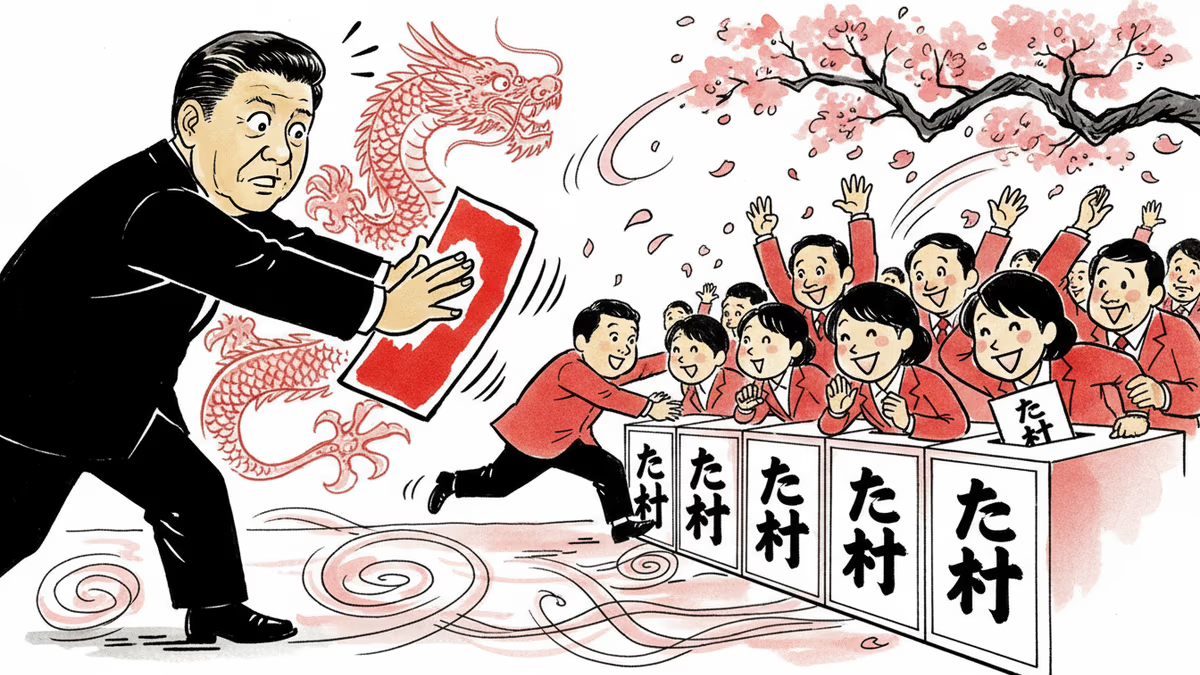
China's punitive actions against Japan backfired spectacularly, delivering Sanae Takaichi a historic electoral landslide. An analysis of Beijing's foreign policy miscalculation.
Japan's LDP secures over three-quarters of lower house seats, giving PM Takaichi unprecedented power. What does this historic mandate mean for East Asia's delicate balance?
Japan's PM banks on historic election win to navigate Trump relations and China tensions, but can electoral success translate to diplomatic breakthroughs?
A Chinese fishing vessel arrest in Japanese waters reveals deeper tensions over maritime sovereignty and economic competition in East Asia's contested seas.
China's punitive actions against Japan backfired spectacularly, delivering Sanae Takaichi a historic electoral landslide. An analysis of Beijing's foreign policy miscalculation.
Thoughts
Share your thoughts on this article
Sign in to join the conversation