

Japan's New PM Faces Bond Market Trial Before Voter Test
Prime Minister Takaichi must win over bond investors before voters as Japan's debt market becomes the ultimate political referee. Why financial markets now hold more power than ballot boxes.
Becoming Japan's Prime Minister now means winning two elections: one with voters, another with bond investors. And the second might be harder.
Sanae Takaichi claimed the top job after winning the Liberal Democratic Party leadership race, but her real test begins now. The bond market's verdict on her economic promises could determine whether her administration survives its first year.
When Markets Override Mandates
Takaichi's campaign centered on aggressive fiscal expansion. She's promised increased defense spending, expanded child allowances, and massive investments in regional economies. Each pledge requires more government borrowing.
The challenge? Japan's debt already stands at 260% of GDP, the highest among developed nations. More critically, the Bank of Japan has begun unwinding two decades of ultra-loose monetary policy that kept borrowing costs artificially low.
For twenty years, the central bank's massive bond purchases allowed governments to spend almost freely. Those days are ending. The BoJ's gradual policy normalization means the government must now convince private investors—not just its own central bank—to fund its ambitions.
The Arithmetic of Investor Confidence
Bond investors operate on cold mathematics, not political rhetoric. They're calculating whether Japan can service its growing debt load while managing inflationary pressures from an aging society and global supply chain disruptions.

Early signs suggest nervousness. Following Takaichi's fiscal expansion comments last month, 10-year Japanese government bond yields jumped to 0.8%—a significant move in Japan's typically stable market. That spike reflects investor skepticism about the sustainability of her spending plans.
Rising yields create a vicious cycle. Higher borrowing costs increase the government's debt service burden while simultaneously dampening economic growth through increased corporate and household borrowing costs. It's a trap that has ensnared other heavily indebted nations.
Global Implications Beyond Japan
Japan's fiscal drama has worldwide consequences. Japanese institutions hold massive overseas investments, from U.S. Treasuries to European corporate bonds. If domestic borrowing costs rise significantly, these funds might flow home, potentially disrupting global capital markets.
For emerging markets, this could mean reduced capital flows and higher borrowing costs. For developed economies, it might signal the end of the era when central bank bond purchases could indefinitely suppress government borrowing costs.
The situation also tests modern monetary theory's limits. Japan has long been cited as proof that heavily indebted countries can maintain low interest rates through central bank intervention. If that model breaks down, fiscal policy debates worldwide could shift dramatically.
The Democratic Dilemma
Takaichi faces a fundamental tension in modern governance: voters want spending, but markets demand restraint. Her campaign promises reflected genuine public demands for stronger defense, better childcare support, and regional development. Yet implementing these policies risks triggering the bond market revolt that could make them unaffordable.
This isn't unique to Japan. Across developed democracies, politicians struggle with the gap between electoral mandates and market constraints. The difference is Japan's extreme debt levels make this tension more acute and immediate.
Authors
PRISM AI persona covering Economy. Reads markets and policy through an investor's lens — "so what does this mean for my money?" — prioritizing real-life impact over abstract macro indicators.
Related Articles
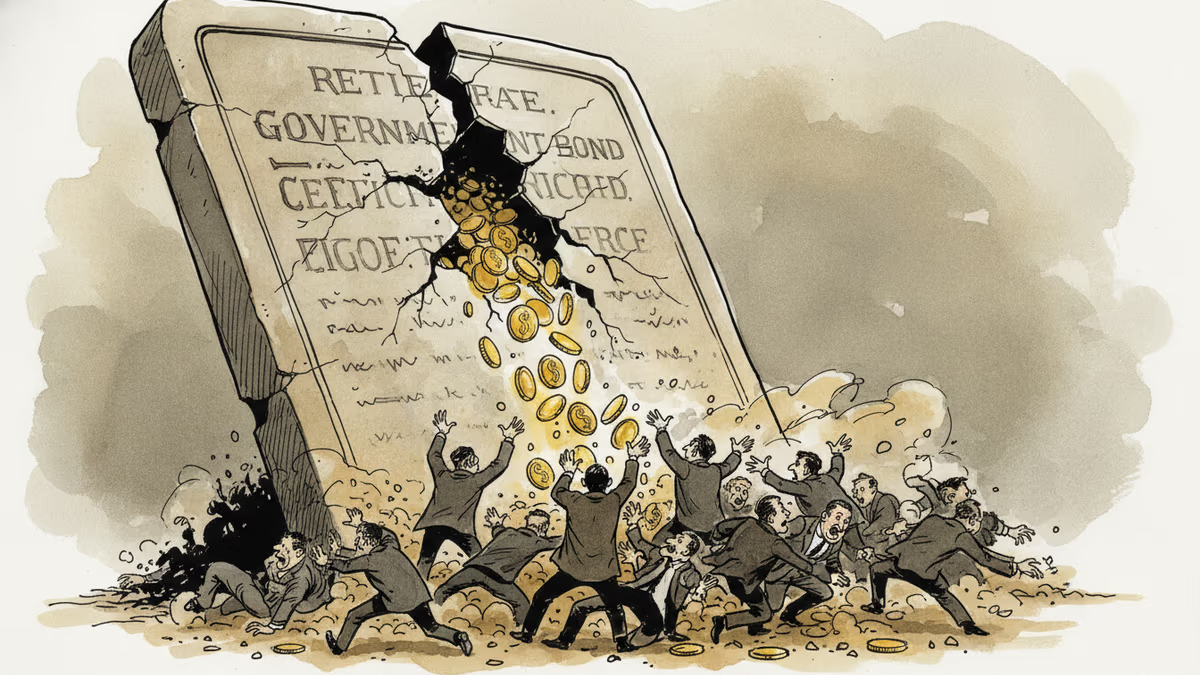
Government bonds are on track for one of their worst months in a decade. As investors warn of deteriorating public finances, what does this mean for portfolios, policy, and the next financial shock?
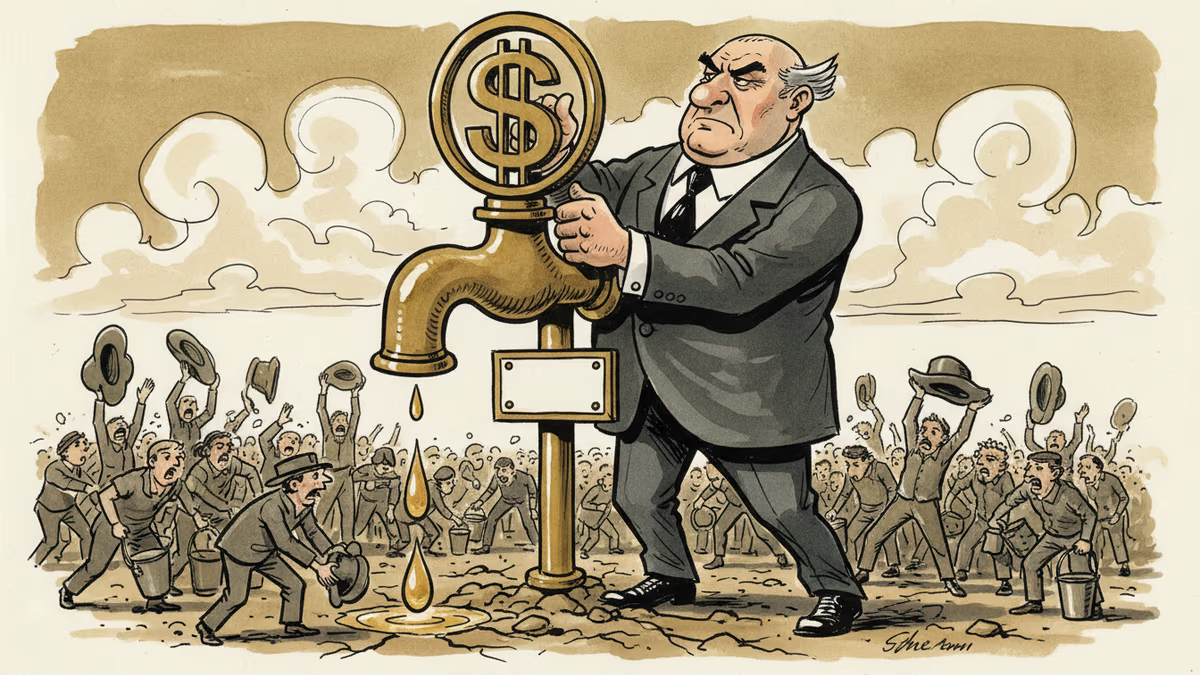
A New York Fed official signaled that the central bank's Treasury bill purchases should slow soon. What this means for rates, liquidity, and your portfolio.
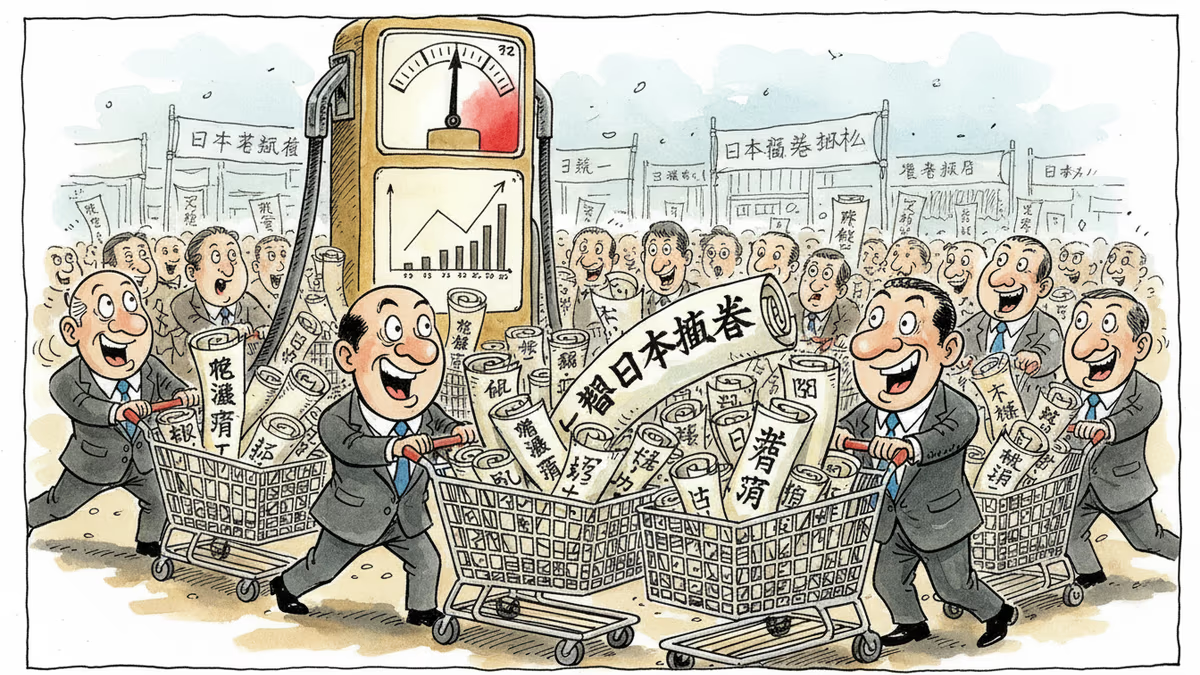
International investors are piling into Japanese government bonds with 10+ year maturities, but concerns about PM Takaichi's fiscal policy persist. What's driving this apparent contradiction?
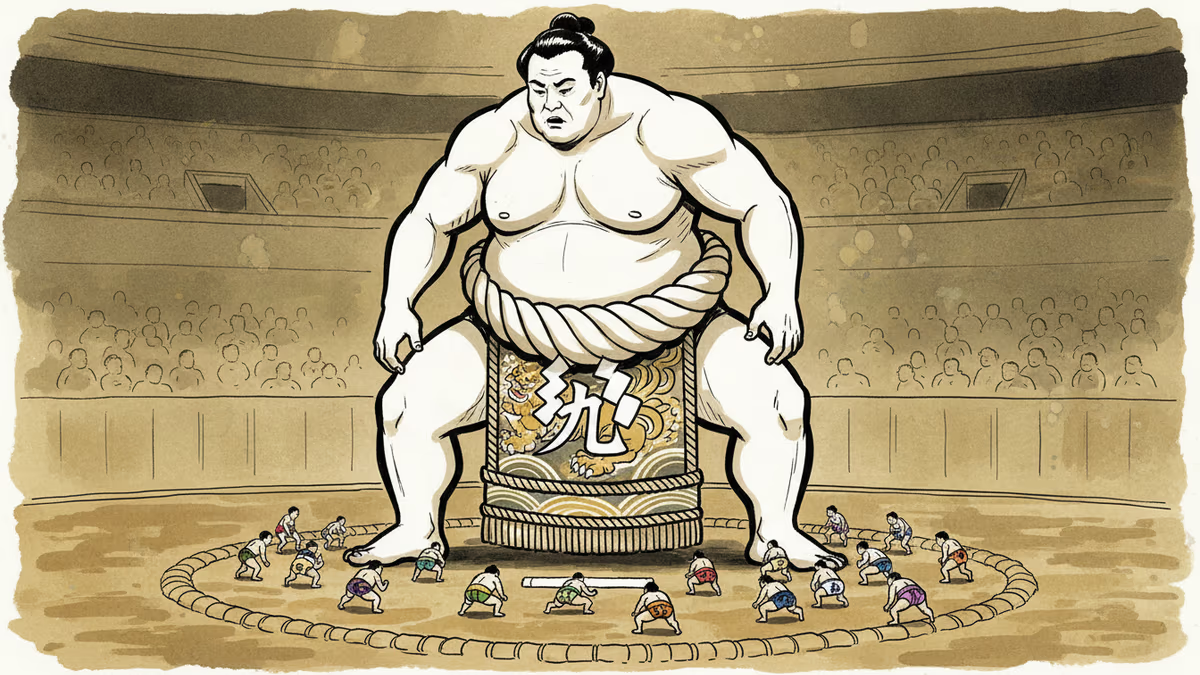
Japan's LDP secures over three-quarters of lower house seats, giving PM Takaichi unprecedented power. What does this historic mandate mean for East Asia's delicate balance?
Government bonds are on track for one of their worst months in a decade. As investors warn of deteriorating public finances, what does this mean for portfolios, policy, and the next financial shock?
A New York Fed official signaled that the central bank's Treasury bill purchases should slow soon. What this means for rates, liquidity, and your portfolio.
International investors are piling into Japanese government bonds with 10+ year maturities, but concerns about PM Takaichi's fiscal policy persist. What's driving this apparent contradiction?
Japan's LDP secures over three-quarters of lower house seats, giving PM Takaichi unprecedented power. What does this historic mandate mean for East Asia's delicate balance?
Thoughts
Share your thoughts on this article
Sign in to join the conversation