

NASA ISS Medical Evacuation 2026: First Emergency Return in 65 Years
NASA has executed its first-ever medical evacuation from the ISS. Discover the details behind the 2026 emergency return of 4 astronauts via SpaceX Dragon.
NASA just broke 65 years of tradition for one reason: safety. For the first time in its human spaceflight history, the agency has conducted a medical evacuation from the International Space Station (ISS). Four astronauts are heading back to Earth today, cutting their mission short by more than one month.
Unprecedented Move: NASA ISS Medical Evacuation 2026 Details
On Wednesday, January 14, 2026, the SpaceX Dragon capsule undocked from the orbiting laboratory. The crew, including NASA's Zena Cardman and Mike Fincke, JAXA’s Kimiya Yui, and Roscosmos' Oleg Platonov, is aiming for a splashdown near San Diego early Thursday morning. While NASA hasn't disclosed which astronaut requires care or the nature of the ailment due to privacy, officials confirmed the individual is stable.

Impact on Space Station Operations
The early departure leaves only three crew members aboard the station. Consequently, NASA must stand down from any routine or emergency spacewalks until a replacement crew arrives, currently targeted for mid-February. This marks the first major executive decision by the new NASA Administrator, Jared Isaacman, who took office in December.
| Metric | Medical Evacuation 2026 | Typical Mission |
|---|---|---|
| Duration | 5 months (approx.) | 6-8 months |
| Reason for Return | Medical Priority | Scheduled Rotation |
| Crew Count Remaining | 3 | 7+ |
Authors
Related Articles
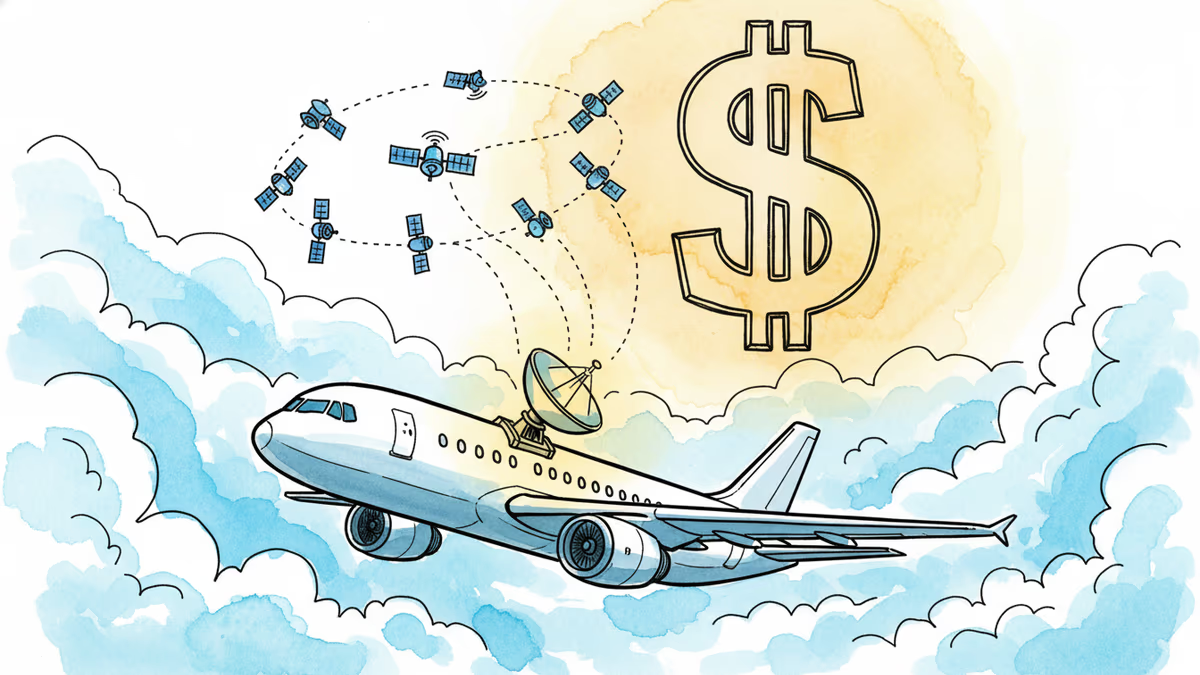
American Airlines just signed Starlink for 500+ aircraft. It's not just about faster inflight internet — it's a calculated move in the run-up to what could be the largest IPO in history.

SpaceX's upgraded Starship V3 completed its first test flight, deploying 20 Starlink simulators but losing the Super Heavy booster. With an IPO weeks away, the stakes just got higher.

SpaceX's IPO filing puts AI at the center, claiming a $26.5 trillion market opportunity. But can Grok compete with OpenAI and Anthropic for enterprise customers?
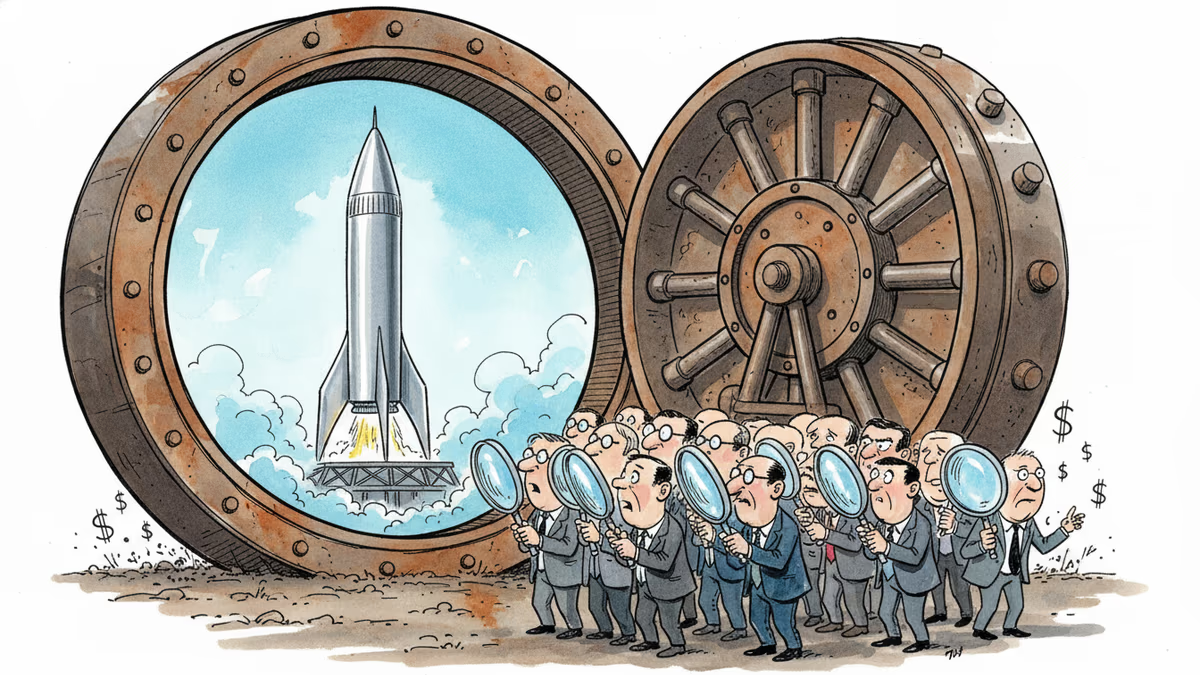
SpaceX filed a nearly 400-page S-1 with the SEC, targeting an IPO as early as June 12. Here's what the filing reveals—and what it doesn't.
American Airlines just signed Starlink for 500+ aircraft. It's not just about faster inflight internet — it's a calculated move in the run-up to what could be the largest IPO in history.
SpaceX's upgraded Starship V3 completed its first test flight, deploying 20 Starlink simulators but losing the Super Heavy booster. With an IPO weeks away, the stakes just got higher.
SpaceX's IPO filing puts AI at the center, claiming a $26.5 trillion market opportunity. But can Grok compete with OpenAI and Anthropic for enterprise customers?
SpaceX filed a nearly 400-page S-1 with the SEC, targeting an IPO as early as June 12. Here's what the filing reveals—and what it doesn't.
Thoughts
Share your thoughts on this article
Sign in to join the conversation