

Humans Are Heading to the Moon Again. Now What?
NASA's Artemis II launched Wednesday, sending four astronauts toward the Moon for the first time in 54 years. What this mission means, who's watching, and what happens next.
The last time humans traveled this close to the Moon, Nixon was president and the Cold War was the reason. That was 1972. On Wednesday evening, 54 years later, four people left Earth and pointed themselves at the Moon again.
What Just Happened
NASA's Artemis II mission lifted off successfully, carrying astronauts Reid Wiseman, Victor Glover, and Christina Koch — along with Canadian Jeremy Hansen — aboard the Orion crew capsule atop the Space Launch System (SLS) rocket. The full trip is a 10-day journey. They won't land on the Moon. Instead, they'll loop around it and come home — a dress rehearsal, not the main event.
But that framing undersells it. This is the first time humans have traveled beyond low Earth orbit since Apollo 17 splashed down in December 1972. The mission had originally been scheduled for February before technical reviews pushed the date back. Wednesday's launch marks the first crewed flight of the SLS, the most powerful rocket NASA has flown since the Saturn V.
Why This Moment Matters

Artemis II is the bridge between Artemis I — an uncrewed test flight in 2022 — and Artemis III, which aims to put humans back on the lunar surface as early as 2028. Whether that timeline holds depends heavily on what this mission reveals about how the Orion capsule and its life support systems perform with actual crew aboard.
The timing is not incidental. China has publicly targeted a crewed lunar landing in the 2030s and has been accelerating its program. SpaceX's Starship, which NASA has contracted to serve as the lunar lander for Artemis III, is still in development. The race to establish a sustained human presence on the Moon — with all the strategic, scientific, and commercial implications that entails — is no longer hypothetical. It's a schedule.
Three Ways to Read This Launch
For governments and space agencies, the Moon is increasingly viewed as strategic terrain. It holds water ice at its poles — a potential source of rocket propellant for deeper missions — and serves as a proving ground for technologies needed to eventually reach Mars. NASA, the European Space Agency, JAXA, and 27 other nations have signed the Artemis Accords, a framework for how lunar resources should be accessed and shared. The geopolitics of space is no longer science fiction.
For the private sector, Artemis II raises a pointed question about cost and efficiency. Each SLS launch is estimated to cost roughly $4 billion. SpaceX is building Starship with reusability at its core, targeting costs orders of magnitude lower. The tension between publicly-funded mega-rockets and commercially-driven architecture isn't just an engineering debate — it's a question about what model of space exploration is actually sustainable over decades.
For ordinary people, lunar missions can feel abstract. But space technology has a long history of filtering down: GPS, weather satellites, memory foam, water filtration systems. The spinoffs from Artemis-era research — in materials science, life support, energy storage — may matter more to daily life in 2040 than the Moon landing itself.
Authors
Related Articles
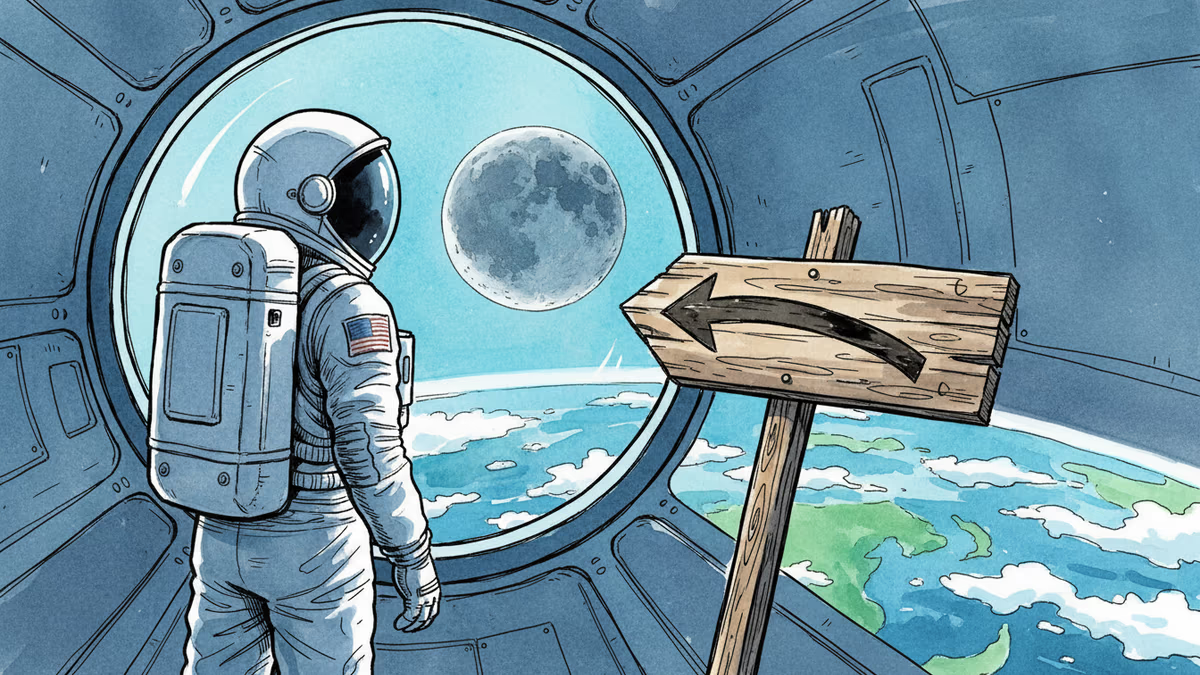
NASA's Artemis III has been redesigned as an Earth-orbit mission. SpaceX and Blue Origin say their landers won't be ready until late 2027. What does this mean for the future of lunar exploration?
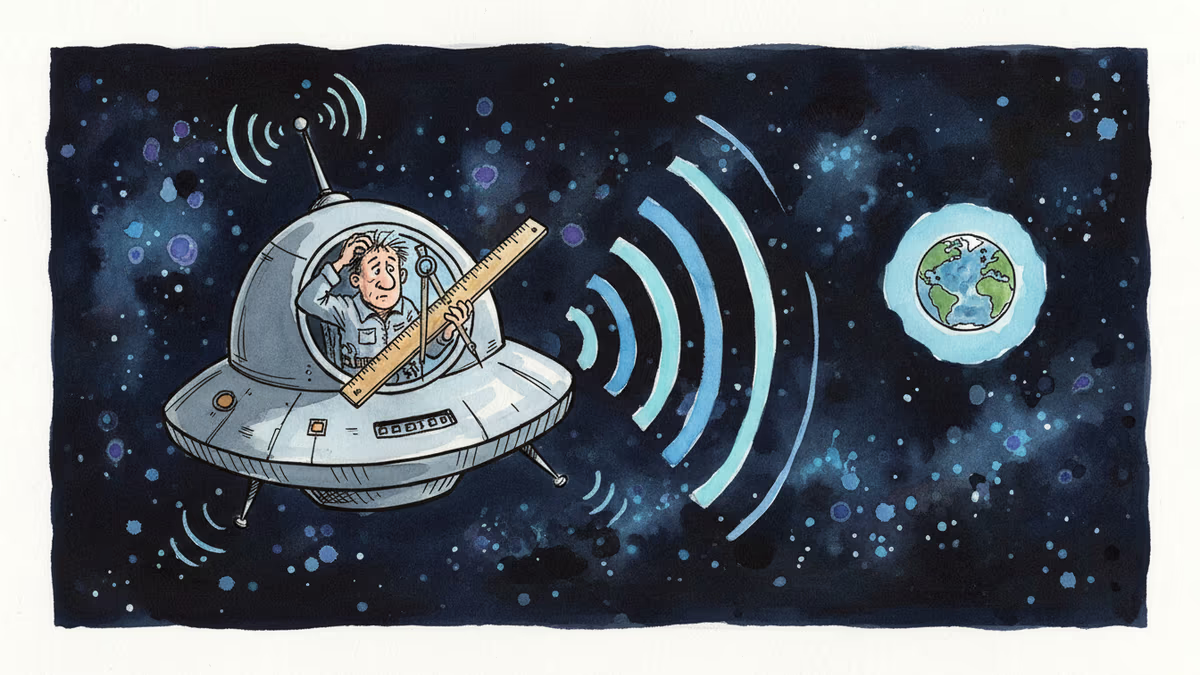
Flying to Mars means navigating without trees, wind, or GPS. Here's the surprisingly elegant physics behind how spacecraft measure their own velocity in the void.
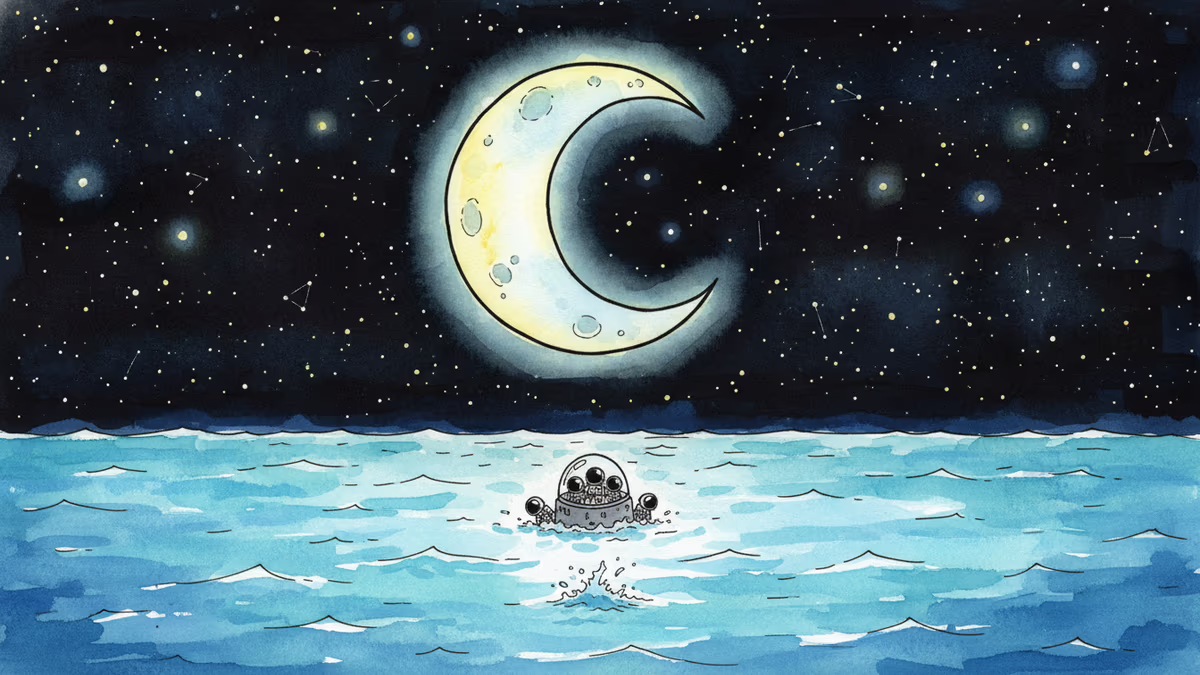
Artemis II splashed down successfully in the Pacific, marking humanity's first crewed deep space mission in over 50 years. But the harder question isn't whether we can go back — it's why we should.
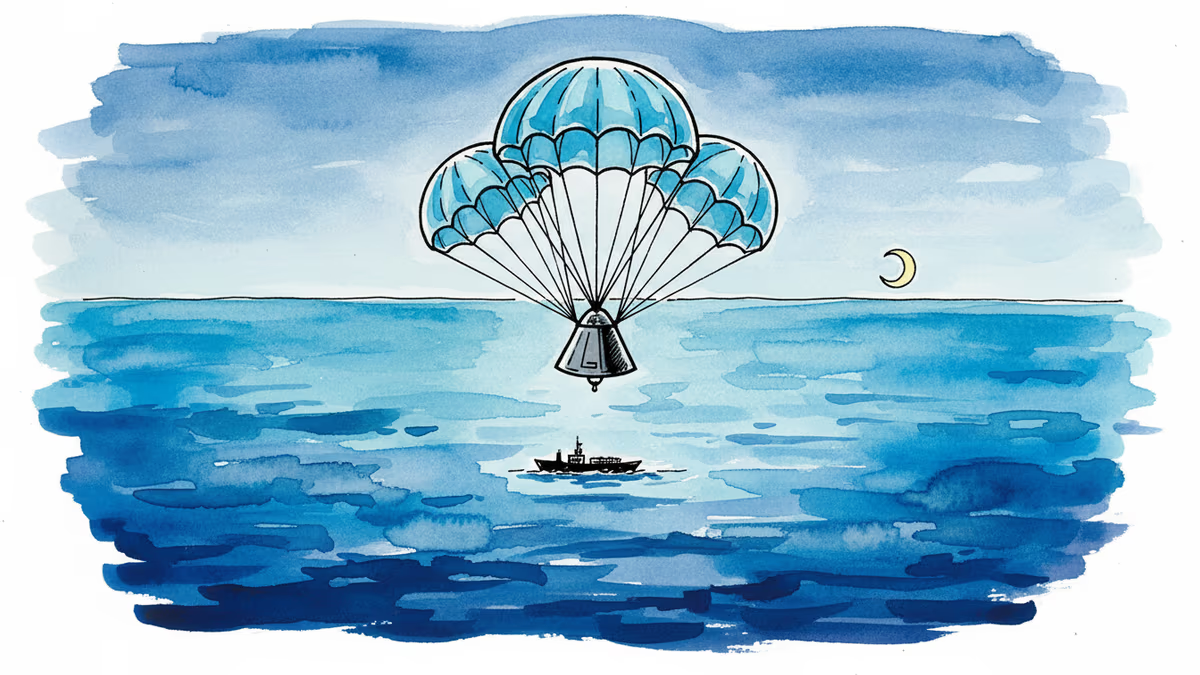
NASA's Orion capsule splashed down safely after humanity's first crewed lunar voyage in 54 years. The mission succeeded. Now the harder questions begin.
NASA's Artemis III has been redesigned as an Earth-orbit mission. SpaceX and Blue Origin say their landers won't be ready until late 2027. What does this mean for the future of lunar exploration?
Flying to Mars means navigating without trees, wind, or GPS. Here's the surprisingly elegant physics behind how spacecraft measure their own velocity in the void.
Artemis II splashed down successfully in the Pacific, marking humanity's first crewed deep space mission in over 50 years. But the harder question isn't whether we can go back — it's why we should.
NASA's Orion capsule splashed down safely after humanity's first crewed lunar voyage in 54 years. The mission succeeded. Now the harder questions begin.
Thoughts
Share your thoughts on this article
Sign in to join the conversation