

NASA Crew-11 Emergency Return: Mission Cut Short Over Medical Concerns 2026
NASA has announced an emergency early return for the Crew-11 mission in 2026 due to an astronaut's medical condition. Learn about the reentry plan and safety protocols.
Safety on the final frontier just took center stage. NASA officials announced on Thursday that they've decided to pull four astronauts from the International Space Station (ISS) after a crew member experienced a medical situation that required Earth-bound intervention.
The Logistics of the NASA Crew-11 Emergency Return
The ailing astronaut is part of the Crew-11 mission, which originally reached the station on August 1, 2025. According to NASA's chief health officer, the agency isn't taking any chances. While the mission was slated to wrap up around February 20, 2026, the team will now depart the ISS within the coming days for a splashdown off the California coast.

The crew member is absolutely stable, but we're erring on the side of caution with the decision to return the astronaut to Earth.
Balancing Privacy and Mission Safety
NASA has kept details sparse, omitting the identity of the affected astronaut to respect medical privacy. The Crew-11 capsule will perform a parachute-assisted splashdown, a standard but high-stakes procedure. This early exit leaves three astronauts remaining on the ISS to maintain operations until the next rotation.
Authors
Related Articles

NASA's Artemis III has been redesigned as an Earth-orbit mission. SpaceX and Blue Origin say their landers won't be ready until late 2027. What does this mean for the future of lunar exploration?

Artemis II splashed down successfully in the Pacific, marking humanity's first crewed deep space mission in over 50 years. But the harder question isn't whether we can go back — it's why we should.

NASA's Orion capsule splashed down safely after humanity's first crewed lunar voyage in 54 years. The mission succeeded. Now the harder questions begin.
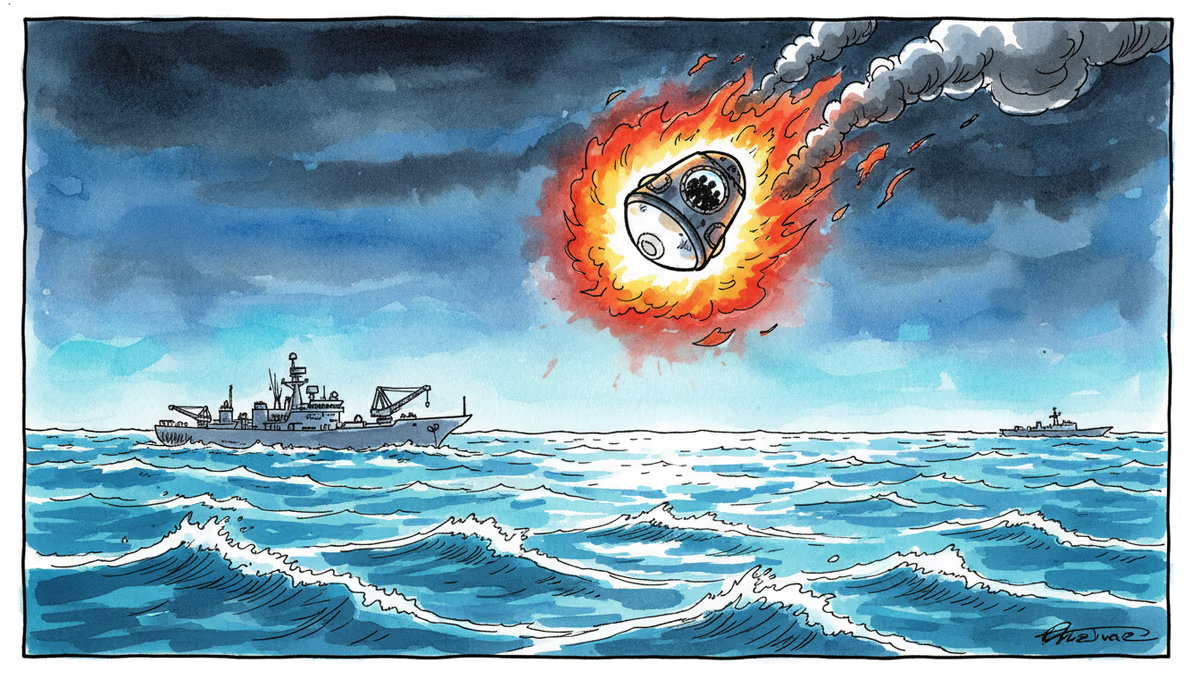
Artemis II's four astronauts are returning to Earth Friday night. The splashdown off Southern California isn't the anticlimax it sounds—it's the most technically perilous moment of the entire lunar journey.
NASA's Artemis III has been redesigned as an Earth-orbit mission. SpaceX and Blue Origin say their landers won't be ready until late 2027. What does this mean for the future of lunar exploration?
Artemis II splashed down successfully in the Pacific, marking humanity's first crewed deep space mission in over 50 years. But the harder question isn't whether we can go back — it's why we should.
NASA's Orion capsule splashed down safely after humanity's first crewed lunar voyage in 54 years. The mission succeeded. Now the harder questions begin.
Artemis II's four astronauts are returning to Earth Friday night. The splashdown off Southern California isn't the anticlimax it sounds—it's the most technically perilous moment of the entire lunar journey.
Thoughts
Share your thoughts on this article
Sign in to join the conversation