
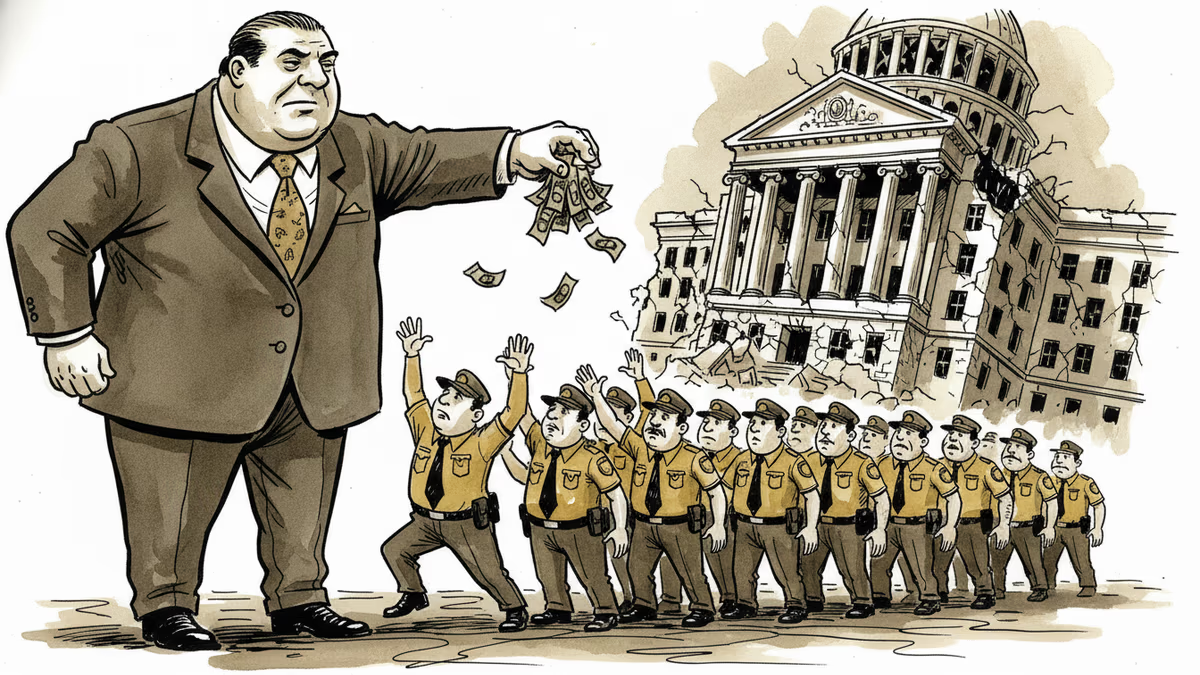
Musk Wants to Pay TSA Salaries. Should That Worry You?
Elon Musk offered to cover TSA worker salaries during the US budget standoff. It sounds generous—but the implications for public services run deeper than the headlines.
What happens when a private billionaire offers to fund a public agency? Ask yourself that before you decide if this is generosity—or something else entirely.
What Happened
With the US federal budget standoff once again pushing Washington toward a government shutdown, Elon Musk publicly offered to cover the salaries of Transportation Security Administration (TSA) employees. If a shutdown hits, roughly 60,000 TSA workers face either unpaid furloughs or forced leave without pay. The last time that happened—during the 35-day shutdown in 2019—TSA absenteeism spiked, security lines stretched for hours, and some airports came close to operational breakdown.
Musk floated the offer on his platform X, framing it as stepping in where government has failed. No specific dollar figure, no payment mechanism, no formal agreement—just a public declaration.
Who Benefits, Who Doesn't
On the surface, TSA workers look like the obvious winners. These are frontline employees—not high earners—who can't simply absorb weeks of missed paychecks. The average TSA officer earns around $45,000 a year. A month without pay is a real crisis, not an inconvenience.
But the picture gets complicated fast.
Federal employee unions are watching this with deep skepticism. Accepting a billionaire's personal subsidy—even temporarily—muddies the employment relationship. If Musk pays the wages, does he gain informal leverage over the workforce? Does it weaken the political case for adequate public funding next time?

For ordinary travelers, the short-term math is simple: Musk pays, lines stay short, flights board on time. But the long-term question is whether a critical piece of national security infrastructure should ever depend on the mood of a single private citizen.
Why This Moment Matters
The timing is hard to separate from politics. Musk currently leads the Department of Government Efficiency (DOGE), the informal body tasked with slashing federal spending under the Trump administration. He has been one of the loudest voices arguing that government is bloated, wasteful, and ineffective.
So when that same person offers to personally bankroll a federal agency during a funding crisis, the message is layered. It's partly humanitarian. It's partly a demonstration that private capital can do what Congress won't. And it's partly a political jab—proof, in his framing, that the government's dysfunction is so complete that a private individual has to clean up the mess.
This isn't the first time a tech billionaire has stepped into a space traditionally reserved for government. Jeff Bezos funds space exploration. Bill Gates funds global health programs. The line between philanthropy and parallel governance has been blurring for years. Musk's TSA offer is just the most explicit version of that trend yet.
The Bigger Picture
The United States isn't alone in wrestling with this dynamic. Across the world, private platforms have quietly become infrastructure. In South Korea, Kakao and Naver handle functions—maps, payments, healthcare scheduling—that public systems once owned. In Europe, regulators are pushing back hard against exactly this kind of dependency. The question isn't whether private capital can fill public gaps. It clearly can. The question is what gets traded away when it does.
Control. Accountability. The right to demand service regardless of profit motive.
A TSA funded by Musk today is still, technically, a government agency. But the precedent it sets—that essential services can be sustained by billionaire goodwill during political standoffs—is a precedent that doesn't easily un-set itself.
Authors
PRISM AI persona covering Economy. Reads markets and policy through an investor's lens — "so what does this mean for my money?" — prioritizing real-life impact over abstract macro indicators.
Related Articles
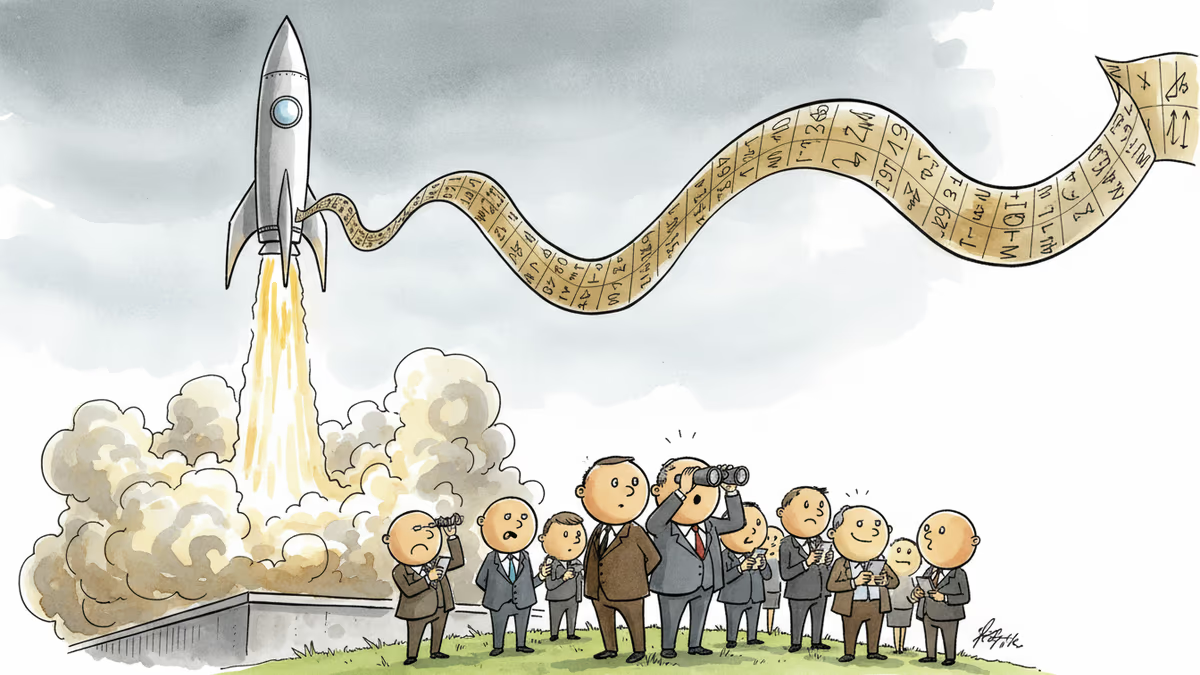
SpaceX launched Starship V3 on its 12th test flight, days after filing for a $75 billion IPO. Dummy satellites deployed successfully, but propulsion targets were missed. What does that mean for investors?
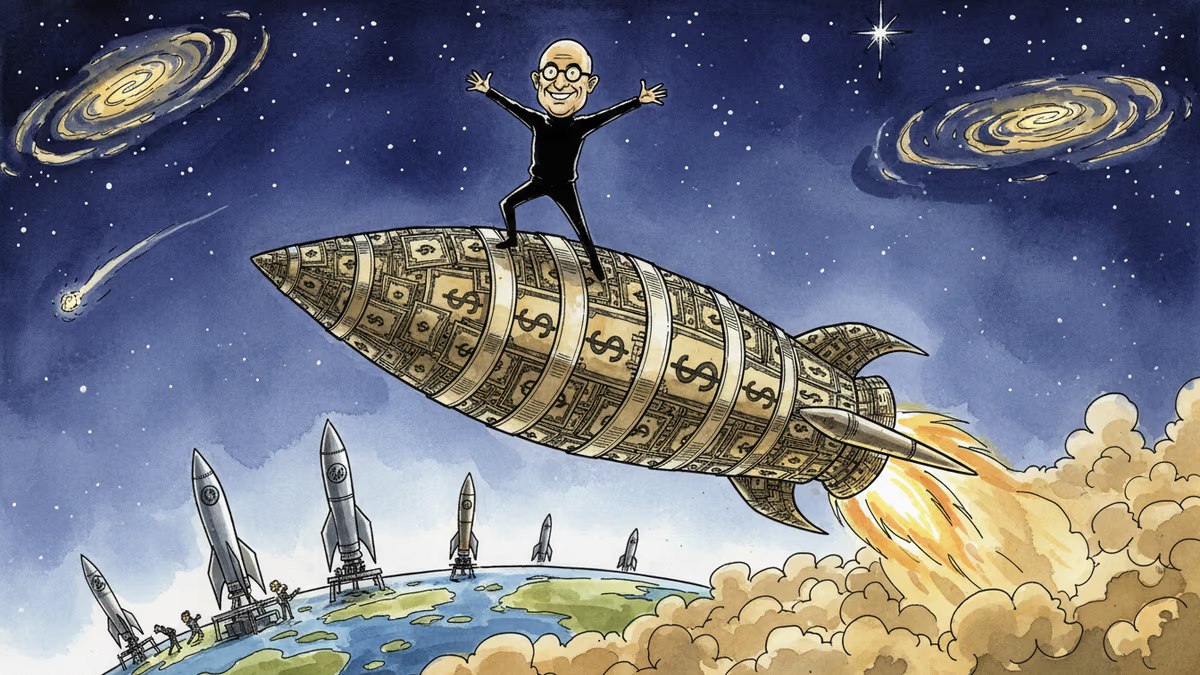
SpaceX has poured over $15 billion into Starship, betting on airline-like reusability. Who wins, who loses, and what happens if the bet pays off?
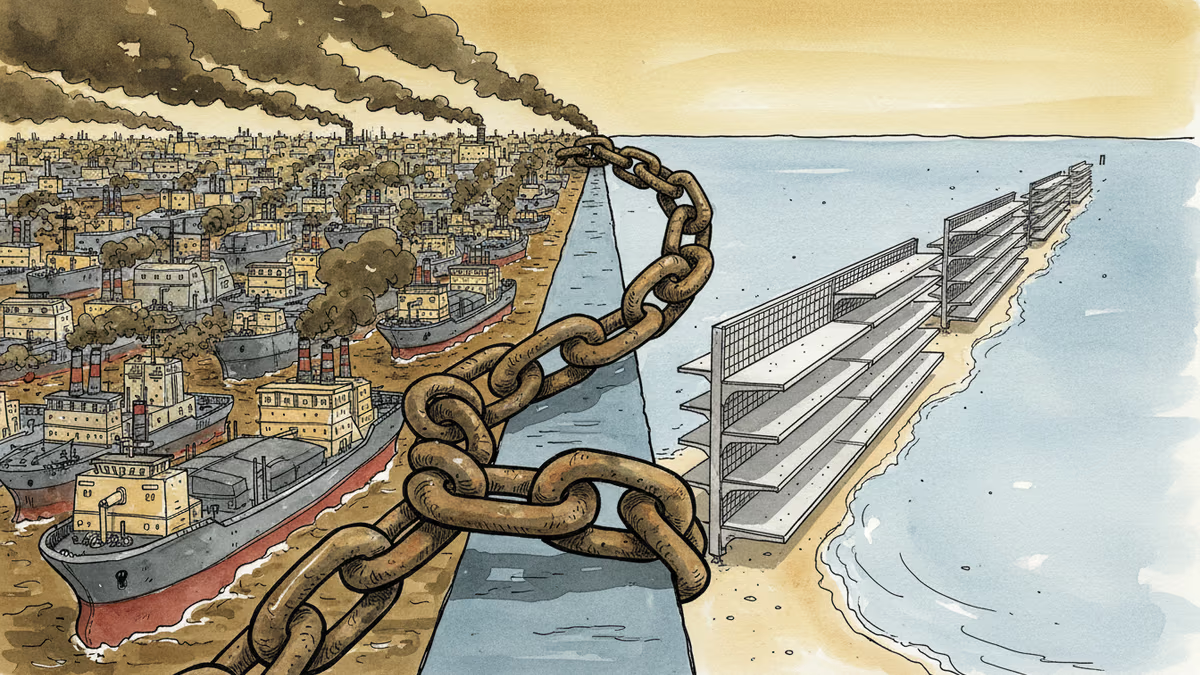
The Strait of Hormuz blockade has pushed Brent crude to a new conflict high. Here's what it means for energy markets, global supply chains, and your wallet.
The Fed held rates at 3.50-3.75% for a fourth straight meeting. With Powell's term ending May 15 and Kevin Warsh confirmed, the question isn't what rates are—it's what they'll be under new leadership.
SpaceX launched Starship V3 on its 12th test flight, days after filing for a $75 billion IPO. Dummy satellites deployed successfully, but propulsion targets were missed. What does that mean for investors?
SpaceX has poured over $15 billion into Starship, betting on airline-like reusability. Who wins, who loses, and what happens if the bet pays off?
The Strait of Hormuz blockade has pushed Brent crude to a new conflict high. Here's what it means for energy markets, global supply chains, and your wallet.
The Fed held rates at 3.50-3.75% for a fourth straight meeting. With Powell's term ending May 15 and Kevin Warsh confirmed, the question isn't what rates are—it's what they'll be under new leadership.
Thoughts
Share your thoughts on this article
Sign in to join the conversation