
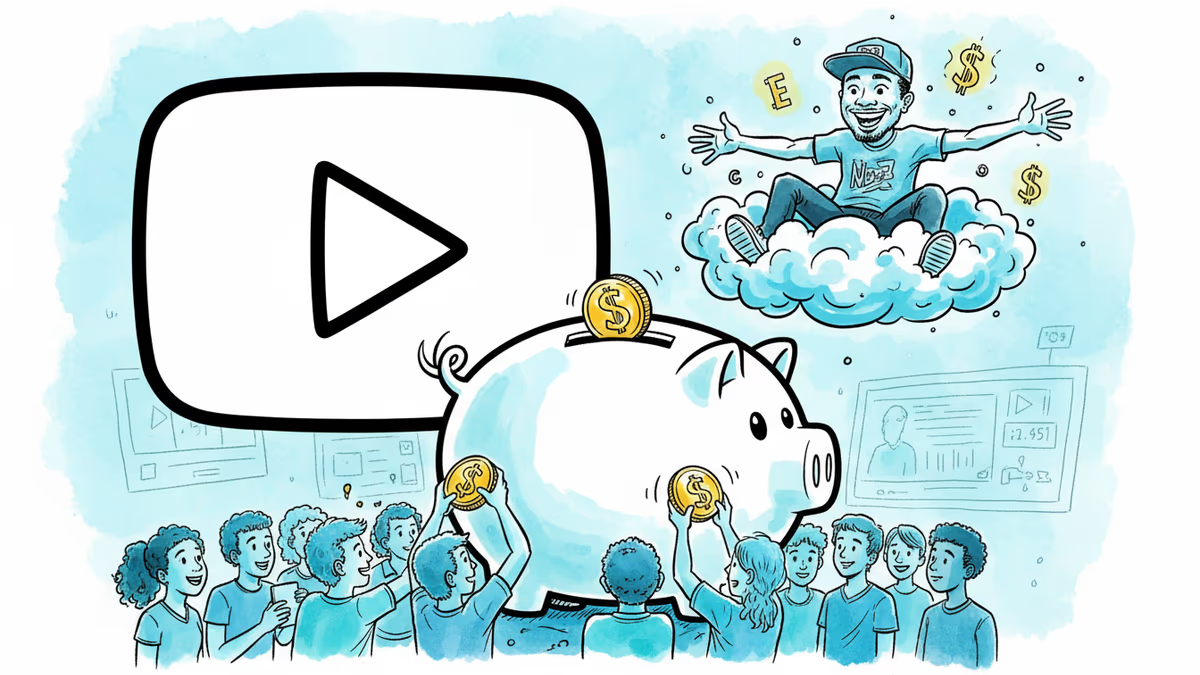
Why MrBeast's Banking Move Changes Everything
MrBeast acquires teen banking app Step, signaling a shift from traditional finance to creator-led financial ecosystems. This isn't just business expansion—it's redefining trust.
When YouTube's Biggest Star Becomes Your Banker
Jimmy "MrBeast" Donaldson just bought a bank. Well, not exactly—but his acquisition of Step, a banking app for teens and young adults, might be just as significant. The announcement Monday comes months after the 466 million-subscriber YouTuber revealed plans for a personal finance channel.
This isn't another celebrity endorsement deal. MrBeast is systematically building what looks like the first creator-led financial ecosystem. The question isn't whether he can pull it off—it's whether traditional banks are ready for what comes next.
The Creator Economy Gets Serious About Money
Beast Industries already spans ghost kitchens, Feastables snacks, and the upcoming Beast Mobile phone service. Adding financial services completes a vertical integration strategy that would make Jeff Bezos proud. But there's something deeper happening here.
Step targets exactly the demographic that traditional banks struggle to reach: teens who want financial independence but lack access to traditional banking products. These are the same viewers who've watched MrBeast give away millions of dollars in increasingly elaborate stunts.
The timing isn't coincidental. While legacy financial institutions debate whether TikTok marketing budgets are worth it, MrBeast is building direct relationships with the next generation of consumers. He's not just advertising to them—he's becoming their financial infrastructure.

Trust in the Age of Influence
Here's what makes this acquisition fascinating: MrBeast might actually be more trusted by teens than traditional banks are. A 2023 survey found that 73% of Gen Z gets financial advice from social media influencers rather than financial advisors. MrBeast isn't just tapping into this trend—he's institutionalizing it.
But trust cuts both ways. When a creator's personal brand becomes intertwined with financial services, the stakes change dramatically. A bad investment recommendation becomes a potential lawsuit. A data breach becomes a betrayal of parasocial relationships built over years.
Regulators are watching too. The SEC has already increased scrutiny of influencer financial advice. MrBeast's move into actual financial services—not just content—puts him in an entirely different regulatory category.
The Netflix Model for Finance
MrBeast's strategy resembles Netflix's evolution from DVD-by-mail to streaming giant to content creator. Start with distribution, build audience relationships, then control the entire value chain. His planned personal finance YouTube channel isn't just content—it's customer acquisition for Step.
This vertical integration could reshape how young people think about money. Instead of learning about compound interest from a bank pamphlet, they'll learn it from the person who gave away a private island last week. The entertainment value makes the education stick.
Traditional financial institutions should be nervous. They've spent decades trying to make banking "fun" and "engaging." MrBeast doesn't need to try—he already owns the attention of the demographic they're fighting for.
Authors
Related Articles
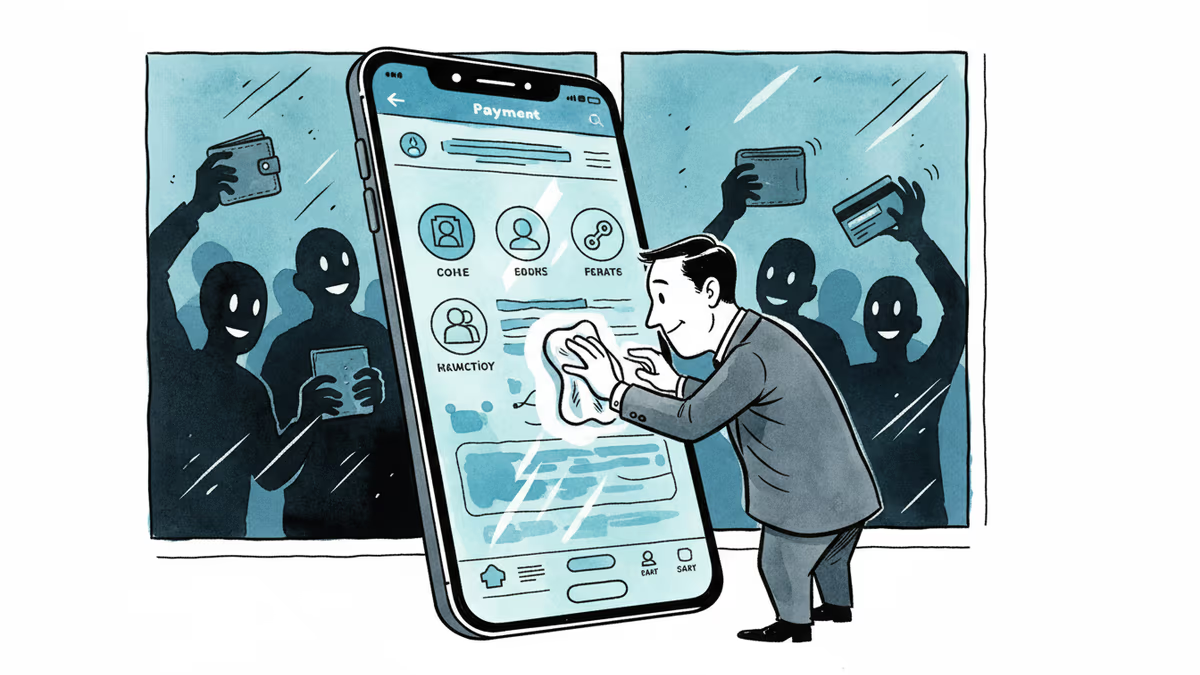
Venmo's biggest redesign since 2021 adds social features, personalized offers, and a revamped feed. But the timing — amid PayPal's restructuring and Stripe's reported interest — raises a harder question about who this update is really for.
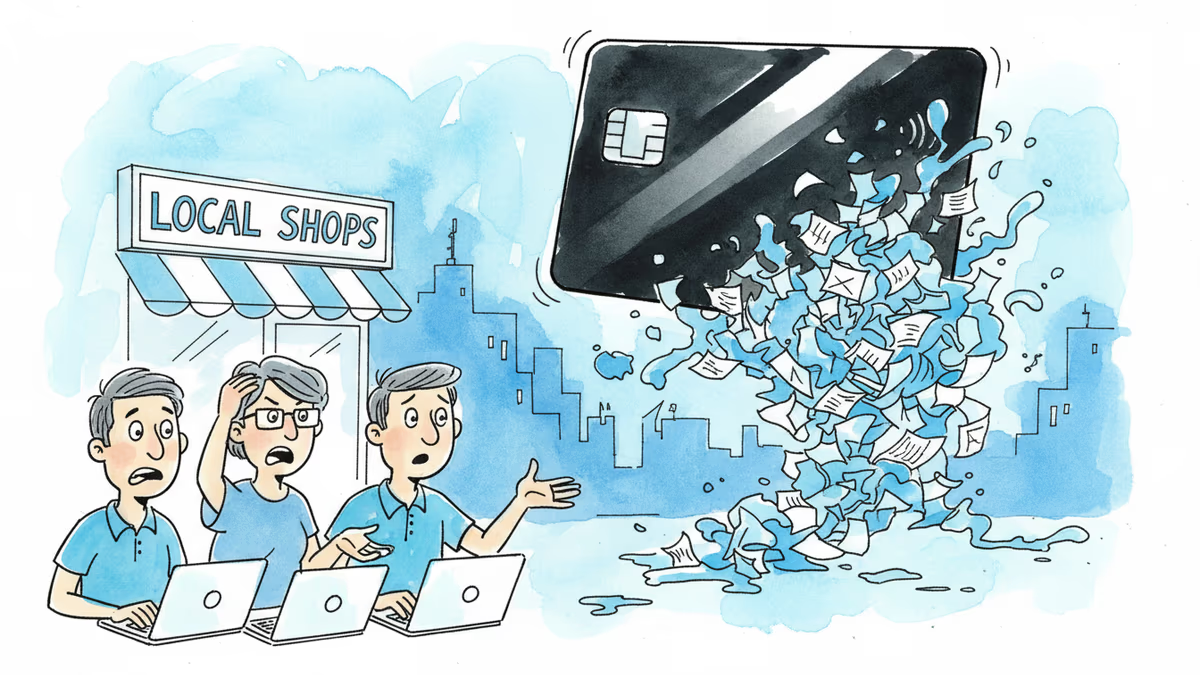
E-commerce fintech Parker filed for Chapter 7 bankruptcy on May 7, despite raising over $200M. The YC-backed startup's abrupt shutdown left small business customers scrambling—and exposed the fragility of vertical fintech models.
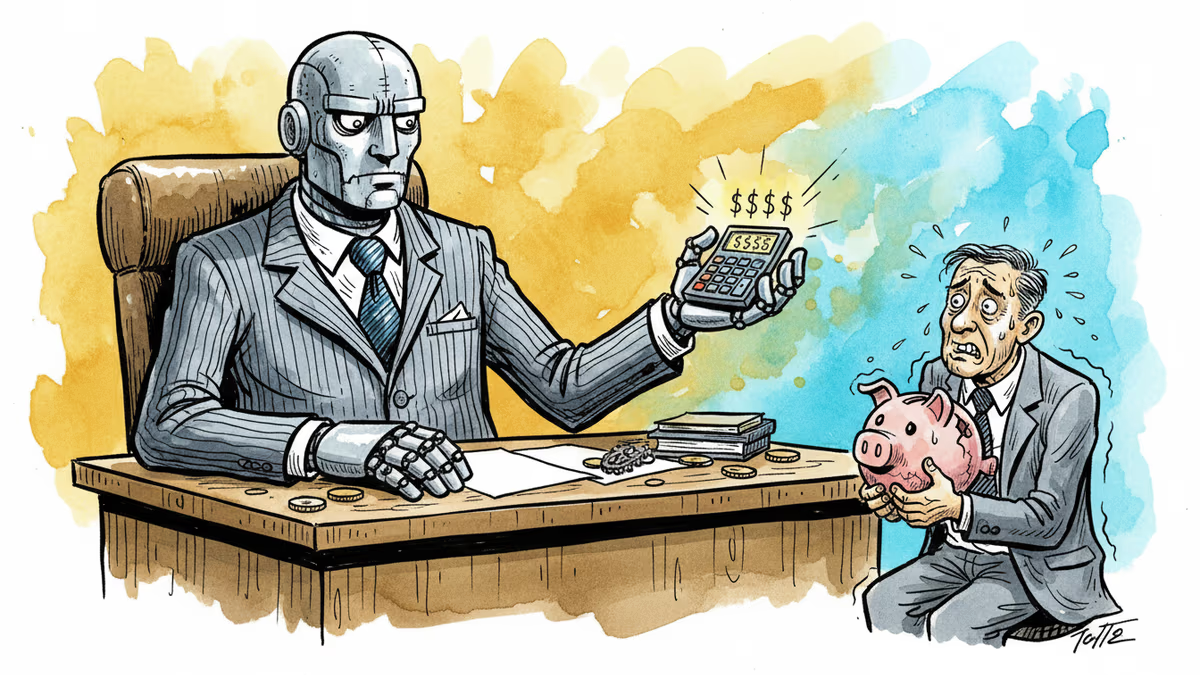
OpenAI acquired Hiro Finance, an AI-powered personal finance startup. Is this just a talent grab, or is the ChatGPT maker quietly building a financial services empire?
Meta's new Creator Fast Track program offers up to $3,000/month guaranteed pay to lure creators from TikTok, YouTube, and Instagram. After paying out $3B in 2025, what's the real play here?
Venmo's biggest redesign since 2021 adds social features, personalized offers, and a revamped feed. But the timing — amid PayPal's restructuring and Stripe's reported interest — raises a harder question about who this update is really for.
E-commerce fintech Parker filed for Chapter 7 bankruptcy on May 7, despite raising over $200M. The YC-backed startup's abrupt shutdown left small business customers scrambling—and exposed the fragility of vertical fintech models.
OpenAI acquired Hiro Finance, an AI-powered personal finance startup. Is this just a talent grab, or is the ChatGPT maker quietly building a financial services empire?
Meta's new Creator Fast Track program offers up to $3,000/month guaranteed pay to lure creators from TikTok, YouTube, and Instagram. After paying out $3B in 2025, what's the real play here?
Thoughts
Share your thoughts on this article
Sign in to join the conversation