
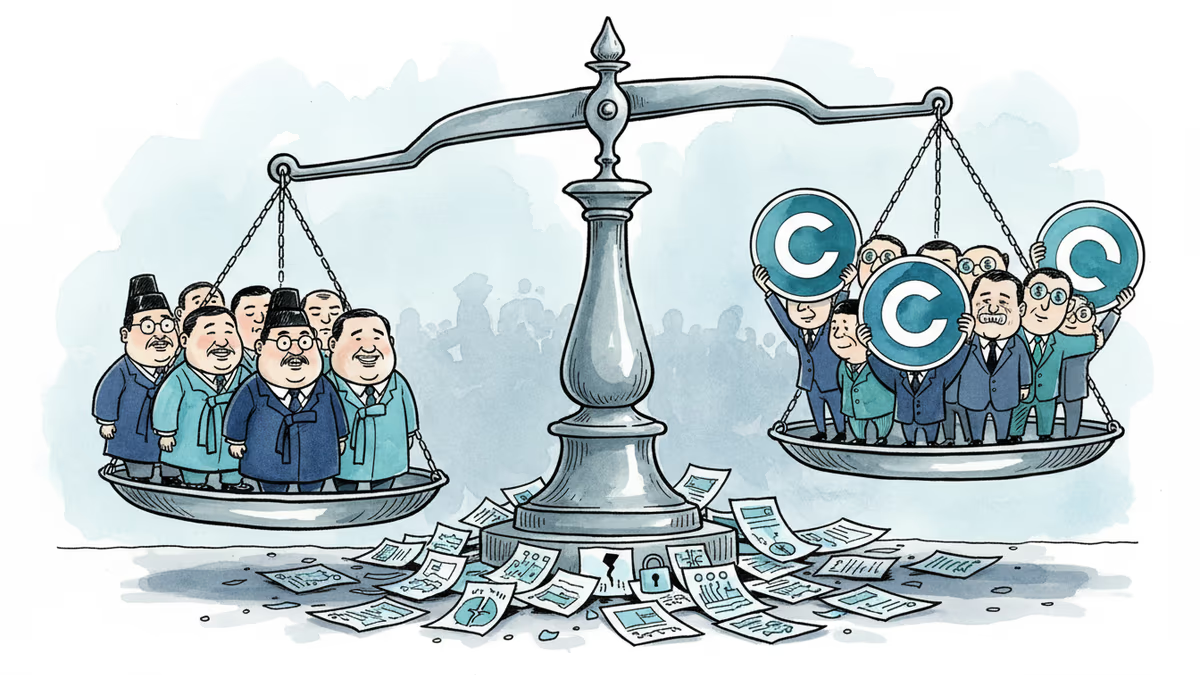
Coupang Data Breach Sparks US-Korea Trade Dispute
Coupang's data breach escalates into international arbitration under US-Korea FTA as American investors claim discriminatory treatment by Korean government
$3.4 Billion in Investments Under Threat
What started as a routine data breach investigation has morphed into a potential trade war flashpoint. Coupang's December disclosure of 34 million compromised customer accounts has now triggered the first investor-state dispute under the US-Korea Free Trade Agreement in over a decade.
Five major US investment firms—including Greenoaks, Altimeter, and Abrams Capital—have filed notices with Korea's Ministry of Justice, claiming billions in losses from what they characterize as discriminatory government treatment. Their 90-day consultation clock is already ticking.
The Tale of Two Standards
The investors' core argument is compelling when you examine the numbers. While Coupang faces potential fines of $800 million (3% of revenue), other companies received dramatically lighter punishment for arguably worse breaches.
KakaoPay transferred 54 billion customer records to Singapore's Alipay but paid just $10 million. SK Telecom's massive SIM card breach cost them $91 million. Chinese-owned AliExpress and crypto exchange Upbit faced minimal action despite significant security incidents.
The disparity becomes more stark when you consider the actual damage. Korea's Personal Information Protection Commission claims 30 million accounts were exposed, but Coupang's investors insist only 3,000 accounts were actually affected—a 10,000x difference in reported scope.
When Politics Meets Regulation

The government's response has been unusually aggressive. President Lee Jae-myung publicly demanded "heavy penalties." Some lawmakers proposed raising penalty caps to 10% of revenue and applying them retroactively. The Personal Information Protection Commission backed punitive measures through special parliamentary acts.
Coupang replaced CEO Park Dae-jun with Harold Rogers, the US parent company's top lawyer—a move that signals this has become more about legal strategy than operational management.
The Ministry of Science and ICT revealed the breach was orchestrated by a Chinese national who exploited authentication vulnerabilities. But here's where it gets murky: the government claims Coupang failed to report within 24 hours and deleted crucial access logs, while the company maintains no sensitive payment data or passwords were compromised.
The Bigger Picture: Tech Nationalism
This isn't just about Coupang. Korea's digital policies increasingly favor domestic players over foreign competitors. Network usage fees target Netflix. Payment restrictions hit Apple's App Store and Google Play. Data localization requirements limit Google Maps on national security grounds.
Adam Farrar from CSIS warns this case could amplify broader US claims of unfair treatment, raising "trade and tariff risks for South Korea as the US Congress becomes increasingly engaged."
The investors' filing pulls no punches: "The Government's unprecedented assault on a U.S. company to benefit its Korean and Chinese competitors is an egregious violation of the Treaty, principles of international law, and the historic partnership between Korea and the United States."
What's Really at Stake
Beyond the immediate billions in damages being sought, this case could reshape how governments regulate foreign tech companies. If the investors succeed, it might embolden other US firms facing regulatory pressure in Asia. If they lose, it could signal that data sovereignty trumps trade agreements.
The 90-day consultation period ends in April. If no resolution emerges, formal arbitration could drag on for years, creating uncertainty for both Korean regulators and foreign investors.
Authors
Related Articles
Granola's AI meeting app claims notes are "private by default," but anyone with a link can view them—and your data trains their AI unless you opt out. Here's what that means.
A complete guide to backing up your Android phone in 2026 — Google One, Samsung Cloud, local storage, and the 2FA codes most people forget until it's too late.
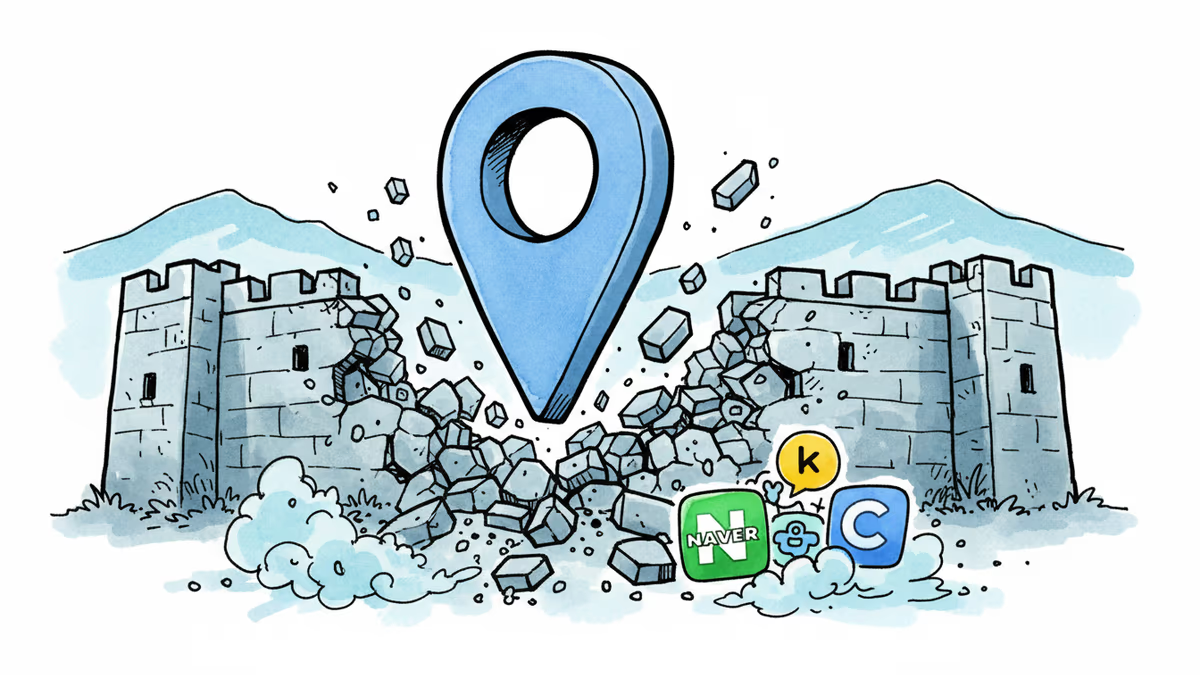
After 15 years of appeals, Google receives conditional approval to export high-precision geographic data from South Korea, enabling full Google Maps functionality and challenging local navigation apps.
FBI recovers doorbell camera footage despite no cloud storage, raising questions about data deletion and privacy in smart home devices
Granola's AI meeting app claims notes are "private by default," but anyone with a link can view them—and your data trains their AI unless you opt out. Here's what that means.
A complete guide to backing up your Android phone in 2026 — Google One, Samsung Cloud, local storage, and the 2FA codes most people forget until it's too late.
After 15 years of appeals, Google receives conditional approval to export high-precision geographic data from South Korea, enabling full Google Maps functionality and challenging local navigation apps.
FBI recovers doorbell camera footage despite no cloud storage, raising questions about data deletion and privacy in smart home devices
Thoughts
Share your thoughts on this article
Sign in to join the conversation