
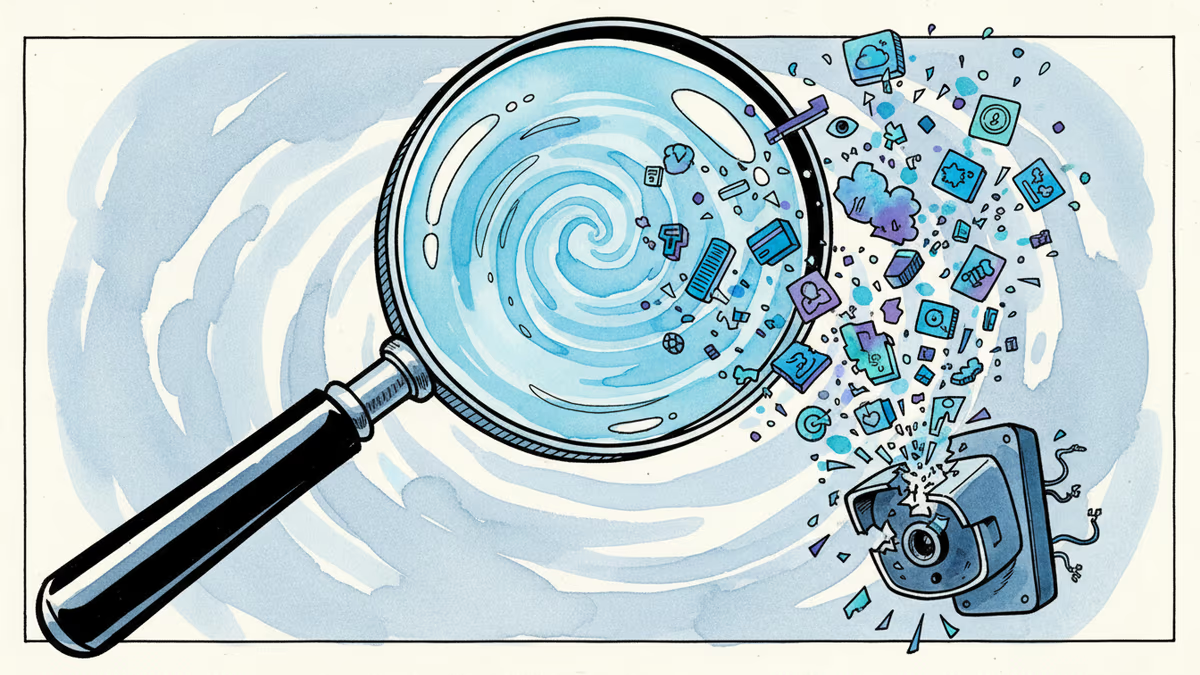
Your Deleted Camera Data Isn't Really Gone
FBI recovers doorbell camera footage despite no cloud storage, raising questions about data deletion and privacy in smart home devices
Ten days after Nancy Guthrie's doorbell camera was ripped from her home, FBI investigators did something that should be impossible: they recovered footage from a device with no cloud storage subscription.
The case has sent ripples through the smart home community. FBI Director Kash Patel revealed that agents extracted the crucial evidence using "residual data located in backend systems"—a technical phrase that's making millions of doorbell camera owners very uncomfortable.
The Guthrie Case: What Actually Happened
When Nancy Guthrie went missing, investigators faced a digital dead end. Her Nest Doorbell had been forcibly removed, and crucially, she had no subscription service. Without a cloud storage plan, conventional wisdom suggested any footage would be lost forever.
Yet ten days later, the FBI released clear video showing a masked suspect. The footage quality was good enough to potentially identify the perpetrator—despite coming from a device that supposedly stored nothing in Google's servers.
This wasn't some advanced NSA technique. According to Patel, the data came from "backend systems"—the infrastructure that smart home companies use to manage their devices, even when customers aren't paying for premium services.
The Uncomfortable Truth About "Deleted" Data
Google hasn't detailed exactly how this recovery worked, but cybersecurity experts point to several possibilities that should concern any smart home user.
Even without a subscription, doorbell cameras often upload thumbnail images, motion detection alerts, and device status updates. These fragments might seem insignificant, but they can contain more than users realize. Some devices also maintain temporary caches—supposedly deleted after a few hours or days, but potentially recoverable with the right tools.

Sarah Chen, a privacy researcher at Stanford, puts it bluntly: "When companies say data is 'deleted,' they often mean it's marked for deletion, not actually overwritten. In backend systems, that data can persist for weeks or months."
This isn't necessarily malicious. Companies keep temporary data for legitimate reasons: troubleshooting device issues, improving algorithms, or ensuring smooth operation. But the Guthrie case shows this data can be far more revealing than advertised.
The Industry's Response Problem
Smart home companies have built their privacy messaging around user control. Ring, Nest, and others emphasize that customers choose what to store and share. But backend data collection operates in a gray zone that most privacy policies barely acknowledge.
The legal landscape makes this murkier. Law enforcement can often access this "metadata" with less stringent warrants than required for actual video content. Companies may cooperate with investigations without customers ever knowing their "deleted" data was recovered.
Consumer advocates worry this creates a false sense of security. "People make decisions about smart home devices based on incomplete information about data persistence," says Mark Rodriguez, director of the Digital Privacy Alliance.
Beyond the Technical: What This Means for You
The implications stretch far beyond doorbell cameras. Smart thermostats track when you're home. Voice assistants store conversation fragments. Security systems log every sensor activation. All generate backend data that might persist longer than users expect.
For law enforcement, this represents a powerful investigative tool. The Guthrie case likely saved crucial time in a missing person investigation. But it also reveals how much digital exhaust our connected homes produce—and how little control we actually have over it.
Privacy-conscious users face an uncomfortable choice: embrace smart home convenience while accepting reduced data control, or stick with "dumb" devices that offer less functionality but more predictable privacy.
Authors
Related Articles
The FTC fined Cox Media and two ad firms $930,000 — not for actually eavesdropping on users, but for falsely claiming they could. The case raises uncomfortable questions about surveillance capitalism.
A Utah woman was sentenced to life in prison partly because of her Google searches and deleted texts. The Kouri Richins case reveals how digital footprints have become the courtroom's most reliable witness.
After 15 years of fragmented mobile messaging, Apple and Google are rolling out end-to-end encrypted RCS messaging between iPhones and Android devices. Here's what changed, why it took so long, and what it means for your privacy.
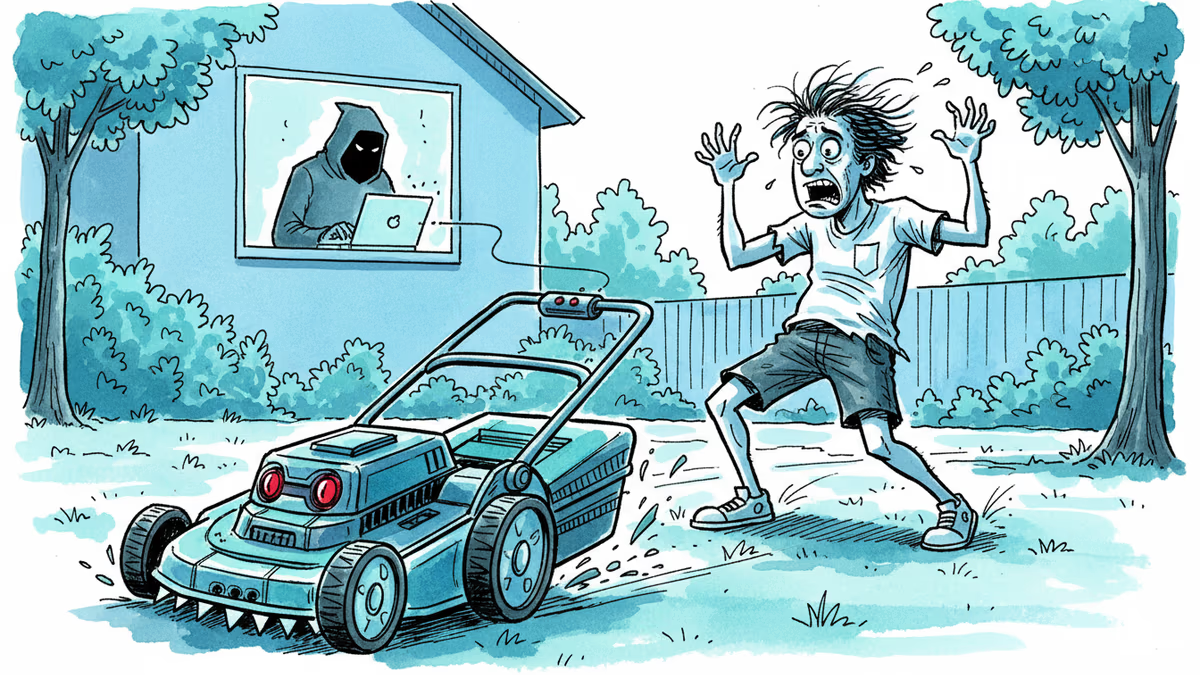
Yarbo's robot lawn mowers had critical security flaws exposing GPS, Wi-Fi passwords, and emails. The company confirmed the findings and cut remote access. But the real issue runs deeper than one brand.
The FTC fined Cox Media and two ad firms $930,000 — not for actually eavesdropping on users, but for falsely claiming they could. The case raises uncomfortable questions about surveillance capitalism.
A Utah woman was sentenced to life in prison partly because of her Google searches and deleted texts. The Kouri Richins case reveals how digital footprints have become the courtroom's most reliable witness.
After 15 years of fragmented mobile messaging, Apple and Google are rolling out end-to-end encrypted RCS messaging between iPhones and Android devices. Here's what changed, why it took so long, and what it means for your privacy.
Yarbo's robot lawn mowers had critical security flaws exposing GPS, Wi-Fi passwords, and emails. The company confirmed the findings and cut remote access. But the real issue runs deeper than one brand.
Thoughts
Share your thoughts on this article
Sign in to join the conversation