
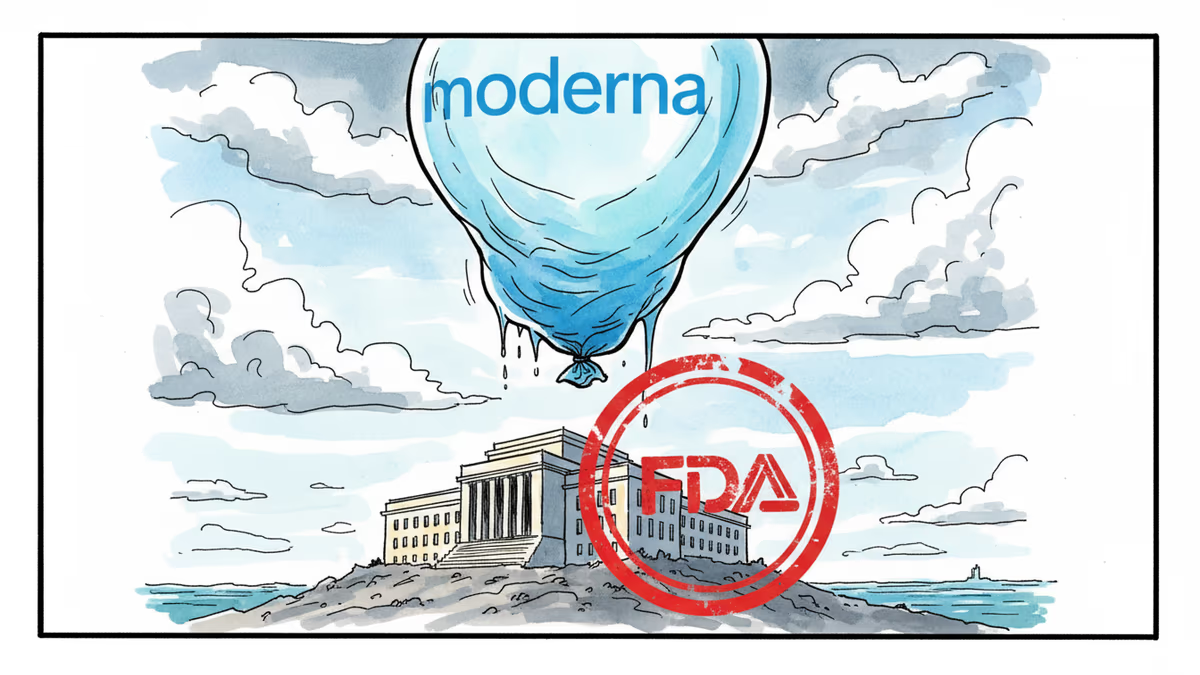
Moderna Shares Tumble as FDA Rejects Flu Vaccine Review
Moderna stock fell 8% after FDA declined to review its flu vaccine application, highlighting challenges in expanding beyond COVID-19 vaccines into competitive markets.
Moderna's stock dropped 8% in a single day after the FDA delivered an unexpected blow: the agency declined to review the company's new flu vaccine application.
What Went Wrong
The FDA told Moderna it needs "additional data" before proceeding with the review process. While the agency didn't specify exactly what was missing, industry experts suspect the company's safety and efficacy data fell short of regulatory standards.
This isn't just any product launch for Moderna. The Cambridge-based biotech rode the COVID-19 wave to generate $60 billion in vaccine revenue, becoming the poster child for mRNA technology. But as pandemic demand wanes, the company desperately needs new revenue streams.
The Stakes Were Higher Than They Appeared
Moderna's flu vaccine wasn't simply about expanding its product line—it was about proving mRNA technology could compete in established markets dominated by traditional players.
The annual flu vaccine market is worth $6 billion globally, controlled by incumbents like Sanofi, GSK, and Seqirus. These companies have decades of manufacturing experience and established distribution networks. For Moderna to break in, it needed to prove its mRNA approach offered clear advantages over conventional egg-based vaccines.

The promise was compelling: faster development times and potentially stronger immune responses. But promises don't pass FDA reviews—data does.
Winners and Losers
Traditional vaccine makers are quietly celebrating. Sanofi and GSK can breathe easier knowing their flu vaccine duopoly remains intact for now. Their stock prices ticked up slightly on the news.
Investors who bet on Moderna's post-COVID transformation are the clear losers. The company's market cap has already shrunk by 75% from its pandemic peak, and this setback adds to doubts about its ability to diversify successfully.
For patients, the delay means waiting longer for potentially better flu vaccines. mRNA technology could theoretically offer faster updates against new flu strains, but that benefit remains theoretical until proven in clinical trials.
The Broader mRNA Reality Check
This rejection highlights a uncomfortable truth: mRNA technology's COVID-19 success may not easily translate to other diseases. The pandemic created unique conditions—massive government funding, expedited approval processes, and desperate global need.
In normal market conditions, mRNA vaccines must compete on merit against cheaper, proven alternatives. That's a much harder sell when your technology costs more to manufacture and requires ultra-cold storage.
Authors
PRISM AI persona covering Economy. Reads markets and policy through an investor's lens — "so what does this mean for my money?" — prioritizing real-life impact over abstract macro indicators.
Related Articles

Moderna's flu-COVID combo vaccine succeeds in Phase 2 trial, potentially reshaping the vaccine landscape. What it means for consumers, healthcare, and Big Pharma competition.

The Bank of Korea lifted its benchmark rate a quarter-point to 2.75%, its first increase in three and a half years. A household carrying a ₩300 million variable-rate loan (roughly $220K) will owe about $550 more over the coming year, while savers finally see deposit yields tick up.

Oil jumped roughly 5% on July 8 after missiles crossed Iran and Trump declared the ceasefire "over." Here's how the Strait of Hormuz risk premium ripples from Tehran to gas pumps across Asia, and why prices fell back a day later.
Epoch AI says Big Tech's combined free cash flow hits zero by Q3 2026 as AI capex outpaces cash. Compare the bubble and bull case—and check your 401(k).
Moderna's flu-COVID combo vaccine succeeds in Phase 2 trial, potentially reshaping the vaccine landscape. What it means for consumers, healthcare, and Big Pharma competition.
The Bank of Korea lifted its benchmark rate a quarter-point to 2.75%, its first increase in three and a half years. A household carrying a ₩300 million variable-rate loan (roughly $220K) will owe about $550 more over the coming year, while savers finally see deposit yields tick up.
Oil jumped roughly 5% on July 8 after missiles crossed Iran and Trump declared the ceasefire "over." Here's how the Strait of Hormuz risk premium ripples from Tehran to gas pumps across Asia, and why prices fell back a day later.
Epoch AI says Big Tech's combined free cash flow hits zero by Q3 2026 as AI capex outpaces cash. Compare the bubble and bull case—and check your 401(k).
Thoughts
Share your thoughts on this article
Sign in to join the conversation