
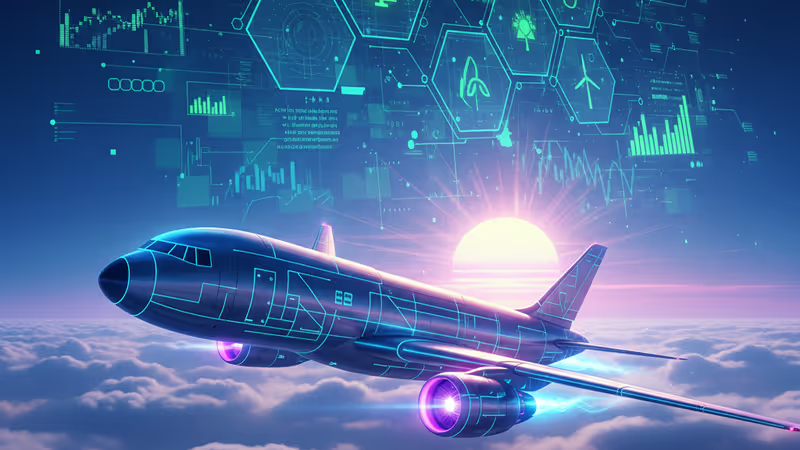
Air Freight Emissions Surge 25%: Can Book and Claim Scale SAF Adoption?
Air freight emissions have risen by 25%. Explore how Sustainable Aviation Fuel (SAF) and the Book and Claim model are helping the cargo sector achieve its decarbonization goals.
Emissions from air freight have skyrocketed by 25% since 2019, according to an analysis by Stand.Earth. While the world slowed down during the pandemic, the demand for rapid delivery didn't. This led to a yearly increase of almost 20 million tons of CO2 from cargo-only fleets.
The High Price of Decarbonizing Air Freight SAF
The International Air Transport Association (IATA) estimates that Sustainable Aviation Fuel (SAF) could account for 65% of total emission reductions. When used pure, SAF cuts life cycle emissions by up to 80%. However, the transition isn't easy.
- Cost: SAF is at least 2x more expensive than conventional jet fuel.
- Availability: Only 92 airports out of 40,000+ worldwide have verified SAF outlets.

Book and Claim: Bridging the Supply-Demand Gap
To solve the concentration of supply, the industry is turning to Book and Claim. This model allows airlines and corporations to claim the environmental benefits of SAF even if the fuel isn't physically available at their location. DHL Express and Shell Aviation are early adopters of this system.
Shell's Avelia platform uses blockchain to ensure transparency. It tracks the SAF injection at specific airports and retires the attributes to the customer, preventing double-counting. For companies with science-based targets, experts believe this mechanism is essential for short-term success.
Authors
Related Articles
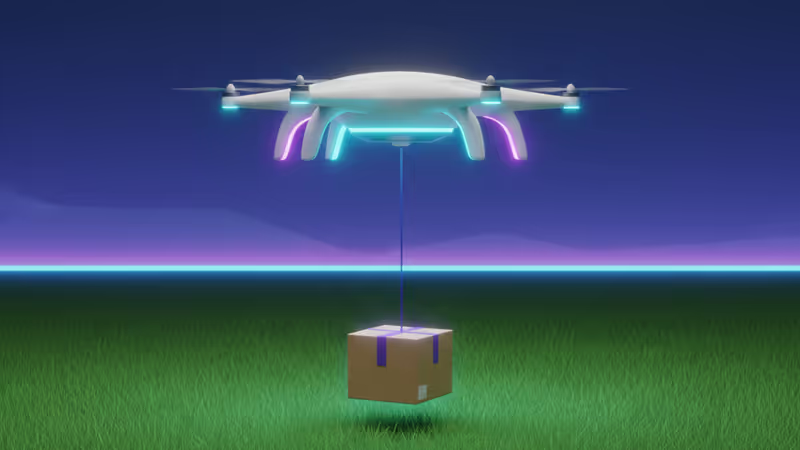
Zipline drone delivery hits 2 million milestone. Learn how their 30-second tethered delivery system is transforming logistics in Texas and beyond.

Bluspark Global security flaws exposed 20 years of shipment data due to plaintext passwords and unauthenticated APIs. Learn how this supply chain tech firm responded.
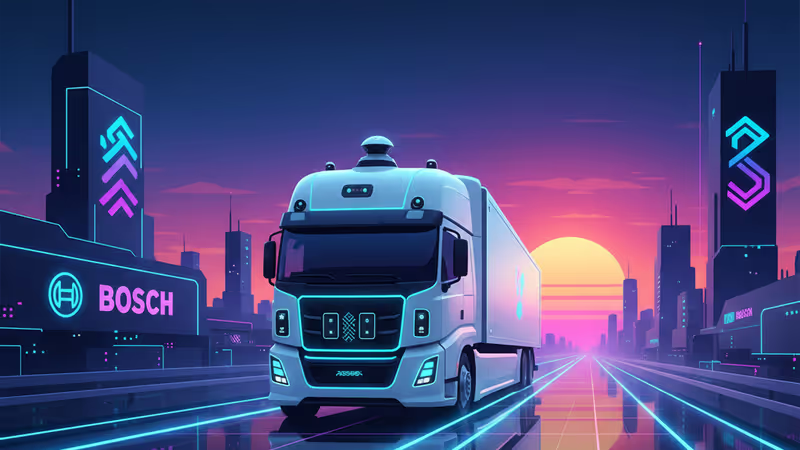
Kodiak AI and Bosch announced a major partnership at CES 2026 to develop production-grade hardware for autonomous trucks. Learn more about Kodiak AI Bosch autonomous trucks.
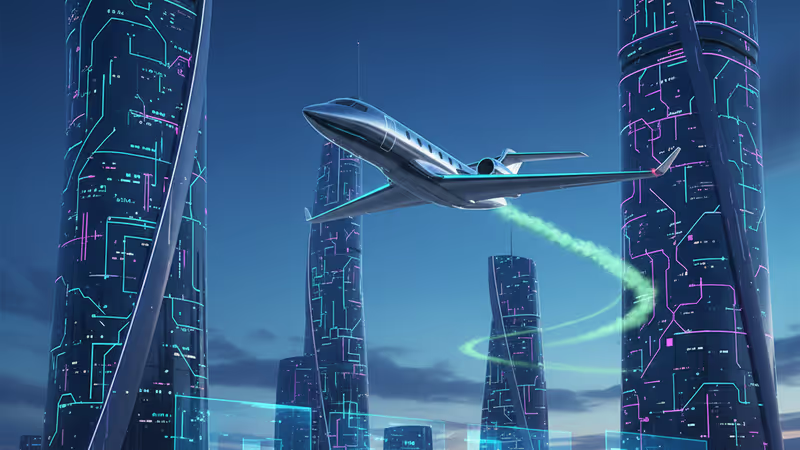
Honda Aircraft successfully completed a test flight of the next-gen HondaJet using 100% Sustainable Aviation Fuel (SAF), marking a major step toward carbon-neutral private aviation.
Zipline drone delivery hits 2 million milestone. Learn how their 30-second tethered delivery system is transforming logistics in Texas and beyond.
Bluspark Global security flaws exposed 20 years of shipment data due to plaintext passwords and unauthenticated APIs. Learn how this supply chain tech firm responded.
Kodiak AI and Bosch announced a major partnership at CES 2026 to develop production-grade hardware for autonomous trucks. Learn more about Kodiak AI Bosch autonomous trucks.
Honda Aircraft successfully completed a test flight of the next-gen HondaJet using 100% Sustainable Aviation Fuel (SAF), marking a major step toward carbon-neutral private aviation.
Thoughts
Share your thoughts on this article
Sign in to join the conversation