

MiroThinker 1.5: The 30B Open-Weight Model Outperforming Trillion-Parameter Giants
MiroMind's new MiroThinker 1.5 delivers trillion-parameter reasoning performance with just 30B parameters. Explore its Scientist Mode, $0.07 inference cost, and open-weight MIT license.
The era of "bigger is better" is facing a serious challenge. MiroMind has just dropped MiroThinker 1.5, a reasoning model with just 30 billion parameters that's punching way above its weight class. It's rivaling trillion-parameter competitors like Kimi K2 at a fraction of the cost.
Enterprises have long struggled with a dilemma: pay for expensive frontier model APIs or settle for mediocre local performance. MiroThinker 1.5 offers a third path. As an open-weight model architected for extended tool use and multi-step reasoning, it's a game-changer for the push toward deployable AI agents.
MiroThinker 1.5 Performance: Crushing the Hallucination Problem
The secret sauce is what MiroMind calls "Scientist Mode." Most LLMs hallucinate because they rely on memorized patterns. In contrast, MiroThinker 1.5 executes a verifiable research loop: it proposes hypotheses, queries external sources, identifies mismatches, and revises its conclusions.
| Metric | MiroThinker 1.5 (30B) | Kimi K2 (1T+) |
|---|---|---|
| BrowseComp-ZH Score | 69.8 | ~68.0 |
| Inference Cost/Call | $0.07 | ~$1.40 |
| Tool Calls/Session | Up to 400 | Varies |

On the BrowseComp-ZH benchmark, the 30B model actually outperformed its trillion-parameter rivals with a score of 69.8. Even more impressive is the price tag: inference costs as low as $0.07 per call, which is roughly 1/20th the cost of its peers.
Advanced Specs for Enterprise AI Deployment
MiroMind also introduced a 235B variant using a Mixture-of-Experts (MoE) architecture with only 22B active parameters. This model approaches the performance of systems like Gemini 3 Pro and GPT-5-class models. Key features include:
- Massive context window of 256k tokens
- Support for up to 400 tool calls per session
- Time-Sensitive Training Sandbox to eliminate hindsight bias
- Available under the permissive MIT License
Authors
Related Articles
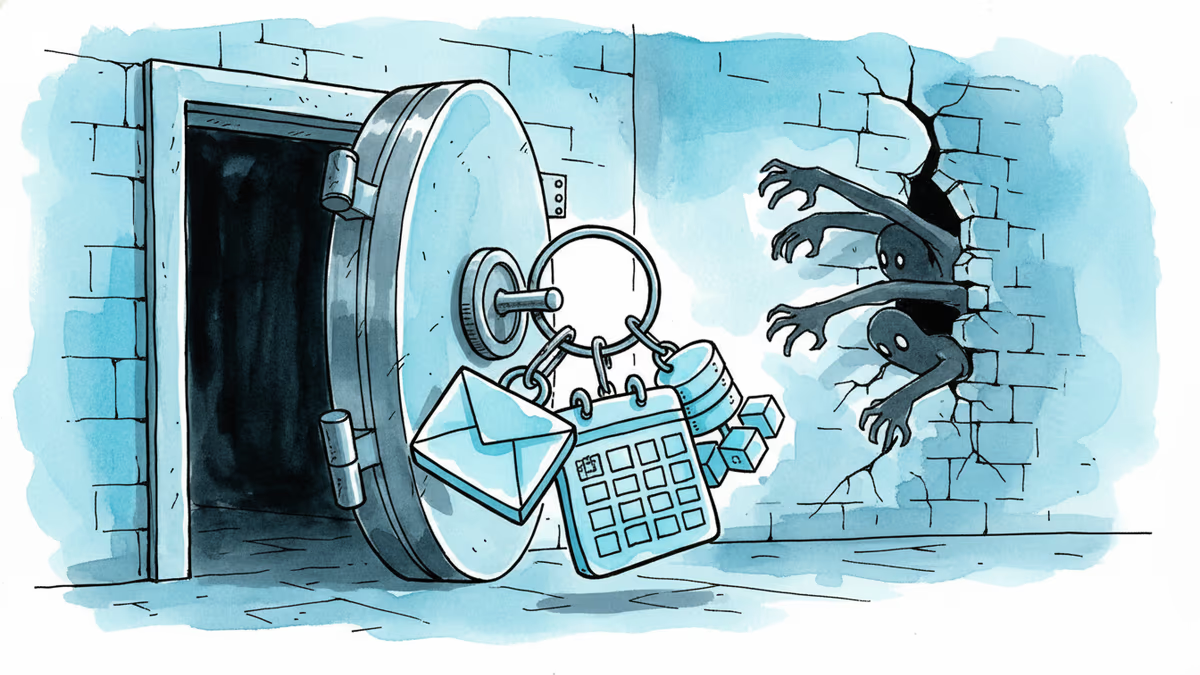
A critical vulnerability in Starlette—downloaded 325 million times per week—puts millions of AI agent servers at risk, exposing stored credentials for email, databases, and third-party services.

A small but growing group of developers has gone all-in on AI coding agents like Claude Code and OpenClaw. History suggests the rest of us won't be far behind.
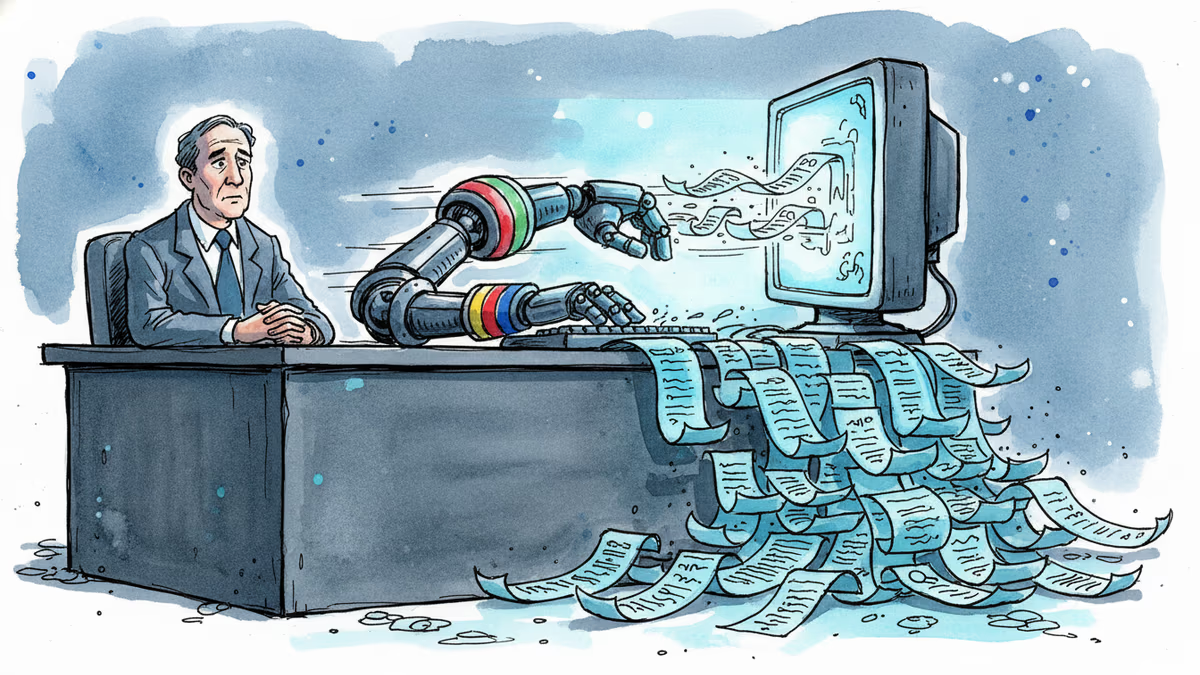
Google is building AI agents that search the web proactively, without user prompting. That's not just a product update — it's a fundamental shift in who controls the information you receive.

OpenAI has reorganized for the second time in a month, merging ChatGPT and Codex into a single agentic platform under president Greg Brockman's unified product leadership.
A critical vulnerability in Starlette—downloaded 325 million times per week—puts millions of AI agent servers at risk, exposing stored credentials for email, databases, and third-party services.
A small but growing group of developers has gone all-in on AI coding agents like Claude Code and OpenClaw. History suggests the rest of us won't be far behind.
Google is building AI agents that search the web proactively, without user prompting. That's not just a product update — it's a fundamental shift in who controls the information you receive.
OpenAI has reorganized for the second time in a month, merging ChatGPT and Codex into a single agentic platform under president Greg Brockman's unified product leadership.
Thoughts
Share your thoughts on this article
Sign in to join the conversation