

The ChatGPT Race That Changed Everything
How OpenAI's ChatGPT launch triggered the biggest tech race since the internet, forcing every company to scramble for AI dominance or risk obsolescence.
November 2022 changed everything. Not with fanfare or keynote presentations, but with a simple chatbot that could write poetry, debug code, and hold conversations that felt almost human.
When OpenAI released ChatGPT, it wasn't just launching another product—it was firing the starting gun on what may be the most consequential technology race in human history. Within days, the entire tech industry realized they were already behind.
From Lab to Mainstream Overnight
The technology wasn't new. AI researchers had been developing large language models for years, tucked away in corporate labs and academic institutions. Google had LaMDA. Meta had research projects. Universities were publishing breakthrough papers.
But these were research projects, not products. They were impressive demos shown to small audiences, not tools that millions of people could use for free.
ChatGPT shattered that barrier. Within five days, it had one million users. Within two months, 100 million. Suddenly, AI wasn't a future possibility—it was a present reality that your neighbor was using to plan dinner menus and write resignation letters.
The Scramble Begins
The response was immediate and frantic. Google, despite having some of the world's leading AI researchers, found itself in the unfamiliar position of playing catch-up. Microsoft pivoted its entire strategy around AI, pouring billions into OpenAI and rushing to integrate the technology into everything from Office to Bing.

Meta accelerated its AI timeline. Amazon launched Bedrock. Anthropic emerged as a serious competitor. Even companies with no obvious AI connection started adding chatbots and "AI-powered" features to their products.
The phrase "by any means necessary" became the unofficial motto of Silicon Valley. Companies that had spent years carefully testing and refining products suddenly adopted startup-like speed, launching AI features in beta and iterating publicly.
Why the Panic?
This wasn't just another tech trend like social media or mobile apps. AI represents something fundamentally different: a technology that could potentially replace human cognitive work across entire industries.
The stakes couldn't be higher. Miss the smartphone revolution, and you lose market share. Miss the AI revolution, and your entire business model might become obsolete. Law firms, marketing agencies, software companies, customer service operations—every industry that relies on knowledge work suddenly faced an existential question.
The timing amplified the urgency. ChatGPT launched during a period of economic uncertainty, when companies were already looking for ways to cut costs and improve efficiency. AI promised both, but only for those who adopted it first.
The New Rules of Competition
This race operates under different rules than previous tech competitions. It's not just about having the best product—it's about having access to the massive computational resources, data, and talent required to compete at all.
The barriers to entry are enormous. Training state-of-the-art AI models costs hundreds of millions of dollars. The specialized chips needed are in short supply. The researchers who understand this technology can command seven-figure salaries.
Yet the potential rewards justify the investment. Companies that master AI could automate significant portions of their operations, offer entirely new services, and potentially dominate their industries for decades.
Authors
Related Articles
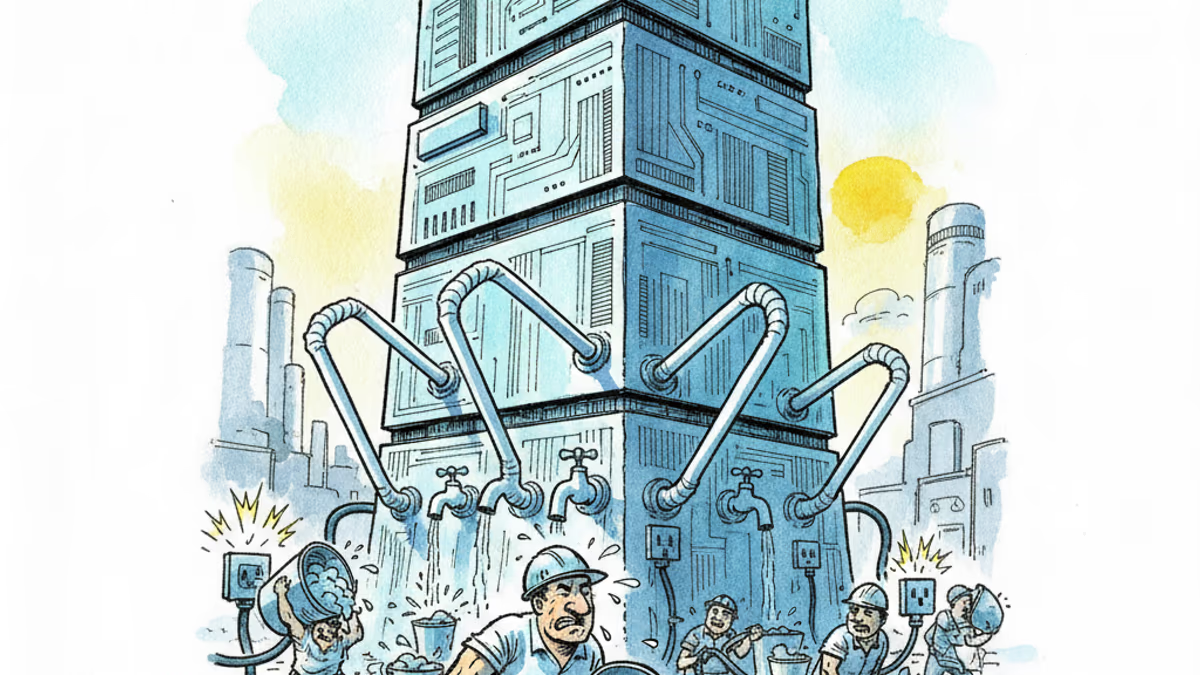
Samsung and SK unveiled a chip and AI investment package worth thousands of trillions of won on June 29. The headline number swings wildly by outlet, but the real contest isn't capital — it's water and power.
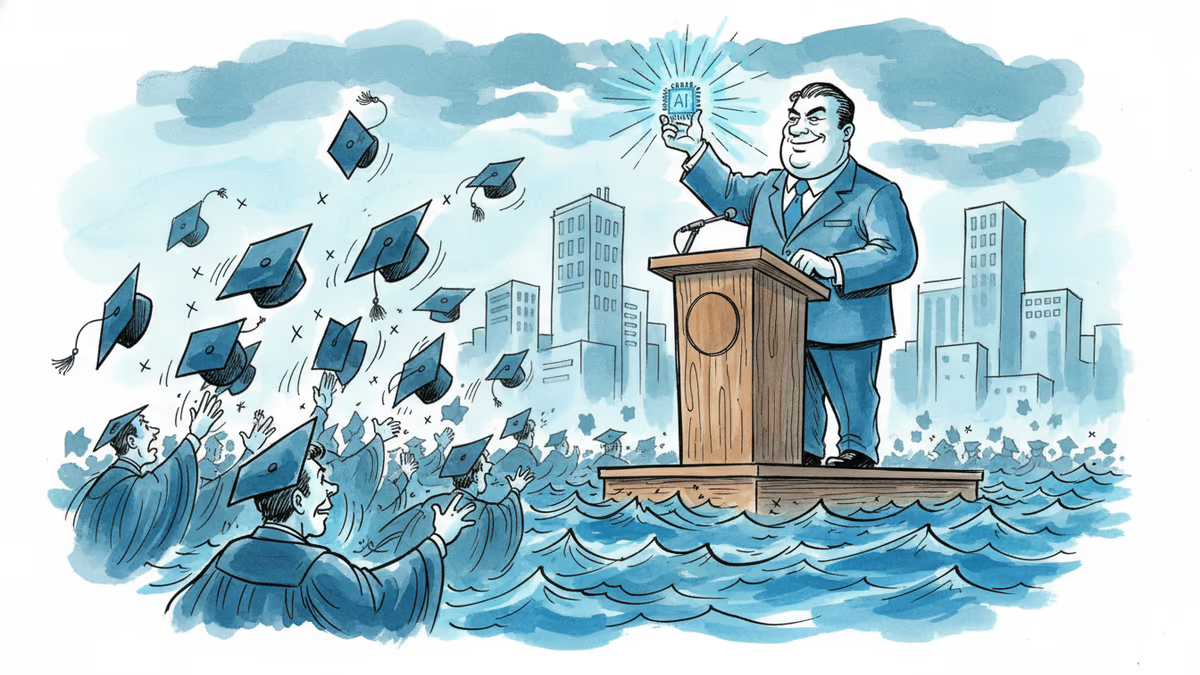
Viral videos show 2026 graduates jeering executives who praise AI at commencement ceremonies. It's not just rudeness — it's a signal about who pays for technological optimism.
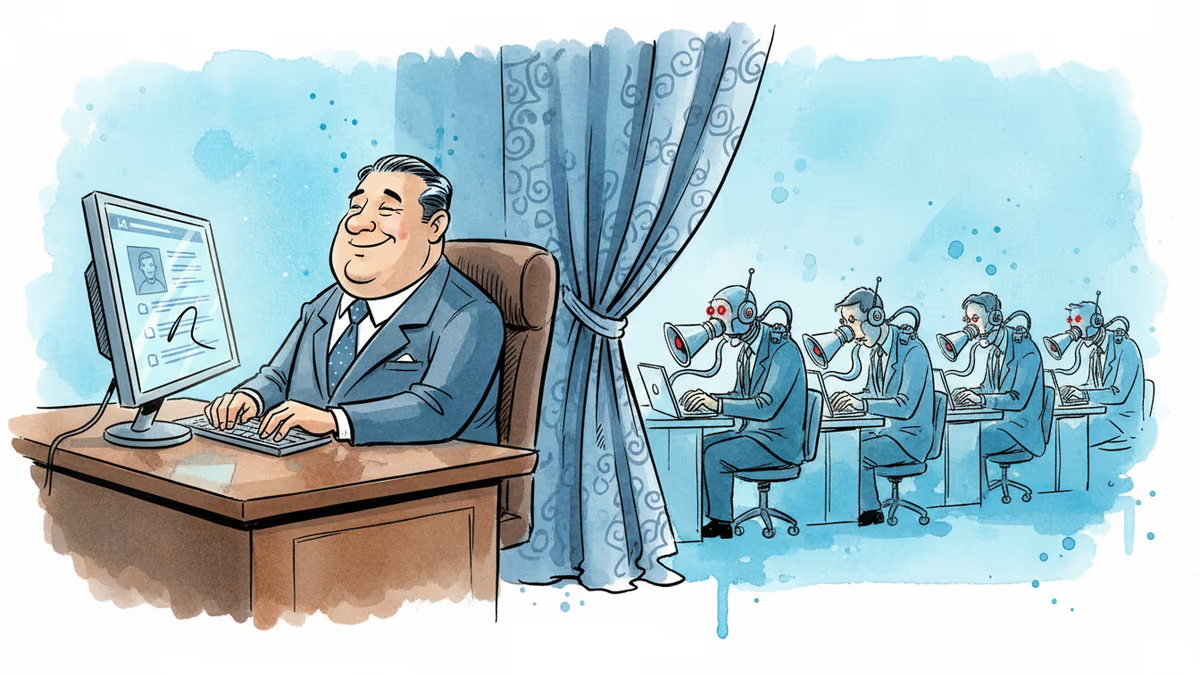
Filipino virtual assistants using AI to ghost-manage LinkedIn profiles for executives is now a structured industry. 30 comments a day, fake engagement rings, and a platform struggling to tell real from fabricated.
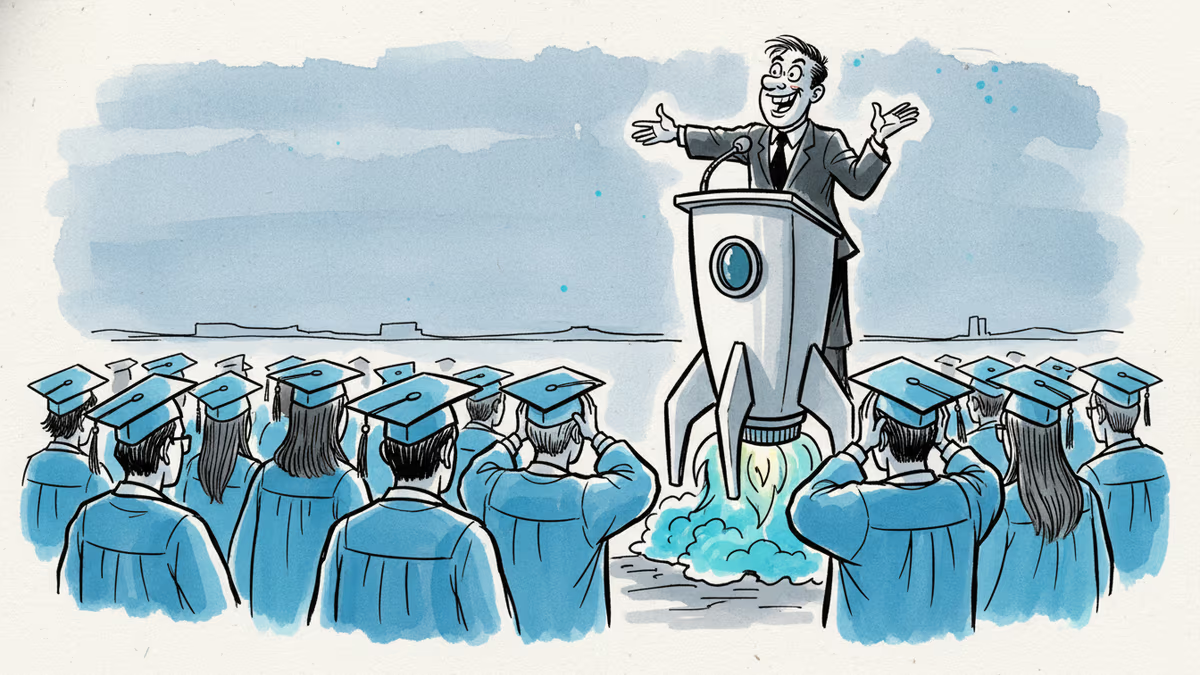
Two commencement speakers learned the hard way that AI enthusiasm doesn't land well with today's graduates. The backlash reveals a widening gap between tech optimism and Gen Z's economic reality.
Samsung and SK unveiled a chip and AI investment package worth thousands of trillions of won on June 29. The headline number swings wildly by outlet, but the real contest isn't capital — it's water and power.
Viral videos show 2026 graduates jeering executives who praise AI at commencement ceremonies. It's not just rudeness — it's a signal about who pays for technological optimism.
Filipino virtual assistants using AI to ghost-manage LinkedIn profiles for executives is now a structured industry. 30 comments a day, fake engagement rings, and a platform struggling to tell real from fabricated.
Two commencement speakers learned the hard way that AI enthusiasm doesn't land well with today's graduates. The backlash reveals a widening gap between tech optimism and Gen Z's economic reality.
Thoughts
Share your thoughts on this article
Sign in to join the conversation