
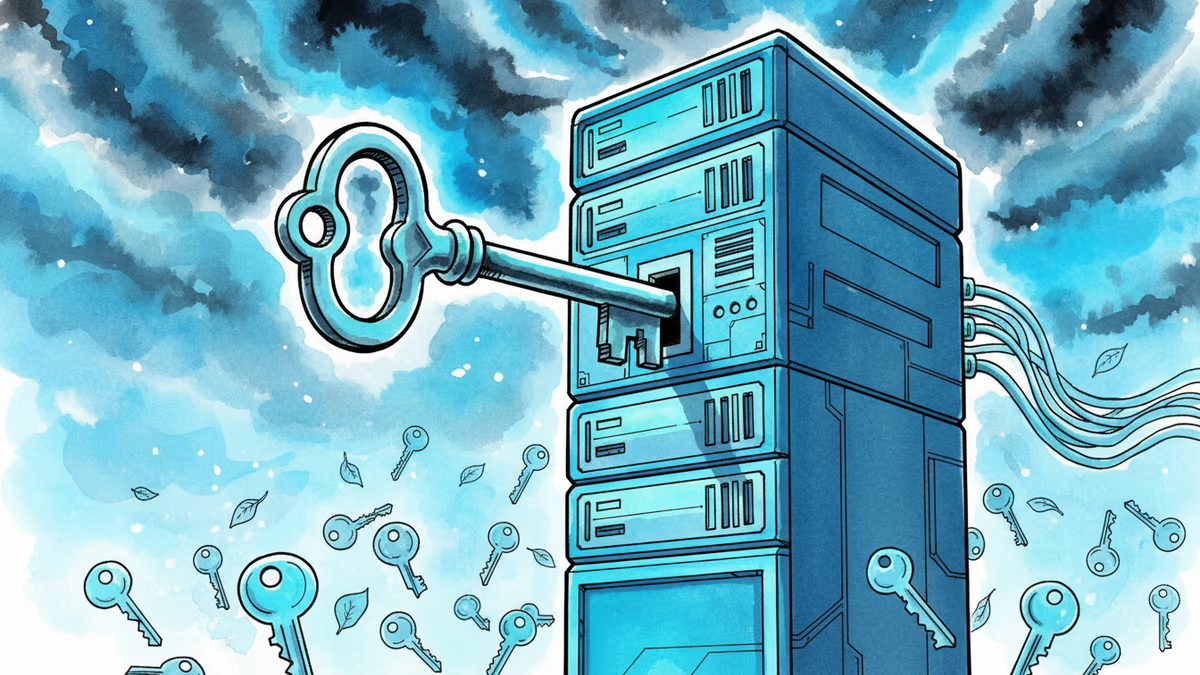
Windows Quietly Swaps Out 15-Year-Old Security Keys
Microsoft begins automatic replacement of Secure Boot certificates expiring in 2026, marking a generational shift in Windows security infrastructure affecting billions of devices.
1.5 Billion Windows Devices Are Getting New Security DNA
Microsoft has quietly begun replacing the security certificates that have protected Windows computers for 15 years. The company announced it's automatically rolling out new Secure Boot certificates through regular platform updates, ahead of the original certificates expiring between June and October 2026.
This isn't just routine maintenance. Microsoft calls it a "generational refresh" of the security standard that's been the invisible guardian of Windows systems since 2011. Every time you've powered on a Windows machine, these certificates have been working behind the scenes to ensure nothing malicious hijacks your boot process.
Why the Urgency Now?
Secure Boot was introduced in 2011 as an optional security feature. Today, it's a mandatory requirement for Windows 11. The technology creates a chain of trust from the moment you press the power button, verifying that each piece of software loading during startup is legitimate.
But digital certificates, like milk, have expiration dates. The 2011-era certificates are reaching their 15-year lifespan just as Secure Boot has become more critical than ever. Without valid certificates, systems could fail to boot or trigger constant security warnings.
Microsoft's preemptive move aims to prevent what could have been a massive support nightmare: millions of computers suddenly refusing to start properly.

The Silent Security Dilemma
Enterprise IT administrators are breathing easier. Managing certificate renewals across thousands of corporate devices manually would have been a logistical nightmare, especially with remote work now standard. Automatic updates solve a problem most people didn't even know existed.
Privacy advocates, however, raise eyebrows. Automatic security updates mean Microsoft can push changes to the deepest levels of your computer without explicit user consent. While the intention is protective, it also represents unprecedented control over personal devices.
Cybersecurity experts are split. The new certificates use stronger encryption and close potential security gaps. But they also create a single point of failure—if Microsoft's update process goes wrong, millions of devices could be affected simultaneously.
The Broader Implications
This certificate refresh highlights a fundamental shift in how we think about device ownership. Your computer may physically belong to you, but the security keys that determine what it can run are now managed remotely by Microsoft.
For businesses, this represents both convenience and dependency. Companies no longer need in-house expertise to manage boot-level security, but they're also surrendering control over one of their systems' most fundamental security mechanisms.
The timing is particularly significant as governments worldwide scrutinize big tech's influence over digital infrastructure. Microsoft's ability to quietly update security certificates on billions of devices demonstrates the company's deep integration into global computing systems.
Authors
Related Articles
GitHub confirmed hackers stole data from 3,800 internal repositories via a poisoned VS Code extension. Here's why developer tools are now the most dangerous attack surface in tech.
Emails revealed in the Musk v. Altman trial show Microsoft executives were deeply skeptical of OpenAI in 2017–2018. What actually changed their minds?
Xbox hardware revenue dropped 33% in Q1 2026, yet Microsoft posted $82.9B in total revenue. What this tells us about the future of gaming—and who actually loses.
A gunman attacked a Secret Service checkpoint at the White House Correspondents' Dinner. Trump's first public reaction wasn't about security. It was about his $400M ballroom project.
GitHub confirmed hackers stole data from 3,800 internal repositories via a poisoned VS Code extension. Here's why developer tools are now the most dangerous attack surface in tech.
Emails revealed in the Musk v. Altman trial show Microsoft executives were deeply skeptical of OpenAI in 2017–2018. What actually changed their minds?
Xbox hardware revenue dropped 33% in Q1 2026, yet Microsoft posted $82.9B in total revenue. What this tells us about the future of gaming—and who actually loses.
A gunman attacked a Secret Service checkpoint at the White House Correspondents' Dinner. Trump's first public reaction wasn't about security. It was about his $400M ballroom project.
Thoughts
Share your thoughts on this article
Sign in to join the conversation