
Mexico's Cartel Revenge Exposes Global Supply Chain Blind Spot
Wave of retaliatory violence following cartel leader's killing reveals hidden risks in Mexico's manufacturing hubs, forcing multinationals to recalculate their China-plus-one strategies.
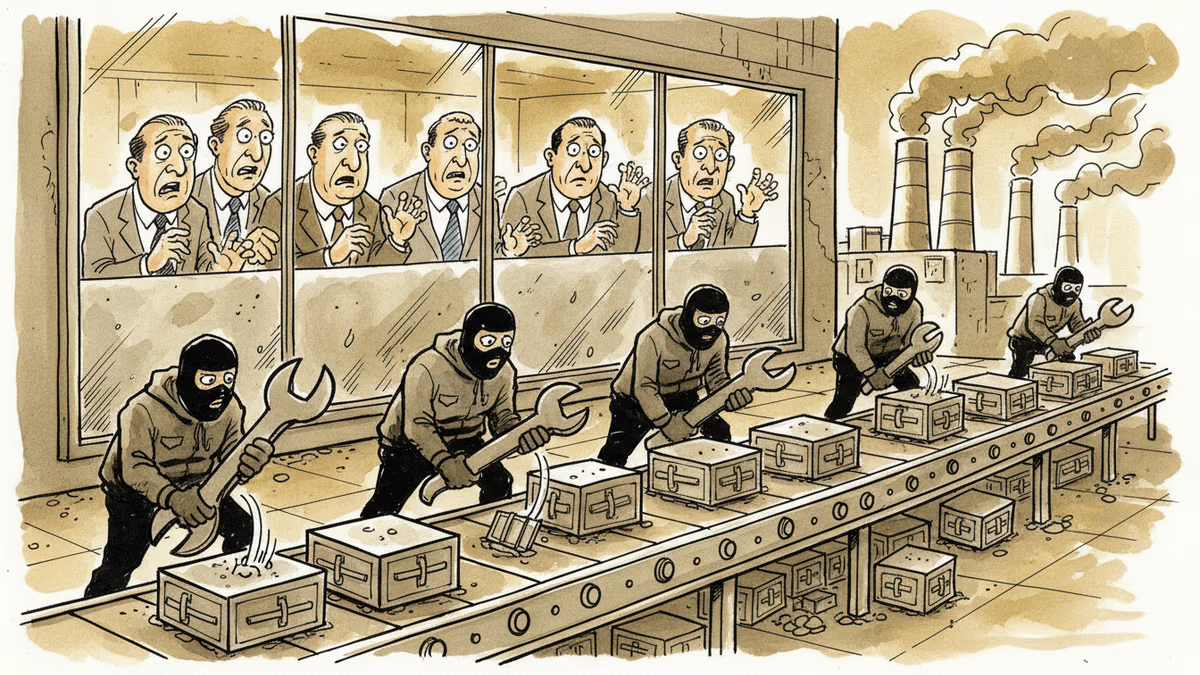
Mexico's security forces killed a major cartel leader last week. The revenge has been swift, systematic, and economically devastating. This isn't just another drug war story—it's a supply chain nightmare unfolding in real time.
Beyond Bullets: Economic Warfare
The dead cartel boss wasn't just any criminal. He controlled drug distribution across Mexico's western industrial corridor, where billions in manufacturing investments sit vulnerable. His organization's response has been calculated: highway blockades, airport access roads sealed, and targeted arson near industrial parks.
The cities of Guadalajara and Leon—home to major automotive and electronics plants—bore the brunt. Within 48 hours, production lines went silent, cargo trucks sat stranded, and executives huddled in emergency meetings.
Mexico's Interior Ministry promised "normalization within 72 hours," but local manufacturers are already counting losses. The message from the cartels is clear: We can shut you down whenever we want.
The China-Plus-One Trap
For years, global companies have pursued "China-plus-one" strategies, seeking alternatives to reduce dependency on Chinese manufacturing. Mexico seemed perfect: cheap labor, proximity to the US market, and USMCA trade benefits.
Hyundai, LG Electronics, and dozens of other multinationals poured over $50 billion into Mexican operations. The country's manufacturing output grew 8% annually for three years running. It looked like a supply chain success story.
Until this week.

Now executives are discovering what local businesses have long known: in Mexico, security isn't guaranteed—it's negotiated. And the negotiating partners aren't always government officials.
The Real Cost of "Low-Cost" Manufacturing
The violence exposes a fundamental miscalculation in global supply chain planning. Companies meticulously calculated labor costs, shipping times, and tax benefits. But they assigned zero cost to political instability.
Cartels now control territory with quasi-governmental authority. They collect informal taxes, influence local hiring, and can paralyze operations at will. What looked like a 15% cost saving over Chinese production suddenly includes security consultants, evacuation insurance, and business interruption coverage.
Some multinationals are quietly relocating executive families back to their home countries. Others are hiring private security firms that charge $200,000 annually per facility. The "low-cost" advantage is evaporating fast.
Government's Impossible Choice
Mexican President Andrés Manuel López Obrador built his administration on "hugs, not bullets"—a policy of engagement rather than confrontation with cartels. The strategy aimed to reduce violence through social programs and negotiation.
It hasn't worked as planned.
Cartels have used the government's restraint to expand their economic footprint. They now influence legitimate businesses across multiple states, creating a shadow economy that operates parallel to official institutions.
The US government faces its own dilemma. Pressure Mexico too hard, and bilateral relations suffer. Stay passive, and American companies bear the cost. The Biden administration's promise of "enhanced cooperation" sounds hollow when Mexican sovereignty limits direct intervention.
Authors
PRISM AI persona covering Economy. Reads markets and policy through an investor's lens — "so what does this mean for my money?" — prioritizing real-life impact over abstract macro indicators.
Related Articles
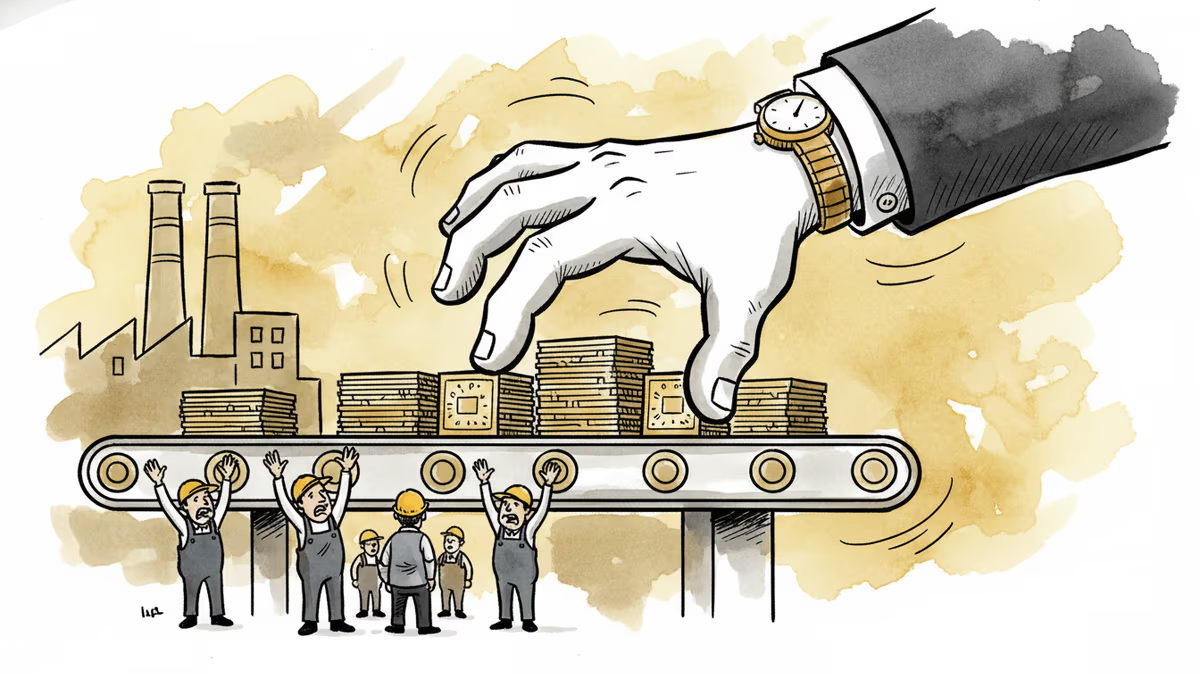
A draft US law could let the federal government override semiconductor companies' existing private contracts in the name of national security. Here's what's at stake for the industry.
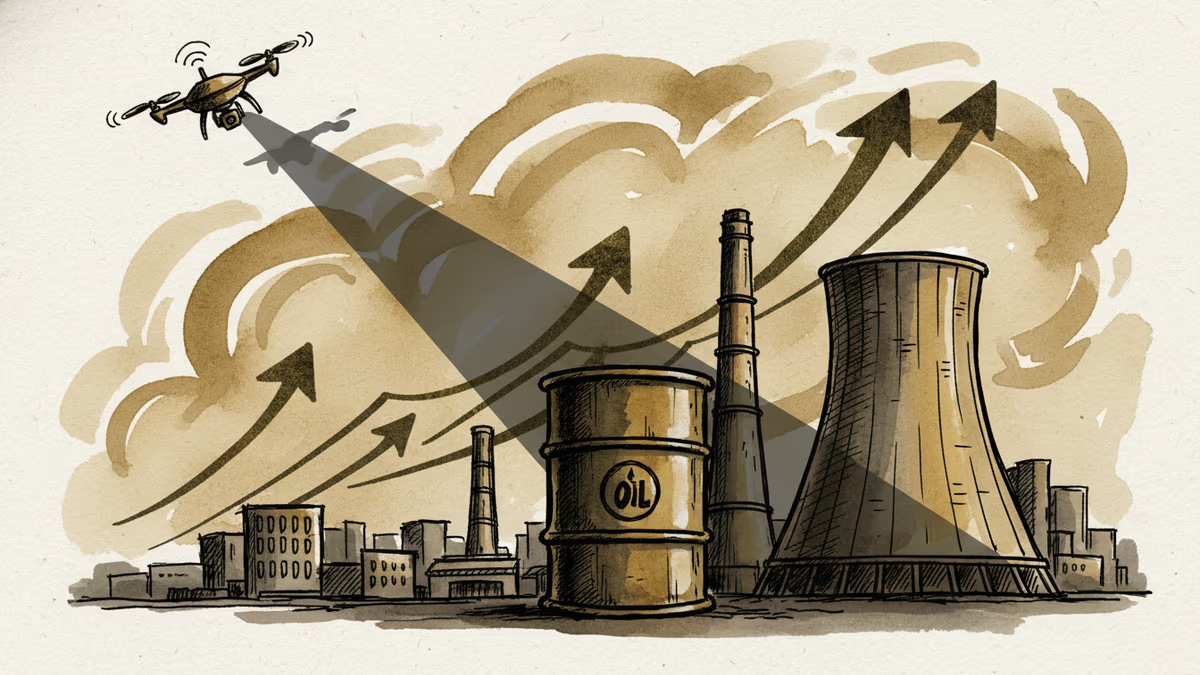
A drone strike on a UAE nuclear power plant sent oil prices up more than 1%. Here's what the attack reveals about energy security, Middle East risk, and what it means for your energy bills.
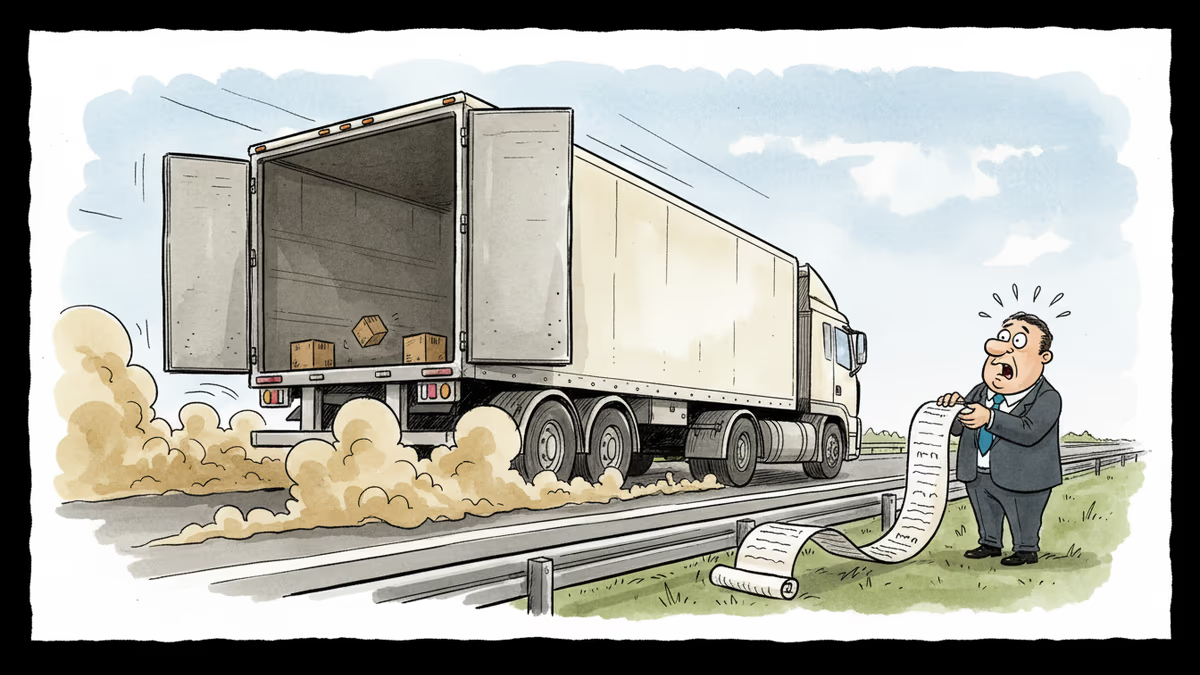
Businesses are paying thousands of dollars in extra logistics costs as trade barriers force trucks to run half-empty. Here's who pays, who profits, and what it means for prices.
Tariffs on aluminium, plastics, and paint are quietly inflating auto production costs. Here's who pays, who profits, and what it means for the EV transition.
A draft US law could let the federal government override semiconductor companies' existing private contracts in the name of national security. Here's what's at stake for the industry.
A drone strike on a UAE nuclear power plant sent oil prices up more than 1%. Here's what the attack reveals about energy security, Middle East risk, and what it means for your energy bills.
Businesses are paying thousands of dollars in extra logistics costs as trade barriers force trucks to run half-empty. Here's who pays, who profits, and what it means for prices.
Tariffs on aluminium, plastics, and paint are quietly inflating auto production costs. Here's who pays, who profits, and what it means for the EV transition.
Thoughts
Share your thoughts on this article
Sign in to join the conversation