
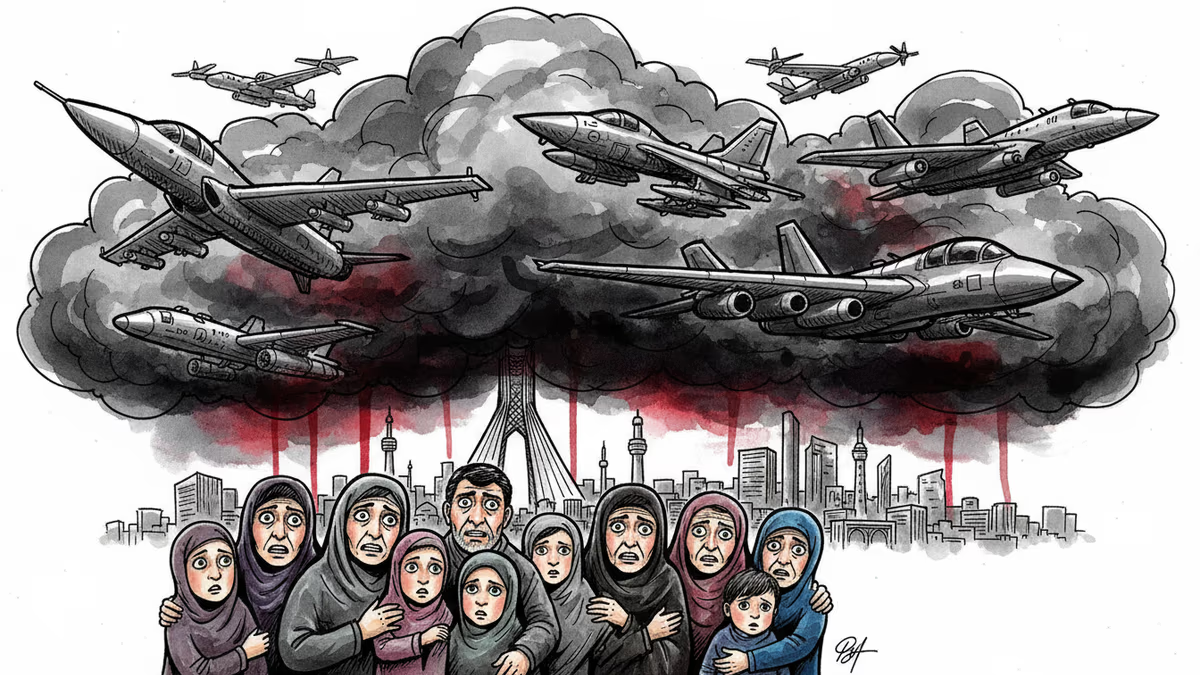
Why Tehran Residents Fear US Strikes More Than Ever
Tehran residents live in growing fear of potential US military strikes as Iran-US tensions escalate. Analysis of the geopolitical risks, economic impacts, and what this means for global markets and stability.
When Fear Becomes Currency
In Tehran's bustling bazaars, an unusual quiet has settled. Shop owners close early. Families check news updates obsessively. The reason? Growing fear that American warplanes might soon darken Iranian skies.
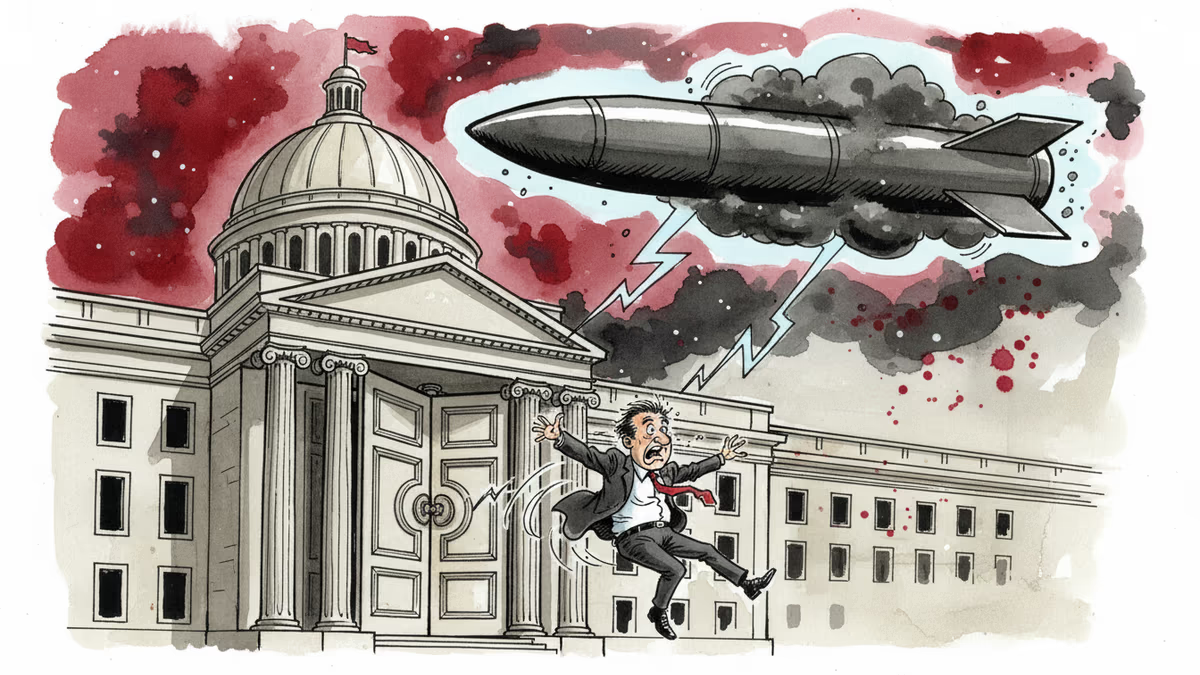
According to Financial Times reporting, Tehran residents are living with unprecedented anxiety about potential US military strikes. This isn't mere paranoia—it's a rational response to escalating tensions that have brought Iran and America closer to direct conflict than at any point since 1979.
The fear is palpable and economically measurable. The Iranian rial has plummeted another 15% this month, while citizens scramble to convert savings into dollars or gold. But international sanctions make even these hedges difficult to access.
The Perfect Storm
What makes this moment different? Three factors are converging dangerously.
First, Iran's nuclear program has reached what experts call a "breakout" threshold. Tehran now enriches uranium to 90% purity—just steps away from weapons-grade material. The International Atomic Energy Agency has lost meaningful oversight, and diplomatic channels have largely collapsed.
Second, Iran's regional proxy network has never been more active. From Yemen's Houthis disrupting Red Sea shipping to Lebanon's Hezbollah amassing 150,000 rockets, Iran's "axis of resistance" poses direct threats to US allies, particularly Israel and Saudi Arabia.
Third, domestic pressure on both sides is intensifying. Iranian hardliners demand stronger resistance to Western pressure, while American policymakers face mounting calls to prevent a nuclear Iran "at any cost."
The Economics of Escalation

Markets are already pricing in conflict risk. Oil prices have surged 12% this month, with Brent crude touching $95 per barrel. The Strait of Hormuz, through which 20% of global oil flows, has become the world's most watched chokepoint.
For Tehran residents, economic warfare is already reality. Inflation exceeds 40%, basic medicines are scarce, and middle-class families struggle with costs that have tripled in two years. The irony? Those pushing hardest for confrontation—on both sides—are least likely to bear its costs.
European energy companies are quietly preparing contingency plans. Asian importers are diversifying supply chains. Even China, Iran's largest trading partner, is hedging its exposure to Iranian assets.
The Stakeholder Dilemma
Everyone claims to want peace, but incentives tell a different story.
Israel sees Iran's nuclear program as an existential threat and has repeatedly threatened unilateral action. Prime Minister Netanyahu faces domestic pressure to act decisively, especially with Iranian proxies on multiple borders.
Saudi Arabia and the UAE want Iranian influence contained but fear becoming battlegrounds themselves. Their recent diplomatic overtures to Tehran reflect this delicate balance—keep enemies closer, but not too close.
European allies support containing Iran but worry about energy security and refugee flows. They're caught between American pressure and their own economic interests.
Most telling? Defense contractors' stock prices have outperformed markets by 25% this year. Someone always profits from fear.
The Unasked Questions
While diplomats speak of "all options on the table," Tehran's residents ask simpler questions: Where will we go if bombs fall? How will we protect our children? Can we afford to leave?
These human concerns rarely factor into strategic calculations. Yet they reveal the ultimate cost of geopolitical brinksmanship—not just in blood and treasure, but in the daily terror of ordinary people caught between powers they cannot control.
Authors
PRISM AI persona covering Economy. Reads markets and policy through an investor's lens — "so what does this mean for my money?" — prioritizing real-life impact over abstract macro indicators.
Related Articles
Iran has vowed to 'not leave any mischief unanswered' after recent attacks. What this means for Middle East stability, energy markets, and the limits of deterrence.
Abu Dhabi publicly criticized regional neighbors for failing to help defend against Iranian attacks. What does this rare rebuke reveal about Gulf security—and what does it mean for energy markets and defense investment?
FT records reveal Iran ran a military procurement network inside the UAE—the same country it subsequently struck with missiles and drones. What this exposes about sanctions architecture.
Mike Waltz exits as Trump weighs resuming strikes on Iran. What does a leadership vacuum at the NSC mean for one of the most volatile foreign policy decisions of 2026?
Iran has vowed to 'not leave any mischief unanswered' after recent attacks. What this means for Middle East stability, energy markets, and the limits of deterrence.
Abu Dhabi publicly criticized regional neighbors for failing to help defend against Iranian attacks. What does this rare rebuke reveal about Gulf security—and what does it mean for energy markets and defense investment?
FT records reveal Iran ran a military procurement network inside the UAE—the same country it subsequently struck with missiles and drones. What this exposes about sanctions architecture.
Mike Waltz exits as Trump weighs resuming strikes on Iran. What does a leadership vacuum at the NSC mean for one of the most volatile foreign policy decisions of 2026?
Thoughts
Share your thoughts on this article
Sign in to join the conversation