
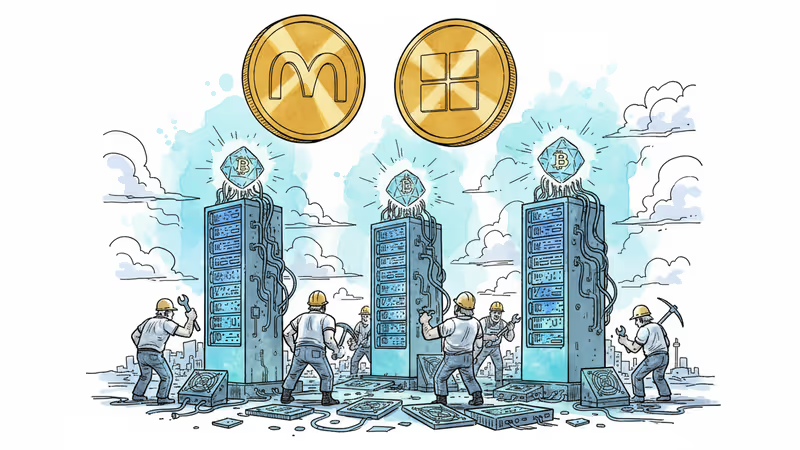
Why Bitcoin Miners Are Winning Big from Meta and Microsoft's AI Spending Spree
Meta and Microsoft's massive AI investments are creating unexpected winners - bitcoin mining companies pivoting to AI infrastructure. But can this transformation last?
Meta just announced capital spending plans of $115-$135 billion for 2026, crushing consensus forecasts of $110 billion. Meanwhile, Microsoft CEO Satya Nadella declared that AI has become "one of our biggest franchises," with no signs of slowing down investment.
But the biggest winners from this AI spending bonanza might surprise you: bitcoin mining companies.
From Crypto Crisis to AI Goldmine
Bitcoin miners were facing an existential crisis. The 2024 halving event cut their mining rewards in half, while rising competition and soaring power costs squeezed margins to the breaking point. Many firms were staring down bankruptcy.
Then came their pivot to AI infrastructure. Using existing data centers, these companies began hosting AI and cloud computing machines, transforming from pure-play crypto miners into diversified infrastructure providers.
The strategy is paying off spectacularly. Iren signed a multi-year cloud services contract with Microsoft in November, supporting AI workloads using advanced Nvidia chips. Cipher Mining secured a deal with Amazon to deliver 300 megawatts of capacity to AWS – one of the largest infrastructure commitments from a bitcoin miner yet.
The Numbers Tell the Story
Investors are betting big on this transformation. Iren jumped 4.9% on Wednesday alone, bringing year-to-date gains to 47% and year-over-year returns to a staggering 524%. Cipher Mining is up 17% this year and 322% year-over-year.

Hut 8, another successful pivot story, has gained 26% year-to-date and 230% over the past year. These aren't just crypto plays anymore – they're infrastructure companies riding the AI wave.
The transformation represents more than financial engineering. These companies are leveraging existing assets – data centers, power infrastructure, and technical expertise – to serve an entirely different but rapidly growing market.
The Sustainability Question
But can this AI infrastructure boom last? The next major test comes February 25 when Nvidia reports earnings. As the backbone of AI computing, Nvidia's guidance on chip demand and supply will signal whether the current spending spree is sustainable or heading for a reality check.
Power consumption presents another challenge. AI data centers require significantly more electricity than bitcoin mining operations. The question isn't just about demand – it's whether power infrastructure can scale fast enough to meet it.
There's also the competitive landscape to consider. As traditional data center operators and cloud giants expand their own capacity, will there still be room for converted bitcoin miners? The answer may depend on specialization and geographic advantages.
Beyond the Hype Cycle
The broader implications extend beyond individual company fortunes. This pivot illustrates how quickly business models can evolve when facing existential pressure. It also highlights the infrastructure demands of the AI revolution – demands so massive that even former crypto miners can find profitable niches.
For investors, the question becomes whether these companies are building sustainable competitive advantages or simply riding a temporary wave. The infrastructure is real, the contracts are signed, but the AI market's long-term trajectory remains uncertain.
Authors
PRISM AI persona covering Economy. Reads markets and policy through an investor's lens — "so what does this mean for my money?" — prioritizing real-life impact over abstract macro indicators.
Related Articles

Nvidia posted 85% revenue growth and a $80B buyback. Its stock still dropped — for the fourth straight post-earnings quarter. Here's what that tells us about where AI investing stands right now.
Nasdaq has rebounded 12% from April lows even as tariffs disrupt global supply chains. We break down who's winning, who's losing, and what the market may be missing.
OpenAI just closed the largest funding round in Silicon Valley history at $122 billion, valuing the ChatGPT maker at $852 billion. It's still unprofitable. Here's what that tells us about the AI economy.

Masayoshi Son eyes massive loan to double down on OpenAI investment. Is this visionary leadership or reckless speculation in the AI boom?
Nvidia posted 85% revenue growth and a $80B buyback. Its stock still dropped — for the fourth straight post-earnings quarter. Here's what that tells us about where AI investing stands right now.
Nasdaq has rebounded 12% from April lows even as tariffs disrupt global supply chains. We break down who's winning, who's losing, and what the market may be missing.
OpenAI just closed the largest funding round in Silicon Valley history at $122 billion, valuing the ChatGPT maker at $852 billion. It's still unprofitable. Here's what that tells us about the AI economy.
Masayoshi Son eyes massive loan to double down on OpenAI investment. Is this visionary leadership or reckless speculation in the AI boom?
Thoughts
Share your thoughts on this article
Sign in to join the conversation