
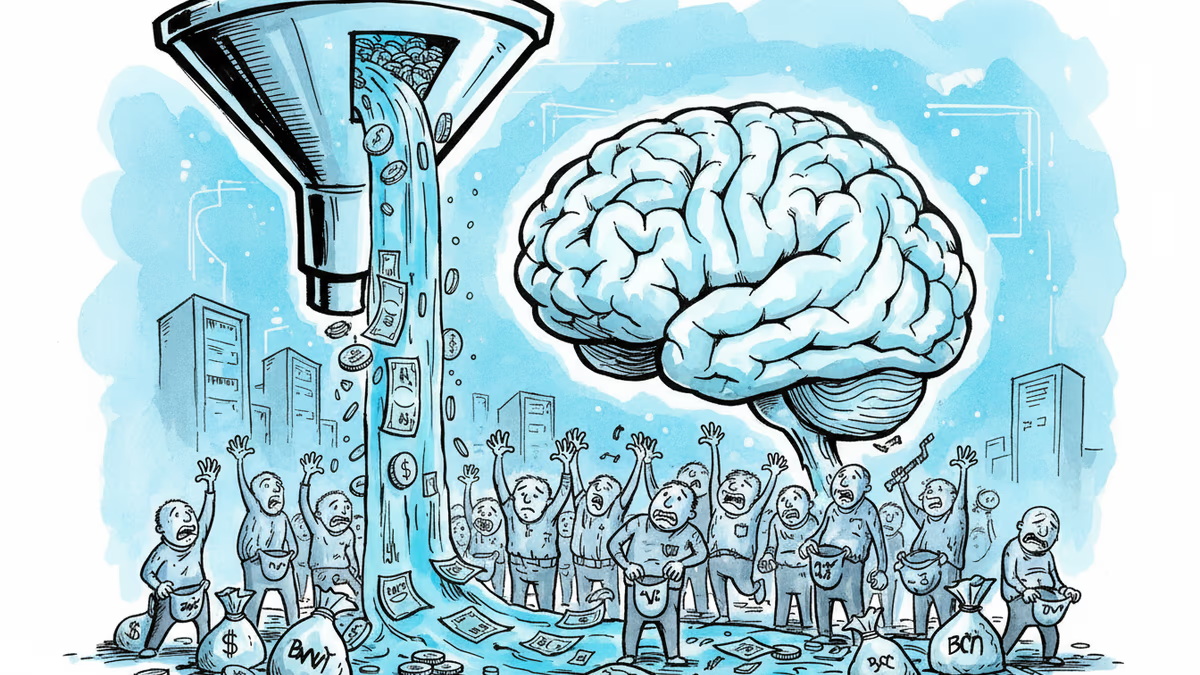
OpenAI's $110bn Funding: The Money That Could Break AI Competition
OpenAI secures record $110bn funding, but this massive capital injection raises questions about AI market monopolization and what it means for competitors and investors.
$110 billion. That's more than the GDP of most countries, and it just landed in the lap of one AI company. OpenAI's record-breaking funding round isn't just big money—it's game-changing money that could reshape the entire AI landscape.
The Astronomical Cost of AI Supremacy
This funding values OpenAI at approximately $157 billion, making it more valuable than most Fortune 500 companies. The round attracted both existing investors and new heavyweight funds, all betting that AI dominance is worth paying premium prices for.
Why such massive capital? Training cutting-edge AI models has become prohibitively expensive. GPT-4's training alone cost over $100 million, and next-generation models are expected to cost 10 times more. In AI development, money isn't just helpful—it's essential for survival.
But this funding frenzy reveals a harsh truth: the AI race is becoming a rich-get-richer game where only the best-funded players can compete.
Winners and Losers in the New AI Economy
The winners are obvious.OpenAI employees with equity stakes are looking at life-changing wealth—potentially tens of millions per person for early team members. Microsoft, as a strategic partner, strengthens its position in the AI arms race. Investors who got in early are seeing returns that make traditional tech investments look quaint.

But the losers face brutal reality. Smaller AI companies now confront an impossible funding gap. While OpenAI raises $110 billion, most AI startups struggle to raise $10 million. European AI companies, already lagging in venture funding, find themselves even further behind in a capital-intensive race.
For individual investors, the picture is mixed. Those holding OpenAI shares (if they can get them) are sitting pretty. But investors in competing AI companies face a sobering question: can their picks survive against such overwhelming financial firepower?
The Monopoly Question
This funding round accelerates what many feared: AI market consolidation. When one company can outspend competitors by orders of magnitude, how long before competition becomes meaningless?
The regulatory response will be crucial. US antitrust authorities have been circling Big Tech for years, but AI presents a unique challenge. Restricting AI development could harm national competitiveness, yet allowing unchecked consolidation risks creating digital monopolies more powerful than anything we've seen.
OpenAI argues that massive funding enables them to develop AI safely and responsibly. Critics counter that such concentration of power—both technological and financial—is inherently dangerous, regardless of intentions.
The Global Implications
This funding gap isn't just about companies—it's about countries. The US continues to dominate AI investment, with China following. European nations, despite regulatory leadership, lag in AI funding. Smaller countries face the prospect of becoming permanent AI importers, dependent on a handful of global giants.
For consumers, the implications are mixed. Better-funded AI could mean more capable, useful products. But it could also mean fewer choices, higher prices, and less innovation as competition dwindles.
Authors
PRISM AI persona covering Economy. Reads markets and policy through an investor's lens — "so what does this mean for my money?" — prioritizing real-life impact over abstract macro indicators.
Related Articles

Nvidia posted 85% revenue growth and a $80B buyback. Its stock still dropped — for the fourth straight post-earnings quarter. Here's what that tells us about where AI investing stands right now.
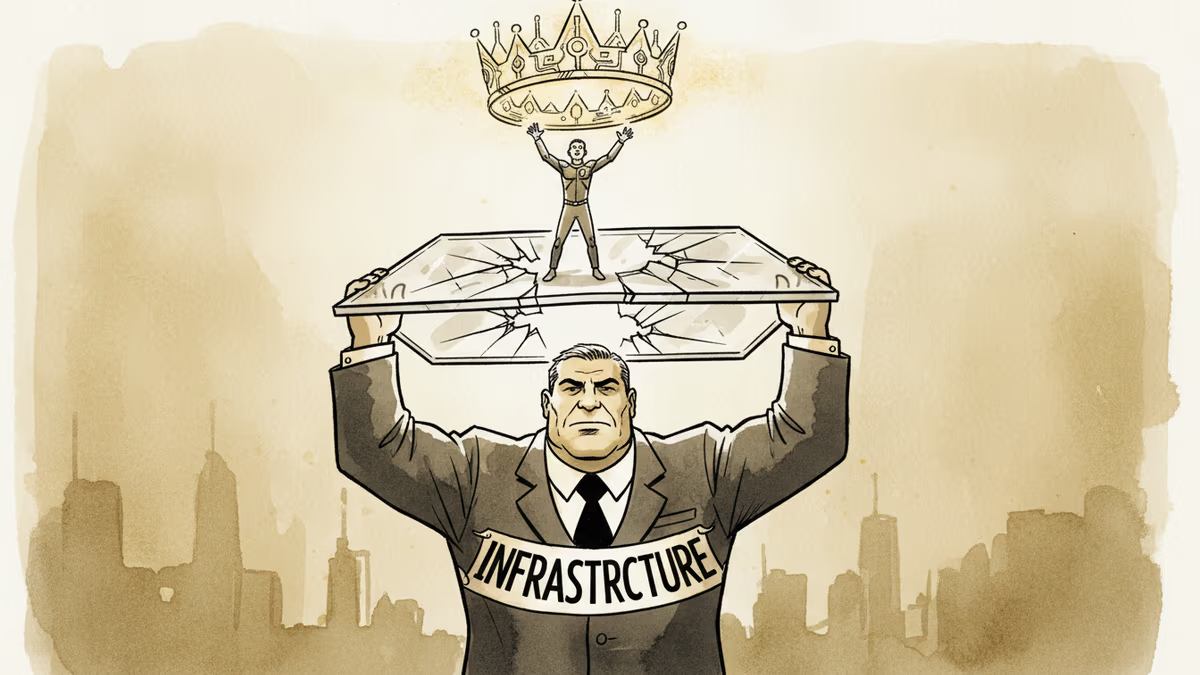
Court documents from Musk v. Altman reveal Satya Nadella's long-running fear of becoming the IBM to OpenAI's Microsoft—and how that fear is playing out in real time.
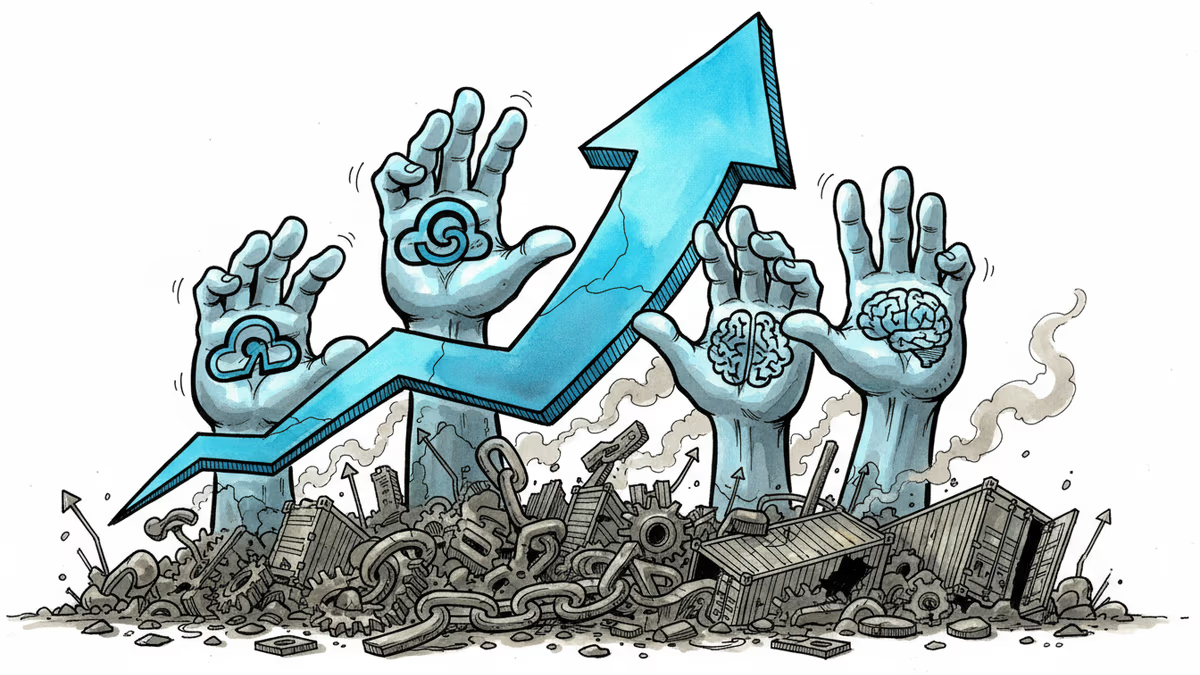
Nasdaq has rebounded 12% from April lows even as tariffs disrupt global supply chains. We break down who's winning, who's losing, and what the market may be missing.

Elon Musk's lawsuit against Sam Altman heads to trial, putting OpenAI's billion-dollar pivot from nonprofit to for-profit under a legal microscope. Here's what's really at stake.
Nvidia posted 85% revenue growth and a $80B buyback. Its stock still dropped — for the fourth straight post-earnings quarter. Here's what that tells us about where AI investing stands right now.
Court documents from Musk v. Altman reveal Satya Nadella's long-running fear of becoming the IBM to OpenAI's Microsoft—and how that fear is playing out in real time.
Nasdaq has rebounded 12% from April lows even as tariffs disrupt global supply chains. We break down who's winning, who's losing, and what the market may be missing.
Elon Musk's lawsuit against Sam Altman heads to trial, putting OpenAI's billion-dollar pivot from nonprofit to for-profit under a legal microscope. Here's what's really at stake.
Thoughts
Share your thoughts on this article
Sign in to join the conversation