
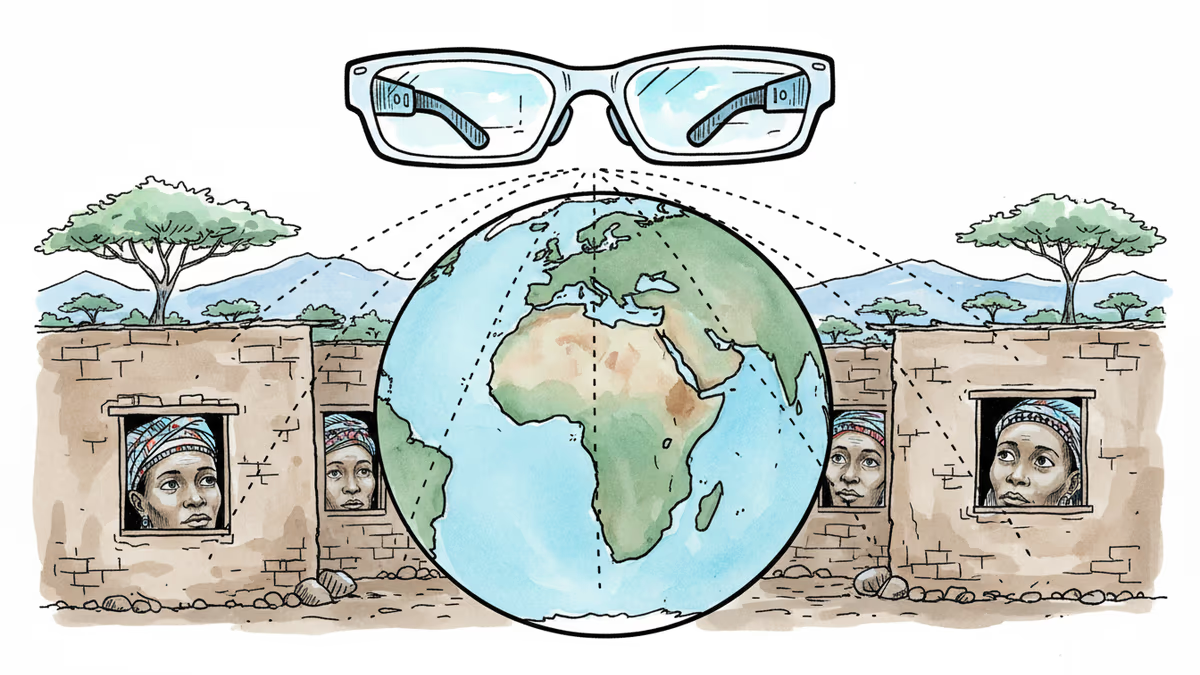
Your Meta Smart Glasses May Have Human Voyeurs in Kenya
Investigation reveals Meta's AI glasses send intimate footage to human reviewers in Kenya, including bathroom visits and private moments. Privacy promise broken?
Your most private moments—in the bathroom, in bed, during intimate conversations—might have an unexpected audience halfway around the world. A Swedish investigation has revealed that Meta's AI-powered smart glasses are sending sensitive footage to human reviewers in Nairobi, Kenya, who have witnessed "bathroom visits, sex and other intimate moments."
The Privacy Promise That Wasn't
When Meta launched its smart glasses, the company emphasized they were "designed with privacy in mind." The reality, according to Svenska Dagbladet's investigation, tells a different story entirely.
Contractors in Kenya have been reviewing footage that users never intended to share with anyone, let alone strangers on another continent. This isn't a glitch—it's how the system was designed to work. AI models need human oversight, and that oversight comes with a hidden cost: your privacy.
The irony is stark. While Meta markets these glasses as a seamless extension of your digital life, they've created a pipeline that funnels your most personal moments to low-wage workers thousands of miles away.
Legal Reckoning Begins
The fallout was swift and predictable. At least one class-action lawsuit has emerged, accusing Meta of false advertising and privacy violations. The plaintiffs argue that Meta's "privacy-first" marketing was fundamentally deceptive.
But this legal action raises deeper questions. How many other tech companies are making similar privacy promises while operating similar human review systems? Apple, Google, and Amazon all use human contractors to improve their AI systems. Are their practices any different?

The Consent Illusion
Here's the uncomfortable truth: 73% of users never read the full terms of service for their devices. They click "agree" and assume their privacy is protected. But buried in those lengthy documents are clauses that often permit exactly the kind of human review that Meta's contractors are performing.
The consent model is broken. Companies present users with a false choice: accept our terms entirely, or don't use our product at all. There's no middle ground, no granular control over what gets reviewed by humans versus what stays private.
Beyond Meta: The Industry's Dirty Secret
This investigation exposes a fundamental contradiction in the AI industry. Companies promise increasingly sophisticated AI that can understand context, emotion, and nuance. But behind every "smart" system are human trainers, reviewers, and quality controllers who see everything the AI sees.
OpenAI, Anthropic, and others rely on human feedback to train their models. Content moderation at Facebook, TikTok, and YouTube involves human reviewers seeing the most disturbing content imaginable. The question isn't whether human review happens—it's whether users truly understand the extent of it.
The Regulatory Response
European regulators are already sharpening their knives. The EU's AI Act and Digital Services Act provide frameworks for addressing exactly these kinds of privacy violations. But enforcement remains patchy, and tech companies often treat fines as a cost of doing business.
In the US, where federal privacy legislation remains weak, state-level actions like California's CCPA offer some protection. But they're no match for the scale and sophistication of modern data collection.
Authors
Related Articles
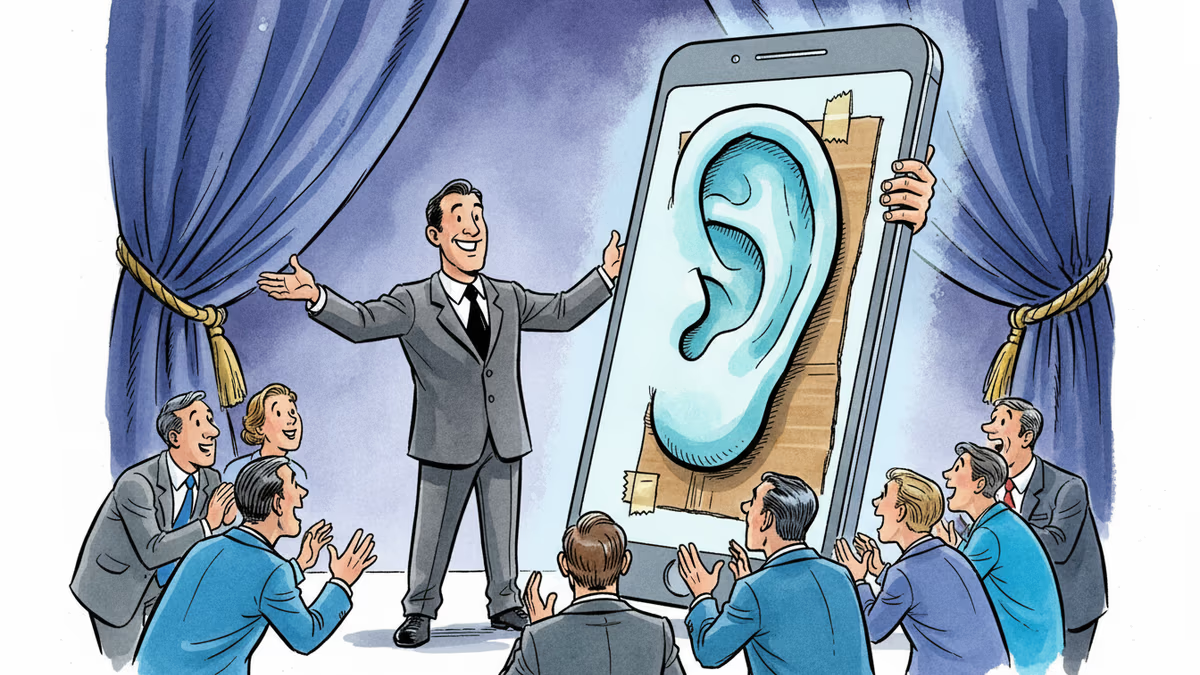
The FTC fined Cox Media and two ad firms $930,000 — not for actually eavesdropping on users, but for falsely claiming they could. The case raises uncomfortable questions about surveillance capitalism.
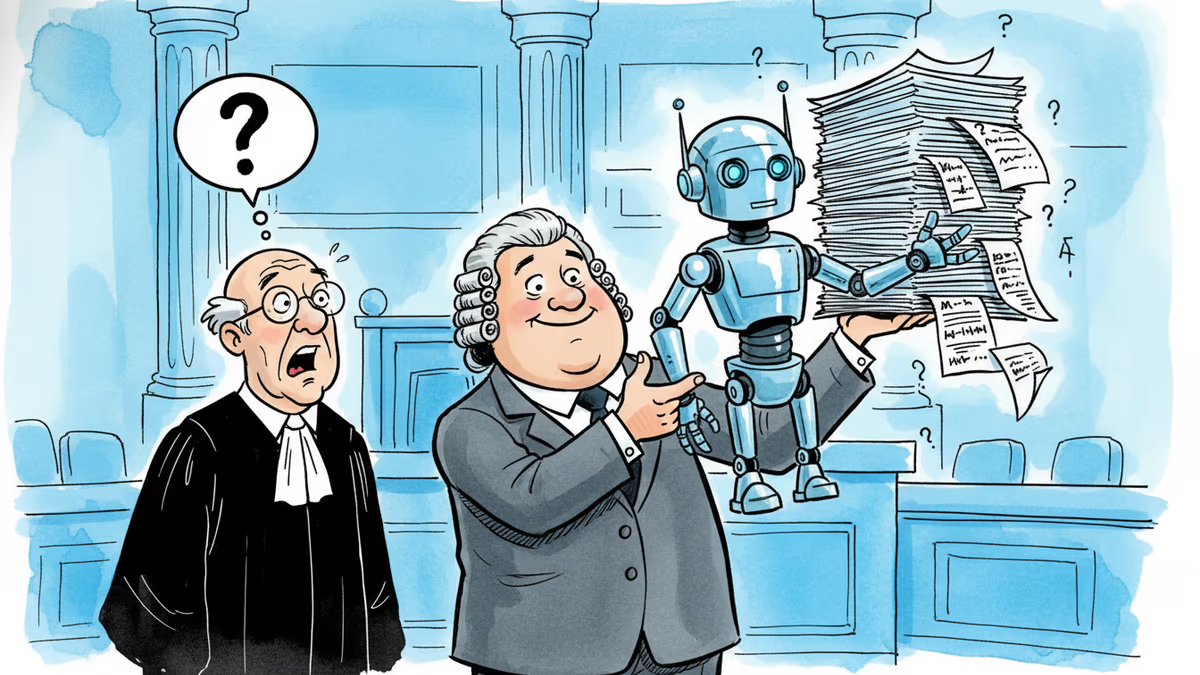
A law firm marketing itself on AI-powered legal success submitted fake citations in a federal appeal. Now its lawyers face sanctions — and the broader AI legal industry faces a credibility crisis.
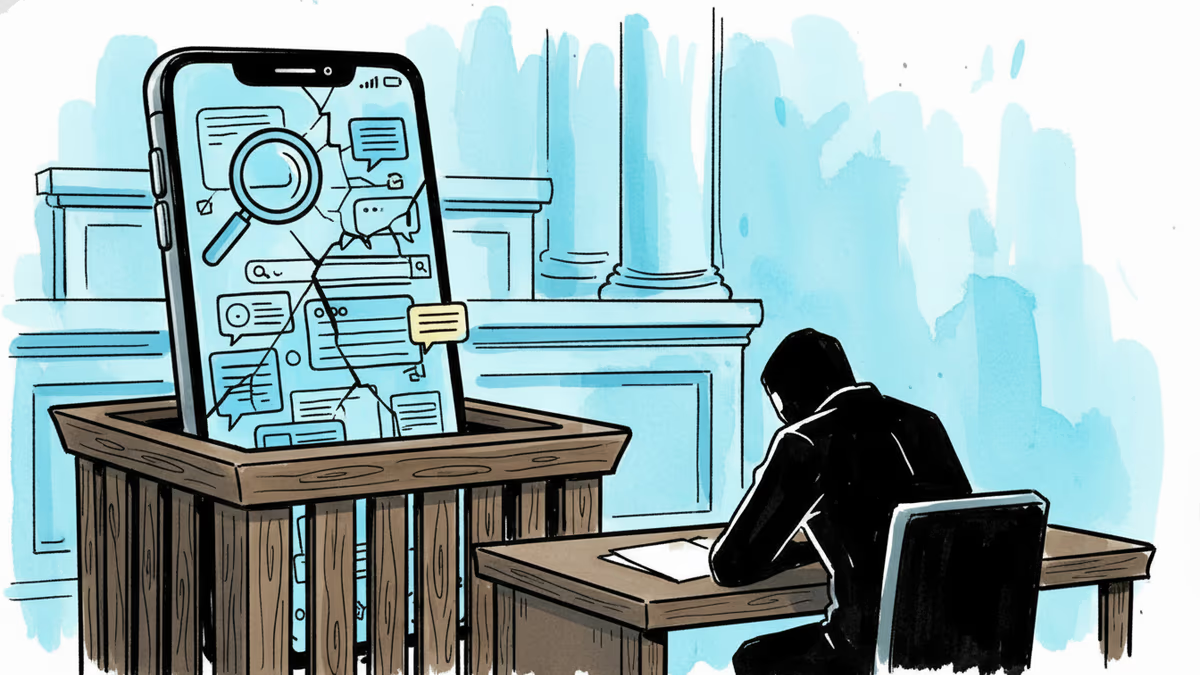
A Utah woman was sentenced to life in prison partly because of her Google searches and deleted texts. The Kouri Richins case reveals how digital footprints have become the courtroom's most reliable witness.
After 15 years of fragmented mobile messaging, Apple and Google are rolling out end-to-end encrypted RCS messaging between iPhones and Android devices. Here's what changed, why it took so long, and what it means for your privacy.
The FTC fined Cox Media and two ad firms $930,000 — not for actually eavesdropping on users, but for falsely claiming they could. The case raises uncomfortable questions about surveillance capitalism.
A law firm marketing itself on AI-powered legal success submitted fake citations in a federal appeal. Now its lawyers face sanctions — and the broader AI legal industry faces a credibility crisis.
A Utah woman was sentenced to life in prison partly because of her Google searches and deleted texts. The Kouri Richins case reveals how digital footprints have become the courtroom's most reliable witness.
After 15 years of fragmented mobile messaging, Apple and Google are rolling out end-to-end encrypted RCS messaging between iPhones and Android devices. Here's what changed, why it took so long, and what it means for your privacy.
Thoughts
Share your thoughts on this article
Sign in to join the conversation