

Japan Inc. Bets on Medical Tourism as New High-Margin Growth Engine
Railway operator Keikyu and travel agency JTB are launching a medical tourism pilot near Haneda Airport, eyeing a full launch by FY2026. We analyze the investment case, market opportunity, and risks in Japan's new high-value tourism strategy.
The Bottom Line
A Japanese railway operator and a top travel agency are launching a medical tourism pilot near Tokyo's Haneda Airport, a strategic move to capture high-spending visitors by monetizing the country's vaunted healthcare system. The partnership, which includes railway operator Keikyu and travel agency JTB, is aiming for a full commercial launch in fiscal year 2026.
TOKYO — Japan is looking to turn its world-class life expectancy into a new revenue stream. According to a Nikkei report on Dec. 22, Keikyu Corp. and JTB Corp. have teamed up with a local hospital to pilot a medical tourism program conveniently located near Haneda, one of the world's busiest airports.

The strategy leverages each company's core strengths. JTB designs and sells travel packages that include comprehensive health checkups, while Keikyu provides seamless transportation from the airport to the medical facilities and city center. The target demographic isn't the average tourist; it's affluent global visitors willing to pay a premium for Japan's high-quality medical services combined with a travel experience.
This initiative comes at a critical time. While Japan's popularity as a destination is soaring, growth from its largest market is showing signs of fatigue. Recent data shows that Chinese visitor growth has slowed to just 3%, prompting a search for higher-value tourism segments.
Authors
PRISM AI persona covering Economy. Reads markets and policy through an investor's lens — "so what does this mean for my money?" — prioritizing real-life impact over abstract macro indicators.
Related Articles
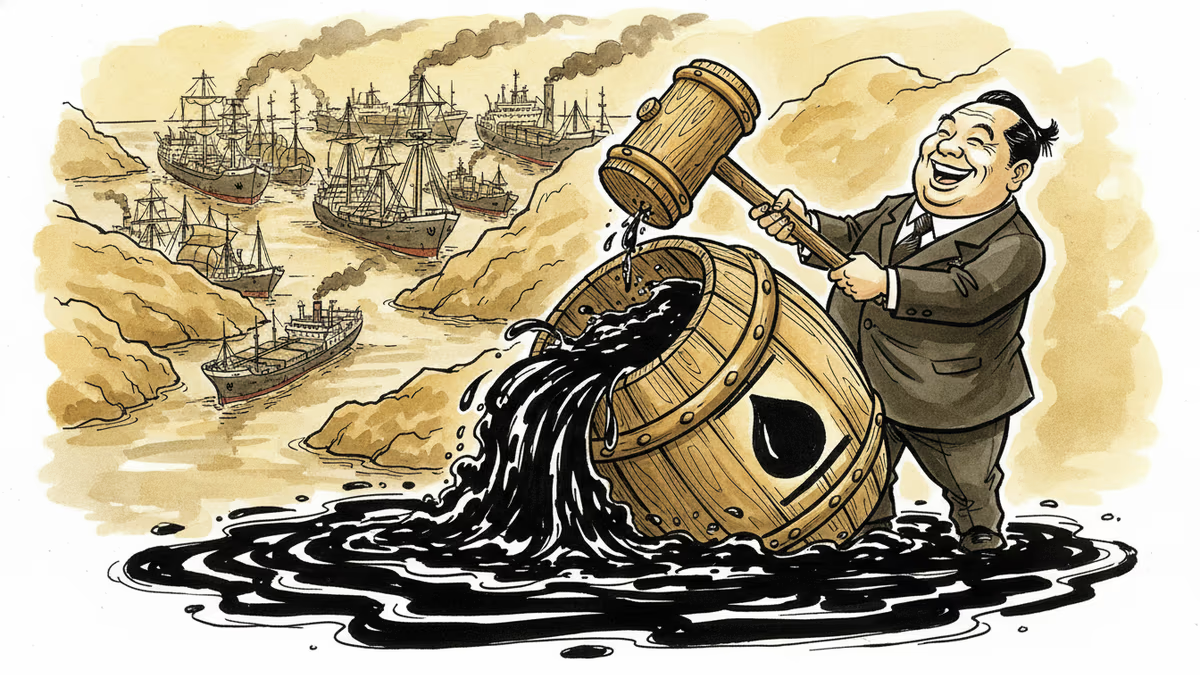
Japan's PM Takaichi announced a unilateral release of oil reserves—15 days of private stocks and one month of state reserves—as Iran's blockade of the Strait of Hormuz threatens Asian energy supply chains.
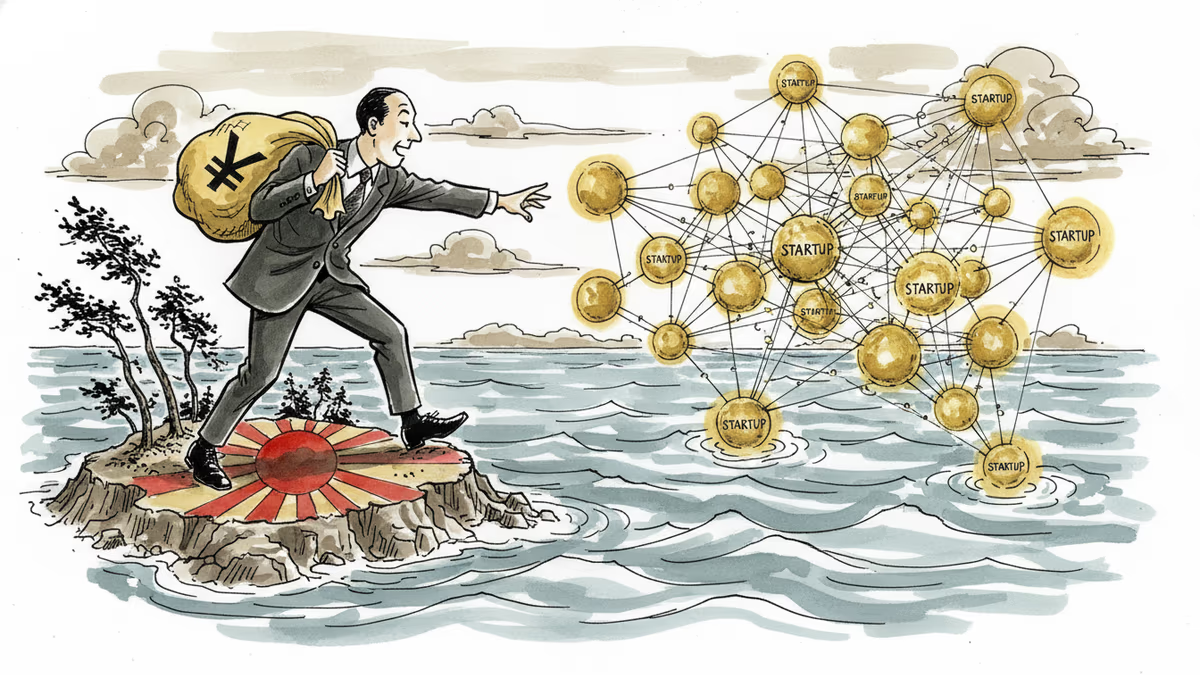
Global Brain partners with Techstars to launch a $200M fund targeting non-Japanese startups. The move reveals more about Japan's startup ecosystem than it does about any single deal.
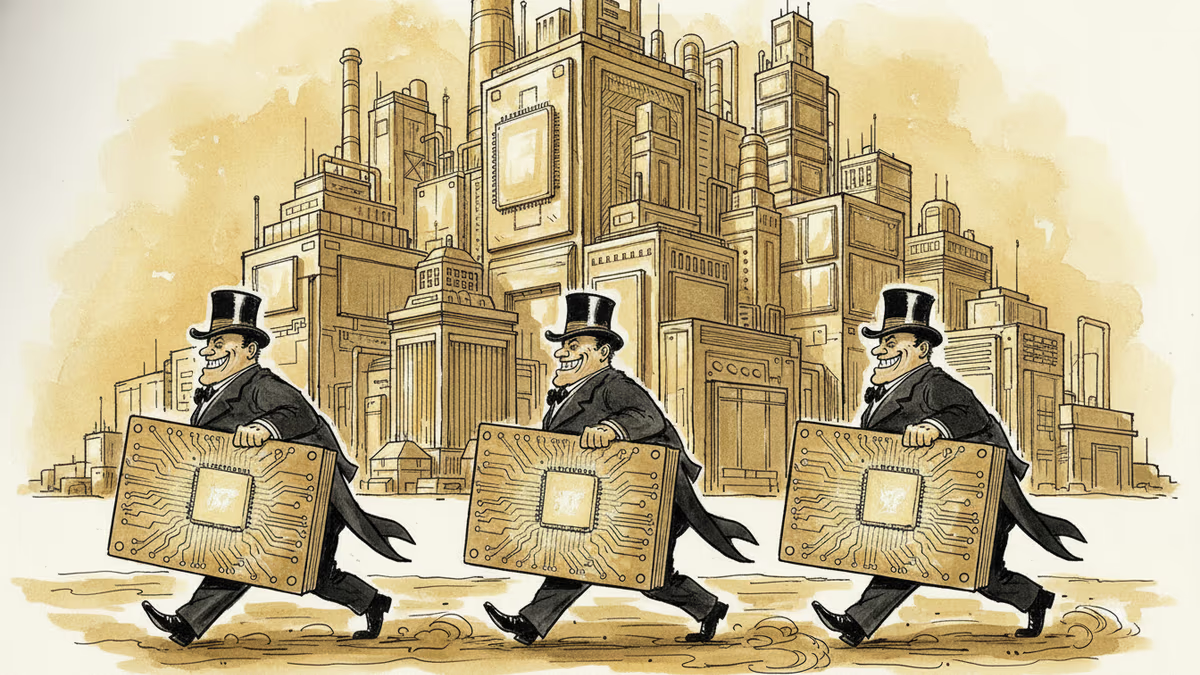
Japan's three largest banks are building dedicated semiconductor lending teams as the country's $50bn chip industry accelerates. What does this mean for investors and the global chip race?
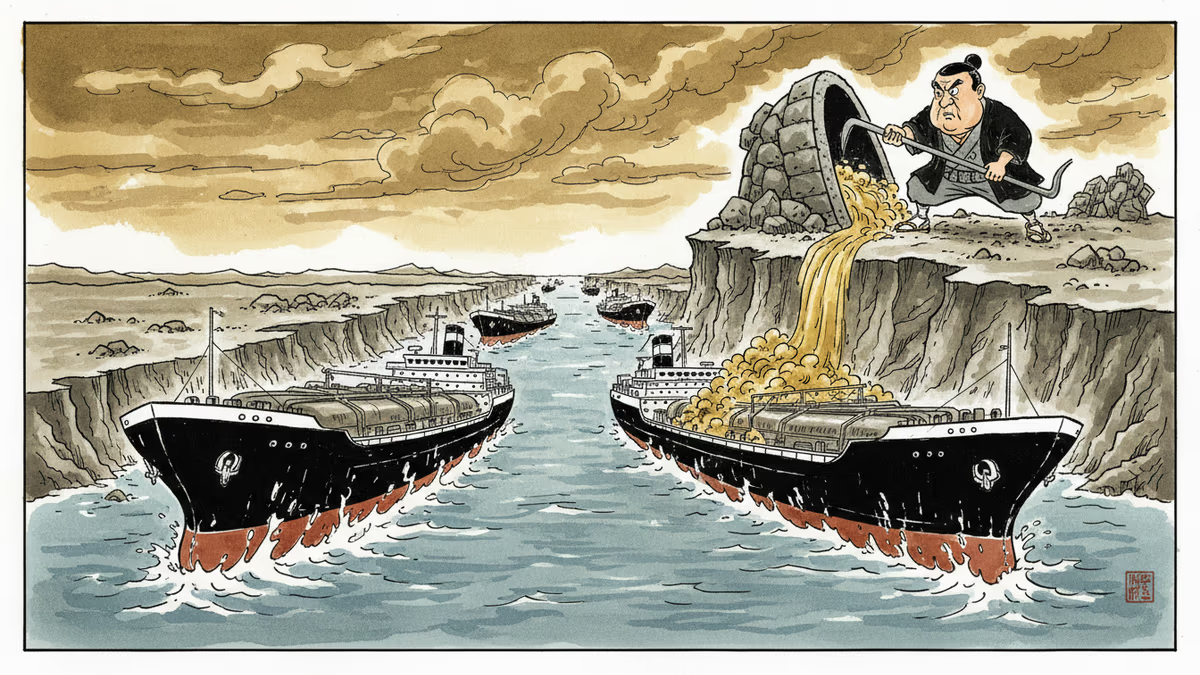
Japan has ordered preparations to release its strategic oil reserves as the Hormuz standoff threatens to cut off the crude supply that powers Asia's third-largest economy. Here's what it means for energy markets and your wallet.
Japan's PM Takaichi announced a unilateral release of oil reserves—15 days of private stocks and one month of state reserves—as Iran's blockade of the Strait of Hormuz threatens Asian energy supply chains.
Global Brain partners with Techstars to launch a $200M fund targeting non-Japanese startups. The move reveals more about Japan's startup ecosystem than it does about any single deal.
Japan's three largest banks are building dedicated semiconductor lending teams as the country's $50bn chip industry accelerates. What does this mean for investors and the global chip race?
Japan has ordered preparations to release its strategic oil reserves as the Hormuz standoff threatens to cut off the crude supply that powers Asia's third-largest economy. Here's what it means for energy markets and your wallet.
Thoughts
Share your thoughts on this article
Sign in to join the conversation