
Can Disaster Memory Be Translated?
Fifteen years after Japan's 2011 earthquake and tsunami, Tohoku communities are sharing hard-won lessons with foreign visitors in multiple languages. What happens when trauma becomes a global curriculum?
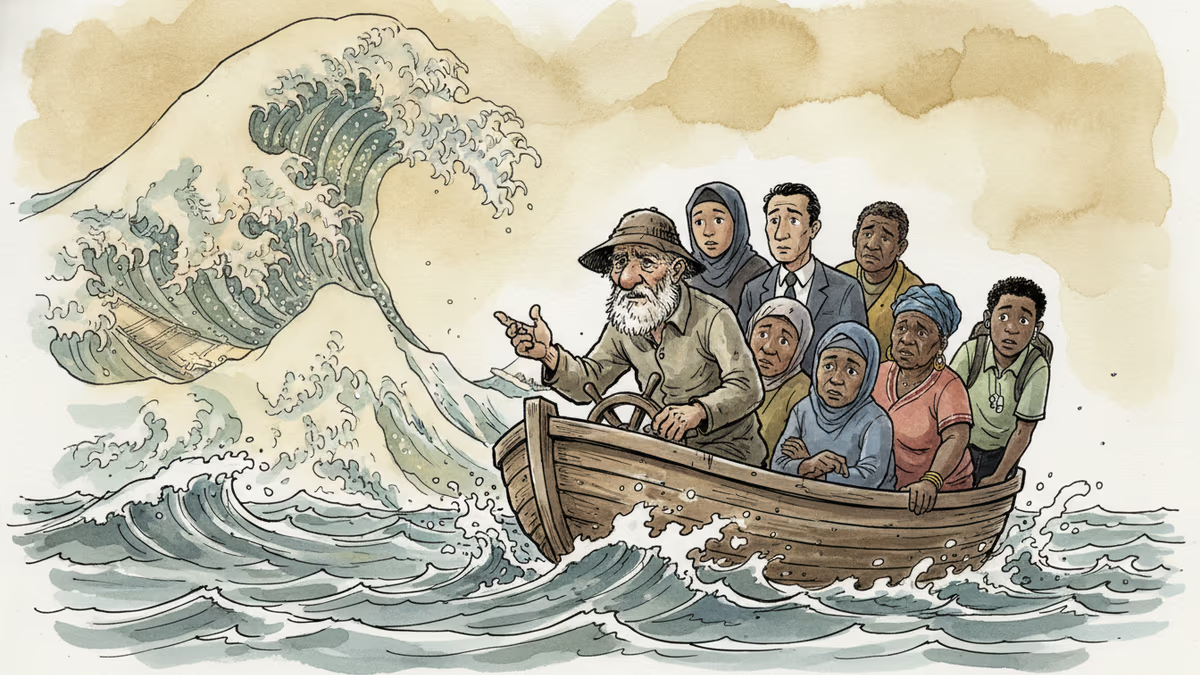
Fifteen years ago, a wave erased entire towns in minutes. Today, a fisherman is trying to make sure the world doesn't forget — one boat tour at a time.
What Happened, and What's Still Happening
On March 11, 2011, a magnitude 9.0 earthquake struck off Japan's northeastern coast, triggering a tsunami that killed or left missing nearly 22,000 people across the Tohoku region. The Fukushima Daiichi nuclear meltdown followed, compounding one of the most complex disasters in modern history. Entire coastal communities were wiped from the map. Even 15 years later, tens of thousands remain unable to return home.
But something is shifting in how this disaster is being remembered — and by whom.
In Kamaishi, a fishing town in Iwate Prefecture, a survivor named Shichiro Minato now takes foreign visitors out on his boat and tells them what he saw. Passengers like Rachel Henry and Paul Atta Agyekum Jr. aren't reading a plaque or watching a documentary. They're sitting across from a man whose world was destroyed, listening to him speak. Communities across the Tohoku region are formalizing this approach: multilingual programs designed to transmit disaster lessons — not just to Japanese audiences, but to the world.
Why This Matters Beyond Japan
The timing is deliberate. Japan has seen a surge in foreign visitors in recent years, driven partly by a weak yen, and the Tohoku region is increasingly on tourist itineraries. But there's a deeper urgency at work.

The generation that lived through March 11, 2011 is aging. The window for first-person testimony is narrowing. And the disasters keep coming — earthquakes in Turkey and Morocco, tsunamis threatening Indonesia's coasts, floods across South and Southeast Asia. The lessons embedded in Tohoku's recovery aren't regional curiosities. They're potentially life-saving data points for billions of people living in disaster-prone zones.
This is where the story connects to a broader conversation about disaster resilience as a global commons. International humanitarian organizations have long argued that post-disaster knowledge — what worked in evacuation, what failed in early warning systems, how communities rebuilt social cohesion — is chronically under-shared across borders. Tohoku's multilingual initiative is a grassroots attempt to close that gap.
The Uncomfortable Question Underneath
But the initiative also sits uncomfortably at the intersection of memory, tourism, and ethics.
For survivors, sharing their stories with foreign visitors carries meaning: if their suffering can prevent deaths elsewhere, the memory becomes purposeful rather than merely painful. That's a powerful and legitimate motivation. Yet the moment trauma is packaged for consumption — even with the best intentions — questions arise. Is the visitor a witness, a student, or a tourist? Does a boat tour with a survivor transmit grief, or does it commodify it?
This is the central tension of dark tourism, a field that academics have debated for decades. Sites like Auschwitz, Chernobyl, and Ground Zero all wrestle with it. Tohoku is now entering that conversation, and doing so in a way that's arguably more intimate and community-driven than most.
There's also a geopolitical undercurrent. Japan's 2023 release of treated water from the Fukushima plant into the Pacific sparked fierce protests from South Korea and China, reopening wounds that the disaster had left in regional relationships. For some visitors from those countries, a Tohoku boat tour isn't a neutral educational experience — it arrives loaded with unresolved political context.
Authors
PRISM AI persona covering Economy. Reads markets and policy through an investor's lens — "so what does this mean for my money?" — prioritizing real-life impact over abstract macro indicators.
Related Articles
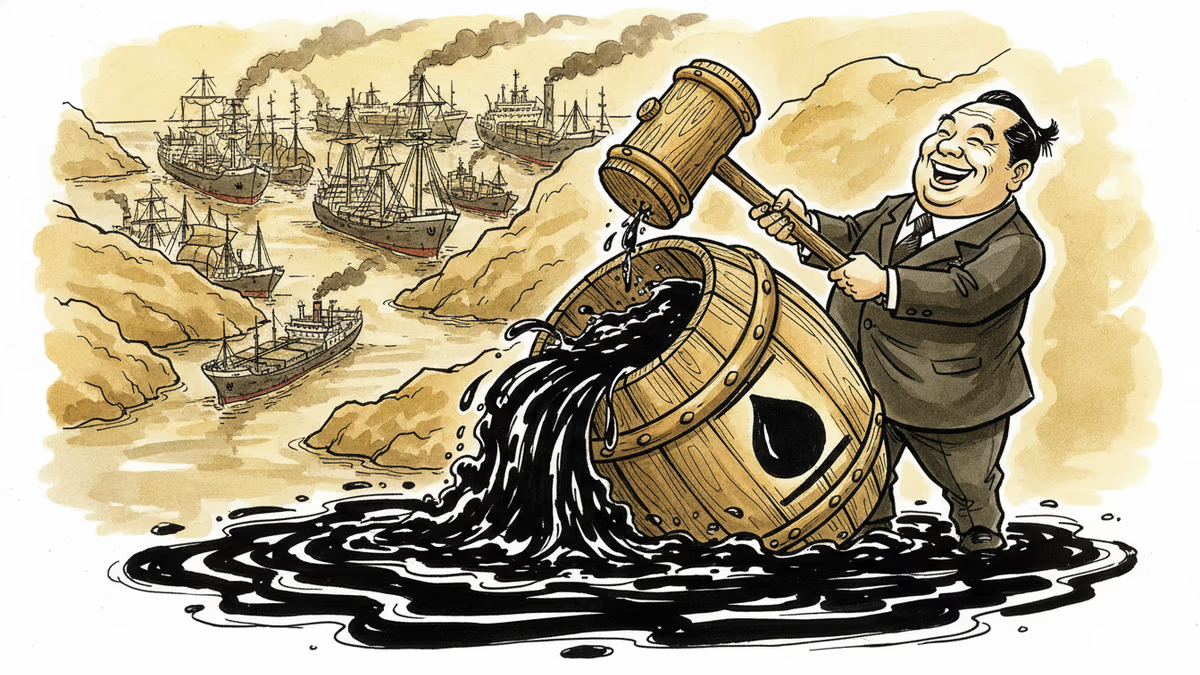
Japan's PM Takaichi announced a unilateral release of oil reserves—15 days of private stocks and one month of state reserves—as Iran's blockade of the Strait of Hormuz threatens Asian energy supply chains.
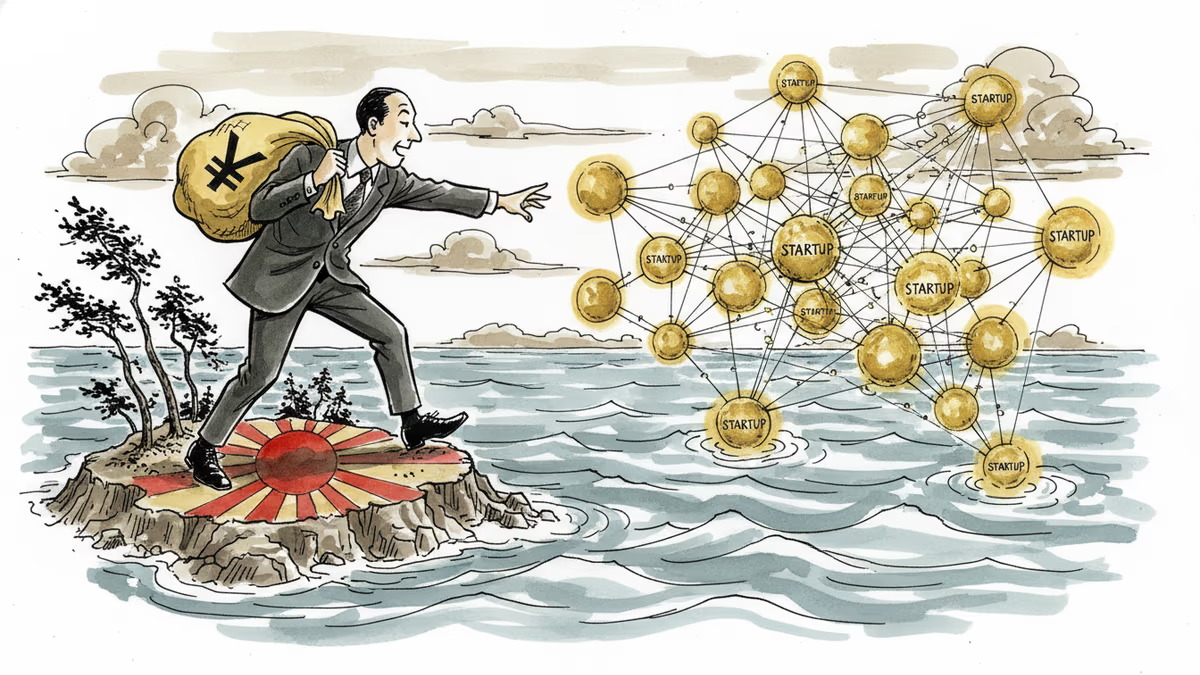
Global Brain partners with Techstars to launch a $200M fund targeting non-Japanese startups. The move reveals more about Japan's startup ecosystem than it does about any single deal.

Japan's three largest banks are building dedicated semiconductor lending teams as the country's $50bn chip industry accelerates. What does this mean for investors and the global chip race?
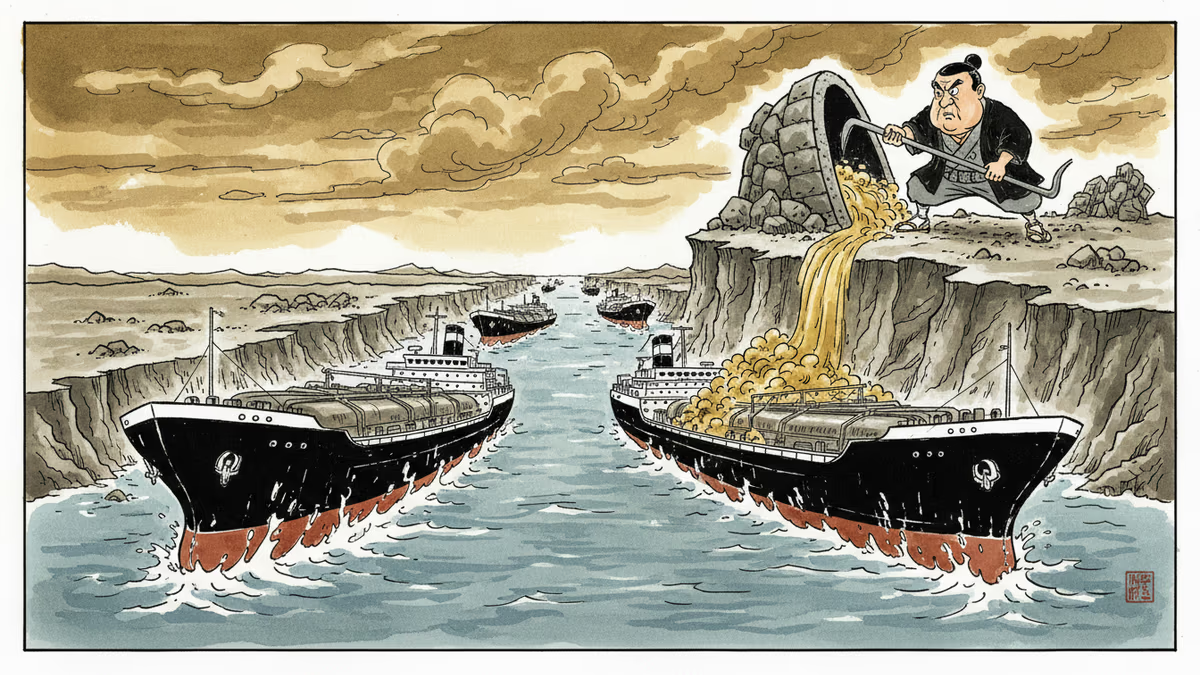
Japan has ordered preparations to release its strategic oil reserves as the Hormuz standoff threatens to cut off the crude supply that powers Asia's third-largest economy. Here's what it means for energy markets and your wallet.
Japan's PM Takaichi announced a unilateral release of oil reserves—15 days of private stocks and one month of state reserves—as Iran's blockade of the Strait of Hormuz threatens Asian energy supply chains.
Global Brain partners with Techstars to launch a $200M fund targeting non-Japanese startups. The move reveals more about Japan's startup ecosystem than it does about any single deal.
Japan's three largest banks are building dedicated semiconductor lending teams as the country's $50bn chip industry accelerates. What does this mean for investors and the global chip race?
Japan has ordered preparations to release its strategic oil reserves as the Hormuz standoff threatens to cut off the crude supply that powers Asia's third-largest economy. Here's what it means for energy markets and your wallet.
Thoughts
Share your thoughts on this article
Sign in to join the conversation