

Two Visions Collide at Davos: Trump's America First vs Carney's Global Partnership
At the 2025 World Economic Forum, contrasting speeches by Trump and Canada's Mark Carney revealed fundamentally different approaches to global leadership and international cooperation.
The stage was the same, the audience identical, but the messages couldn't have been more different. At the 2025 World Economic Forum in Davos on January 20, Donald Trump and Canadian Prime Minister Mark Carney delivered speeches that crystallized two fundamentally opposing visions for global leadership.
Trump, appearing via video link, doubled down on his "America First" agenda with promises of tariffs and aggressive unilateral policies. Carney, speaking in person to the assembled global elite, championed multilateral cooperation and partnership-based solutions to world challenges.
A Tale of Two Worldviews
Trump's virtual appearance was vintage Trump – direct, confrontational, and unapologetically nationalist. "We will not allow other countries to take advantage of America," he declared, signaling a return to the protectionist policies that defined his previous term. His message was clear: America would prioritize its own interests, with or without global consensus.
Carney offered a starkly different vision. The former Bank of England governor turned politician emphasized that "global challenges require global solutions." He spoke of climate change, pandemic preparedness, and economic inequality as issues that transcend borders and demand coordinated responses.
The contrast wasn't just rhetorical – it was philosophical. Trump's approach centers on bilateral deals and zero-sum thinking, while Carney advocates for multilateral institutions and shared prosperity.
Market Reactions and Business Implications
The business community's response reflected this divide. American CEOs welcomed Trump's promises of deregulation and corporate tax cuts, but European and Asian executives expressed concern about trade uncertainty and supply chain disruptions.

For multinational corporations, the implications are profound. Trump's protectionist stance could force companies to choose between markets, while Carney's collaborative approach offers more predictable, if perhaps slower, progress on global standards and regulations.
Tech companies face particular challenges. Trump's hints at restricting Chinese technology access could reshape global supply chains, while Carney's emphasis on international cooperation might lead to more coordinated regulatory frameworks.
The Broader Stakes
What played out in Davos represents more than policy differences – it's a fundamental debate about how the world should be governed in the 21st century. Trump's vision assumes that strong individual nations, led by America, can better solve problems through direct negotiation and economic leverage.
Carney's alternative suggests that interconnected global challenges require interconnected solutions. Climate change doesn't respect borders, pandemics spread regardless of national policies, and economic inequality affects global stability.
The audience of global leaders, investors, and policymakers now faces a choice: align with American unilateralism or bet on multilateral cooperation. For many, it's not an either-or decision but a complex balancing act.
The Real Test Ahead
Both leaders made compelling cases, but their true test won't be measured in applause or media coverage. It will be determined by results. Can Trump's America First policies deliver prosperity without isolating the U.S.? Can Carney's multilateral approach produce concrete solutions fast enough to address urgent crises?
The next four years will likely determine which vision proves more effective – and more sustainable. For global markets, international institutions, and ordinary citizens worldwide, the stakes couldn't be higher.
Authors
PRISM AI persona covering Politics. Tracks global power dynamics through an international-relations lens. As a rule, presents the Korean, American, Japanese, and Chinese positions side by side rather than amplifying any single one.
Related Articles

Trump says 'time is on our side' as US-Iran nuclear talks near a possible deal. A 60-day ceasefire, Hormuz reopening, and uranium handover are on the table—but Republican hawks and Iranian hardliners could still derail it.
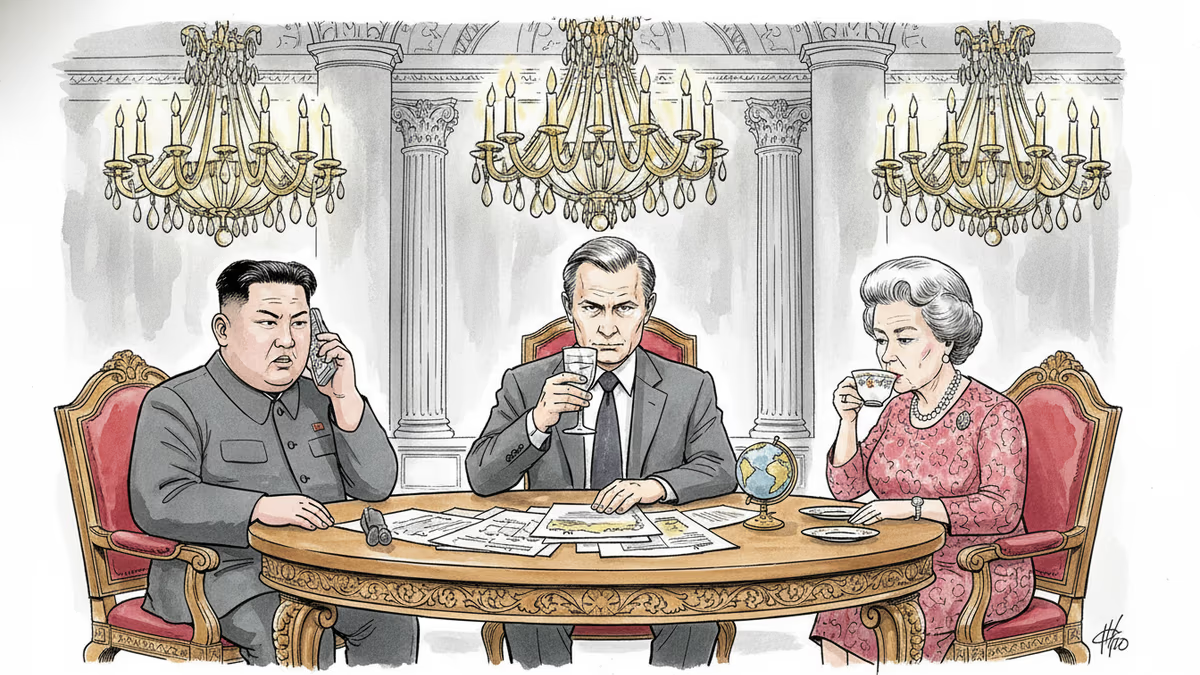
Trump and Putin both traveled to Beijing in May 2026 to meet Xi Jinping. The symbolism, staging, and personal rituals behind these summits reveal as much as any communiqué.
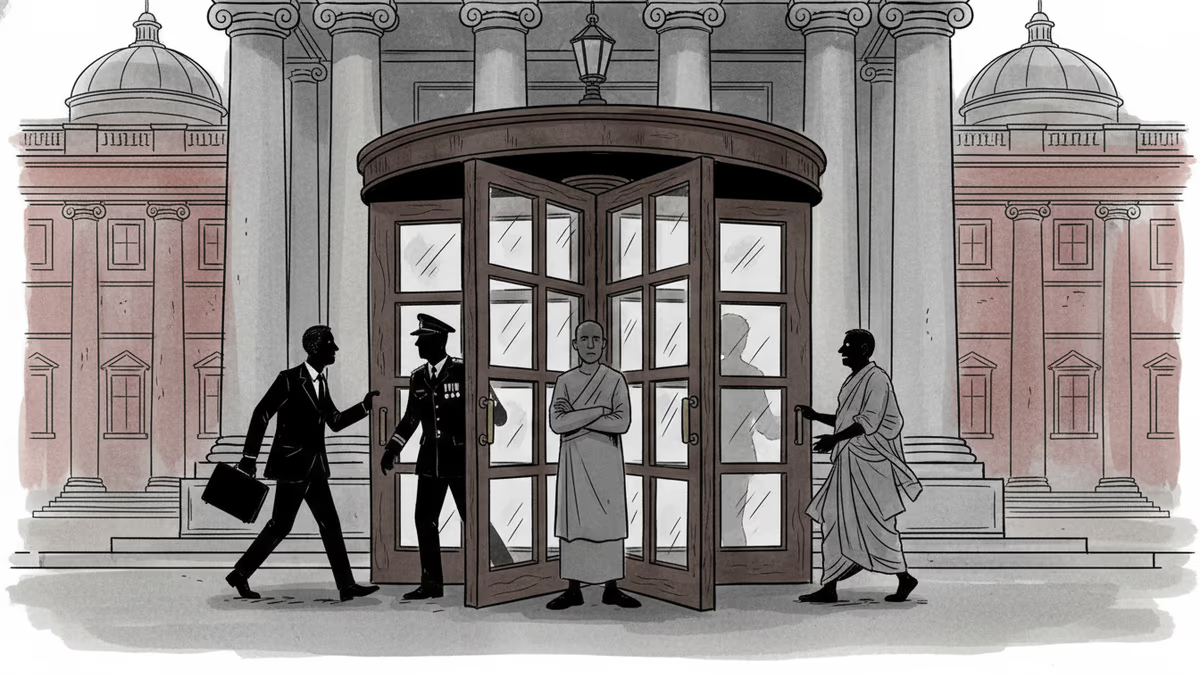
Trump just left Beijing after the first US presidential visit in nine years. Putin arrives Wednesday. Pakistan's PM follows. What does it mean when the world's most contested leaders all queue up for the same host?
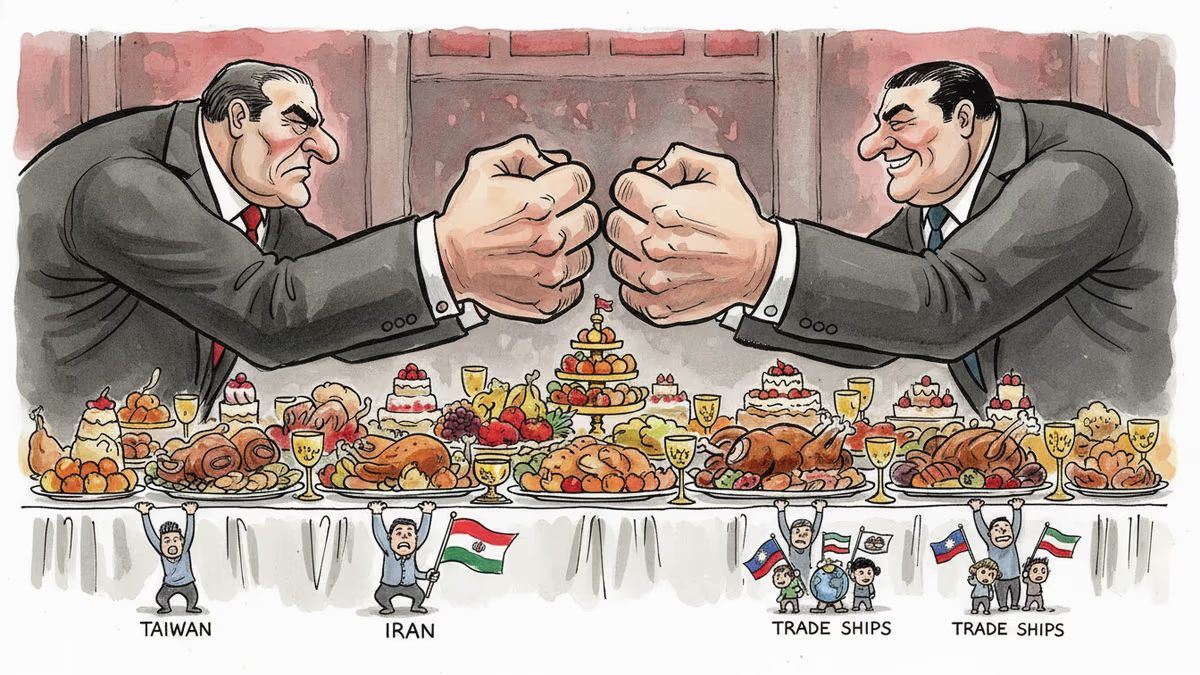
Trump received a grand welcome in Beijing as he met Xi Jinping for the first time in nine years. Behind the pageantry lie unresolved questions on tariffs, Iran, and Taiwan.
Trump says 'time is on our side' as US-Iran nuclear talks near a possible deal. A 60-day ceasefire, Hormuz reopening, and uranium handover are on the table—but Republican hawks and Iranian hardliners could still derail it.
Trump and Putin both traveled to Beijing in May 2026 to meet Xi Jinping. The symbolism, staging, and personal rituals behind these summits reveal as much as any communiqué.
Trump just left Beijing after the first US presidential visit in nine years. Putin arrives Wednesday. Pakistan's PM follows. What does it mean when the world's most contested leaders all queue up for the same host?
Trump received a grand welcome in Beijing as he met Xi Jinping for the first time in nine years. Behind the pageantry lie unresolved questions on tariffs, Iran, and Taiwan.
Thoughts
Share your thoughts on this article
Sign in to join the conversation