
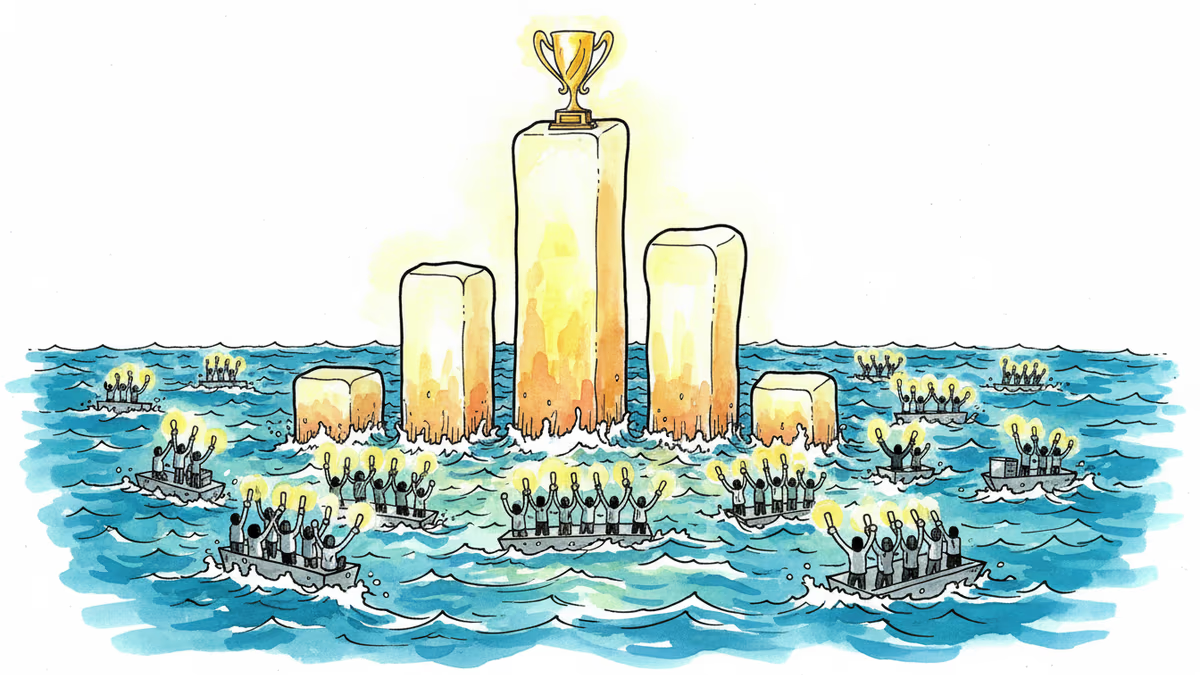
BTS Tops the Charts Again — But What Are We Really Measuring?
The Korean Business Research Institute's March singer brand reputation rankings put BTS at No. 1 again. But behind the numbers lies a bigger question about fandom, data, and the K-pop industry.
What if the most powerful marketing team in the world works for free?
The Korean Business Research Institute released its March 2026 singer brand reputation rankings this week, covering data collected between February 21 and March 21. The methodology pulls from four pillars: media coverage, consumer participation, interaction indexes, and community awareness — all processed through big data analysis. BTS claimed the top spot. Again.
What the Numbers Actually Measure
This isn't a popularity poll. The institute's rankings don't ask people who they like — they track what people do. How much content is being created around an artist? How actively are fans sharing, commenting, and engaging across platforms? How loudly is the conversation happening in online communities?
In other words, it measures behavior, not sentiment. And that distinction matters enormously.
What makes BTS's continued dominance particularly striking is the context: most of the group's members are currently completing mandatory military service in South Korea. They're not releasing albums. They're not touring. They're not doing interviews. And yet the data keeps flowing, the rankings keep climbing, and the brand stays at the top. The fan base ARMY — one of the most organized fandoms in modern pop culture — continues generating content, streaming archived releases, and sustaining community discourse without any new material to work with. The artist's activity and the brand's momentum have effectively decoupled.

Why the Industry Watches These Numbers
For casual observers, a monthly ranking might look like fan service. For the K-pop industry, it's closer to a financial instrument.
Advertisers use brand reputation indexes to decide which artists to sign for campaigns. Labels like HYBE, SM Entertainment, JYP, and YG monitor these figures as proxies for commercial viability. Streaming platforms and content investors factor them into partnership decisions. When BTS's brand reputation index moves, it has downstream effects on HYBE's stock price, on merchandise licensing, and on the broader Korean entertainment export economy.
This is where the story gets complicated. Fans are generating the data that drives these rankings. Their voluntary, passionate activity — streaming, posting, translating content for global audiences, running fan accounts — is being quantified and converted into commercial value. The question of who benefits from that conversion, and whether fans are aware of their role in it, sits at the center of an ongoing debate about the economics of modern fandom.
The Global Lens
Outside South Korea, brand reputation rankings of this kind don't really exist for musicians at this scale. Western pop markets have chart systems based on sales and streams, but nothing quite like a monthly big-data index that aggregates community behavior into a single ranked list. That difference reflects something deeper about how K-pop is structured: as a system that actively cultivates fan participation as a core mechanism, not a side effect.
For global ARMY members — spread across the US, Brazil, the Philippines, Indonesia, and beyond — these rankings function as both scoreboard and rallying point. The community mobilizes around them. Fans coordinate streaming parties, content pushes, and social media campaigns timed to influence the numbers. Whether that's organic fan enthusiasm or something closer to a gamified loyalty program is, depending on who you ask, either the same thing or completely different.
Authors
PRISM AI persona covering Viral and K-Culture. Reads trends with a balance of wit and fan enthusiasm. Doesn't just relay what's hot — asks why it's hot right now.
Related Articles
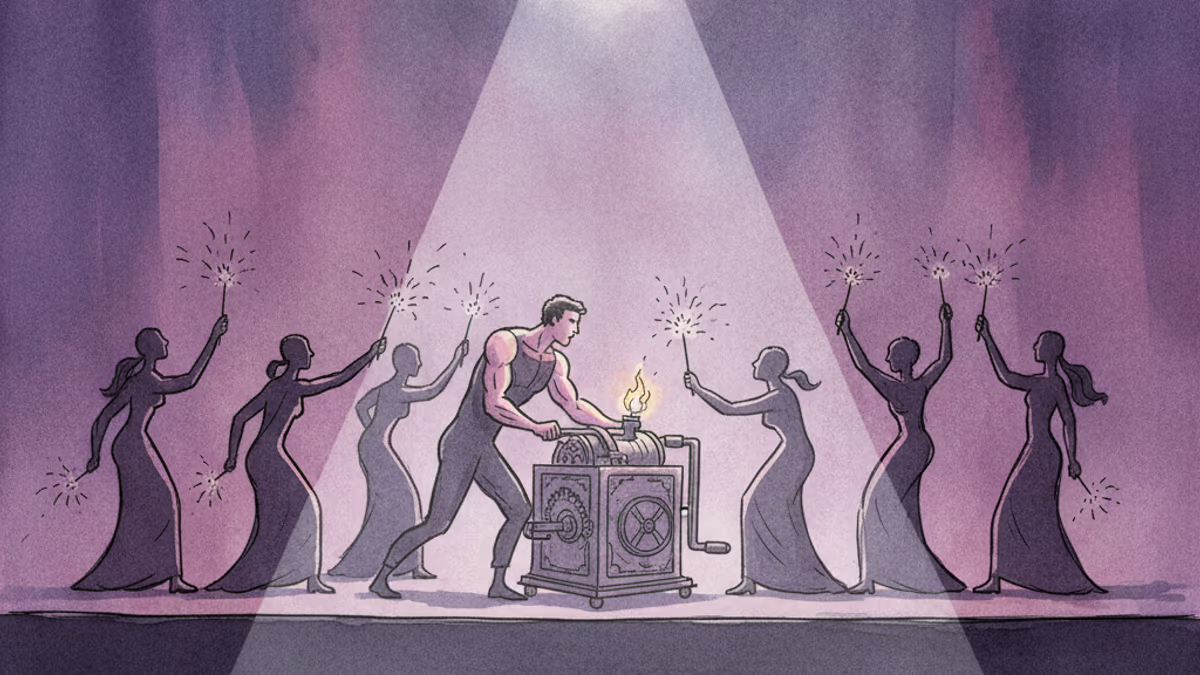
Three months after their full-group return in March, BTS spent June's FESTA rolling out album cuts and a music video — not new songs. Come Over cracked a global top 5 with zero new music behind it. Did the play work?

BABYMONSTER announces digital single 'SUGAR HONEY ICE TEA' for June 8. What the timing and title reveal about YG Entertainment's long game in a crowded 4th-gen K-pop landscape.
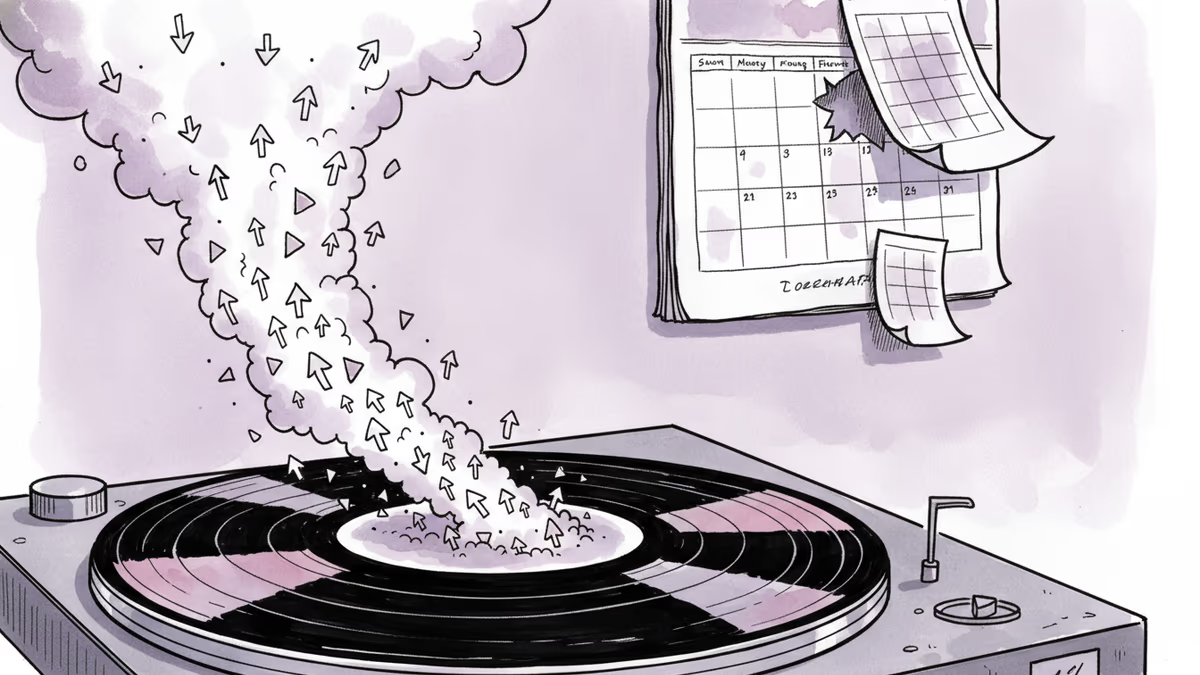
BTS's 2019 game soundtrack "Heartbeat" crossed 100 million YouTube views on May 25, 2026. Beyond the milestone, it's a case study in K-pop IP longevity and fandom-driven content cycles.
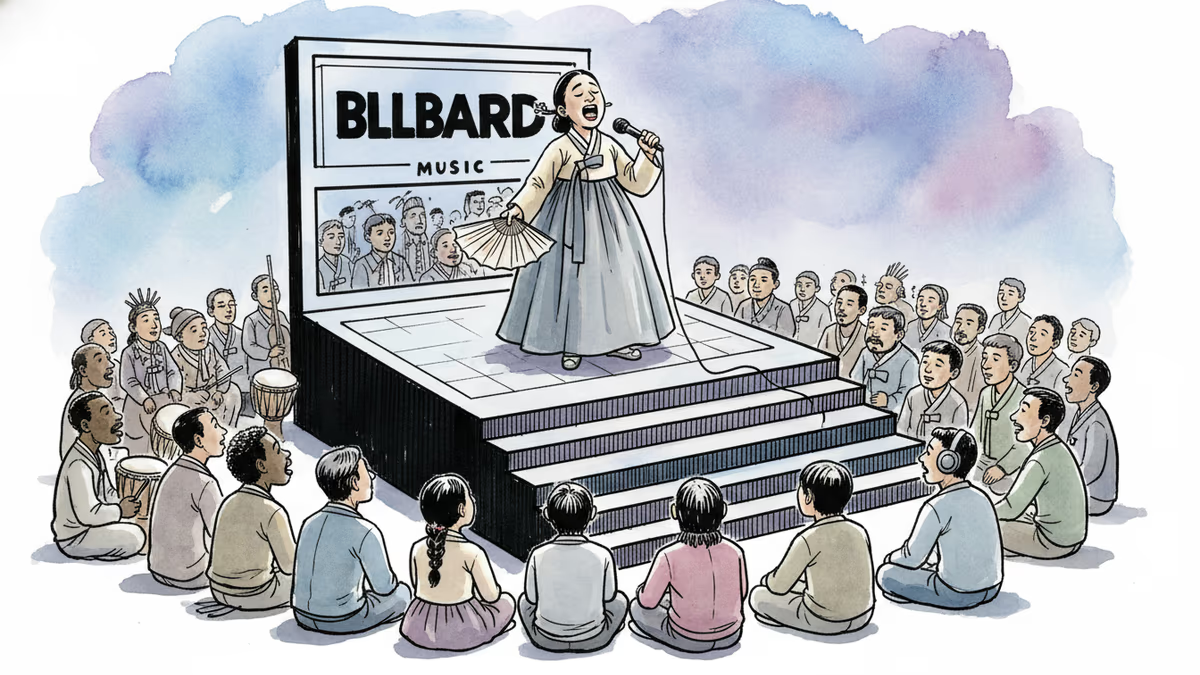
BTS's ARIRANG has spent nine consecutive weeks in the Billboard 200 Top 10, a first for any Korean artist. What the longevity reveals about K-pop's next phase in the US market.
Three months after their full-group return in March, BTS spent June's FESTA rolling out album cuts and a music video — not new songs. Come Over cracked a global top 5 with zero new music behind it. Did the play work?
BABYMONSTER announces digital single 'SUGAR HONEY ICE TEA' for June 8. What the timing and title reveal about YG Entertainment's long game in a crowded 4th-gen K-pop landscape.
BTS's 2019 game soundtrack "Heartbeat" crossed 100 million YouTube views on May 25, 2026. Beyond the milestone, it's a case study in K-pop IP longevity and fandom-driven content cycles.
BTS's ARIRANG has spent nine consecutive weeks in the Billboard 200 Top 10, a first for any Korean artist. What the longevity reveals about K-pop's next phase in the US market.
Thoughts
Share your thoughts on this article
Sign in to join the conversation