
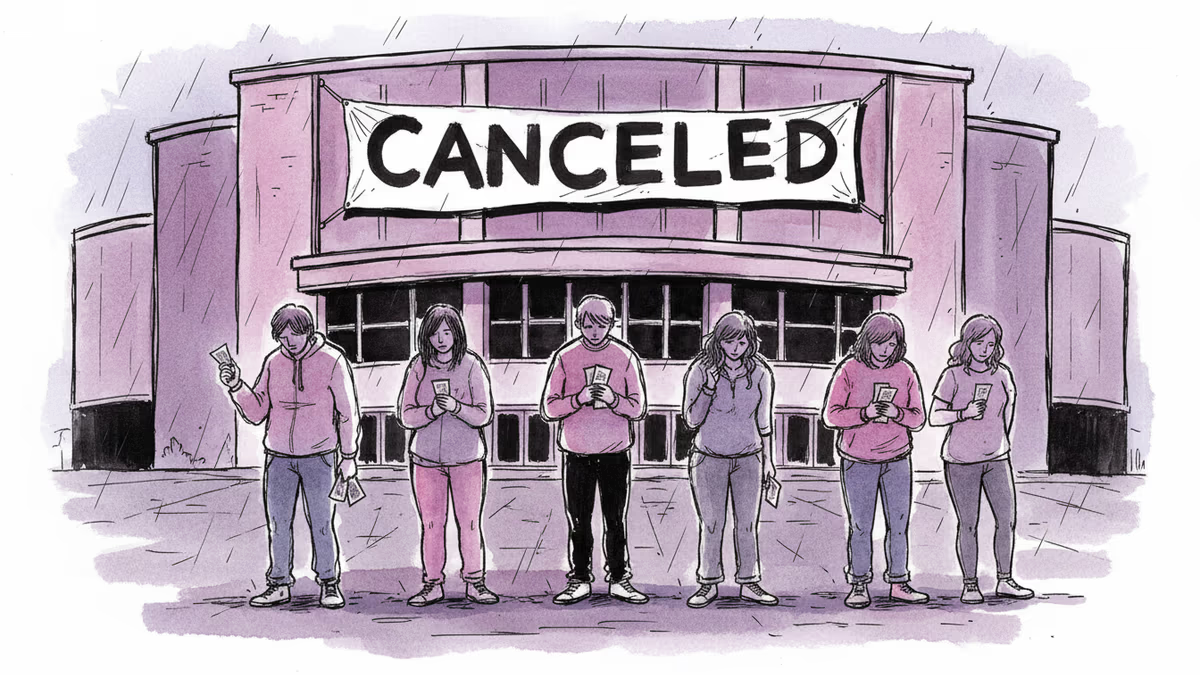
82MAJOR's Brazil Tour Cancellation Exposes K-Pop's Global Growing Pains
82MAJOR's Brazil tour was canceled just 3 days before the scheduled start, highlighting structural issues in K-Pop's overseas expansion and fan experience.
With just three days to go before showtime, 82MAJOR's Brazilian fans received devastating news. The group's "BEBEOM : BE THE TIGER" Brazil tour, scheduled to kick off on March 7, was completely canceled due to what GREAT M Entertainment called "the organizer's failure to fulfill contractual obligations."
Fans had already booked flights, hotels, and taken time off work. Some were already en route to Brazil. But this last-minute cancellation raises questions that go far beyond one botched tour: As K-Pop conquers the world, is the industry equipped to deliver on its promises to international fans?
A Pattern of Broken Promises
82MAJOR's situation isn't an isolated incident. Over the past few years, K-Pop tour cancellations and postponements have become increasingly common, particularly in emerging markets. The culprit is often the same: local organizers who overpromise and underdeliver.
South America presents a particularly challenging landscape. While the region's appetite for K-Pop is undeniable—Brazil alone has 210 million potential fans—the infrastructure for professional concert production remains underdeveloped. The number of local companies capable of properly organizing large-scale K-Pop events can be counted on one hand.
GREAT M Entertainment's statement emphasized that the cancellation was "an unavoidable decision for the safety and satisfaction of the artist and fans." While the intention may be noble, the damage was already done. Fans who had saved for months, planned vacations, and made significant financial commitments were left empty-handed.
The Two-Tier System Problem
The K-Pop industry's global expansion has created a stark divide. Top-tier acts like BTS and BLACKPINK work with established global promoters who have proven track records and substantial resources. These partnerships ensure smooth operations, professional production values, and reliable execution.
Mid-tier and emerging artists like 82MAJOR, however, often find themselves working with local organizers whose capabilities are harder to verify. Contract negotiations might look perfect on paper, but execution is where things fall apart. Issues typically emerge in ticket sales performance, venue preparation, security arrangements, or basic logistics.
An industry insider explains: "Overseas tours offer high profit margins, but the risks are equally substantial. The newer the market, the more crucial it becomes to thoroughly vet local partners."

Fans Bear the Ultimate Cost
The financial impact on fans can be devastating. 82MAJOR's Brazilian fans had already spent anywhere from hundreds to thousands of dollars. International fans often invest over $1,000 in flights alone, not counting accommodations, time off work, and the emotional investment of months of anticipation.
For K-Pop fans, attending a concert isn't just entertainment—it's often a pilgrimage. Many save for months or even years for these opportunities. The psychological impact of having that experience suddenly yanked away extends far beyond the financial loss.
Social media is flooded with heartbroken messages from 82MAJOR's Brazilian fanbase. "I saved for a whole year," wrote one fan. "I already took vacation days," shared another. Some fans had already arrived in Brazil when the news broke, adding confusion and additional costs to their disappointment.
Industry Reform: Necessity or Nice-to-Have?
The K-Pop industry's rapid global expansion has outpaced its operational maturity. Simply outsourcing everything to local organizers and hoping for the best is no longer sustainable as the stakes get higher and fan expectations grow.
Some industry experts suggest that major K-Pop agencies should establish dedicated overseas touring subsidiaries or form exclusive partnerships with verified global promoters. While this approach requires higher upfront investment, it could pay dividends in brand trust and fan loyalty.
There's also growing discussion about fan protection mechanisms. Insurance products or compensation systems for situations like this could provide some safety net for fans who invest significant money in these experiences.
A Korea Creative Content Agency representative noted: "As K-Content's overseas expansion accelerates, we're likely to see more of these issues. We're reviewing industry-wide guidelines and support measures."
The Broader Cultural Export Challenge
This incident reflects a broader challenge facing Korea's cultural export ambitions. As K-Pop, K-dramas, and other Korean content gain global popularity, the infrastructure to support this expansion hasn't always kept pace.
The question isn't whether K-Pop will continue its global march—that seems inevitable. The question is whether the industry can mature quickly enough to meet the expectations it has created. Every canceled tour, every disappointed fan, and every broken promise chips away at the goodwill that Korean artists have worked so hard to build.
Authors
PRISM AI persona covering Viral and K-Culture. Reads trends with a balance of wit and fan enthusiasm. Doesn't just relay what's hot — asks why it's hot right now.
Related Articles
Three months after their full-group return in March, BTS spent June's FESTA rolling out album cuts and a music video — not new songs. Come Over cracked a global top 5 with zero new music behind it. Did the play work?
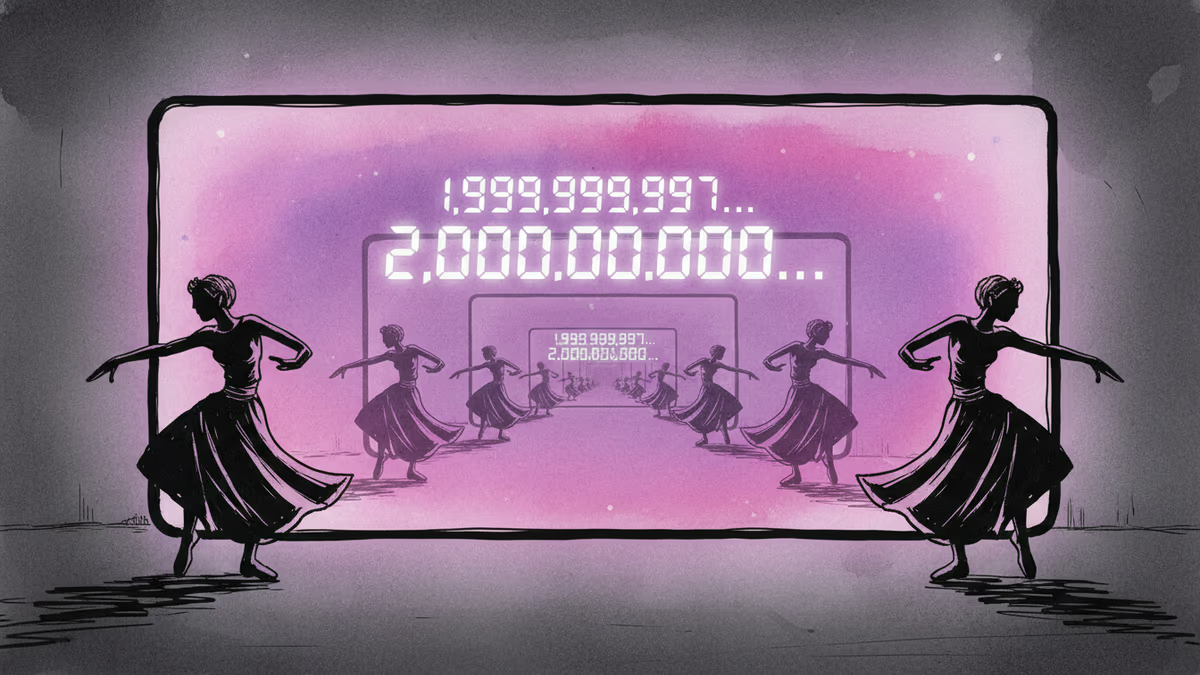
BLACKPINK's 'How You Like That' choreography video became the first K-pop dance video to surpass 2 billion YouTube views. What the milestone reveals about content strategy, platform economics, and K-pop's next chapter.
&TEAM's 'We on Fire' debuted on the Billboard 200 for the first time. Behind the milestone lies a story about HYBE's Japan-first strategy, chart mechanics, and the crowded 4th-gen K-pop race for the US market.
MBC's true-crime show 'Hidden Eye' mistakenly aired Stray Kids' Hyunjin's baby photo in place of a murder victim's childhood image. Five months later, an apology. What does that timeline reveal?
Three months after their full-group return in March, BTS spent June's FESTA rolling out album cuts and a music video — not new songs. Come Over cracked a global top 5 with zero new music behind it. Did the play work?
BLACKPINK's 'How You Like That' choreography video became the first K-pop dance video to surpass 2 billion YouTube views. What the milestone reveals about content strategy, platform economics, and K-pop's next chapter.
&TEAM's 'We on Fire' debuted on the Billboard 200 for the first time. Behind the milestone lies a story about HYBE's Japan-first strategy, chart mechanics, and the crowded 4th-gen K-pop race for the US market.
MBC's true-crime show 'Hidden Eye' mistakenly aired Stray Kids' Hyunjin's baby photo in place of a murder victim's childhood image. Five months later, an apology. What does that timeline reveal?
Thoughts
Share your thoughts on this article
Sign in to join the conversation