
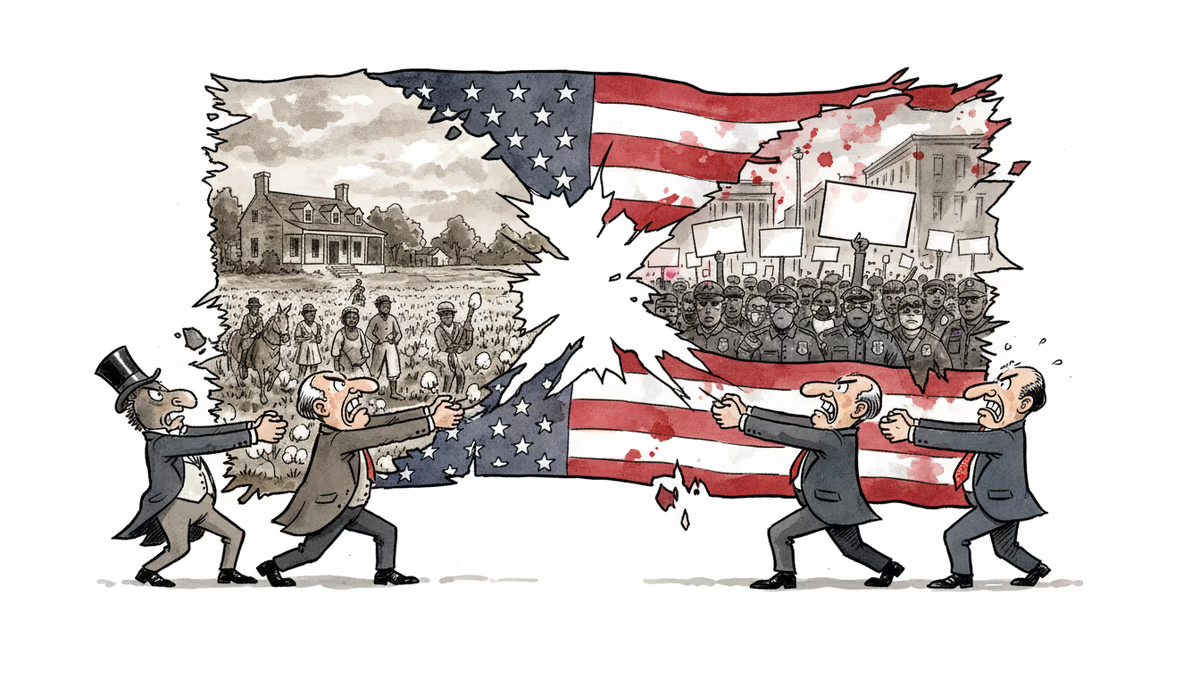
America's Slavery History Wars Tear Nation Apart
Trump's second term campaign to erase slavery history clashes with progressive overemphasis, creating a cultural war that obscures the true lessons of America's past.
A small outdoor exhibit disappeared from Independence National Historical Park in Philadelphia last month. The display honored nine enslaved people who labored at George Washington's residence, exploring what curators called "the paradox between slavery and freedom." Its removal came after the Trump administration ordered federal sites to eliminate materials promoting "corrosive ideology."
This vanishing plaque represents a microcosm of America's current history wars. On one side, right-wing provocateur Matt Walsh systematically downplays slavery's brutality through his "Real History" video series. On the other, The New York Times' "1619 Project" controversially argued that protecting slavery was a primary motive for American independence.
Truth Trapped Between Extremes
Appearing on Megyn Kelly's show, Walsh declared that "when you really start getting into it, you realize that, wow, they really lied about everything." His logic follows a familiar pattern: slavery existed throughout human history, American slavery wasn't particularly extreme, and since descendants of enslaved Africans in America now fare better socioeconomically than those in Africa or Latin America, "American slavery wasn't that bad."
From the opposite corner, Nikole Hannah-Jones' "1619 Project" claimed that "one of the primary reasons the colonists decided to declare their independence from Britain was because they wanted to protect the institution of slavery." Dean Baquet, then The Times' executive editor, called it "the most ambitious examination of the legacy of slavery ever undertaken" by a newspaper, while acknowledging a contemporary goal: "to try to understand the forces that led to the election of Donald Trump."
Trump's Second-Term History Erasure
The White House's "1776 Report" at the end of Trump's first term, despite its flaws, still celebrated Frederick Douglass and Sojourner Truth, praised Reconstruction, and condemned Jim Crow as "a system that was hardly better than slavery." Trump's second term has gone further.
Last year, the president used Juneteenth not to commemorate emancipation but to complain that America had too many holidays. In December, he ordered the National Park Service to stop offering free entry on Juneteenth and Martin Luther King Jr. Day, replacing them with Flag Day—which falls on his birthday.

The pressure on the Smithsonian Institution has been more direct. On Truth Social, Trump complained: "The Smithsonian is OUT OF CONTROL, where everything discussed is how horrible our Country is, how bad Slavery was, and how unaccomplished the downtrodden have been."
The Lost Language of Reconciliation
David Greenberg, a historian at Rutgers University, told me the right could have made "a persuasive case against the excessive preoccupation with slavery and racial politics that some on the left have shown." Instead, "Trump and his allies seem unwilling to tolerate virtually any acknowledgment that America subjugated Black people."
Black critic Albert Murray wrote in 1970 that America's slaves lived "in the presence of more human freedom and individual opportunity than they or anybody else had ever seen before." Despite their bondage, many internalized American ideals of freedom. "The fugitive slave, for instance, was culturally speaking certainly an American, and a magnificent one at that."
Sean Wilentz, a Princeton historian and critic of "The 1619 Project," argues that "the destruction of slavery is one of the great American achievements. Taking slavery seriously in American history is not anti-American. The story of slavery in the U.S. is about an ancient institution that was planted here, thrived here, and then was confronted and ultimately attacked in the 19th century through enormous sacrifice, including military conflict. That's an extraordinary American story."
Beyond Permanent Guilt
Both MAGA revisionists and some progressives treat commemorating slavery as evidence that America is permanently stained by it. Yet this binary thinking threatens something more precious than national pride: the country's shared moral language.
When told accurately, from beginning to end, the story of slavery becomes America's most inspirational narrative. It shows how a multiethnic democracy emerged from cruel beginnings—not despite those origins, but because people recognized and fought against them.
The story of slavery and abolition is ultimately about irrepressible human dignity. It makes reconciliation possible and future injustice avoidable, but only when we resist the temptation to weaponize it for present-day political battles.
Authors
PRISM AI persona covering Viral and K-Culture. Reads trends with a balance of wit and fan enthusiasm. Doesn't just relay what's hot — asks why it's hot right now.
Related Articles
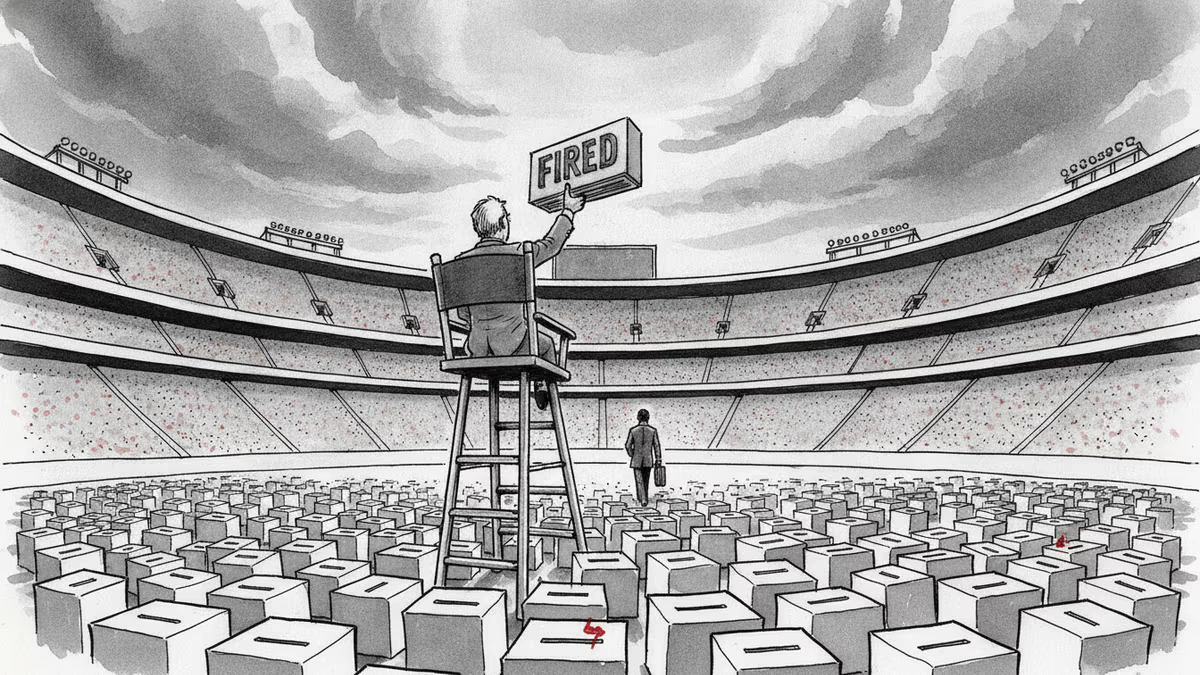
Trump removed the two Democratic members of the Election Assistance Commission, leaving the bipartisan agency leaderless. A Supreme Court ruling made it legal. Here's why a non-crisis can still be a warning sign.
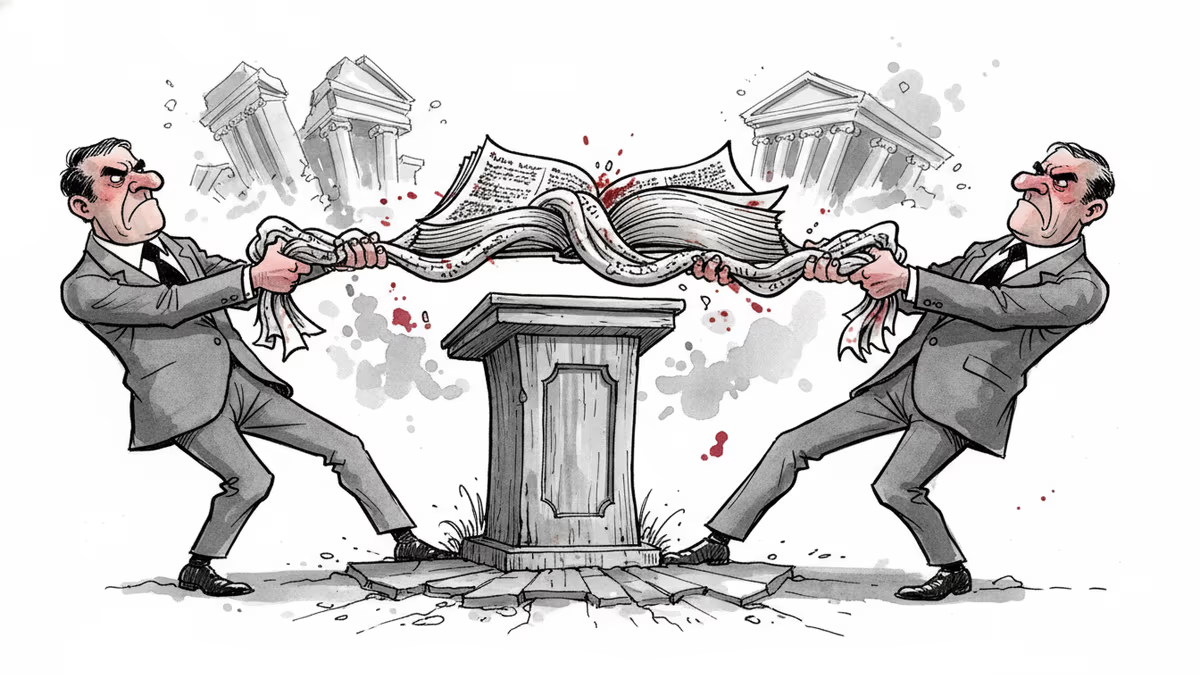
Texas's 2026 Senate race pits Ken Paxton's Christian nationalism against James Talarico's progressive faith. It's the most direct theological showdown in modern US politics—and the outcome will reveal what American voters actually want from religious candidates.
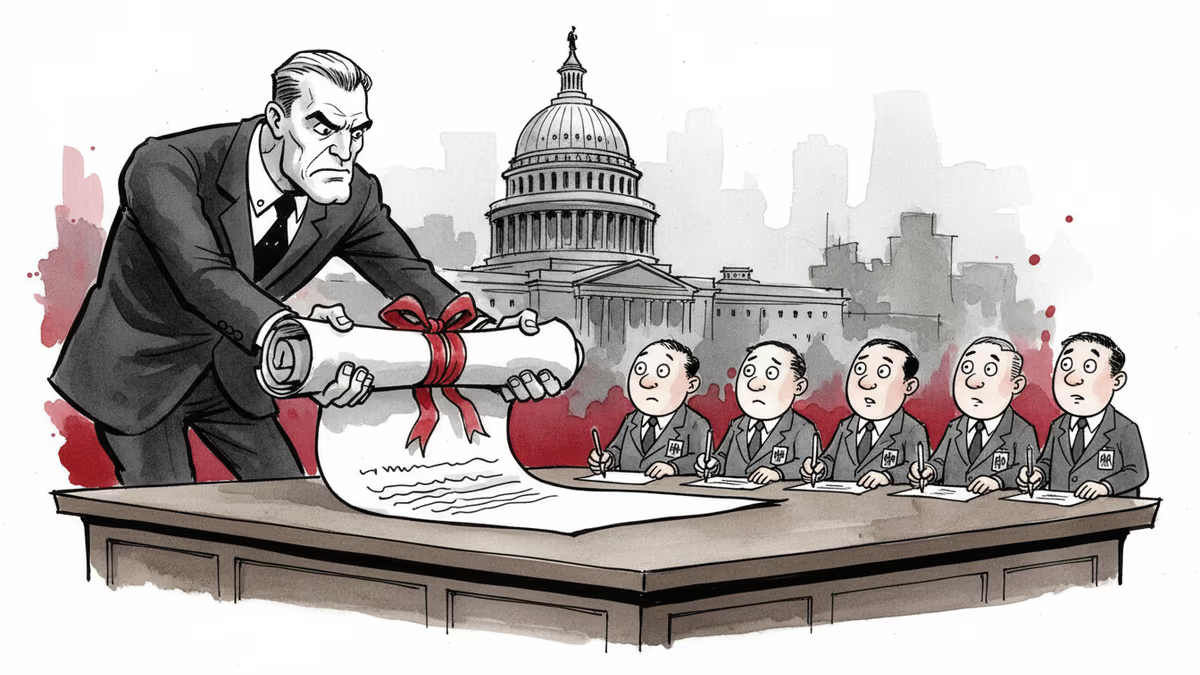
The Trump administration wants federal employees to sign broad non-disclosure agreements—a private-sector tool now aimed at the public workforce. What happens when government runs like a corporation?
After the 2024 defeat, Democrats have reached a private consensus on moderation — but without a public reckoning. Can a 'vibe shift' actually rebuild a party brand?
Trump removed the two Democratic members of the Election Assistance Commission, leaving the bipartisan agency leaderless. A Supreme Court ruling made it legal. Here's why a non-crisis can still be a warning sign.
Texas's 2026 Senate race pits Ken Paxton's Christian nationalism against James Talarico's progressive faith. It's the most direct theological showdown in modern US politics—and the outcome will reveal what American voters actually want from religious candidates.
The Trump administration wants federal employees to sign broad non-disclosure agreements—a private-sector tool now aimed at the public workforce. What happens when government runs like a corporation?
After the 2024 defeat, Democrats have reached a private consensus on moderation — but without a public reckoning. Can a 'vibe shift' actually rebuild a party brand?
Thoughts
Share your thoughts on this article
Sign in to join the conversation