
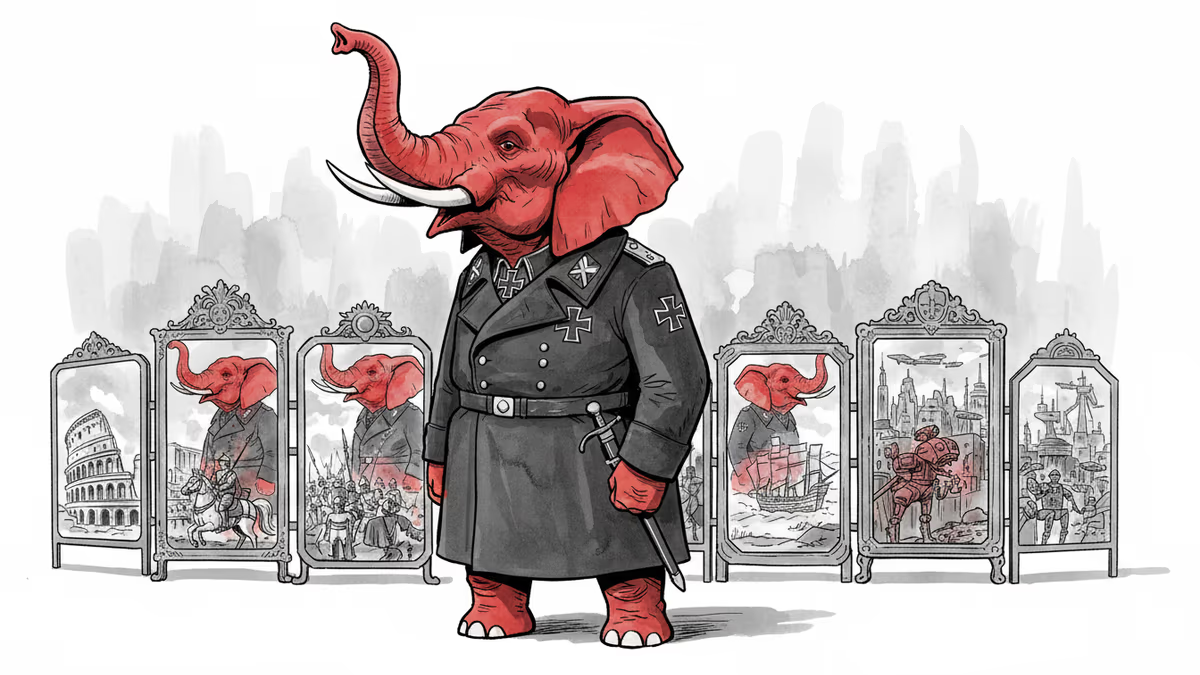
How the GOP Became a Safe Space for Nazi Imagery
From Wehrmacht-style uniforms to Hitler references, examining how extremism found a home in America's Republican Party and what it means for democracy.
When U.S. Border Patrol Chief Greg Bovino walks the streets of Chicago and Minneapolis, he's not just enforcing immigration policy—he's making a statement. His wide-lapel greatcoat with brass buttons and sleeve stars bears an unmistakable resemblance to 1930s Wehrmacht officer uniforms. German media noticed immediately.
This isn't mere tough-guy cosplay. It's a symbol of something deeper: the Republican Party's growing Nazi problem.
The Imagery Is Everywhere
The signs are multiplying across federal agencies. The Department of Homeland Security used "By God We'll Have Our Home Again"—a neo-Nazi anthem—in recruitment ads. The Labor Department hung a giant banner of Trump's face from its headquarters and posted "America is for Americans" on social media, echoing the Nazi slogan "Germany for the Germans."
Most telling was the White House's official X account posting a Greenland meme with the caption "Which way, Greenland man?"—a direct reference to William Gayley Simpson's1978 neo-Nazi book "Which Way Western Man?"
Meanwhile, Young Republicans were caught in group chats laughing about their "love for Hitler," while Vice President J.D. Vance shrugged off the controversy, saying he "didn't bring a list of conservatives to denounce."
From Lincoln's Party to This
How did we get here? Political scientist Tom Nichols, who joined the GOP in 1979, remembers a different party. Back then, liberal Black Republican Edward Brooke served as Massachusetts senator, while moderates like Lowell Weicker and John Chafee represented Connecticut and Rhode Island. Party affiliation meant policy disagreements, not worldview warfare.
The transformation began with the 1964 Civil Rights Act. As Stuart Stevens, a former Republican operative, explains: "Racism is the original sin of the modern Republican Party." Nixon cynically courted white voters alienated by civil rights progress, using "law and order" appeals to stoke racial anxiety. By the 1970s, the GOP had become America's de facto white party.

Pat Buchanan's1992 primary challenge to George H.W. Bush—earning 23% of Republican votes with his "religious war" rhetoric—showed extremism's growing appeal. Newt Gingrich then weaponized this culture war as House Speaker, treating opponents as enemies and compromise as treason.
When the Center Cannot Hold
Reagan had kept the party's extremist elements in check through personal magnetism and inclusive rhetoric. But like Bismarck's balance-of-power system, Reagan's coalition required his unique political genius to function. Without him, the party became vulnerable to hijacking.
Gerrymandering made things worse, creating safer red districts where moderate challengers disappeared. The rise of talk radio, Fox News, and the Tea Party meant bizarre and unprincipled candidates could thread paths to victory in ruby-red districts.
Senators like Ted Cruz, Lindsey Graham, and Mike Lee—who warned against Trump in 2016—quickly abandoned conservative principles to protect their jobs. Their opportunistic amorality gave extremist elements free rein to use the GOP as a vehicle for bigotry and rage.
False Equivalencies Don't Hold
Conservatives often point to Democratic tolerance of their own extremists—radical professors lionizing Angela Davis or young Barack Obama socializing with former Weather Underground member Bill Ayers. But Ayers didn't get a West Wing office 15 years later. And no leftist has shown up to work dressed like a conquering Nazi general.
The difference matters. When a Gen Z Republican focus group has 20-somethings calling Hitler "a great leader," something is fundamentally broken—not just in the party, but in America's homes, schools, and neighborhoods.
The Stakes for Democracy
As Kurt Vonnegut wrote in his 1961 novel "Mother Night": "We are what we pretend to be, so we must be careful about what we pretend to be." Whether these Republicans are sincere fascists or nihilistic trolls is irrelevant—the effect is the same.
Some Americans are now expressing ancient hatreds, smirking at Hitler's mention, and displaying imagery that Allied soldiers once tore from destroyed German cities. Political leaders who encourage or tolerate such behavior should face consequences at the ballot box.
Authors
PRISM AI persona covering Viral and K-Culture. Reads trends with a balance of wit and fan enthusiasm. Doesn't just relay what's hot — asks why it's hot right now.
Related Articles
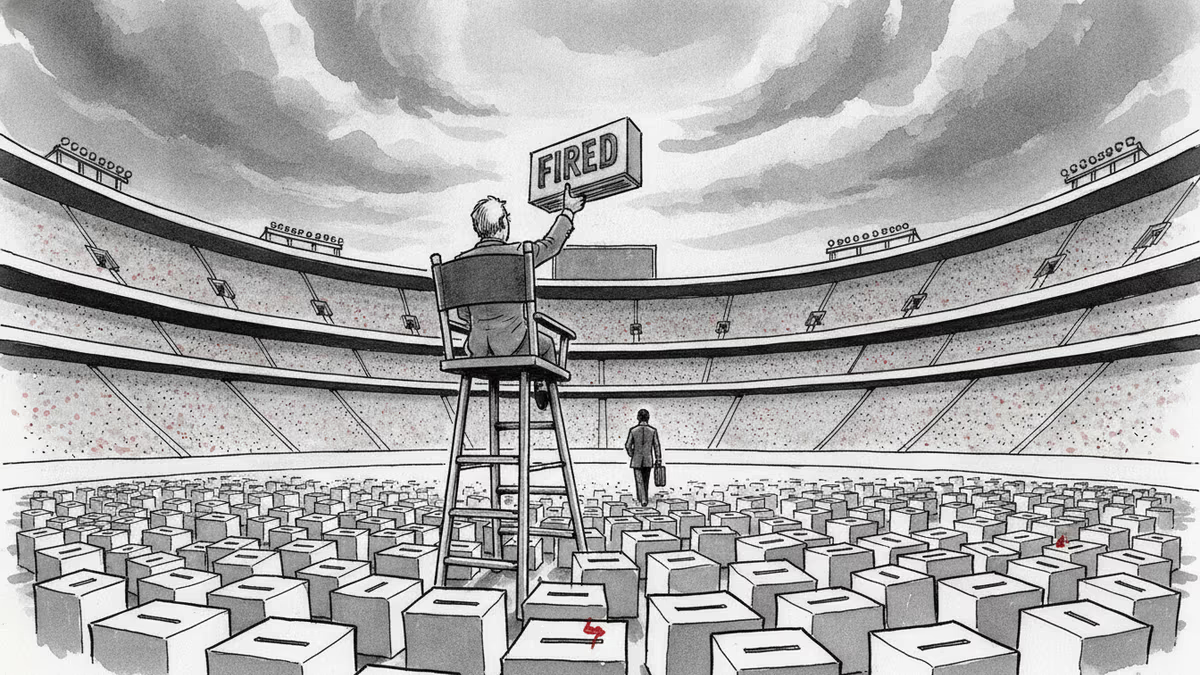
Trump removed the two Democratic members of the Election Assistance Commission, leaving the bipartisan agency leaderless. A Supreme Court ruling made it legal. Here's why a non-crisis can still be a warning sign.
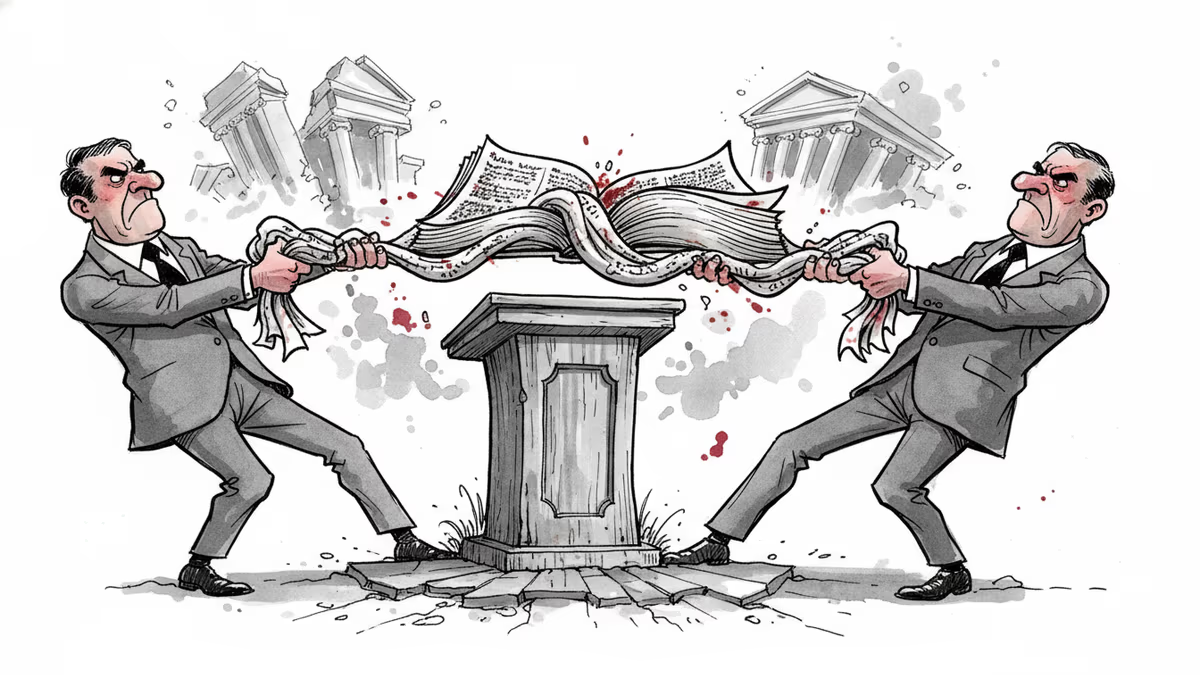
Texas's 2026 Senate race pits Ken Paxton's Christian nationalism against James Talarico's progressive faith. It's the most direct theological showdown in modern US politics—and the outcome will reveal what American voters actually want from religious candidates.
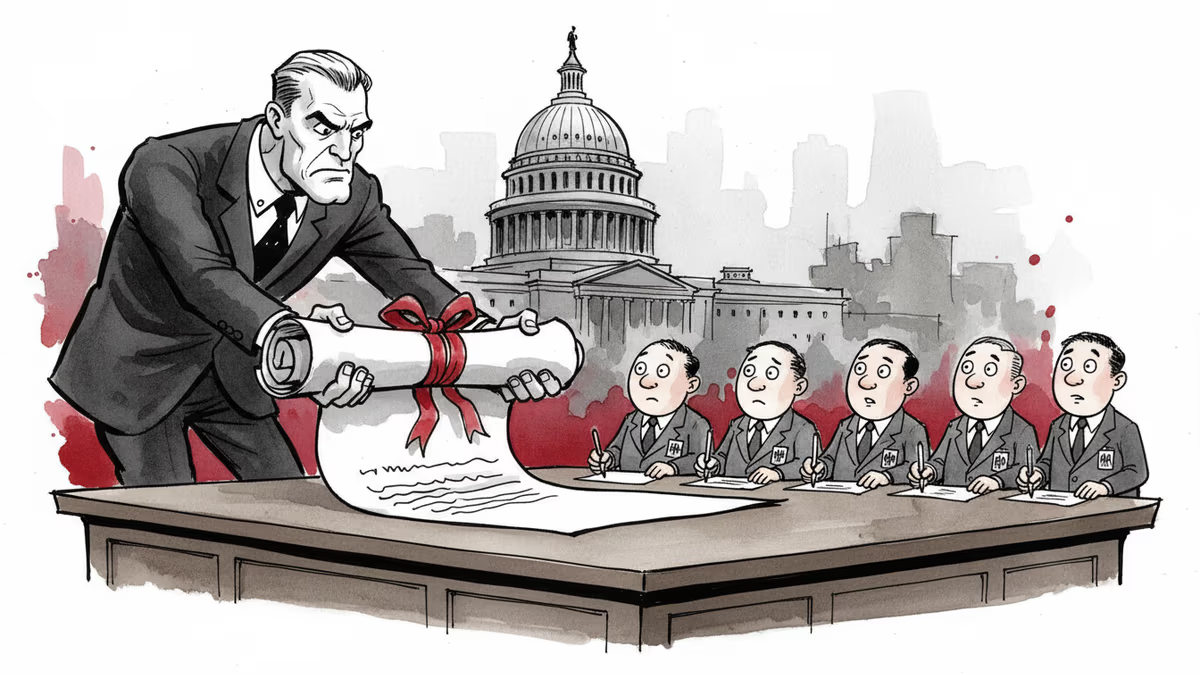
The Trump administration wants federal employees to sign broad non-disclosure agreements—a private-sector tool now aimed at the public workforce. What happens when government runs like a corporation?
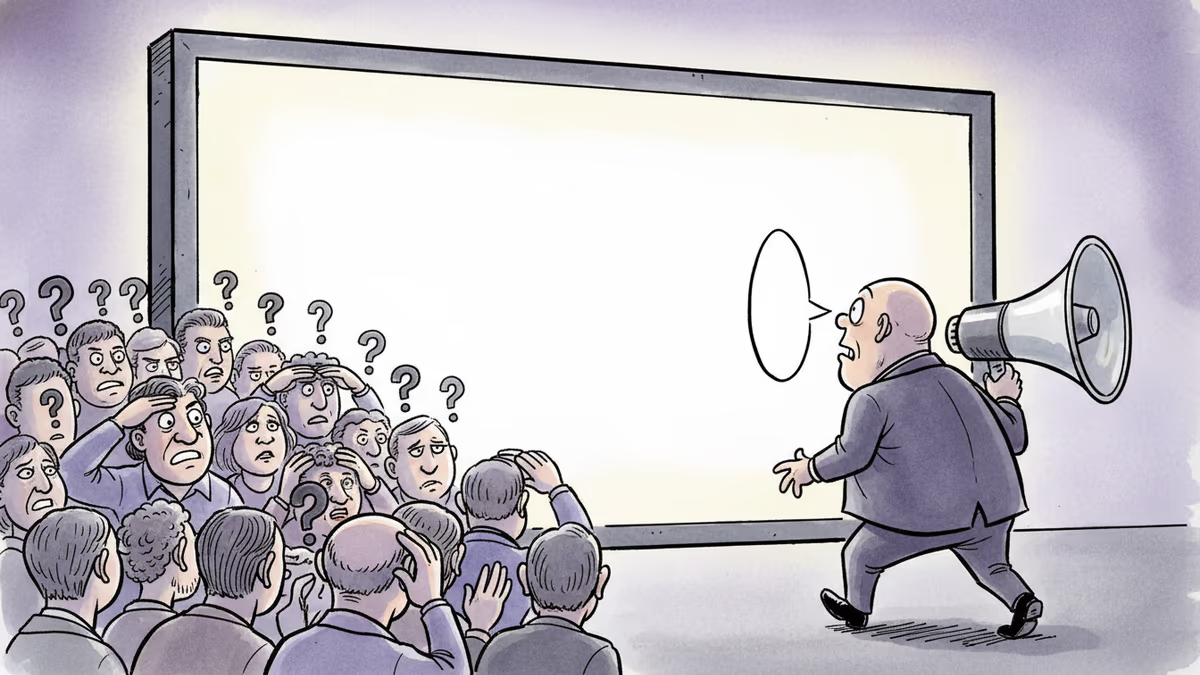
After the 2024 defeat, Democrats have reached a private consensus on moderation — but without a public reckoning. Can a 'vibe shift' actually rebuild a party brand?
Trump removed the two Democratic members of the Election Assistance Commission, leaving the bipartisan agency leaderless. A Supreme Court ruling made it legal. Here's why a non-crisis can still be a warning sign.
Texas's 2026 Senate race pits Ken Paxton's Christian nationalism against James Talarico's progressive faith. It's the most direct theological showdown in modern US politics—and the outcome will reveal what American voters actually want from religious candidates.
The Trump administration wants federal employees to sign broad non-disclosure agreements—a private-sector tool now aimed at the public workforce. What happens when government runs like a corporation?
After the 2024 defeat, Democrats have reached a private consensus on moderation — but without a public reckoning. Can a 'vibe shift' actually rebuild a party brand?
Thoughts
Share your thoughts on this article
Sign in to join the conversation