
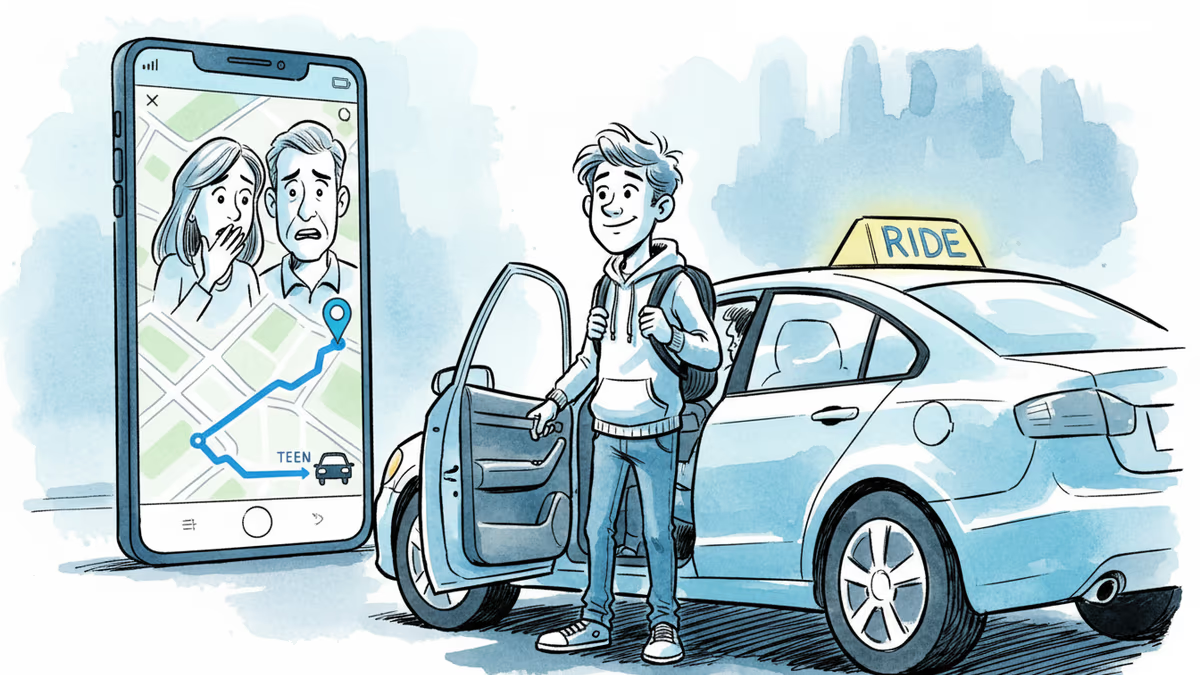
At 13, They Ride Alone: Lyft Redraws Lines of Teen Independence
Lyft launches teen accounts allowing 13-year-olds to ride solo in 200 US cities. With parental controls and driver screening, how will this reshape family mobility and teenage autonomy?
200 Cities, One Big Experiment in Teen Freedom
Across America this week, something shifted. Lyft officially launched teen accounts, allowing kids as young as 13 to hail rides without adults in major cities from Atlanta to New York. It's not just a service expansion—it's a reimagining of how families move.
For decades, the equation was simple: teens needed parents to drive them or figured out public transit. Now there's a third option, and it's sparking conversations at dinner tables nationwide.
The Safety Scaffolding
Lyft isn't winging this. Only parents can create teen accounts. Drivers who get matched with underage passengers face additional screening and yearly background checks. The tech layer is thick: PIN verification, audio recording, real-time GPS tracking so parents can monitor every mile.
Teens can bring friends along—with parental permission, of course. It's helicopter parenting meets ride-sharing, wrapped in an app.
But critics aren't convinced. Enhanced screening aside, you're still putting a minor alone with a stranger in a moving vehicle. That fundamental risk calculation hasn't changed, no matter how many safety features you bolt on.
Playing Catch-Up in a Fast-Moving Market
Lyft is late to this party. Uber has been testing teen accounts since 2017 and launched commercially in spring 2024 across dozens of US and Canadian cities. They've since expanded internationally, even piloting in India.

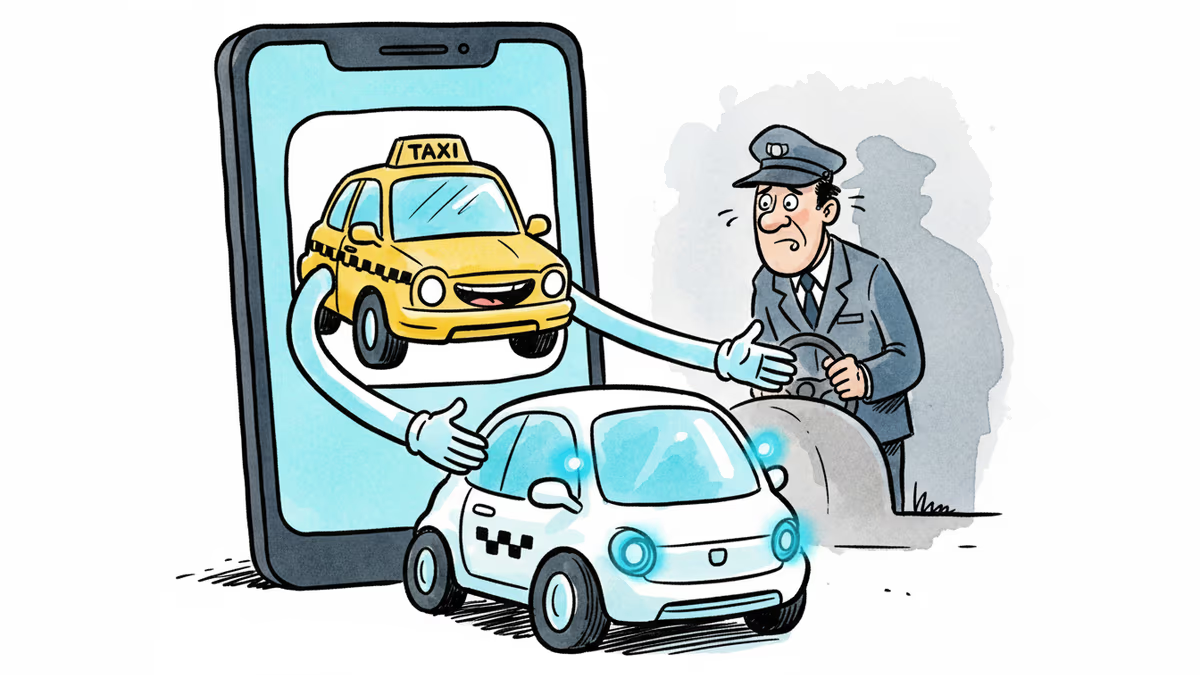
More intriguingly, Waymo offers teen accounts for its Phoenix robotaxi service. There's something telling about parents trusting algorithms over humans when it comes to their kids' safety.
This push reflects CEO David Risher's broader strategy since taking the helm. He's been aggressive: autonomous vehicle partnerships, a $197 million acquisition of German mobility app Freenow to crack Europe, and now this bet on teenage riders.
The Economics of Independence
For families, the math is compelling. No more leaving work early for school pickup. No more weekend taxi service to friends' houses. Parents in suburbs without robust public transit see this as liberation.
For Lyft, it's about market expansion. Teenagers represent untapped demand—and they're digital natives who'll likely stick with the platform into adulthood. It's customer acquisition with a 20-year horizon.
But there's a darker economic angle. As gig economy wages stagnate, will drivers feel pressured to accept teen rides despite discomfort? The power dynamics between adult drivers and teenage passengers add complexity to an already complicated labor relationship.
Cultural Collision Course
This isn't just about transportation—it's about childhood itself. American culture increasingly pushes independence earlier, while simultaneously extending parental oversight through technology. Teen ride-hailing embodies this contradiction perfectly.
In other cultures, the idea might seem absurd. But in car-dependent American suburbs, where a 16-year-old's license represents freedom, starting that journey at 13 via ride-share feels almost inevitable.
The real test isn't technical—it's social. Will parents actually use this service, or will cultural anxiety about "stranger danger" override convenience?
Authors
Related Articles
Waymo's new Ojai robotaxi isn't just a vehicle upgrade. It's the company's most serious attempt yet at cracking the cost problem that has kept autonomous vehicles from scaling. Here's what's really at stake.
Auto China 2026 set records with 1,451 vehicles and 181 world premieres. But the real story isn't the size—it's how Chinese automakers stopped competing on price and started competing on brains.
Studded snow tires offer unmatched grip on ice, but they're banned or restricted in many countries due to road damage and air quality concerns. What's the real trade-off?
Uber partners with China's Pony AI and Croatia's Verne to launch Europe's first commercial robotaxi service. Is this a survival strategy or a sign that the ride-hail giant is ceding its future to others?
Waymo's new Ojai robotaxi isn't just a vehicle upgrade. It's the company's most serious attempt yet at cracking the cost problem that has kept autonomous vehicles from scaling. Here's what's really at stake.
Auto China 2026 set records with 1,451 vehicles and 181 world premieres. But the real story isn't the size—it's how Chinese automakers stopped competing on price and started competing on brains.
Studded snow tires offer unmatched grip on ice, but they're banned or restricted in many countries due to road damage and air quality concerns. What's the real trade-off?
Uber partners with China's Pony AI and Croatia's Verne to launch Europe's first commercial robotaxi service. Is this a survival strategy or a sign that the ride-hail giant is ceding its future to others?
Thoughts
Share your thoughts on this article
Sign in to join the conversation