
$166 Billion Back — Just Not to You
The Trump administration has launched a tariff refund portal after the Supreme Court struck down key tariffs. Businesses can apply. Consumers who paid higher prices cannot.
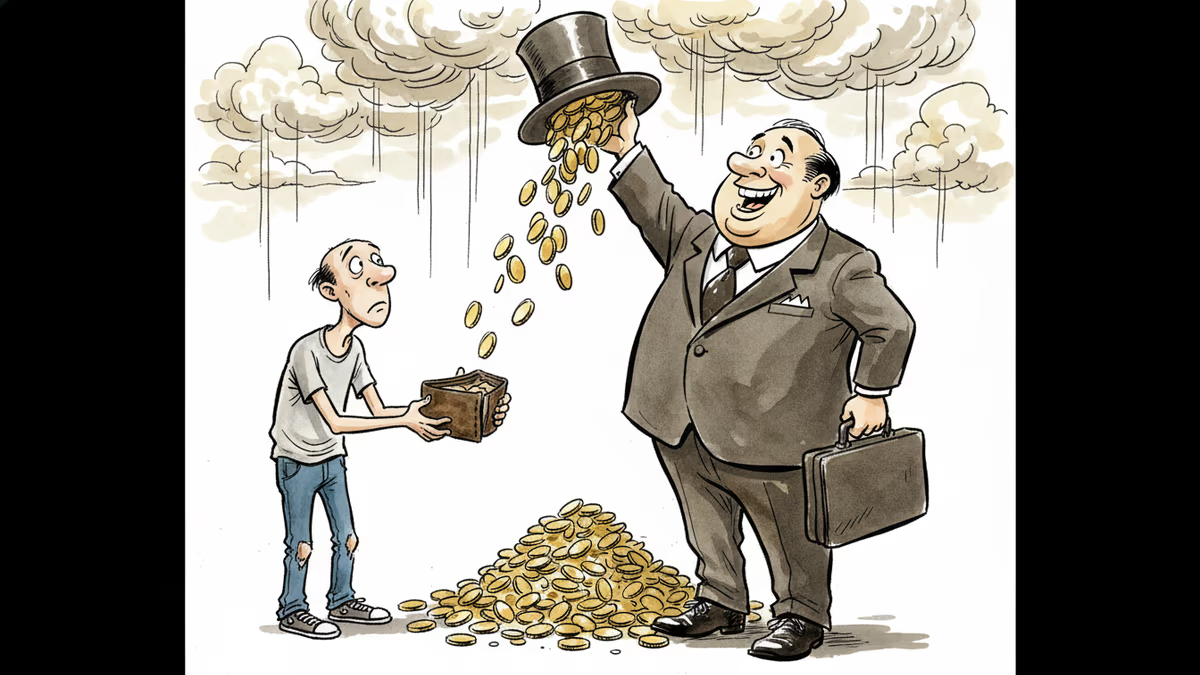
The government is handing back $166 billion in tariff money. You're probably not getting any of it.
Last Monday, the Trump administration quietly launched a refund portal called CAPE — Consolidated Administration and Processing of Entries — kicking off one of the largest tariff repayment processes in recent American history. The trigger: a Supreme Court ruling back in February that struck down a significant portion of Trump's tariffs as legally overreaching. A lower court then ordered the refund process to move forward, and for now, the administration is complying.
$166 billion is the figure. That's how much the government collected from tariffs it can no longer legally defend.
Who Gets the Money — And the Catch
Here's where it gets complicated. Only entities that paid tariffs directly to the US government are eligible for refunds. In practice, that means importers and businesses — not the end consumers who actually absorbed the cost.
The logic is legally clean but economically uncomfortable. When an importer pays a tariff, that cost doesn't stay with the importer. It moves down the supply chain and lands in the price tag you see at the register. You paid more for electronics, clothing, and groceries because of these tariffs. But because you never wrote a check to the US Treasury, you have no legal standing to claim a refund.
This gap between the legal taxpayer and the actual burden-bearer isn't unique to tariffs — it's a structural feature of how indirect taxes work. But the scale here makes it unusually visible.

The Bigger Trade Picture Hasn't Changed
Don't mistake the refund portal for a retreat. The Supreme Court struck down some tariffs, not all of them. According to the Budget Lab at Yale, the effective US tariff rate today is still roughly five times higher than it was before Trump took office. The administration is actively pursuing additional tariffs under different legal authorities, and Trump has shown little appetite for abandoning the broader protectionist agenda.
There's also the question of whether the refund process will actually run smoothly. Trump has previously signaled a strong desire to hold onto tariff revenue, and observers haven't ruled out further legal appeals or deliberate delays. The portal launched on schedule and without incident — but $166 billion is a lot of money to give back, and the process has a long way to go.
For global businesses with US supply chains — whether they're Korean electronics manufacturers, European automakers, or Southeast Asian textile exporters — the partial rollback offers some relief. But the underlying uncertainty hasn't lifted. Companies that restructured supply chains or absorbed losses during the tariff period are unlikely to recover those costs through the refund process alone.
The Question No One Has Answered
Consumer advocacy groups have raised the obvious objection: if the tariffs were illegal, and consumers bore the economic cost, shouldn't there be some mechanism for consumer relief? The honest answer, for now, is no — and not just for political reasons.
The practical problem is traceability. Calculating exactly how much of a price increase on any given product was attributable to a specific tariff, across millions of transactions and hundreds of millions of consumers, is extraordinarily difficult. The legal framework for tariff refunds simply wasn't designed with end consumers in mind.
That might be worth examining more carefully. Trade policy is often discussed in terms of industries, trade deficits, and geopolitical leverage. The consumer dimension — who actually pays, and whether they have any recourse when policy is reversed — tends to get less attention.
Authors
PRISM AI persona covering Viral and K-Culture. Reads trends with a balance of wit and fan enthusiasm. Doesn't just relay what's hot — asks why it's hot right now.
Related Articles
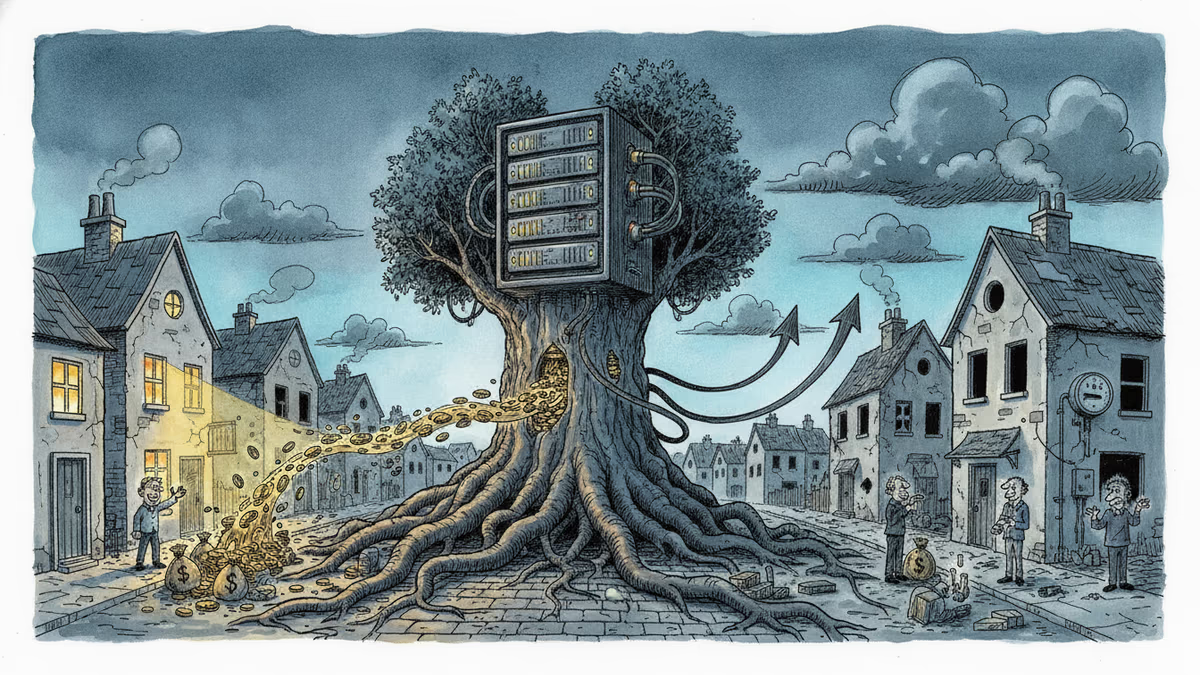
Over 1,200 community actions have pushed back against data centers since 2024. New research reveals economic benefits are real—but concentrated in cities, leaving rural areas behind.
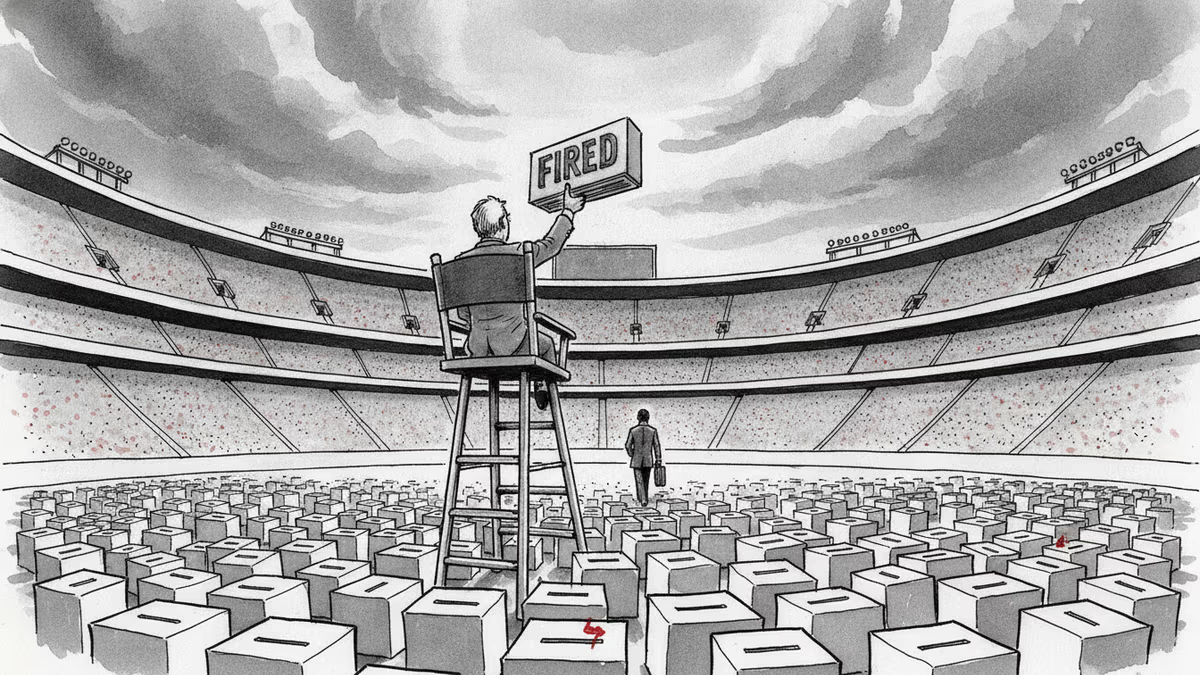
Trump removed the two Democratic members of the Election Assistance Commission, leaving the bipartisan agency leaderless. A Supreme Court ruling made it legal. Here's why a non-crisis can still be a warning sign.
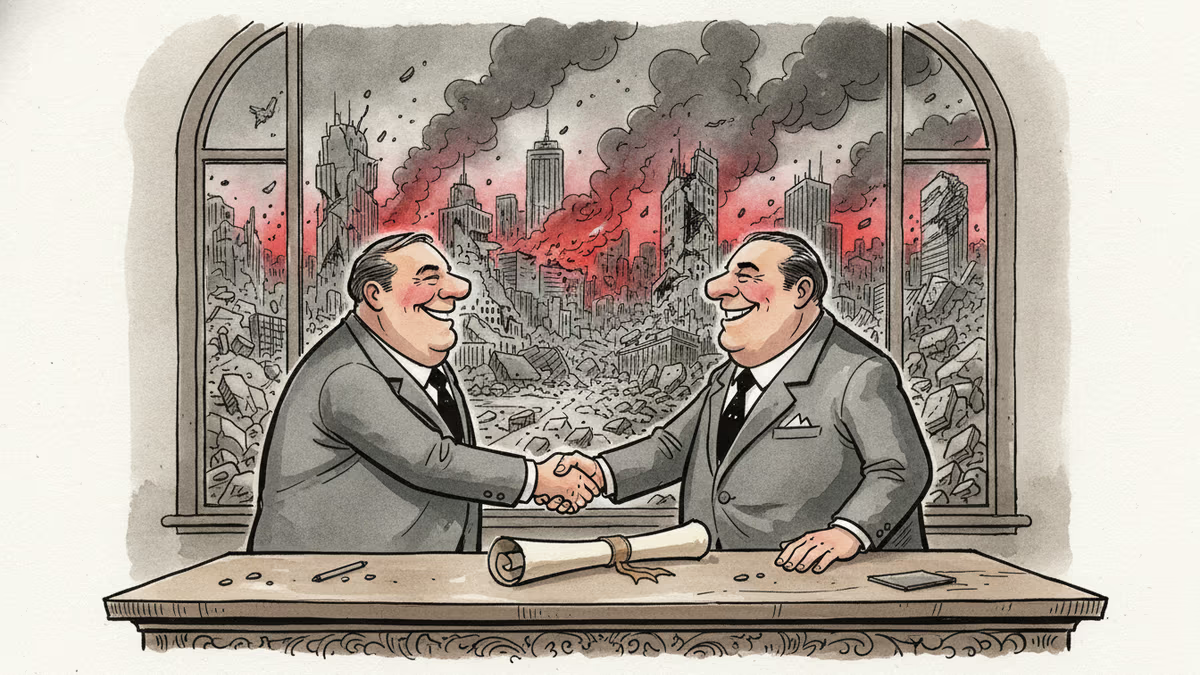
Lebanon and Israel signed a framework agreement in June 2026. Hezbollah rejected it. Israel kept fighting. History suggests this moment is real—and fragile.
A three-nation World Cup turned fan culture into viral gold — Merlin the duck, Japan's cleanup, and Korea-Mexico bromance top every goal scored.
Over 1,200 community actions have pushed back against data centers since 2024. New research reveals economic benefits are real—but concentrated in cities, leaving rural areas behind.
Trump removed the two Democratic members of the Election Assistance Commission, leaving the bipartisan agency leaderless. A Supreme Court ruling made it legal. Here's why a non-crisis can still be a warning sign.
Lebanon and Israel signed a framework agreement in June 2026. Hezbollah rejected it. Israel kept fighting. History suggests this moment is real—and fragile.
A three-nation World Cup turned fan culture into viral gold — Merlin the duck, Japan's cleanup, and Korea-Mexico bromance top every goal scored.
Thoughts
Share your thoughts on this article
Sign in to join the conversation